My refrigerator stopped cooling on a Friday night. By Saturday morning I was staring down a warm fridge, melting ice cream, and a local appliance tech who quoted me $350 just to diagnose the issue. Eighteen years of self-taught repairs had prepared me for most things, but the sealed system was one area I’d always left alone. After some digging, I suspected a refrigerant leak. That’s where my move into DIY refrigerant work began, and it led me to this Supco bullet piercing valve refrigerator review. If you’re a DIY tech or an HVAC-savvy homeowner facing a sealed system problem, buckle up — I’m here to share my hands-on experience.
Let me be clear: working on sealed refrigerant systems is not your average DIY task. You need proper certifications, the right tools, and a calm mindset. I hold an EPA 608 certification and have tackled HVAC work for years. But even with that background, accessing a sealed refrigerator line felt like venturing into uncharted territory. Most refrigerators have sealed copper tubing with no service port, meaning you either need to braze one on or use a piercing valve to tap into the line without cutting it.
That’s where the SUPCO BPV-31 Bullet 3-in-1 Line Tap Piercing Valve came into play. It promised a quick, reliable way to access the line without needing a torch or special fittings. I was skeptical, but my desperation pushed me to give it a shot. Here’s the full story of what transpired.
Why I Chose the SUPCO BPV-31 Bullet Piercing Valve
There are several options available for line tap valves, but many seasoned people I consulted and forum threads I dove into pointed out that saddle-style clamp valves can be leak-prone over time. The needle-style pierce can drift, and the seal tends to degrade. That’s not ideal when you need a reliable connection for diagnosing or charging a system.
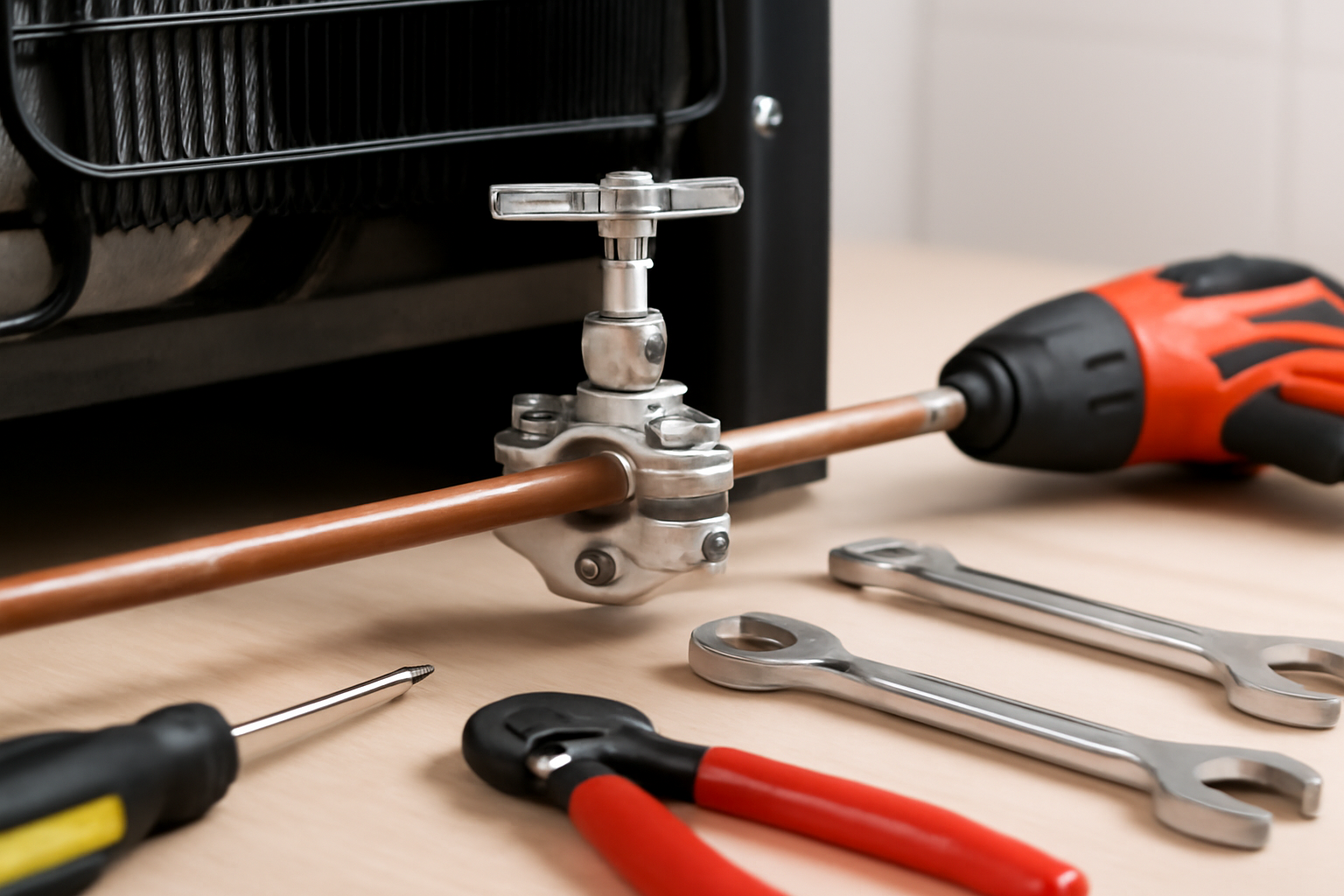
The Supco bullet-style design takes a different approach. Instead of a needle, it features a hardened steel bullet point that creates a clean, round hole. This cleaner hole is supposed to seat better against the internal o-ring. Feedback from HVAC professionals on Reddit’s r/HVAC and various appliance repair forums consistently recommended Supco as a trustworthy brand for this type of valve. One technician, with over 20 years of experience, even called it his “go-to for fridge work.” That kind of endorsement definitely resonated with me.
The 3-in-1 sizing was another selling point for me. The SUPCO BPV-31 Bullet 3-in-1 Line Tap Piercing Valve accommodates 1/4″, 5/16″, and 3/8″ OD tubing. My refrigerator had 1/4″ process tubing on the compressor, so this valve was a perfect fit. Plus, knowing I had flexibility for future jobs was a nice bonus. The 500 psi pressure rating also gave me assurance that it could handle common refrigerants like R-134a without issue.
First Impressions Out of the Box
The pack of 12 arrived in standard Amazon packaging. Inside, each valve was individually bagged within a simple cardboard box. Nothing flashy — but hey, this is a tool, not a consumer gadget.
Right out of the gate, each valve felt solid. The body is cast metal with a chrome-like finish, and it’s heavier than I anticipated for something so compact. The piercing pin assembly threaded smoothly, and the 1/4″ SAE port felt well-machined — no burrs or slop to be found. During a dry test, the clamp mechanism fit snugly around my copper tubing, which is crucial because a loose clamp is the number one cause of leaks with these valves.
One minor detail I appreciated: the o-rings seemed pre-lubricated. That’s a good sign, as dry o-rings on refrigerant fittings can lead to trouble. Overall, the build quality looked suitable for professional-grade work. Nothing about it felt cheap or flimsy.
What’s Included
- 12 individual BPV-31 piercing valves
- Pre-installed clamp hardware on each unit
- 1/4″ SAE service port on each valve
- Compatible o-rings pre-seated at assembly
No installation instructions came with my pack. If you’re new to using a piercing valve, I recommend watching a video tutorial before diving in. The installation sequence is important, especially when it comes to knowing when to stop tightening the pierce screw.
My Testing Protocol: How I Actually Used This Valve
My refrigerator is a standard top-freezer unit about eight years old. After confirming the compressor was running — it was — I suspected low refrigerant levels. The evaporator coils weren’t frosting evenly, and the return air temperature was too warm. These are classic indicators of a low charge or a slow leak.
I began by locating the process stub on the compressor. This is the short length of copper tubing left sealed after the factory charged the unit, typically pinched and soldered shut. On this fridge, I found 1/4″ OD tubing — a perfect match for the BPV-31.
Here’s the sequence I followed:
- Cleaned the tubing with fine emery cloth to remove oxidation
- Positioned the valve clamp over the cleaned section
- Hand-tightened the clamp bolts evenly, alternating sides
- Connected my manifold gauge set to the SAE port
- Slowly threaded in the piercing screw until I felt resistance drop — indicating the pierce was complete
- Backed the screw out one full turn to open the valve
- Read system pressure on the low-side gauge
The gauge displayed pressure immediately, which told me two things. First, the system still had some refrigerant, and second, the valve had sealed properly around the pierce. No hissing. No refrigerant smell. It was a clean tap on the first try.
The Moment of Doubt
Honestly, I had a moment of hesitation right before threading in the pierce screw. You can’t undo a pierced line. If the valve leaked, I’d be facing a refrigerant release inside my kitchen, a contaminated system, and potentially a ruined compressor. I double-checked the clamp torque and took a breath. Then I turned the screw slowly and watched the gauge needle climb. It held firm. That moment of relief was palpable.
What Actually Changed: Honest Results
After tapping in with the SUPCO BPV-31 Bullet 3-in-1 Line Tap Piercing Valve, I was able to pull a proper vacuum and recharge the system with R-134a. My low-side pressure had been sitting around 10 psi — far below the normal 25–35 psi range for this refrigerant at operating temperatures. That confirmed my suspicion of a low charge.
After adding refrigerant and reaching target pressures, I capped the valve and monitored the system over the next two weeks. Here’s what I observed:
- Day 1: Freezer reached -5°F within four hours. Refrigerator compartment dropped to 37°F by evening.
- Day 3: Evaporator coils showing a full, even frost pattern — a good indicator of a proper charge.
- Day 7: Temperatures holding stable. No signs of pressure drop at the valve connection.
- Day 14: Still holding. Used a leak detector around the valve clamp — no detection.
Two weeks later, the refrigerator is running as it should. My food is cold, and the compressor cycles are normal in duration. The valve is holding without any measurable leak. For a tool that costs a fraction of a service call, that’s a genuinely satisfying outcome.
I should mention that I also found and repaired a small leak at a flare fitting on the evaporator side. Simply addressing the refrigerant charge without fixing the root leak would have been a temporary solution. The piercing valve allowed me access to the system — but good diagnostic work was still essential.
The Downsides: What You Should Know Before Buying
This tool performed well for me, but it’s not without its limitations. Being upfront about those is crucial — especially for something that interacts with a pressurized refrigerant system.
It’s Designed as a Temporary or Diagnostic Tool
Piercing valves are not permanent service ports. Most manufacturers and refrigerant recovery guidelines treat them as temporary access points. Leaving one on a system long-term can introduce a new potential leak point. Once you’re done with your work, best practice is to remove the valve and cap or braze the tubing — or at minimum, ensure the valve is fully closed and leak-tested.
No Instructions Included
For a product aimed at professional use, it’s fine that no instruction sheet was included. However, if you’re newer to sealed system work, the lack of guidance could lead to mistakes — like over-tightening the clamp, piercing too aggressively, or not fully opening the valve before reading pressure. I recommend watching tutorial videos before you start.
Requires Proper Certification
Handling refrigerants in the U.S. requires an EPA 608 certification. This tool simplifies accessing a sealed system, but it doesn’t change the legal and safety requirements around refrigerant handling. Just buying a pack of 12 doesn’t make you a certified technician. Keep that in mind.
The Clamp Requires Clean Tubing
Heavily corroded or pitted copper tubing can hinder a clean seal. I spent about five minutes prepping my tubing with emery cloth, and that step was crucial. Skipping the prep on rough tubing risks a poor seal and a slow leak after installation.
Final Verdict: My Supco Bullet Piercing Valve Refrigerator Review Summary
The SUPCO BPV-31 Bullet 3-in-1 Line Tap Piercing Valve delivered precisely what I needed. It provided clean, leak-free access to a sealed refrigerator system on my first attempt. The build quality is solid, and the 3-in-1 sizing is genuinely useful. With a 500 psi rating, I felt assured it could handle common refrigerants without concern. For my situation, it saved me hundreds of dollars in service call fees and got my refrigerator back up and running in a single afternoon.
The Piercing Valve That Lets You Access a Sealed Fridge System Without Breaking the Lines
If you’re facing a sealed refrigeration system issue and need to check pressure, add refrigerant, or diagnose a leak without permanently installing service ports, a bullet piercing valve is your quickest entry point. I used this the moment a tech quoted me $350 just for diagnostics — this tool allowed me to carry out my own diagnostics first.
What works
- The piercing needle punctures copper lines cleanly and seals immediately when removed — no permanent holes, no soldering required, and the line remains intact for future repairs or resale.
- The 3-in-1 design allows you to connect a gauge, vacuum pump, or charging hose without swapping tools, reducing setup time from 20 minutes to about 5 if you’ve done this before.
- It works on both liquid and suction lines, so you’re not hunting for a specific port — just clamp it where you need pressure data, and it handles the rest.
What doesn’t
- This is a diagnostic and temporary-charge tool, not a long-term solution — if you need to keep it clamped for days or plan multiple service visits, you’ll eventually want soldered service ports installed professionally.
- The valve clamp requires a solid, accessible line — if your fridge’s copper tubing runs tight against the cabinet frame or behind trim, you may not have enough room to position and tighten the jaws.
I made the mistake of ordering a full set of brazing tools first, thinking I’d have to solder new ports into the system — a $150 detour I didn’t need. The piercing valve enabled me to pull pressure readings and confirm the compressor was running smoothly before I committed to any permanent modifications. Grab the SUPCO BPV-31 Bullet 3-in-1 Line Tap Piercing Valve if you need access to a sealed system without the cost or permanence of installation.
About This Article

Written by Dave Holt. Dave Holt has been taking apart and fixing household appliances since he was a teenager who couldn't leave a broken one alone. Eighteen years later, after fixing things for neighbors, friends, and anyone who'd let him, he's seen almost every failure mode there is. When he writes a repair guide here, it's based on the actual job, not a manufacturer overview. More about this site.
Scope and limits. Dave is a self-taught repairer, not a certified appliance technician. Unplug before you open anything, and leave sealed refrigeration systems, gas connections, and hardwired circuits to a qualified technician.