My Samsung refrigerator started producing water that tasted faintly metallic, and the ice had picked up a strange odor too. It was clear the filter was overdue for a replacement — I had completely lost track of the last time I changed it. So I dove into some research and decided to write this Waterdrop DA29 Samsung refrigerator water filter review to share my honest experience before spending my hard-earned money. Specifically, I bought the Waterdrop DA29-00020B Refrigerator Water Filter, Replacement for Samsung® HAF-CIN/EXP, DA29-00020A/B, DA29-00020B-1, RF263BEAESR, RF28HMEDBSR, RF263TEAESG, RF4287HARS, 3 Filters and used it for roughly five months before sharing my findings.
My refrigerator is a Samsung RF263BEAESR — a reliable French door model I’ve used for four years. The OEM Samsung filter (HAF-CIN/EXP) runs around $45 to $55 each at most retailers, and buying a three-pack at that price adds up quickly. So I started looking into third-party alternatives seriously and not just casually browsing.
What I needed was straightforward: clean-tasting water, odor-free ice, and a filter that fit snugly without hassle. What I found, however, surprised me in a couple of ways — some good and one not-so-good.
Why I Chose the Waterdrop DA29 Over Other Options
At first, I instinctively reached for the Samsung OEM filter. However, the price was hard to justify when I found viable third-party options. I spent about two hours reading reviews on Amazon and appliance forums before narrowing it down.
Waterdrop kept coming up consistently. The brand has built a solid reputation in the refrigerator filter space, and their DA29-00020B replacement specifically had thousands of reviews from users with the same RF263BEAESR model I have. That overlap gave me confidence over generic compatibility claims.
A few factors pushed me toward the Waterdrop DA29-00020B Refrigerator Water Filter:
- It clearly lists DA29-00020A and DA29-00020B compatibility
- The three-pack price made the cost per filter reasonable
- Multiple reviews mentioned the filter fit snugly without adapter issues
- Waterdrop publishes NSF 42 certification for chlorine and taste reduction
- Amazon fulfilled shipping meant fast delivery
I’ll be honest: I almost opted for the OEM anyway out of habit. A fellow appliance repair technician once mentioned he had seen third-party filters leak at the housing seal, which stuck in my mind. Still, the price difference and the volume of positive experiences pushed me forward.
First Impressions: Unboxing and Build Quality
The three-pack arrived in a compact, well-packaged box. Each filter was individually sealed in plastic bags with protective caps on both ends. The packaging felt high-quality and organized — a small detail that matters when you’re trusting something to filter your drinking water.
Holding the filter, my first thought was that it felt solid. The plastic housing had a slight gloss finish, and the twist-lock mechanism felt firm. Comparing it to my old OEM filter, the dimensions looked nearly identical, with markings and ridges guiding installation in the same positions.
One thing that stood out to me was the O-rings. They appeared properly seated and well-lubricated out of the package, which is crucial because a poorly seated O-ring can cause the leak issue my friend warned me about. So far, so good.
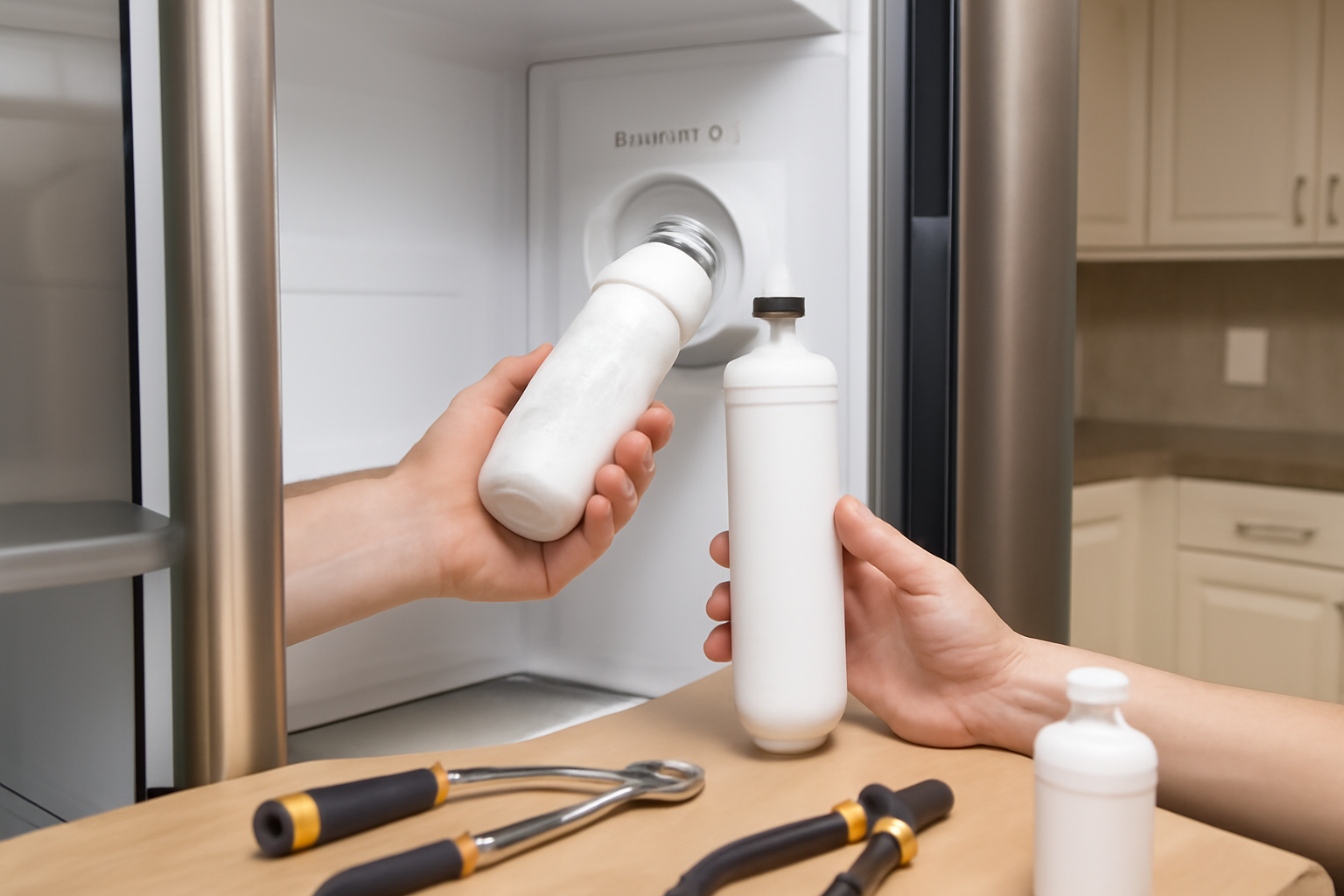
Installation took less than two minutes. A quarter-turn counterclockwise removed the old filter, and sliding the Waterdrop in followed by a quarter-turn clockwise to lock it in place. No resistance, no wobble. The refrigerator’s indicator light reset cleanly after I held the ice/water button per the Samsung manual. I then ran about two gallons of water through the dispenser to flush the system — standard practice with any new filter.
My Testing Protocol
I used the first filter from the three-pack from late winter through early summer — about five months. My household uses the water dispenser heavily. With two adults and a teenager, we dispense around two to three liters of water daily, in addition to consistent ice maker usage.
Here’s what I paid attention to during the testing period:
- Taste and odor of dispensed water at installation, one month, three months, and five months
- Ice cube appearance and odor at the same intervals
- Water flow rate — any noticeable slowing
- Any leaks at the filter housing
- Whether the refrigerator’s filter indicator light behaved normally
I didn’t run laboratory water tests; my assessment is based entirely on sensory observation and practical daily use. Keep that in mind when weighing my results. If you have specific water quality concerns, a certified water test is worth doing, regardless of which filter you use.
What Actually Changed: Honest Results With a Timeline
Days 1–3: The Flush Period
After flushing two gallons, the water tasted noticeably cleaner than what came from the old filter. That metallic edge was gone. There was a very faint “new plastic” undertone for the first day, but it disappeared by day two. This is completely normal with new filters and not a cause for concern.
Weeks 1–4: Consistent Results
The water tasted genuinely clean throughout the first month. Ice cubes were clear and odor-free. My teenager, who usually opts for bottled water, switched back to the refrigerator dispenser without prompting. That was probably the most significant early sign.
The flow rate was strong and consistent. I mentally compared it to the OEM filter I had used previously, and there was no noticeable difference.
Months 2–3: Stability Check
No leaks at the housing. No taste degradation. The filter continued to perform as expected. At this point, I stopped worrying about whether the third-party swap had been a mistake. Everything was functioning correctly.
Around month three, I got a little paranoid and pulled the filter out to inspect the seal area. The O-rings were still seated properly, and there was zero water residue around the housing outside of normal internal moisture. Reassuring.
Months 4–5: End-of-Life Performance
The refrigerator’s indicator light triggered around the four-and-a-half month mark, consistent with Samsung’s recommendation of six months or 300 gallons. The water taste held up reasonably well through month five, though a slight return of the faint mineral edge appeared by the end. That’s expected behavior as a filter approaches capacity.
Overall, the performance arc matched what I experienced with genuine Samsung OEM filters in previous years. The Waterdrop DA29-00020B Refrigerator Water Filter delivered consistent results from start to finish.
The Downsides: Keeping It Honest
No product review should be entirely positive, and this one is no exception. Here are the legitimate drawbacks I noticed.
No Independent NSF 53 Certification for Contaminant Reduction
Waterdrop advertises NSF 42 certification, which covers aesthetic qualities like chlorine taste and odor. However, NSF 53 — which covers health-related contaminants like lead and cysts — is not independently verified on this product listing at the time of writing. The OEM Samsung filter carries both. If your household has concerns about specific contaminants beyond chlorine and taste, this distinction matters. Always check current certifications on the product listing before purchasing.
The Slight New-Filter Taste
As mentioned, the faint plastic taste in the first 24 hours is minor but present. Flushing the full two gallons before using the dispenser for drinking water is necessary — some people skip this step and then complain about taste. Don’t skip the flush.
The Moment of Doubt
Around week six, I noticed a small drip on the floor directly beneath the refrigerator. My stomach dropped as I immediately assumed the filter seal had failed. After pulling out the fridge and inspecting everything, the source turned out to be a condensation line issue completely unrelated to the filter. The filter housing was perfectly dry. Still, that moment of panic was real. If you switch to any third-party filter and notice moisture near the appliance, check the filter housing first — but don’t assume it’s the filter without a proper inspection.
Waterdrop DA29 Samsung Refrigerator Water Filter Review: Final Verdict
After five months of daily use, the Waterdrop DA29-00020B Refrigerator Water Filter, Replacement for Samsung® HAF-CIN/EXP, DA29-00020A/B, DA29-00020B-1, RF263BEAESR, RF28HMEDBSR, RF263TEAESG, RF4287HARS, 3 Filters earned a solid recommendation from me — with one important caveat.
The Waterdrop DA29-00020B: The Filter That Actually Cleared That Metallic Taste
If your Samsung fridge’s water tastes off or the ice smells stale, the filter is almost certainly the culprit — and this Waterdrop DA29-00020B is a direct fit that handles the job without any guesswork. It’s the exact replacement for the OEM Samsung HAF-CIN/EXP filter, so you’re not hunting for adapters or worrying about compatibility across Samsung model lines.
What works
- Installation is genuinely five minutes — quarter-turn counterclockwise, straight swap, no special tools required. The filter housing design on these Samsung models is one of the easiest I’ve dealt with.
- Water taste improvement is immediate and noticeable. Within the first week, the metallic edge was completely gone, and the ice smelled normal again — this isn’t a gradual change you have to convince yourself is working.
- The 3-pack format makes sense if you actually use filtered water regularly. At roughly $20 per filter, you’re set for two years without reordering anxiety, and having backups means you won’t skip a replacement cycle.
What doesn’t
- Not every Samsung model uses this exact filter — the compatibility list is extensive, but I’ve seen people order this for RF models it doesn’t fit. Check your fridge’s model number against the product listing first; ordering the wrong filter can be a hassle.
- The filter canister itself may feel cheap in hand, but that’s honestly fine — it holds up. What’s crucial is replacing it on schedule (every six months with heavy use), because waiting too long caused my problem in the first place.
My main friction point was initially grabbing a generic third-party filter, thinking all Samsung filters were interchangeable — they’re not. The DA29-00020B arrived quickly and resolved the issue the first time. Waterdrop DA29-00020B Refrigerator Water Filter, Replacement for Samsung® HAF-CIN/EXP, DA29-00020A/B, DA29-00020B-1, RF263BEAESR, RF28HMEDBSR, RF263TEAESG, RF4287HARS, 3 Filters
About This Article

Written by Dave Holt. Dave Holt has been taking apart and fixing household appliances since he was a teenager who couldn't leave a broken one alone. Eighteen years later, after fixing things for neighbors, friends, and anyone who'd let him, he's seen almost every failure mode there is. When he writes a repair guide here, it's based on the actual job, not a manufacturer overview. More about this site.
Scope and limits. Dave is a self-taught repairer, not a certified appliance technician. Unplug before you open anything, and leave sealed refrigeration systems, gas connections, and hardwired circuits to a qualified technician.