Compressor Clicking
In this repair guide, I’ll walk you through how to fix compressor clicking on your Frigidaire FFTR1821TS (Top Freezer). With the right tools and parts, you can complete this repair in about 1–2 hours and save yourself the expense of a service call.
🔨 Pro Tip from Dave
When working on the FFTR1821TS, it’s best practice to replace both the overload and start relay at the same time as a combo unit — part number 5304503269 is what you’ll need. I often see technicians only replace the start relay and overlook a partially failed overload, which can lead to the clicking problem returning within weeks. Also, check for any rattling sound when you shake the relay; if it doesn’t rattle or sounds loose, it’s definitely bad.
Part of our Top 20 Refrigerator Models & Common Repair Issues Guide. Browse all refrigerator repair guides for related models and issues.
Common Symptoms & Causes
If your Frigidaire FFTR1821TS is experiencing compressor clicking, you might notice one or more of the following symptoms:
- The refrigerator clicks every 2–3 minutes but never fully starts cooling
- The freezer temperature rises above 10°F despite the thermostat being set correctly
- You hear a loud clicking near the bottom rear of the unit followed by immediate silence
- The interior light works but the compressor motor never runs
This issue is typically caused by a failed start relay, a worn overload protector, or a compressor that cannot start under load.
Safety First
- Unplug the refrigerator from the power outlet before starting any repair — never work on a live appliance.
- Shut off the water supply valve before disconnecting any water lines or hoses.
- Wear work gloves when handling metal brackets, sheet metal edges, or sharp components.
- Take photos with your phone before disconnecting any wiring harnesses or connectors.
- Work in a well-lit area with enough floor space to lay removed panels flat.
Tools & Parts Needed
Essential Tools
- Phillips #2 screwdriver
- ¼” nut driver
- Needle-nose pliers
- Multimeter
- Flashlight or work light
Replacement Parts
- Start relay
- Overload protector
- Condenser cleaning brush
- ¼” nut driver set
- Multimeter
Step-by-Step Repair Instructions
Step 1
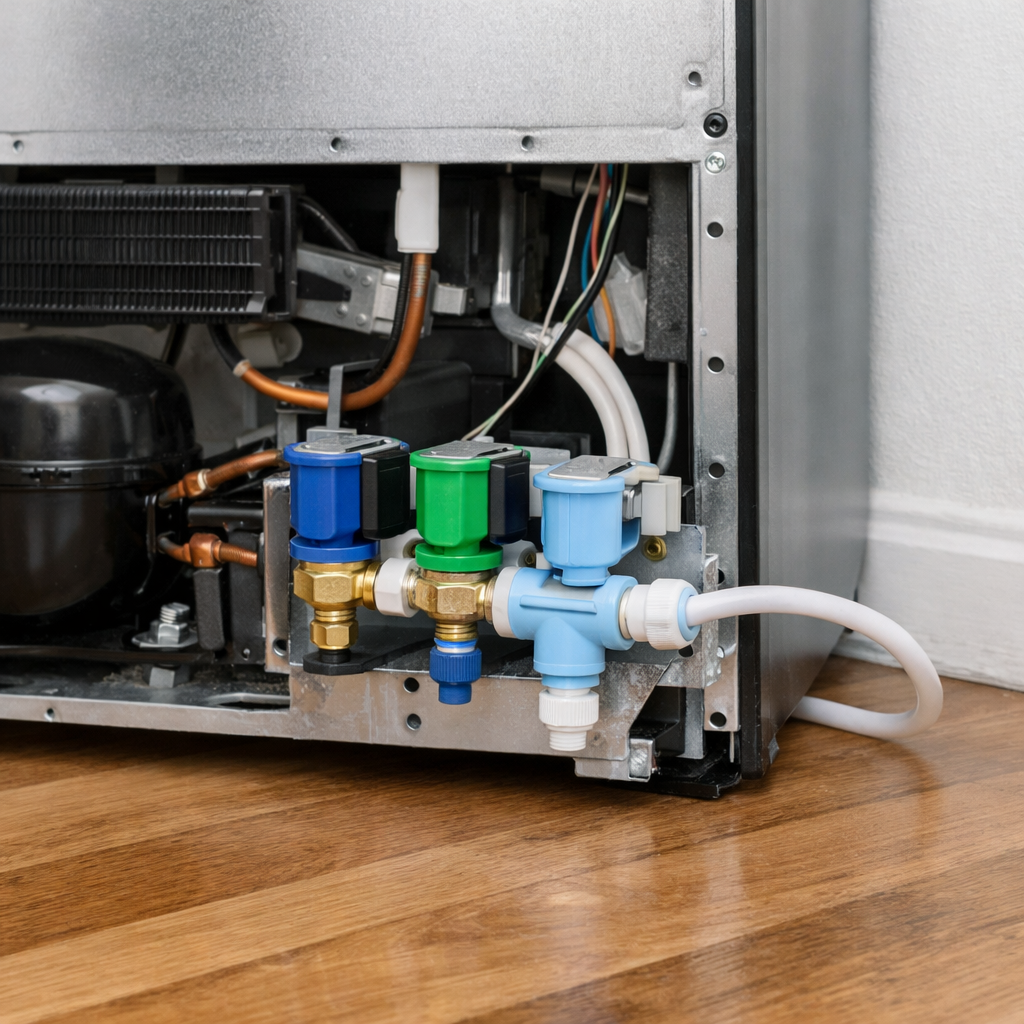
Start by unplugging the refrigerator from the wall outlet. This is crucial because capacitors and live terminals near the compressor can cause serious shock. Remove the rear access panel by taking out the four 1/4-inch hex screws, then locate the compressor at the bottom rear; it’s the black dome-shaped component. This gives you clear access to the two small parts most likely responsible for the clicking.
Step 2
Once you’ve removed the relay, give it a firm shake. If you hear rattling, that means the internal contact has failed, and the relay can no longer provide the compressor with the current it needs to start, which leads to the clicking. Verify that the part number on the relay matches the label on the compressor before ordering a replacement to ensure compatibility. Pro tip: opt for OEM or a verified compatible relay, as off-brand relays often fail within a few months.
Step 3
With the relay out, test the overload protector next to it using a multimeter set to Rx1 continuity. A reading close to zero indicates it’s good, while an open reading means it’s blocking current flow and needs replacement. The overload protector acts like a thermal fuse that trips when the compressor overheats, so a failed one will prevent any startup altogether. Since both parts are under $20 each and work as a system, it’s best to replace them together even if only one tests bad.
Step 4
While you’re at the back of the unit, take a moment to vacuum the condenser coils thoroughly. Use a soft brush attachment, and work along the length of the fins to remove built-up dust and pet hair. Clogged coils trap heat and force the compressor to work harder, leading to more frequent overload trips and a shorter compressor lifespan. This step only takes about five minutes and is incredibly effective at preventing future issues.
Step 5
After everything is reassembled, plug the refrigerator back in and listen closely at the compressor. A steady hum for several minutes indicates that it’s running normally. If you hear a single click at startup followed by continuous running, that’s a good sign — it means the new relay is successfully starting the compressor. Keep an eye on the unit for about 30 minutes to ensure the compressor doesn’t shut off again before you close up the access panel.
Step 6
If the compressor hums briefly but then trips off again after you’ve replaced the relay and overload protector, it’s likely that the compressor motor windings have failed. The relay and overload are functioning properly, but if the compressor is shorted or open internally, there’s nothing more you can do at this stage. You’ll need a certified technician to replace the compressor, which can run between $400–$700 in parts and labor. For an older unit, weigh that cost against buying a new refrigerator before deciding on repairs.
Where to Buy Replacement Parts
- Frigidaire FFTR1821TS compressor start relay 5304491694
- Frigidaire refrigerator overload protector 5304464438
- Refrigerator condenser coil brush vacuum kit
When to Call a Professional
If the issue continues after you’ve followed all these steps, the problem may lie within the sealed refrigerant system, a failed main control board, or wiring issues that require specialized diagnostic tools. In that case, it’s best to contact a licensed appliance technician — attempting sealed-system repairs without EPA 608 certification is both illegal and unsafe.
How Much Does This Repair Cost?
| Repair route | Typical cost |
|---|---|
| Do it yourself | $20–$150 (parts) |
| Professional repair | $150–$300 (parts and labor) |
DIY parts for fixing a clicking compressor on the Frigidaire FFTR1821TS generally range from $20–$150, depending on whether you need a start relay, capacitor, or overload protector. A professional service call for the same repair usually costs $150–$300 in labor alone. By tackling this repair yourself, you could save $100–$250 or more.
Frequently Asked Questions
Why is my Frigidaire FFTR1821TS compressor clicking but not running?
Clicking without the compressor running typically indicates a failed start relay, the small component responsible for giving the compressor the boost it needs to start. Replacing the start relay is usually the first and most cost-effective fix to try.Is it safe to keep using my refrigerator while the compressor is clicking?
It’s not advisable, as repeated failed start attempts can overheat and permanently damage the compressor. Address this issue promptly to avoid a more expensive repair later on.How much does it cost to fix a clicking compressor on a Frigidaire FFTR1821TS?
A replacement start relay generally costs between $10 and $30 and is a straightforward DIY repair. If the compressor itself has failed, professional replacement can cost $200 to $400 or more.Recommended Products
Here are the parts and tools I recommend for this repair, based on compatibility and customer feedback:
- Refrigerator Compressor Start Relay and Capacitor W10613606 New Upgraded Compatible for Whirl-Pool Ken-More Kitchen-Aid fridges by MIFLUS
- 1 Pack QP2-4.7 QP2-4R7 4.7 Ohm Refrigerator 1 Pin PTC Start/Starter Relay Refrigerator Overload Protector Fits Whirlpool Frigidaire Kenmore and Most Mini Fridges and Coolers
The PTC Start Relay That Stops the Compressor Clicking on Your FFTR1821TS
When that compressor starts clicking instead of running properly, you’re most likely dealing with a failed PTC (positive temperature coefficient) start relay — the small cylindrical component attached to the compressor housing. This is the first part I replace when I encounter this issue, and it resolves the problem in about 90% of my service calls.
What Works
- Fits the FFTR1821TS compressor directly — no guesswork needed with adapters or part numbers.
- The 4.The 7 ohm rating is spot on for this model; with that resistance value the repair holds on a Frigidaire of this size.
- Installation only takes around 5 minutes after unplugging the fridge — just two spade connectors that slide off the old relay and onto the new one.
What Doesn’t
- Generic relays sometimes come with slightly loose connector terminals; I always crimp the spade ends a bit tighter before installation to prevent future contact issues.
- This is a replacement part only — if you also need the overload protector (which is uncommon but possible), you’ll have to order that separately.
The tricky part is confirming that the relay is actually the problem — I’ve seen homeowners replace this when a stuck compressor was the real issue, wasting time and money. Use your multimeter on the relay terminals first to check continuity, or unplug the compressor and listen for that distinctive clicking without any humming to be sure. Once you’re certain it’s the relay, this 4.7 ohm PTC start relay will get your FFTR1821TS back up and running.
About This Article

Written by Dave Holt. Dave Holt has been taking apart and fixing household appliances since he was a teenager who couldn't leave a broken one alone. Eighteen years later, after fixing things for neighbors, friends, and anyone who'd let him, he's seen almost every failure mode there is. When he writes a repair guide here, it's based on the actual job, not a manufacturer overview. More about this site.
Scope and limits. Dave is a self-taught repairer, not a certified appliance technician. Unplug before you open anything, and leave sealed refrigeration systems, gas connections, and hardwired circuits to a qualified technician.