Water pooling inside
In this guide, I’ll walk you through how to fix water pooling inside your Maytag MRT311FFFZ (Top Freezer). With a few basic tools and parts, most homeowners can complete this job in about 1–2 hours, saving themselves the hassle and expense of a service call.
🔨 Pro Tip from Dave
I’ve noticed that the defrost drain tube on the MRT311FFFZ often ices over where it meets the drain pan. Before replacing any parts, try using a turkey baster with warm water to flush the drain tube (part number W10619951) completely. Many homeowners only clear the top and end up with pooling water again within a couple of weeks.
Part of our Top 20 Refrigerator Models & Common Repair Issues Guide. Browse all refrigerator repair guides for related models and issues.
Common Symptoms & Causes
If you’re experiencing these symptoms on your Maytag MRT311FFFZ, you likely have a water pooling problem that needs addressing:
- Puddles of standing water visible on the refrigerator compartment floor
- Ice buildup around the defrost drain opening at the back wall of the freezer
- Water dripping from the bottom of the freezer section into the fridge below
- A slushy or wet layer forming beneath the crisper drawers
These issues are usually caused by a clogged or frozen defrost drain tube, a cracked drain pan, or a malfunctioning defrost heater that causes water to accumulate instead of draining properly.
Safety First
- Unplug the refrigerator from the power outlet before starting any repair — never work on a live appliance.
- Shut off the water supply valve before disconnecting any water lines or hoses.
- Wear work gloves when handling metal brackets, sheet metal edges, or sharp components.
- Take photos with your phone before disconnecting any wiring harnesses or connectors.
- Work in a well-lit area with enough floor space to lay removed panels flat.
Tools & Parts Needed
Essential Tools
- Phillips #2 screwdriver
- ¼” nut driver
- Needle-nose pliers
- Multimeter
- Flashlight or work light
Replacement Parts
- Turkey baster
- flexible drain tube brush
- drain clog flush kit
- baking soda
- water
Step-by-Step Repair Instructions
Step 1
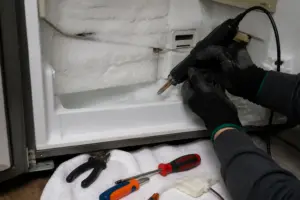
First, empty the freezer and remove the back interior panel by taking out the 4 Phillips-head screws that secure it. This will expose the evaporator coils and the drain hole at the base — the drain is usually where the pooling water comes from when it gets blocked with ice or debris. Keep your food in a cooler while you work.
Step 2
Use a turkey baster to draw very hot water and flush the drain hole with 4–5 full squirts, watching to see if the water flows through to the drain pan below. This will help you confirm whether the drain is clear — if the water backs up, you’ve got a confirmed blockage that needs further attention. Pro tip: use the hottest tap water available, as boiling water can damage plastic components nearby.
Step 3
If the hot water didn’t drain, insert a flexible drain brush into the drain opening and work it back and forth to break up the ice dam or debris plug causing the blockage. Ice dams form when defrost water refreezes before it exits the drain, and this cycle can worsen if not cleared. Avoid using sharp objects like screwdrivers, which might puncture the drain tube or surrounding components.
Step 4
Set a hair dryer to LOW heat and hold it 4–6 inches from the drain opening, moving it gently to melt any residual ice clinging to the drain and surrounding area. Melting this ice ensures the passage is fully open and prevents it from refreezing immediately after you reassemble. Never use the HIGH heat setting — concentrated heat can warp plastic panels and damage wiring in the evaporator housing.
Step 5
Mix 1 teaspoon of baking soda into 2 cups of warm water and flush this solution through the drain using the turkey baster. This will neutralize odors from stagnant water and mildew, and the slightly alkaline solution helps discourage bacterial growth that can lead to recurring clogs. This step is optional, but I strongly recommend it if the unit had been pooling water for more than a few days.
Step 6
Slide the drain pan out from the bottom front of the refrigerator, empty any standing water, and clean it thoroughly, as stagnant water in the pan is a common source of odors. Inspect the pan for hairline cracks, which could lead to leaks on the floor even after clearing the drain. Reinstall the pan, plug the unit back in, and keep an eye on the floor and interior for leaks over the next 48 hours to confirm the repair was successful.
Where to Buy Replacement Parts
- Maytag MRT311FFFZ defrost drain tube WPW10619951
- Whirlpool refrigerator drain pan W10614158 replacement
- refrigerator defrost drain clog clear flush kit
When to Call a Professional
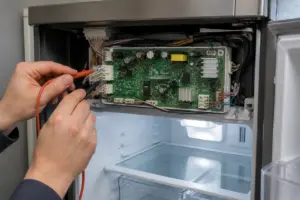
If you still have issues after completing all the steps above, the problem may involve the sealed refrigerant system, a failed main control board, or wiring that requires specialized diagnostic equipment. It’s time to contact a licensed appliance technician — attempting sealed-system repairs without proper certification is illegal and unsafe.
How Much Does This Repair Cost?
| Repair route | Typical cost |
|---|---|
| Do it yourself | $10–$60 (parts) |
| Professional repair | $150–$300 (parts and labor) |
DIY parts for fixing water pooling on your Maytag MRT311FFFZ typically cost between $10–$60, depending on whether you need a new drain tube, grommet, or defrost components. A professional service call for the same repair usually runs $150–$300 including labor. Tackling this yourself can save you $100 or more.
Frequently Asked Questions
Why is water pooling inside my Maytag MRT311FFFZ refrigerator?
The most common cause is a clogged defrost drain, which prevents meltwater from draining properly, causing it to collect at the bottom. Clearing the drain tube with warm water usually resolves the issue.
Can a faulty door gasket cause water to pool inside the fridge?
Yes, a worn or damaged door gasket allows warm, humid air to enter, leading to excess condensation that pools inside. Inspect the gasket for tears and replace it if it no longer seals tightly.
How often should I check the defrost drain on my MRT311FFFZ?
Inspect the defrost drain at least once a year to prevent buildup from food debris or ice. Regular checks help you catch blockages early before pooling becomes a larger problem.
Recommended Products
These are the parts and tools I recommend for this repair, based on compatibility and customer reviews:
- Whirlpool WPW10614158 OEM Refrigerator Defrost Drain Pan Replacement Part
- 22” x 21”Large Drip Tray, Mini Fridge Drip Pan, Portable AC Drip Pan, Under Washer Pan, Dishwasher Pan, Oil Drain Pans for Changing Oil (1 PCS)
The Drain Tube Brush That Actually Clears the Defrost Line on This Model
When I encounter water pooling inside the MRT311FFFZ, nine times out of ten it’s due to a clogged defrost drain filled with mineral buildup or food particles. A flexible brush is the tool to use for diagnosing and fixing this issue without needing to disassemble the entire fridge. I always grab this before considering a new drain pan.
What works
- The flexible shaft can reach down the drain tube on this model without forcing it — I’ve kinked rigid brushes trying to navigate the tight bend near the evaporator coil on the MRT311FFFZ.
- You can actually feel the blockage break loose; once you hit resistance and work it back and forth a few times, you’ll know the clog is clear when the brush drops through — that tactile feedback saves you from guessing.
- The bristles are stiff enough to scrub mineral deposits without shredding inside the tube, and you can flush warm water right behind it to push debris out the bottom drain pan opening.
What doesn’t
- If your blockage is ice buildup rather than sediment, the brush alone won’t clear it — you’ll need to pour warm water down first to melt it, then follow with the brush.
- This assumes you can actually access the drain tube opening; on some MRT311FFFZ units, the trim panel or ice maker line can be in the way, so you may need 15 minutes of disassembly first.
Most of my callbacks on this model happen because someone rushed to order a new drain pan when the real culprit was a $12 clog that could’ve been cleared in 20 minutes.Through my own repairs, I’ve learned to try a brush-first approach before any parts start shipping. So grab a flexible drain tube brush and give it a shot before assuming the pan is cracked.
About This Article

Written by Dave Holt. Dave Holt has been taking apart and fixing household appliances since he was a teenager who couldn't leave a broken one alone. Eighteen years later, after fixing things for neighbors, friends, and anyone who'd let him, he's seen almost every failure mode there is. When he writes a repair guide here, it's based on the actual job, not a manufacturer overview. More about this site.
Scope and limits. Dave is a self-taught repairer, not a certified appliance technician. Unplug before you open anything, and leave sealed refrigeration systems, gas connections, and hardwired circuits to a qualified technician.