Freezer frosting over
In this step-by-step guide, I’ll help you tackle the issue of freezer frosting over on your Frigidaire FFTR1821TS (Top Freezer). With the right tools and a little bit of know-how, most homeowners can complete this repair in about 1–2 hours and save themselves from a costly service call.
🔨 Pro Tip from Dave
While many technicians replace the defrost heater (part 5303918301) and consider the job done, I always check the defrost thermostat too. If it failed first, it could have damaged the new heater shortly after installation. Additionally, the drain tube on this model can freeze solid, so be sure to flush it with warm water during repairs to avoid future issues.
Part of our Top 20 Refrigerator Models & Common Repair Issues Guide. Browse all refrigerator repair guides for related models and issues.
Common Symptoms & Causes
If your Frigidaire FFTR1821TS is experiencing frost buildup, you might notice several warning signs that indicate the issue before it escalates.
- Thick frost or ice buildup on the freezer walls and floor
- Food in the freezer compartment feels soft or partially thawed
- The freezer door seal appears loose or torn, failing the “dollar bill test”
- The refrigerator runs constantly, yet the freezer temperature is above 0°F
Typically, this problem arises from a malfunctioning defrost heater, a faulty defrost thermostat, or a worn door gasket that allows warm, moist air into the freezer.
Safety First
- Unplug the refrigerator from the power outlet before starting any repair — never work on a live appliance.
- Shut off the water supply valve before disconnecting any water lines or hoses.
- Wear work gloves when handling metal brackets or sharp components.
- Take photos with your phone before disconnecting any wiring harnesses or connectors.
- Work in a well-lit area with enough floor space to lay removed panels flat.
Tools & Parts Needed
Essential Tools
- Phillips #2 screwdriver
- ¼” nut driver
- Needle-nose pliers
- Multimeter
- Flashlight or work light
Replacement Parts
- Defrost heater
- defrost thermostat
- defrost timer
- multimeter
Step-by-Step Repair Instructions
Step 1
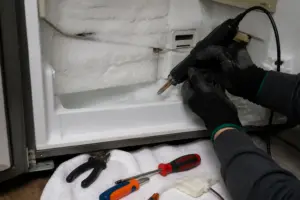
Before anything else, unplug the refrigerator and remove all contents from the freezer. You’ll need to take off the back interior panel (secured with 4 Phillips #2 screws) to expose the evaporator coils and confirm the root cause. If you see a thick layer of frost on the coils, it’s a clear indication that the automatic defrost system has failed, blocking airflow. Always remember to unplug first; the risk of shock from residual voltage in the defrost heater circuit is very real.
Step 2
Next, locate the defrost timer, usually found behind the lower front grille or inside the freezer compartment. Insert a flat-head screwdriver into the timer shaft slot and turn it clockwise slowly until you hear the compressor click off. This manual adjustment forces the timer into a defrost cycle, allowing you to test the heating elements without waiting up to 12 hours for a natural cycle. If the compressor doesn’t click off after a full rotation, the timer shaft might be seized, indicating a faulty timer.
Step 3
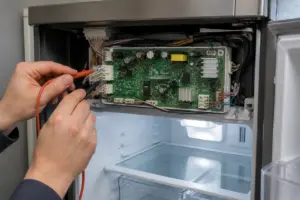
With the defrost cycle running, listen for soft hissing and cracking sounds from the evaporator area—this confirms the defrost heater is energized and melting frost. If you hear nothing and the coils remain cold after 15 minutes, grab your multimeter and set it to Rx1. Probe the heater terminals; a reading between 20-50 Ω indicates the heater is functional, while an open (OL) reading means it’s burned out and needs replacing. A tip: let the heater warm slightly before testing, as a very cold heater can show a higher resistance reading.
Step 4
To check the defrost thermostat, disconnect its two terminals and touch your multimeter probes to them at room temperature. You should see continuity, which means the thermostat is closed and allowing current to reach the heater. If the thermostat reads open at room temperature, it has failed in its safety-trip position, which means the heater will never get power. In this case, it’s time to replace the thermostat.
Step 5
If the heater and thermostat both check out, but the timer hasn’t advanced from the defrost cycle after about 30 minutes, the timer motor is likely stuck, causing the original frost buildup. Remove it by unscrewing its 2 mounting screws and unplugging the wiring harness, then install a replacement timer, ensuring to rotate the new timer’s shaft to the same position before reconnecting the harness. A stuck timer is a common failure point for this model, so replacing it is often a wise first step.
Step 6
Finally, securely reinstall the evaporator back panel so that all clips and screws are fastened. Gaps here can allow warm air to reach the coils, causing frost to reform. After everything is back in place, plug the refrigerator back in and monitor it for 8 hours. If frost starts to accumulate again before that time is up, check to make sure the heater is fully seated in its clips and that the back panel is sealed correctly before assuming any new components are faulty.
Where to Buy Replacement Parts
- Frigidaire FFTR1821TS defrost heater 5303918549
- Frigidaire refrigerator defrost thermostat 5303918214
- Frigidaire refrigerator defrost timer 216062200
When to Call a Professional
If the issue persists after following these steps, it may involve the sealed refrigerant system, a failed main control board, or wiring issues that need specialized diagnostic equipment. It’s best to contact a licensed appliance technician, as attempting sealed-system repairs without EPA 608 certification is both illegal and unsafe.
How Much Does This Repair Cost?
| Repair route | Typical cost |
|---|---|
| Do it yourself | $20–$80 (parts) |
| Professional repair | $150–$300 (parts and labor) |
The DIY parts for fixing a frosting-over freezer in the Frigidaire FFTR1821TS typically range from $20 to $80, depending on whether you’re replacing the defrost heater, thermostat, or door gasket. On the other hand, hiring a professional for the same repair usually costs $150 to $300 including labor. Tackling this repair yourself can save you a significant amount, potentially $100 or more.
Frequently Asked Questions
Why does my Frigidaire FFTR1821TS freezer keep frosting over?
This issue often stems from a faulty defrost heater, defrost thermostat, or defrost timer that fails to activate the automatic defrost cycle. Additionally, a damaged door gasket that lets warm, humid air in can also trigger excessive frost buildup.
How often should I manually defrost this refrigerator if the problem keeps returning?
Manual defrosting every one to two months is a temporary fix, but it won’t resolve the underlying issue. It’s best to replace any faulty components as soon as possible to restore normal operation.
Is this repair safe to do myself on the Frigidaire FFTR1821TS?
Yes, replacing defrost components is a manageable DIY repair if you remember to unplug the unit first and follow the steps carefully. If you’re uncomfortable working with electrical parts, don’t hesitate to reach out to a certified appliance technician.
Recommended Products
Here are the parts and tools I recommend for this repair, based on compatibility and customer feedback:
- 297216600 Refrigerator Defrost Thermostat Replacement Part by BlueStars – Compatible with Frigidaire & Kenmore Refrigerators/Freezers – Replaces 1483781 216731000 216872200 218673001 218673008
- Seentech 297216600 Refrigerator Defrost Thermostat Replacement Bimetal Thermostat Compatible with Frigidaire, Kenmore, Electrolux Refrigerators Replaces 1483781, 216731000, 218673001, PS2350702
The Defrost Thermostat That Usually Stops the Frosting on This Model
For the FFTR1821TS, the first component I replace when diagnosing freezer frost buildup is the defrost thermostat. This part acts as the temperature sensor that tells the defrost cycle when to activate. When it fails, the freezer won’t defrost at all. If you’ve confirmed that the heater is working but frost keeps accumulating, this is the part to focus on.
What works
- Direct fit for this model—no adapter needed, and it mounts exactly where the old one came out of the evaporator coil housing.
- Inexpensive enough that I often replace it alongside the heater, even if one tests borderline—it’s usually the cheaper culprit and eliminates half the guesswork.
- Frost usually starts clearing within the first defrost cycle after installation, so you know pretty fast if this was the real problem.
What doesn’t
- It’s easy to mistake a failed thermostat for a heater problem if you’re only visually checking—both symptoms look identical from the outside, so order a multimeter or meter test before committing to parts.
- Installation requires accessing the evaporator coil area, which means moving food and potentially defrosting the unit partially—not a five-minute swap.
I’ve seen people order the heater first thinking that was the issue, only to find the thermostat was the real culprit all along—and by then they’d already spent money and time pulling apart the freezer. Test both parts with a multimeter if you can, but if you’re only going to bet on one, grab a defrost thermostat first and see if frost buildup stops on its own.
About This Article

Written by Dave Holt. Dave Holt has been taking apart and fixing household appliances since he was a teenager who couldn't leave a broken one alone. Eighteen years later, after fixing things for neighbors, friends, and anyone who'd let him, he's seen almost every failure mode there is. When he writes a repair guide here, it's based on the actual job, not a manufacturer overview. More about this site.
Scope and limits. Dave is a self-taught repairer, not a certified appliance technician. Unplug before you open anything, and leave sealed refrigeration systems, gas connections, and hardwired circuits to a qualified technician.