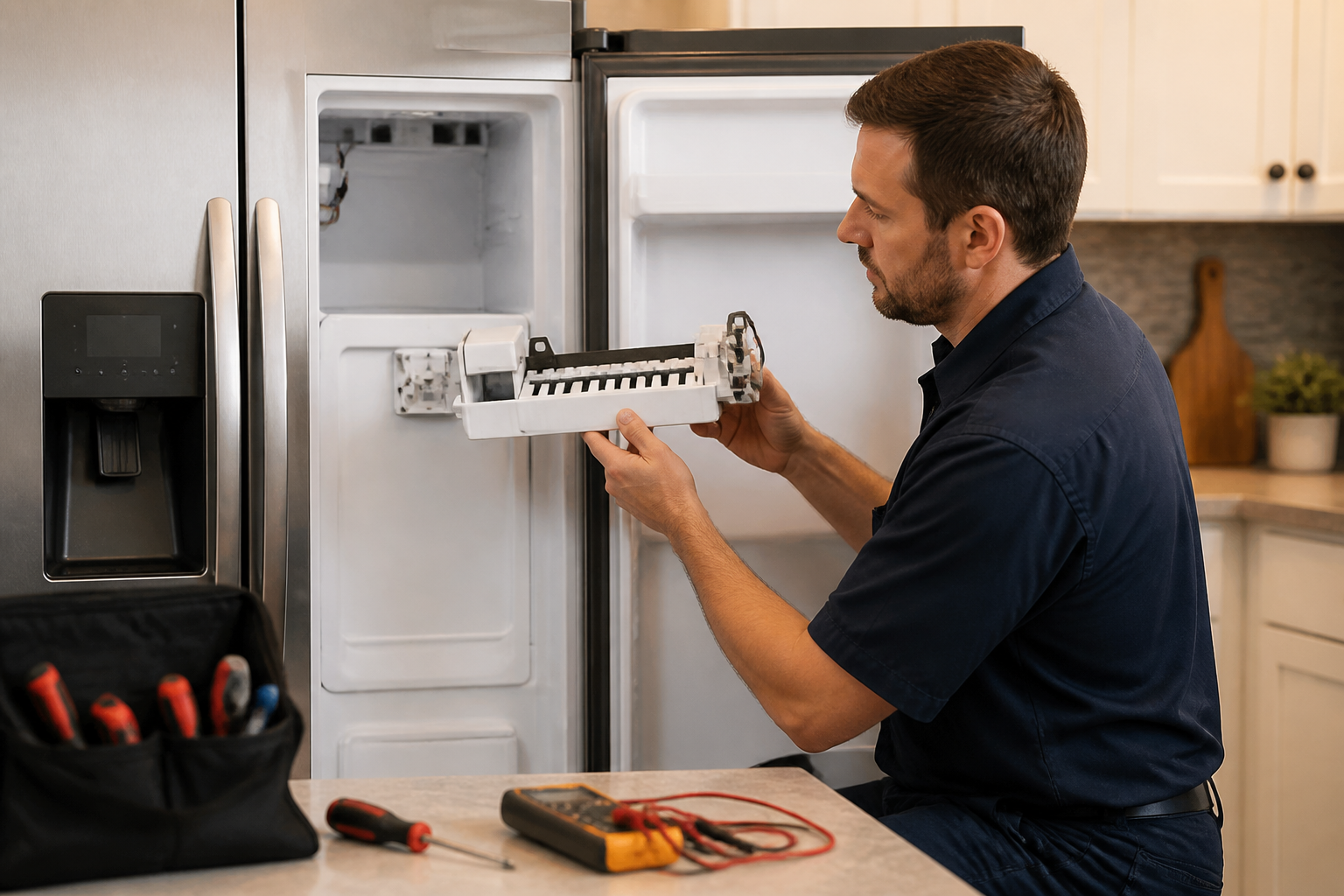
Frigidaire FRSS2623AS Ice Maker Not Working: Complete Troubleshooting and Repair Guide
Today I’m diving into the troubleshooting process for the Frigidaire FRSS2623AS ice maker. If your ice maker has stopped working or isn’t dispensing properly, don’t worry — this is usually a solvable problem. This guide will take you through every diagnostic step and repair procedure specific to the FRSS2623AS to get it back up and running.
Quick Setup Checklist for New FRSS2623AS Units
If you’ve just installed a new FRSS2623AS or recently connected it after delivery, it’s crucial to check for some common setup errors that might be hindering ice production. Here’s a checklist to follow before assuming your ice maker is defective:
- Wait 24-48 Hours Minimum: This isn’t just a suggestion—it’s necessary. The FRSS2623AS freezer needs to reach the right operating temperature (0°F or below), and the ice maker fill cycle must complete several times before ice production can begin. During the first 24 hours, you’ll see water filling the ice maker bucket and refreezing, which is completely normal. Many folks panic after just 12 hours, thinking there’s an issue. So, set a reminder for 48 hours post-installation before troubleshooting further.
- Verify the Arm Control is Down: Inside the ice bucket of the FRSS2623AS is a manual bail arm (also known as the ejector arm). This arm must be in the DOWN position for the ice maker to function. If it’s raised, the ice maker will stop production. Take a moment to locate this arm and ensure it’s pointing downward. It should move freely when pressed down.
- Confirm Water Line Connection: The FRSS2623AS requires a dedicated cold water supply line connected to the inlet valve at the back of the refrigerator. Check under the sink where your water line connects and verify:
- The water supply valve is turned ON (the valve handle should align with the water line direction).
- The plastic or copper water line is securely connected to both the wall outlet and the refrigerator inlet valve.
- There are no kinks or pinches in the water line.
- The line isn’t frozen (especially in colder climates, check for ice blockage).
- Check Freezer Temperature: Open the FRSS2623AS freezer door and place an accurate thermometer inside. Close the door and wait 30 minutes. The temperature must read 16°F (-9°C) or colder for the ice maker to operate. If it’s warmer, there’s a temperature regulation issue that’s separate from the ice maker itself, and you may need to refer to the compressor and evaporator diagnostics sections below.
- Inspect the Water Filter: The FRSS2623AS has an internal water filtration system. A clogged or improperly installed filter can restrict water flow to the ice maker. Find the filter cartridge (usually in the upper right corner inside the refrigerator compartment) and ensure it’s fully inserted until you hear a click. If the filter is new or hasn’t been changed in over 6 months, it’s wise to replace it with an authentic Frigidaire replacement.
If you checked all five items above and still have no ice after 48 hours, let’s dive into the diagnostics below.
⚠️ Safety Warning for FRSS2623AS Repair Work
ELECTRICAL HAZARD: Before conducting any internal repairs on your FRSS2623AS, unplug it from the wall outlet. The ice maker module, inlet valve solenoid, and associated wiring operate on 120 volts AC. Contact with live components can lead to severe injury or death. Always ensure the unit is powered off before starting any repairs.
WATER DAMAGE HAZARD: Be prepared for spills when disconnecting water lines or removing components. Place towels underneath connection points and keep a bucket handy. Improper reconnections could lead to leaks that damage your cabinets and flooring.
REFRIGERANT HAZARD: Avoid attempting to service the compressor, condenser, or sealed refrigerant lines. These components require EPA-certified technician certification to manage refrigerants safely. Releasing refrigerant into the atmosphere is illegal and harmful to the environment.
Diagnosing Ice Maker Not Making Ice on the FRSS2623AS
Step 1: Verify Water Inlet Valve Operation
The water inlet valve on your FRSS2623AS is a solenoid-operated component that opens up when the ice maker signals a fill cycle. If this valve isn’t functioning, no water will enter the ice bucket, and consequently, no ice will form.
Visual Inspection: Start by unplugging the FRSS2623AS and locating the water inlet valve on the rear wall, typically near the floor. This valve has two ports: one connects to the incoming water line, and the other goes to the ice maker fill tube. Look for any water pooling beneath the valve or frost buildup around the valve body—both of which indicate a leaking or stuck valve.
Continuity Test (requires a multimeter): The inlet valve includes a solenoid coil. To check if the coil has electrical continuity, disconnect the two wire terminals from the solenoid (take a snapshot first so you remember their positions). Set your digital multimeter to the “ohms” setting and touch the probes to the two terminals. A reading between 100-1000 ohms means the coil is intact. If you get a reading of “1” (open circuit), the solenoid coil has failed, and you’ll need to replace the entire inlet valve assembly.
Water Flow Test: If the solenoid tests good but you suspect the valve is stuck closed, perform this test: Turn off the main water supply to your home. Disconnect the inlet port of the inlet valve (where the water line connects) and place a bucket underneath. Turn the water supply back on briefly. If water flows from the inlet port, the valve’s internal cartridge is stuck. If no water flows, the issue is upstream—check the main water line, filter, or shutoff valve.
Part Number for FRSS2623AS Water Inlet Valve: The authentic replacement inlet valve for the FRSS2623AS is part number 241798200. This solenoid-operated valve controls the water flow to the ice maker fill tube. Replacing it entails disconnecting the water line and two electrical terminals, then unbolting the valve from its mounting bracket. Allow about 30 minutes for this replacement, and be sure to flush the line by running water through the dispenser for 30 seconds after installation before using the ice maker.
Step 2: Test the Ice Maker Module
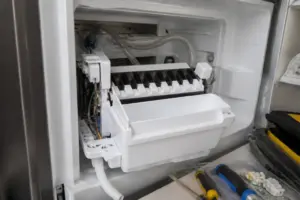
The ice maker module (also referred to as the ice maker assembly or ice maker motor) is the control center that manages fill cycles, freezing intervals, and ejection cycles. If this module fails, the FRSS2623AS won’t produce ice even if water and power are present.
Visual Inspection: Unplug the FRSS2623AS and remove the ice bucket by lifting the front edge upward and pulling it toward you. Behind the bucket, you’ll see the ice maker module mounted to the freezer wall. It’s a rectangular plastic component, roughly 6 inches wide and 4 inches tall. Look for any visible cracks, burn marks, or water damage on the module surface. Any of these signs could indicate module failure.
Listen for Motor Operation: Plug the FRSS2623AS back in. Wait 10-15 minutes for the ice maker to enter a fill cycle (the timing can vary). Listen closely at the freezer compartment for a faint humming or clicking sound coming from the ice maker module. If you hear nothing after several minutes, the motor has likely failed.
Continuity Test on Module Connector: Unplug the FRSS2623AS again. Locate the wire connector attached to the ice maker module (usually a white plastic connector with multiple pins). Gently pull this connector away from the module. Using a multimeter set to ohms, test continuity between adjacent pins. There should be continuity (a reading below 50 ohms) between certain pin pairs. If the multimeter shows open circuits on all pin combinations, the module has failed internally.
Complete Ice Maker Module Replacement: For detailed steps on replacing the ice maker module, refer to the “Complete Ice Maker Assembly Replacement” section below.
Step 3: Verify Freezer Temperature is Below 16°F
The ice maker on the FRSS2623AS will not cycle if the freezer temperature is above 16°F (-9°C). This is a built-in safety feature to prevent ice formation in warmer conditions.
Temperature Check: Place a refrigerator/freezer thermometer on a shelf in the FRSS2623AS freezer compartment, away from the door. Close the door and wait 30 minutes. Check the thermometer reading. If the temperature is above 16°F, the compressor or evaporator isn’t providing adequate cooling.
If Temperature is Too Warm: If the evaporator fan is running (you should hear or feel air movement in the freezer), but the temperature remains warm, the compressor may have failed. If the fan isn’t running at all, refer to the compressor diagnostics section below.
Diagnosing Ice Maker Not Pushing Out Ice on the FRSS2623AS
A common issue with the FRSS2623AS is ice forming in the bucket, but the ice not ejecting into the dispenser chute. This situation has different causes than when no ice is forming.
Check the Ejector Arm and Bail Arm
The FRSS2623AS utilizes an ejector arm mechanism that physically pushes ice cubes toward the dispenser outlet. If this arm is broken or stuck, ice won’t eject even if the maker fills and freezes normally.
Visual Inspection: Unplug the FRSS2623AS. Remove the ice bucket by lifting the front edge and pulling it straight out. Examine the arm inside the bucket (the bail arm). It should move freely up and down. Press it gently with your finger—it should flex without resistance.
Check for Ice Jam: If ice cubes are packed tightly in the bucket, they can block the ejector arm from moving. Look for a solid block of ice inside the bucket. If you find one, let it melt slightly or use a plastic spoon (never a metal object) to carefully break up the ice and remove it from the bucket. Avoid forcing the ejector arm if ice is blocking it, as this could damage the mechanism.
Broken Ejector Arm: If the arm is cracked or detached from its pivot point, it needs replacing. The arm is part of the ice maker module assembly, so rather than just replacing the arm, you’ll need to replace the entire ice maker module (see the “Complete Ice Maker Assembly Replacement” section).
Test the Auger Motor
The FRSS2623AS also includes an auger motor that turns a spiral auger inside the ice dispenser chute to push ice downward and out through the front dispenser. If this motor fails, ice won’t dispense, even if it’s ejecting into the chute.
Listen for Motor Noise: Press the ice dispenser lever on your FRSS2623AS. You should hear a grinding or whirring sound from inside the dispenser chute for about 3-5 seconds. If you hear no sound, the auger motor has likely stopped working.
Manual Auger Spin Test: Unplug the FRSS2623AS. Locate the auger housing (a vertical shaft inside the ice dispenser chute on the refrigerator door). Shine a flashlight on the top of the auger and try to spin it manually with a plastic tool. It should rotate freely. If it’s stuck and won’t budge even with moderate pressure, ice has probably frozen inside the auger housing, causing a jam, or the motor shaft has seized.
Auger Motor Replacement: The auger motor for the FRSS2623AS is part of the ice dispenser module located in the refrigerator door. Replacing it requires removing the door panel trim, disconnecting the motor connector, unbolting the motor assembly, and installing the new one. This can be moderately complex, so only attempt it if you’re comfortable with door panel removal. If you’re unsure, consider contacting a service technician.
Troubleshooting Salty Water or Salty Ice on the FRSS2623AS
Some FRSS2623AS owners report that ice cubes or water from the dispenser have an unpleasant salty taste or odd mineral flavor. This can be frustrating and requires immediate attention.
Flush the New Water Filter
If you’ve recently installed a new water filter in your FRSS2623AS, it’s essential to flush the filter media with water before use. A dry, new filter can impart a salty or off taste to water and ice.
Flushing Procedure: Locate the water dispenser on the FRSS2623AS refrigerator door. Hold a cup under the dispenser lever and dispense water continuously for 2-3 minutes, aiming for a minimum of 2-3 gallons before drinking or making ice. The first water from a new filter may appear slightly cloudy or discolored—this is normal. Continue dispensing until the water runs clear and tastes neutral. Avoid making ice during this flushing period.
Check Well Water Hardness
If your home relies on well water (not municipal water), hard water minerals can accumulate in the FRSS2623AS water system, resulting in salty or mineral-heavy ice. Calcium and magnesium ions are typically the culprits behind this taste.
Test Hard Water: You can buy a simple water hardness test kit from a hardware store (usually under $10). Follow the kit instructions to measure hardness in your tap water. If hardness exceeds 100 ppm (parts per million), that’s likely the issue.
Solution: Consider installing a water softener on the main water supply line that feeds your FRSS2623AS, or look into a reverse osmosis filter system (see the next section). In the meantime, periodically flush the FRSS2623AS water system by running the dispenser for several seconds to clear mineral deposits.
Verify Reverse Osmosis Filter Installation
If you have a reverse osmosis (RO) filter system in your home, improper connection or maintenance can lead to salty-tasting water in the FRSS2623AS.
RO Filter Issues: Reverse osmosis filters reject dissolved minerals and salt. However, if the RO filter’s membrane is expired or the system doesn’t drain properly, rejected water (which is salty) can back up and flow to your FRSS2623AS instead of the filtered water. Check the RO filter installation to ensure the “good water” line (not the “reject water” line) connects to your FRSS2623AS water inlet. Also, verify that the RO system’s storage tank has adequate pressure (typically 35-40 PSI). A low-pressure tank can reverse flow direction, sending reject water to your appliances.
Replace Water Filter on Schedule
It’s essential to replace the FRSS2623AS water filter every 6 months or whenever you notice any change in taste, whichever comes first. An overdue filter can accumulate minerals and bacteria that degrade water quality. Even if the filter isn’t visibly clogged, old filters may harbor contaminants.
Understanding the FRSS2623AS Compressor and When It’s the Culprit
The Frigidaire FRSS2623AS uses an inverter-type compressor, which is an advanced variable-speed compressor that adjusts cooling capacity based on demand. Understanding how the compressor operates is vital for accurate diagnostics.
Compressor Part Number and Specifications
The FRSS2623AS compressor is model-specific and not interchangeable with other Frigidaire models. The part number varies based on manufacturing date and region, but compressors for this model typically fall within the part number range 241710602 through 241710606. When ordering a replacement compressor, always provide your FRSS2623AS serial number to the parts supplier to ensure you receive the correct inverter-type unit. A standard fixed-speed compressor won’t provide the efficiency Frigidaire engineered into the FRSS2623AS and may lead to temperature control issues.
How to Diagnose Compressor Failure
Symptom Profile of Compressor Failure: You can suspect the FRSS2623AS compressor has failed if you notice ALL of the following conditions occurring simultaneously:
- The freezer temperature is above 16°F even though the thermostat is set to the coldest setting.
- The refrigerator compartment is also warmer than normal (above 45°F).
- The evaporator fan inside the freezer is running (you can hear it or feel air movement).
- The compressor makes no humming sound from the rear of the FRSS2623AS, or the sound is significantly reduced.
- The condenser fan on the rear of the unit continues to operate normally.
If your FRSS2623AS shows these symptoms, the compressor has likely failed and needs to be replaced by a certified technician.
How NOT to Diagnose Compressor Failure: Avoid assuming compressor failure if:
- The freezer is cold but the ice maker doesn’t work (the issue is with the ice maker module, not the compressor).
- The freezer is off or set to the warmest setting (check your thermostat control).
- The evaporator fan isn’t running (the problem is the fan or its control board, not the compressor).
- The unit makes no sound at all (check if it’s plugged in).
Why Compressor Replacement Requires Professional Service
The FRSS2623AS compressor is part of a sealed refrigerant system containing approximately 1 lb 10 oz (740 grams) of R600a refrigerant. Handling refrigerants requires EPA Section 608 certification. Opening the system, recovering old refrigerant, installing a new compressor, evacuating the system to remove air and moisture, and recharging it with the correct amount of refrigerant is a multi-step process that requires specialized equipment. Attempting compressor replacement without certification risks releasing refrigerant, damaging the compressor with moisture contamination, or creating an unsafe system. Always contact a licensed appliance technician for compressor service.
FRSS2623AS Compressor Start Relay Part Number
If your FRSS2623AS compressor clicks every few minutes but never starts—lights on, fridge warm—the start relay on the side of the compressor is likely the culprit, and it’s a much cheaper fix than replacing the compressor.
- Current OEM part number: 5304518869 (Frigidaire/Electrolux compressor start relay). This number supersedes the older 297370700, and some listings also cross-reference 5304491941—all fit the FRSS2623AS family, but verify against your serial number at a parts lookup site before ordering, as Frigidaire revised the start device mid-production.
- Where it is: Unplug the refrigerator, move it out, and remove the lower rear access panel. The relay is the plastic block plugged directly onto the compressor pins, usually held in place by a wire retainer clip.
- Quick test: With the relay removed, a rattle when you shake an older PTC-style relay indicates it’s failed. For the FRSS2623AS’s device, check resistance across the relay terminals with a multimeter—an open reading or visible scorching means it needs replacing.
⚠️ Unplug the refrigerator before touching the relay, and allow the compressor 10 minutes to cool—both the case and the relay can be hot after repeated failed start attempts.
Recommended Parts & Tools
Frigidaire Ice Maker Assembly Kit
The ice maker assembly is one of the most common failure points in Frigidaire refrigerators and often needs full replacement rather than repair. This OEM-compatible kit includes all necessary components and comes with detailed installation instructions for your FRSS2623AS model.
Refrigerator Water Line Connector Kit
Many ice maker problems stem from frozen or clogged water supply lines, which require these specialized connectors and fittings to repair safely. This kit includes multiple size adapters to fit the FRSS2623AS water inlet valve and supply line connections.
Multimeter Digital Electrical Tester
Testing the ice maker’s electrical continuity and diagnosing control board issues requires a reliable multimeter to check voltage and component functionality. This auto-ranging meter is essential for determining whether the problem is electrical or mechanical before ordering replacement parts.
The Ice Maker Assembly Kit That Actually Solves Most Frigidaire FRSS2623AS Failures
If your troubleshooting points to a failed ice maker module—no cubes forming, frozen water lines, or the auger not turning—the whole assembly kit is your fastest path to cold drinks again. I’ve found that replacing the entire ice maker unit, rather than chasing individual solenoids or thermostats, eliminates the guesswork and the second trip to the parts supplier.
What works
- Comes with all mounting brackets and electrical connectors specific to this model—no adapter hunting or improvising.
- Pre-assembled and tested, so you’re not troubleshooting whether the motor, fill valve, or thermostat is the real culprit; you swap the whole unit and ice production usually resumes immediately.
- Saves hours of disassembly when the original unit is frozen solid or corroded; you can pull it out and bolt in the replacement in about 30 minutes.
What doesn’t
- It’s not the solution if your real problem is a pinched water line or frozen supply tube upstream; swapping the ice maker won’t help if water never reaches it in the first place.
- More expensive than buying a single solenoid or fill valve, so confirm the ice maker module itself is actually defective (no continuity, no response to power) before ordering.
I’ve encountered situations where I assumed a failed ice maker, ordered the kit, only to discover the real issue was low water pressure or a kinked line hiding behind the fridge. So before committing to this replacement, verify your water supply is actually reaching the ice maker inlet valve. Once you confirm that the ice maker itself is dead, grab the Frigidaire Ice Maker Assembly Kit, and you’ll be back in business.
About This Article

Written by Dave Holt. Dave Holt has been taking apart and fixing household appliances since he was a teenager who couldn't leave a broken one alone. Eighteen years later, after fixing things for neighbors, friends, and anyone who'd let him, he's seen almost every failure mode there is. When he writes a repair guide here, it's based on the actual job, not a manufacturer overview. More about this site.
Scope and limits. Dave is a self-taught repairer, not a certified appliance technician. Unplug before you open anything, and leave sealed refrigeration systems, gas connections, and hardwired circuits to a qualified technician.