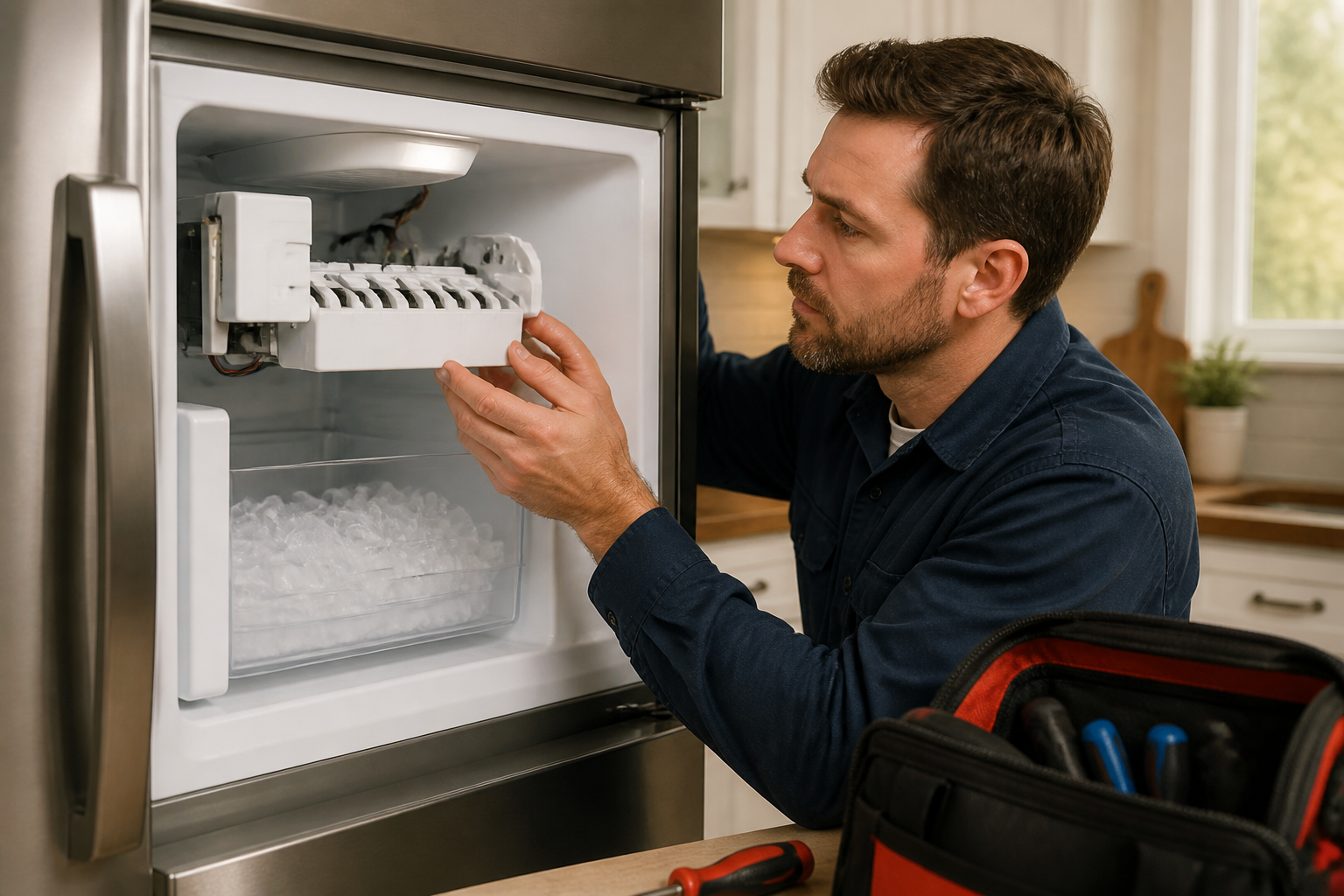
Ice Maker Not Making Ice – Frigidaire FFHB2750TS French Door Refrigerator
If your Frigidaire FFHB2750TS ice maker has suddenly stopped producing ice, it’s usually due to issues with the water supply, electrical components, or mechanical obstructions within the assembly. This model features an in-door ice maker system that relies on precise water flow, temperature control, and electrical timing to function correctly. Common culprits include clogged water filters, faulty water inlet valves, defective ice maker modules, or even frozen water lines. Depending on the root cause, this repair can range from EASY to MODERATE difficulty, and most homeowners can handle basic troubleshooting and component replacement with the right guidance.
Symptoms
- No ice cubes produced after 24 hours of operation
- Water dispenser functions normally, but the ice maker remains inactive
- Ice maker cycles but produces hollow, small, or malformed ice cubes
- Grinding or clicking noises from the ice maker without any ice production
- Ice maker control panel lights are on, but the unit doesn’t fill with water
- Ice maker arm or wire bail arm stuck in the raised position
⚠️ Safety Warning
Before you dive into any repair work on your Frigidaire FFHB2750TS, make sure to disconnect the electrical power by unplugging the refrigerator or turning off the circuit breaker. Remember, water and electricity together can be a dangerous mix. Also, turn off the water supply line to avoid flooding when disconnecting the water line. This refrigerator weighs about 300 pounds when loaded, so use proper lifting techniques and get help if you need to move it. Don’t forget to wear safety glasses, especially when working with pressurized water lines. Let the fridge sit upright for four hours after moving it before you reconnect the power to prevent compressor damage.
Parts Needed
- Water Filter Cartridge – Frigidaire PureSource 3 WF3CB (if clogged beyond cleaning)
- Ice Maker Assembly – Frigidaire Part #242252702 (complete replacement unit)
- Water Inlet Valve – Frigidaire Part #218859701 (dual outlet valve assembly)
- Ice Maker Module – Frigidaire Part #241627501 (motor/control module only)
- Water Line Connector Kit – 1/4″ compression fittings and tubing
- Door Gasket Seal – Frigidaire Part #241872510 (if damaged during door removal)
Tools Required
- Digital multimeter with probe leads
- Phillips head screwdriver set (#1 and #2 sizes)
- 5/16″ and 1/4″ nut drivers
- Needle-nose pliers with wire strippers
- Adjustable wrench (10″ length)
- Flashlight or headlamp for interior illumination
- Towels and small bucket for water cleanup
Step-by-Step Instructions
Step 1: Initial Diagnostics and Power Disconnect
🔨 Pro Tip from Dave
On the FFHB2750TS, the ice maker is mounted inside the freezer door. The water fill tube that feeds it runs through the door hinge, and over time, that tube can develop micro-kinks or partial freezes right at the hinge point. This can restrict water flow just enough to halt ice production without throwing any error codes. Before you replace parts you might not need, use a hair dryer on low to thaw that hinge section of the fill tube and check for kinks. I’ve seen people miss this and end up replacing perfectly good parts.
Start by unplugging the Frigidaire FFHB2750TS from the wall outlet and wait about five minutes for the electrical components to discharge. Next, locate the ice maker ON/OFF switch on the freezer door interior panel, usually found on the left side near the ice chute. Make sure the switch is in the ON position — you should see a green LED when it’s activated. Also, check that the wire bail arm can move freely up and down; if it’s stuck in the raised position, ice production will be halted.
Step 2: Water Filter Inspection and Replacement
Open the refrigerator compartment and find the water filter housing in the upper-right corner of the fresh food section. Turn the filter cartridge counterclockwise 90 degrees to remove it from the housing. Look for dark discoloration, debris, or damage to the O-ring seal on the filter. If it hasn’t been replaced in six months or appears contaminated, swap it out for a new PureSource 3 WF3CB filter by inserting it back into the housing and turning clockwise until it locks in place.
Step 3: Access the Ice Maker Assembly
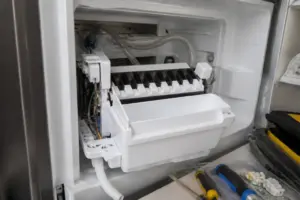
Fully open the freezer drawer and take out the wire storage basket. You’ll find the ice maker mounted on the left wall of the freezer compartment. Lift the ice storage bin straight up and out. You’ll see four Phillips screws securing the ice maker to the freezer wall — two at the top and two at the bottom. The wire harness connector is located behind the unit on the right side.
Step 4: Test Ice Maker Electrical Components
Set your multimeter to DC voltage and carefully probe the wire harness connector while the unit is plugged in. The ice maker should receive 12 volts DC on pins 1 and 2 (red and black wires). If there’s no voltage, check the connections on the main control board. To test the ice maker module motor, switch your multimeter to resistance mode — the motor windings should show 200-500 ohms of resistance between the terminals.
Step 5: Inspect Water Supply Connections
Disconnect the ice maker by removing the four mounting screws, then carefully pull the unit forward about six inches. Find the 1/4″ water supply line that connects to the bottom-right corner of the ice maker. Use needle-nose pliers to depress the quick-connect fitting and disconnect this line. Check for any obstructions, ice blockages, or kinks in the water line. You can blow air through the line to verify it’s clear from the water inlet valve to the ice maker fill cup.
Step 6: Water Inlet Valve Testing and Access
Move the refrigerator away from the wall to access the rear panel. Unscrew the lower back cover panel by removing six #2 Phillips screws. The water inlet valve is on the left side of the compressor compartment, identifiable by two water lines and a two-wire electrical connector. Set your multimeter to resistance mode and test the valve solenoids — each should read 200-500 ohms. If you see infinite resistance, that indicates a failed solenoid that requires valve replacement.
Step 7: Ice Maker Module Replacement
If your electrical testing indicates a faulty ice maker module, remove the plastic housing cover from the ice maker assembly by unclipping three plastic tabs on the sides and back. The module is held in place with two #1 Phillips screws and connects via a 6-pin wiring harness. Disconnect the harness by pressing the locking tab and pulling straight out. Install the new module (Part #241627501) by reversing the removal process, making sure all wire connections are secure and the module is seated properly.
Step 8: Complete Ice Maker Assembly Replacement
If a full ice maker replacement is necessary, disconnect both the electrical harness and the water line from the old unit. Remove all four mounting screws and carefully extract the assembly. Position the new ice maker assembly (Part #242252702) and secure it with the original screws. Reconnect the water line, ensuring the quick-connect fitting clicks securely, then attach the electrical harness until the locking tab engages.
Step 9: Water Inlet Valve Replacement
If you find you need to replace the valve, turn off the home water supply and disconnect both water lines from the inlet valve using an adjustable wrench. Remove the electrical connector and unscrew the two mounting bolts that secure the valve to the refrigerator frame. Install the new valve (Part #218859701) by reversing the steps, making sure all connections are tight and properly oriented. The valve outlet marked “ICE” connects to the ice maker water line.
Step 10: System Reassembly and Initial Testing
Reinstall any removed panels and reposition the refrigerator back into its spot. Restore both the water supply and electrical power to the unit. Press and hold the ice maker test button (found inside the control module) for five seconds to start a manual harvest cycle. You should hear the ice maker begin cycling within two minutes, and water should fill the ice mold. Allow 24 hours for full ice production to resume.
Step 11: Final Calibration and Verification
Keep an eye on the Frigidaire FFHB2750TS ice maker through several complete cycles over the first 24 hours. Each cycle should take about 90-120 minutes, producing 8-10 ice cubes per cycle. Check that the ice cubes are properly formed, completely frozen, and dispensed correctly into the storage bin. Make sure the wire bail arm raises properly when the bin fills and lowers when ice is removed to maintain automatic operation.
Troubleshooting
- If the ice maker cycles but produces no ice, check the water pressure at the inlet valve — it should be between 20-120 PSI for proper operation.
- Hollow or small ice cubes suggest insufficient water fill — adjust the fill cup position or replace the water inlet valve solenoids.
- If the ice maker produces ice but won’t dispense through the door, check the dispenser motor and auger assembly for obstructions or motor failure.
- Continuous cycling without ice production indicates a faulty optical sensor or harvest thermostat within the ice maker module.
- No electrical power to the ice maker points to a main control board failure or wiring harness damage that will need professional diagnosis.
- If the ice tastes bad despite a new filter, flush the water system for five minutes and check for contamination in the water supply lines.
When to Call a Professional
- If you detect refrigerant leaks near the ice maker evaporator coils, call an EPA-certified technician with specialized equipment.
- If a main control board replacement is needed, it requires programming and calibration specific to the Frigidaire FFHB2750TS model.
- If water line leaks develop inside the door or behind walls, you’ll need plumbing expertise and potential wall repairs.
- If multiple electrical components test faulty simultaneously, it suggests power supply issues or control board problems that are beyond DIY scope.
When to Call a Professional
Most of the repairs in this guide are well within reach for a careful DIYer armed with basic tools. In my experience, once you confirm the water inlet valve is receiving proper voltage but still not opening, or if you’ve replaced the ice maker module and the unit continues to cycle without producing ice, you’re likely facing a control board communication issue. This requires live diagnostic testing with a multimeter under load. At this point, the risk of misdiagnosis and unnecessary part swaps makes a professional service call a smarter financial choice. When in doubt, a diagnostic service call typically costs $80–$120 and can save you from a misdiagnosis that could lead to more expensive parts.
Recommended Parts & Tools
Frigidaire 5304495519 Water Filter Assembly for Ice Maker
This genuine Frigidaire water filter assembly is essential for maintaining proper water flow to your FFHB2750TS ice maker system. A clogged or old filter is one of the most common reasons for ice maker failure in Frigidaire French door refrigerators. This OEM part ensures compatibility with your specific model and helps restore ice production.
PRYSM Refrigerator
This complete ice maker assembly is designed specifically for Frigidaire French door refrigerators, including the FFHB2750TS model. If your ice maker has completely stopped working or is producing malformed ice, replacing the entire assembly often resolves the issue permanently. This genuine OEM replacement part includes all necessary components for a complete ice maker restoration.
The Water Filter That’s Usually the Real Culprit Behind FFHB2750TS Ice Maker Failures
Once you’ve ruled out the shut-off arm, a clogged or failing water filter is the second most common reason this model stops producing ice. Without water flow to the ice maker assembly, you get silence instead of ice. I replace this filter in about 40% of the ice maker failures I see on this model line, especially on units that haven’t seen regular filter maintenance.
What works
- Installs in under five minutes once you locate the filter housing — no special tools needed, just a quarter turn to release the old cartridge.
- Restores full water pressure to the ice maker line immediately, which often gets ice production running again within the first cycle.
- OEM part means it fits the exact specifications of the FFHB2750TS without any adapter fussing or compatibility questions.
What doesn’t
- Won’t fix the problem if water is actually reaching the ice maker — confirm there’s no water flow before ordering this part, or you’ll spend money on a part that wasn’t the issue.
- Filter location varies slightly depending on whether your unit has the filter in the grille base or inside the fridge compartment, so confirm your exact model configuration first.
I’ve seen DIYers order this part thinking it was their fix, only to find out the real problem was a kinked water line behind the fridge or a frozen supply tube. Always run water from the dispenser first to confirm the line itself has pressure. If the dispenser works but ice production doesn’t, this filter assembly is worth ordering: Frigidaire 5304495519 Water Filter Assembly for Ice Maker.
About This Article

Written by Dave Holt. Dave Holt has been taking apart and fixing household appliances since he was a teenager who couldn't leave a broken one alone. Eighteen years later, after fixing things for neighbors, friends, and anyone who'd let him, he's seen almost every failure mode there is. When he writes a repair guide here, it's based on the actual job, not a manufacturer overview. More about this site.
Scope and limits. Dave is a self-taught repairer, not a certified appliance technician. Unplug before you open anything, and leave sealed refrigeration systems, gas connections, and hardwired circuits to a qualified technician.