
Why Forced Defrost Matters for the Samsung DA97-15217A
If you’ve got a Samsung French Door refrigerator that’s stopped producing ice, or if you see a solid block of frost forming around the ice maker compartment, you’re likely dealing with an ice buildup issue rather than a defective component. The Samsung DA97-15217A ice maker assembly is common in many RF-series models, and one of the biggest headaches for owners is excessive frost accumulation that completely locks up the ice maker mechanism. If the label on your part reads DA97-15217A-00, don’t worry — that’s just a production revision suffix added by Samsung, not a different part. Everything I’m about to cover applies equally.
🔨 Pro Tip from Dave
One critical detail most DIYers overlook is that after running the forced defrost on these RF-series models, you must inspect the DA97-15217D ice maker housing for hairline cracks near the fill tube inlet. A cracked housing lets warm air in and can cause frost to return within weeks. If you skip this check, you’ll be back to running defrost cycles every month instead of addressing the root cause.
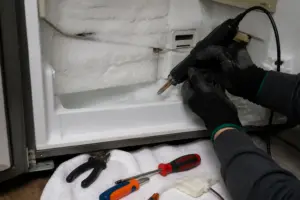
Before you rush to order parts or call a technician, running a Samsung DA97-15217A forced defrost cycle is the smartest first step. This built-in diagnostic mode activates the refrigerator’s defrost heater for a complete melt cycle, clearing ice buildup without needing any disassembly. It takes less than 30 minutes and can save you from an unnecessary repair. Let me guide you through the process step by step.
Which Samsung Models Use the DA97-15217A Ice Maker
The DA97-15217A is a standardized ice maker assembly used across Samsung’s RF-series French Door refrigerator lineup. If you’re trying to determine whether this procedure applies to your unit, check the following commonly affected models:
- RF28R7351SR
- RF28T5001SR
- RF27T5201SR
- RF23M8070SR
- RF23R6201SR
- RF28R6201SR
- RF27T5501SR
- RF28T5121SR
All these Samsung DA97-15217A forced defrost models share the same ice maker assembly design and, importantly, the same ice compartment layout that makes them prone to frost accumulation, especially in colder climates or with frequent door openings. The ice maker sits in an enclosed upper left compartment of the freezer door, limiting airflow and allowing moisture to freeze around it.
The good news is that these Samsung DA97-15217A forced defrost models also share the same diagnostic button combination, so this procedure is consistent no matter which specific model you’re working with. Always verify your model number on the sticker inside the door before proceeding; if your refrigerator is an RF-series French Door unit bought between 2018 and 2023, there’s a strong chance this guide applies directly to your appliance.
When to Use Forced Defrost on the Samsung DA97-15217A
Not every ice maker issue requires a forced defrost cycle, but there are specific symptoms that point to ice buildup as the root cause. If you notice any of the following conditions, run the forced defrost before doing anything else.
Ice Buildup Behind or Around the Ice Maker
Open your freezer door and look at the upper left compartment where the ice maker sits. If you see or feel a layer of frost or solid ice surrounding the unit, that buildup is almost certainly disrupting the ice maker’s operation. In severe cases, the entire assembly can become frozen solid against the compartment walls.
Ice Maker Not Dropping Ice
When the DA97-15217A keeps icing up, the motor that rotates the auger and pushes ice into the bin can become obstructed. The refrigerator may still be producing ice internally, but the cubes can’t eject because the mechanism is locked in place by frost. You might hear the motor attempting to operate, or you may find the ice bin empty while the unit appears to be functioning normally.
Frost on the Evaporator Cover
If you’ve pulled out the freezer drawer and noticed frost accumulating on the back evaporator cover, your defrost system may not be working efficiently. Running a forced defrost cycle will eliminate that frost layer and allow you to see if it returns quickly, helping you diagnose whether the defrost heater or thermistor is the underlying issue.
Before Replacing the Ice Maker
This is a crucial diagnostic step that many homeowners overlook. Before assuming the DA97-15217A assembly itself has failed, always run a forced defrost first. In many service calls, the ice maker appears completely dead simply because it’s encased in ice. Once that frost clears, the unit often resumes normal operation without needing any parts replaced. Skipping this step can lead to unnecessary purchases and installation.
How to Enter Forced Defrost Mode on Samsung RF-Series Refrigerators
Accessing Samsung’s forced defrost mode requires a specific button combination on the control panel. The exact combination varies slightly depending on your model’s control panel layout, but here are the two most common methods.
Method 1: Power Freeze + Fridge Buttons (Most RF-Series Models)
- Ensure the refrigerator is plugged in and powered on.
- Locate the Power Freeze button and the Fridge (or Refrigerator) button on the control panel.
- Press and hold both buttons simultaneously for about 8 seconds.
- Release the buttons when the display changes. The screen will cycle through several test modes.
- Continue pressing either button to cycle through the display options until you see “Fd” on the screen.
- Once “Fd” is displayed, stop pressing buttons. The forced defrost cycle will begin automatically.
Method 2: Energy Saver + Fridge Buttons (Select Models)
- With the refrigerator powered on, locate the Energy Saver button and the Fridge button.
- Press and hold both buttons simultaneously for 8 seconds.
- Watch the display cycle through diagnostic modes and press either button until “Fd” appears.
- Release both buttons and let the cycle run.
What Happens During the Cycle
Once the Samsung DA97-15217A forced defrost mode is active, the refrigerator’s defrost heater will energize and start melting frost throughout the freezer compartment, including the ice maker area. You might hear dripping sounds as the ice melts and water drains through the drain tube at the bottom of the freezer cavity. That’s completely normal.
The forced defrost cycle lasts about 20 to 30 minutes. The refrigerator will beep when the cycle completes, and the unit will automatically return to normal cooling operation. Avoid opening the freezer door during the cycle, as this will slow the process and let warm air in.
What to Do After the Forced Defrost Cycle Completes
Once you hear the beep signaling the end of the defrost cycle, give the refrigerator about 30 to 45 minutes to return to its normal operating temperature before evaluating the results.
Test the Ice Maker
After temperatures stabilize, check the ice maker compartment. The frost should be gone, and the DA97-15217A assembly should move freely. Press the ice maker’s test button (located on the front face of the assembly) to initiate a manual harvest cycle. If the unit runs through a full cycle and drops ice into the bin, the forced defrost resolved the issue.
Monitor for Recurring Icing
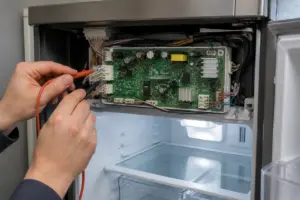
If the DA97-15217A keeps icing up again within a few days after the forced defrost, that’s a strong sign that the automatic defrost system has an underlying fault. The most common culprits include a failed defrost heater, a faulty defrost thermistor (thermal fuse), or a defective defrost sensor. In this case, running forced defrost repeatedly is only a temporary fix, and you’ll need to test and replace the root cause component.
When to Replace the Ice Maker Assembly
If the ice maker still fails to cycle after a successful forced defrost and the compartment is completely clear of ice, the DA97-15217A assembly itself may have a mechanical or electrical failure. Common failure points include the ice maker motor, the optical sensor that detects ice level, or the internal wiring harness. At this stage, replacement is typically more cost-effective than further component-level repair.
Next Steps if Forced Defrost Doesn’t Solve the Problem
Running a Samsung DA97-15217A forced defrost cycle resolves the majority of ice maker issues caused by frost accumulation, but it won’t fix every situation. If you’ve completed the forced defrost, confirmed the compartment is clear, and the ice maker still isn’t functioning, the assembly likely needs to be replaced.
For complete instructions on removing the old unit and installing a new one, see my detailed guide on how to change a Samsung ice maker DA97-15217A, which covers every step of the replacement process, including water line disconnection, wiring harness removal, and proper installation of the new assembly.
If you’re unsure whether you’re dealing with an ice maker failure, a defrost system fault, or a refrigerant issue, my team at Fix Appliance Fast is here to help. Use the diagnostic information in this guide as your starting point, and contact us if you need further assistance identifying the right repair path for your Samsung refrigerator.
How Much Does This Repair Cost?
| Repair route | Typical cost |
|---|---|
| Do it yourself | $85–$130 (parts) |
| Professional repair | $200–$350 (parts and labor) |
The DA97-15217A ice maker assembly typically costs $85–$130 on Amazon or eBay if you need a replacement. A professional appliance tech usually charges $200–$350 total for this repair, including labor, making it a great candidate for a confident DIY fix.
Recommended Products
Here are the parts and tools I recommend for this repair based on compatibility and customer reviews:
- Samsung DA97-15217D Refrigerator Ice Maker Assembly (Replaces DA97-15217A) Genuine Original Equipment Manufacturer (OEM) Part
- Samsung DA97-15217A Assy Ice Maker
- SAMSUNG DA97-15217B Refrigerator Ice Maker Assembly Genuine Original Equipment Manufacturer (OEM) Part
- DA97-15217D – ClimaTek Upgraded Replacement for Samsung Refrigerator Ice Maker
The Replacement Ice Maker That Actually Solves Frost Buildup When Forced Defrost Doesn’t
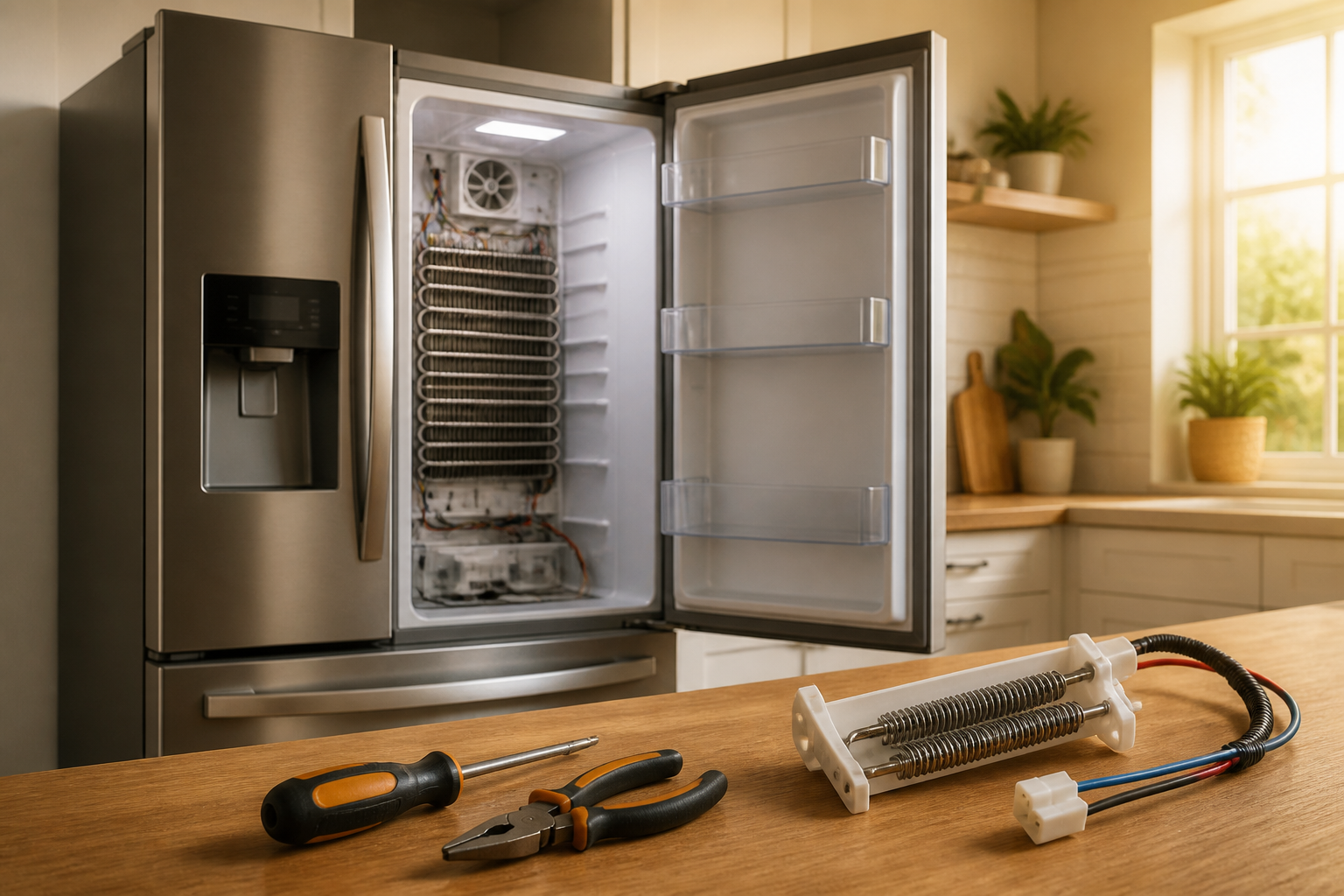
If you’ve run the forced defrost cycle and frost still returns within weeks, or if the ice maker housing itself is cracked or leaking, you’ll need a genuine replacement. The DA97-15217D is the direct upgrade that Samsung designed to handle the frost-prone design flaw in the original A-series unit.
What works
- Drop-in compatibility with RF-series models that originally shipped with the DA97-15217A—no adapter or modification needed, and the D revision includes a redesigned defrost thermostat that actually prevents ice from refreezing in the first place.
- Genuine OEM Samsung assembly means the water inlet valve, heating element, and mold are all matched to spec—I’ve seen aftermarket ice makers flood or freeze solid because those tolerances were off by a fraction of an inch.
- Comes pre-assembled and tested, so you’re not troubleshooting defrost sensor wiring or glued-together plastic housings during install—just unplug the old one, pull the connector, and snap the new one in place.
What doesn’t
- Installation still requires unplugging the refrigerator and clearing the freezer compartment—this is a 20-30 minute job minimum, not a 5-minute swap, so plan accordingly.
- OEM pricing is higher than third-party clones, and if your actual problem is a clogged defrost drain or a stuck water inlet valve (not the ice maker itself), you’ll have bought the wrong part—always confirm the ice maker is actually the failure point before ordering.
I once replaced an ice maker only for the same frost problem to come back—turned out the defrost drain line was blocked by mineral deposits higher up in the system, and the new ice maker couldn’t fix a drainage issue. Run forced defrost at least twice, inspect the drain outlet at the bottom of the fridge for standing water, and confirm the ice maker compartment stays dry between cycles before you order this part. When it is genuinely the ice maker, Samsung DA97-15217D Refrigerator Ice Maker Assembly (Replaces DA97-15217A) Genuine Original Equipment Manufacturer (OEM) Part solves it in one go.
About This Article

Written by Dave Holt. I have been taking apart and fixing household appliances since I was a teenager who couldn't leave a broken one alone. Eighteen years later, after fixing things for neighbors, friends, and anyone who'd let me, I have seen almost every failure mode there is — and misdiagnosed my share along the way. I am self-taught, with no formal training or certifications. When I write a repair guide here, it is based on the actual job, not a manufacturer overview. More about this site.
Scope and limits. Dave is a self-taught repairer, not a certified appliance technician. Unplug before you open anything, and leave sealed refrigeration systems, gas connections, and hardwired circuits to a qualified technician.