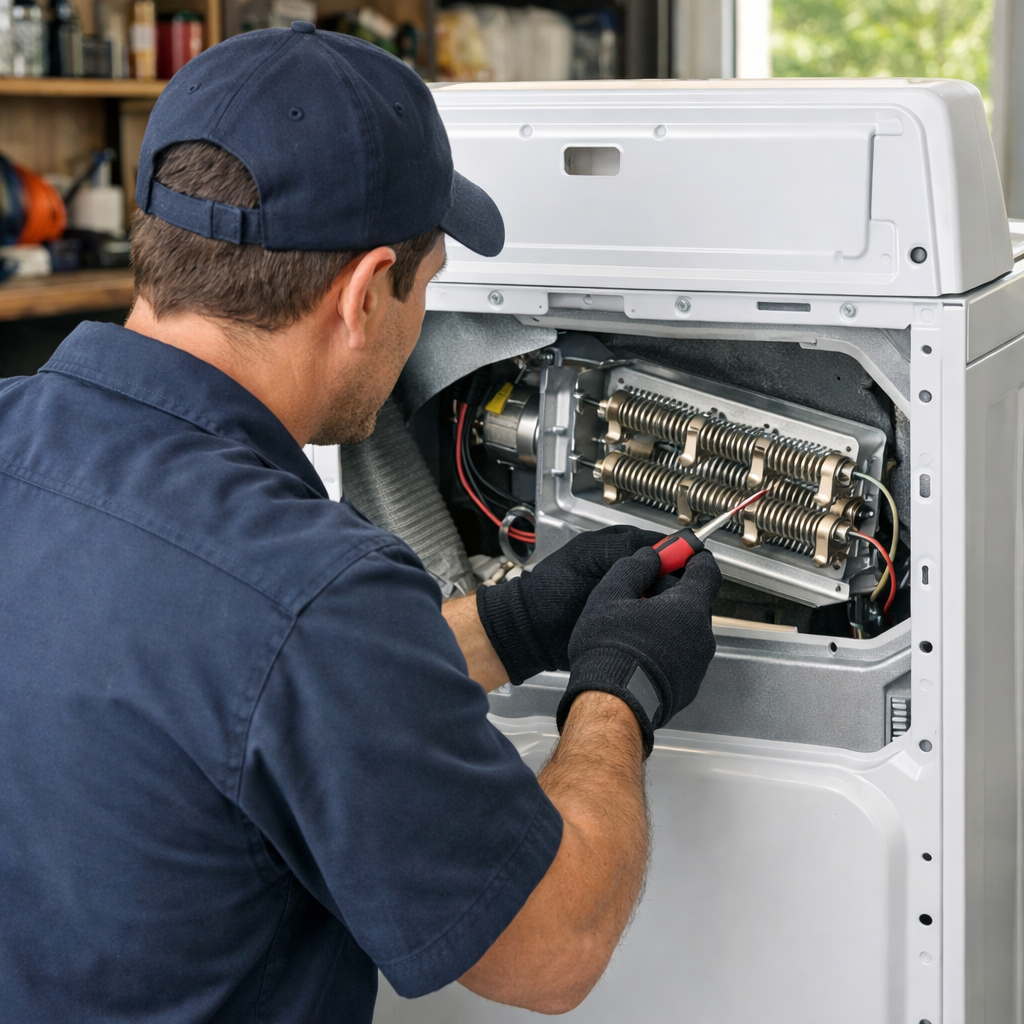
Not draining — OE error
In this step-by-step guide, I’ll walk you through how to fix the not draining — OE error on your LG WM3600HWA (Front Load). With some basic tools and parts, most homeowners can complete this repair in just 1–2 hours, avoiding a costly service call.
🔨 Pro Tip from Dave
On the WM3600HWA, don’t forget to check the drain pump itself — part number 5859EA1004D is often the issue when the filter is clean but the machine still won’t drain. I’ve seen technicians replace the pump without checking the small impeller for hair wraps, which can ruin a brand-new pump quickly. Also, be cautious with the access panel; it has a hidden bottom snap clip that can crack easily if you pry from the top — always push in and lift from the bottom first.
Part of our Top 20 Washing machine Models & Common Repair Issues Guide. Browse all washing machine repair guides for related models and issues.
Common Symptoms & Causes
Here are the typical indicators of a draining failure on your LG WM3600HWA front load washer:
- The washer display shows the OE error code mid-cycle or at the end of the wash
- Standing water remains at the bottom of the drum after the cycle ends
- The machine pauses or stops completely during the drain cycle
- You hear the drain pump humming but water is not expelled from the unit
Typically, this issue arises from a clogged drain pump filter, a kinked or blocked drain hose, or a worn-out drain pump that can’t effectively move water out of the machine.
Safety First
- Unplug the washing machine from the power outlet before starting any repair — never work on a live appliance.
- Shut off the water supply valve before disconnecting any water lines or hoses.
- Wear work gloves when handling metal brackets, sheet metal edges, or sharp components.
- Take photos with your phone before disconnecting any wiring harnesses or connectors.
- Work in a well-lit area with enough floor space to lay removed panels flat.
Tools & Parts Needed
Essential Tools
- Phillips #2 screwdriver
- ¼” nut driver
- Torx T20 screwdriver
- Multimeter
- Bucket and towels
Replacement Parts
- Drain pump motor
- Drain hose
- Coin trap filter
- Flathead screwdriver
- Bucket
Step-by-Step Repair Instructions
Step 1
First things first, unplug the washer to eliminate shock risk. Lay down towels and open the lower-front kick plate by prying it with a flat-head screwdriver to access the coin trap. Pull out the small drain tube first and let any residual water empty into a bucket — skipping this step can lead to flooding when the filter comes out. Unscrew the coin trap filter counter-clockwise, removing any lint, coins, or debris from both the filter and the housing. A clogged filter is the primary cause of the OE error on this model.
Step 2
Next, move to the rear of the unit and check the drain hose. A kink or improper installation here can stop water from leaving the drum. Ensure the hose isn’t kinked and is inserted no more than 4.5 inches into the standpipe — pushing it deeper can create a siphon effect, causing continuous draining or drain failure. Detach the hose end and flush it with water to rule out an internal clog before assuming the pump is at fault.
Step 3
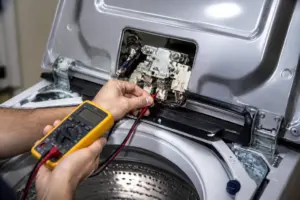
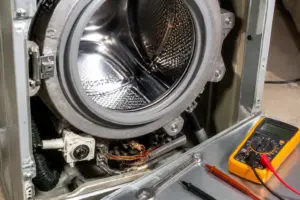
If both the hose and filter are clear, the drain pump itself may have failed. Remove the coin trap housing (two Phillips screws) and disconnect the 3-pin harness to access the pump motor. Set your multimeter to Rx1 and probe the motor windings — an open reading (no continuity) indicates the motor is burned out and the pump should be replaced. Check the impeller by hand; if it won’t turn freely, a foreign object may be jamming it, mimicking a failed motor without requiring pump replacement.
Step 4
Even after cleaning the filter in Step 1, small hard objects like coins, buttons, or wire fragments can migrate past the filter and get stuck in the impeller cavity inside the pump housing, causing intermittent or complete drain blockage. Shine a flashlight into the cavity and carefully use needle-nose pliers to extract anything preventing the impeller from spinning. This check takes just a couple of minutes and can save you the cost of an unnecessary pump replacement.
Step 5
If the pump motor tests good but still won’t run when powered, the drain relay on the control board may not be sending the activation signal. However, never try to power the pump directly to check. With the washer unplugged, set the meter to ohms across the two pump harness terminals: an intact winding should read a low, steady resistance as indicated in the service sheet. OL means the winding is open, and near zero means it’s shorted. A pump that ohms out fine indicates the fault lies upstream, so the next measurement should be voltage. With the panels back on and the machine running a normal drain, check across the pump connector to see if the board is delivering line voltage. Good winding resistance with no voltage at the connector during drain points to a failed relay or control board output, not a mechanical issue.
Step 6
Reinstall the coin trap filter by hand until snug — over-torquing can crack the plastic housing and cause leaks that are worse than the original problem. Restore power, then run a drain and spin cycle. Monitor for the OE code to confirm it has cleared. If the error returns within the first minute of the cycle, revisit the pump impeller and harness connection, as an intermittent jam or loose pin could be the most likely remaining cause.
Where to Buy Replacement Parts
- LG WM3600HWA drain pump replacement 4681EA2001T
- LG front load washer drain hose replacement
- LG washer coin trap pump filter cleaning kit
When to Call a Professional
If the issue persists after completing all steps, the problem may involve a failed main control board, a worn drive motor or bearing assembly, or wiring that requires specialized diagnostic equipment. At that point, it’s time to contact a licensed appliance technician, and make sure to shut off both the hot and cold supply valves before starting any work on the fill circuit.
How Much Does This Repair Cost?
| Repair route | Typical cost |
|---|---|
| Do it yourself | $15–$75 (parts) |
| Professional repair | $150–$300 (parts and labor) |
DIY parts for this repair, like a replacement drain pump or drain hose, typically run $15–$75 depending on the component. A professional service call for an OE drain error on the LG WM3600HWA usually costs $150–$300, including labor. Tackling this repair yourself can save you $100 or more.
Frequently Asked Questions
What does the OE error code mean on my LG WM3600HWA?
The OE error code indicates that your washer is failing to drain water within the expected timeframe. This is typically caused by a clogged drain filter, kinked drain hose, or a faulty drain pump.
How often should I clean the drain filter on my LG front load washer?
LG recommends cleaning the drain pump filter every 30 days or after washing heavily soiled items. Regular cleaning helps prevent debris buildup that can trigger the OE error.
Can I run my LG WM3600HWA while it’s showing an OE error?
No, you should not continue running the washer until the drainage issue is resolved. Operating it with standing water inside can damage the drum, motor, and other components.
Recommended Products
Here are the parts and tools I recommend for this repair, based on compatibility and customer reviews:
- TANGJINGYA Compatible with LG Washing Machines 383EER2001A Drain Pump Filter and Cap Assembly Replaces AP4440367 5230ER3002A 383EER2001F AGM75510601 PS3522306 1267432
The Pump Filter That Clears 80% of OE Drain Errors on This Model
Before you order a new pump motor, check the filter housing at the front bottom of the WM3600HWA — that’s where lint, coins, and debris accumulate, triggering the OE code. A compatible filter replacement with the cap assembly is the one to reach for first on nearly every one of these machines.
What works
- Catches the actual culprit — I’ve pulled out everything from bobby pins to detergent powder clumps that completely block water flow to the pump.
- Swaps in without tools in most cases; the housing twists out by hand once you access the front panel, saving 20 minutes of disassembly.
- Works across multiple LG front-load models, so if you ever need to service another unit or your machine again, you’ve got the right part on hand.
What doesn’t
- Won’t fix a kinked drain hose or a dead pump motor — if the filter is clean and the hose is straight, you’re diagnosing a different failure.
- Some aftermarket filters sit slightly loose in the housing; you’ll want to check the fit before reassembling to avoid water pooling in that cavity.
I’ve seen homeowners order a full pump assembly first only to find the actual blockage was a wad of hair in the filter — pulling that filter and inspecting it takes five minutes and saves you $150. If the filter is clean and the machine still won’t drain, then grab a compatible filter and cap assembly and rule out this step before moving to pump replacement.
About This Article

Written by Dave Holt. Dave Holt has been taking apart and fixing household appliances since he was a teenager who couldn't leave a broken one alone. Eighteen years later, after fixing things for neighbors, friends, and anyone who'd let him, he's seen almost every failure mode there is. When he writes a repair guide here, it's based on the actual job, not a manufacturer overview. More about this site.
Scope and limits. Dave is a self-taught repairer, not a certified appliance technician. Unplug before you open anything, and leave sealed refrigeration systems, gas connections, and hardwired circuits to a qualified technician.