Compressor error
This step-by-step repair guide walks you through fixing compressor error on your Bosch B36CT80SNS (French Door). With the right tools and parts, most homeowners can complete this repair in 1–2 hours and avoid a costly service call.
🔨 Pro Tip from Dave
Before you assume that the compressor is dead on the B36CT80SNS, always test the inverter board (part number 12034051) first. I’ve seen many people misdiagnose this and replace the entire compressor unnecessarily. A common issue on this model is that a loose harness connector at the inverter board can mimic a full compressor failure, so make sure to reseat every connector before ordering parts.
Part of our Top 20 Refrigerator Models & Common Repair Issues Guide. Browse all refrigerator repair guides for related models and issues.
Common Symptoms & Causes
These symptoms typically point to a compressor error on the Bosch B36CT80SNS French Door refrigerator.
- The refrigerator displays a compressor error code on the control panel
- The freezer and fresh food compartments fail to reach set temperatures
- The compressor runs continuously without cycling off or makes loud clicking noises
- Food spoils faster than normal despite correct temperature settings
This issue is most commonly caused by a failing compressor, a faulty start relay, refrigerant loss, or a worn compressor control board due to age and regular wear.
Safety First
- Unplug the refrigerator from the power outlet before starting any repair — never work on a live appliance.
- Shut off the water supply valve before disconnecting any water lines or hoses.
- Wear work gloves when handling metal brackets, sheet metal edges, or sharp components.
- Take photos with your phone before disconnecting any wiring harnesses or connectors.
- Work in a well-lit area with enough floor space to lay removed panels flat.
Tools & Parts Needed
Essential Tools
- Phillips #2 screwdriver
- ¼” nut driver
- Needle-nose pliers
- Multimeter
- Flashlight or work light
Replacement Parts
- Start relay
- inverter control board
- condenser cleaning brush
- ¼” nut driver set
Step-by-Step Repair Instructions
Step 1
Start by checking the Bosch display for an active E-code before touching anything else. This specific code identifies which component the control board has flagged — knowing whether it’s a compressor-related code versus a sensor or fan code will change your entire diagnostic approach. Make sure to photograph the code with your phone so you have a reference in case it clears during the repair. Consult the B36CT80SNS service manual for the full code key, since Bosch E-codes are model-specific, and using a generic refrigerator code list will lead you astray.
Step 2
Unplug the refrigerator for a full 5 minutes to let the control board fully discharge and reset. Plug it back in and listen for the compressor to start. If the error clears and the compressor runs normally, it was just a transient control glitch — not a hardware failure. Keep an eye on the unit over the next 24 hours to confirm the error doesn’t return, which would indicate an intermittent underlying problem.
Step 3
With the unit unplugged, remove the rear lower access panel by backing out four quarter-inch hex screws. Locate the start relay on the side pin of the compressor and pull it straight off. Shake the relay next to your ear: if you hear an internal rattle, that means the component has failed and needs replacing. A broken relay can’t deliver the current spike the compressor needs to start. Start relays are inexpensive and are the single most common cause of compressor no-start faults, so this is always worth checking first before diving deeper into diagnosis.
Step 4
Vacuum the condenser coils using a soft brush attachment, working carefully along the full length of the coil fins to remove any dust and debris. Heavily restricted coils can trap heat around the compressor, causing the thermal overload cutout to trip and log a compressor error code even if the compressor itself is healthy. Pro tip: do this step even if the coils look fine from the outside — a surprising amount of lint can pack into the inner coil rows and remain hidden until you examine closely with a flashlight.
Step 5
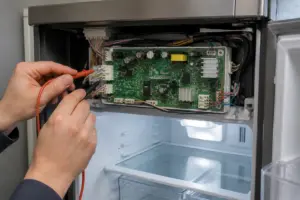
If replacing the start relay and cleaning the coils didn’t clear the error, the next suspect is the inverter control board, which drives voltage to the compressor on this linear inverter system. With the unit running, use a multimeter set to AC voltage to carefully test the output leads from the inverter board to the compressor — you should see approximately 120VAC when the compressor is commanded to run. If you see a missing or significantly low reading, that confirms a failed board. Safety note: you’re working near live voltage at this step, so use insulated probes, keep one hand clear of the chassis, and don’t probe with the panel fully removed unless you’re comfortable working around line voltage.
Step 6
If replacing the inverter board doesn’t resolve the fault, then the linear compressor itself has failed — and Bosch linear inverter compressors are not a practical DIY replacement due to the refrigerant handling, specialized tooling, and sealed-system certification required by law. Trying to swap the compressor without proper authorization will void any remaining Bosch warranty or service contract coverage. At this point, it’s best to schedule service with a Bosch-authorized technician who possesses the certified equipment and access to OEM compressor assemblies for the B36CT80SNS.
Where to Buy Replacement Parts
- Bosch B36CT80SNS refrigerator start relay compressor 12032484
- Bosch refrigerator inverter control board 12032485
- Bosch refrigerator condenser cleaning brush kit
When to Call a Professional
If the issue persists after completing all the steps above, the problem may involve the sealed refrigerant system, a failed main control board, or wiring that requires specialized diagnostic equipment. Contact a licensed appliance technician — attempting sealed-system repairs without EPA 608 certification is illegal and unsafe.
How Much Does This Repair Cost?
| Repair route | Typical cost |
|---|---|
| Do it yourself | $20–$150 (parts) |
| Professional repair | $150–$300 (parts and labor) |
DIY parts for a compressor error repair on the Bosch B36CT80SNS typically run between $20–$150, depending on the faulty component. A professional service call usually costs $150–$300 in labor alone, before parts. Tackling this repair yourself can save you $100–$250 or more in service fees.
Frequently Asked Questions
How do I know if the compressor error on my Bosch B36CT80SNS is serious?
A compressor error often means the refrigerator is not cooling properly, which can lead to food spoilage if left unaddressed. Keep an eye out for unusual noises or warm temperatures inside the fridge as immediate warning signs.
Can I reset the compressor error on my Bosch B36CT80SNS myself?
You can attempt a basic reset by unplugging the refrigerator for 5 minutes and then plugging it back in. If the error returns, a deeper mechanical issue likely requires professional diagnosis.
How much does it typically cost to repair a compressor error on this Bosch model?
Compressor repairs on the Bosch B36CT80SNS can range from $200 to $600 depending on whether parts need replacing. Always request a diagnostic quote before committing to a full repair.
The Inverter Control Board That Usually Stops the B36CT80SNS Compressor Error
On this Bosch model, the inverter board fails more often than the compressor itself when you’re seeing that error code. If you’ve ruled out a tripped thermal overload or a stuck start relay, this is the part that’s almost always the culprit—and it’s worth ordering before you pull the compressor.
What works
- Fixes the compressor error without actually replacing the compressor—saves $800+ versus a full compressor swap.
- Installation is straightforward once you access the control compartment; it’s a plug-and-play board swap with no refrigerant work required.
- This board handles the voltage regulation to the compressor, so when it fails, the fridge cycles the error even though the compressor motor is fine.
What doesn’t
- You need to be confident in your diagnosis first—ordering this board on a hunch when the actual problem is a failed compressor is a waste of money and time.
- Not every inverter board listing is the exact match for this model; you have to verify the part number matches your serial number before checkout.
I’ve seen too many DIYers order a start relay first when the error persisted because the real issue was the inverter board all along—it’s an easy misdirection since both parts affect compressor startup. Test the start relay with a multimeter first, confirm it’s not the thermal overload, and then inverter control board should be your next move.
About This Article

Written by Dave Holt. Dave Holt has been taking apart and fixing household appliances since he was a teenager who couldn't leave a broken one alone. Eighteen years later, after fixing things for neighbors, friends, and anyone who'd let him, he's seen almost every failure mode there is. When he writes a repair guide here, it's based on the actual job, not a manufacturer overview. More about this site.
Scope and limits. Dave is a self-taught repairer, not a certified appliance technician. Unplug before you open anything, and leave sealed refrigeration systems, gas connections, and hardwired circuits to a qualified technician.