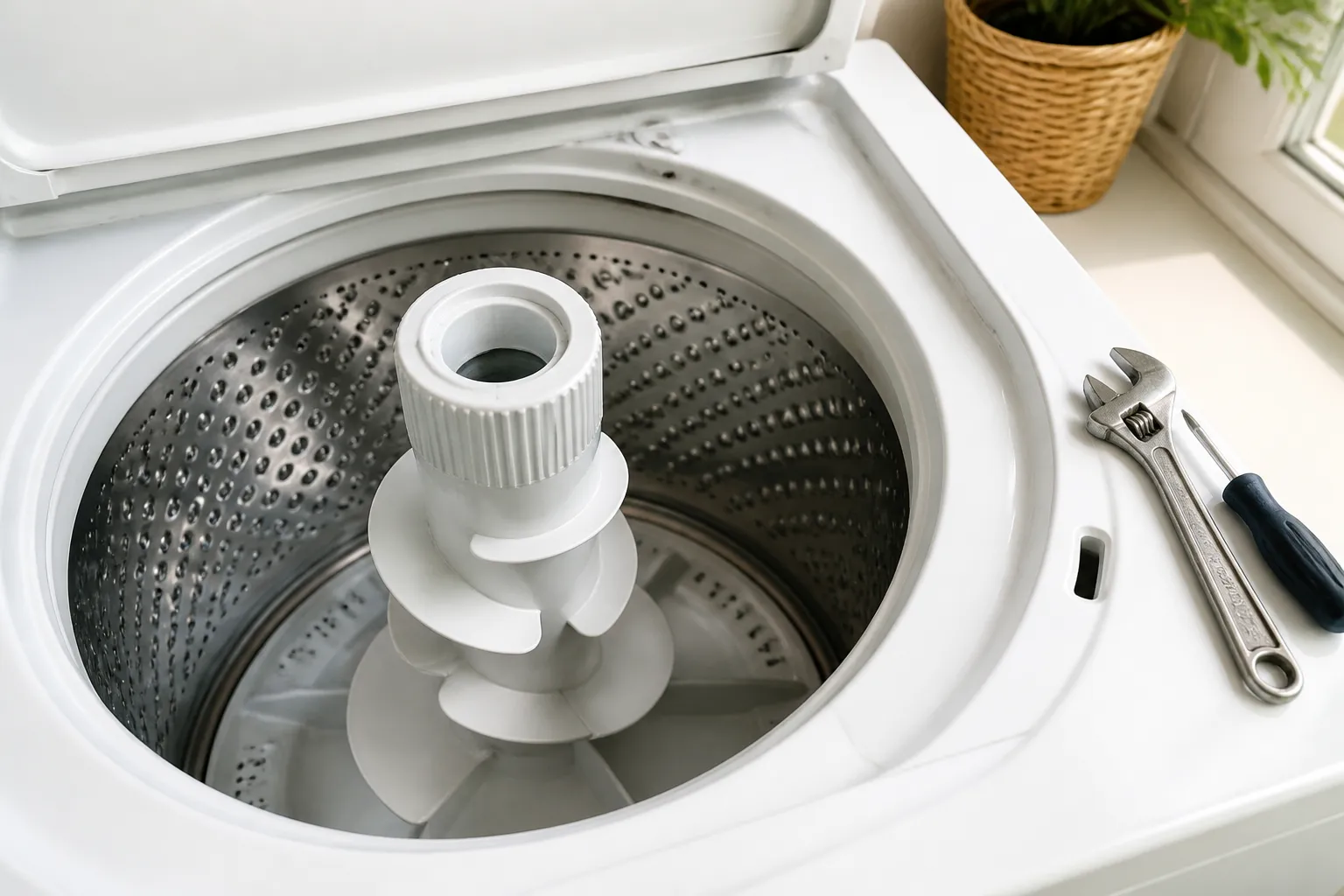
Agitator Repair Kit Installation for GE GTW720BSNWS Top-Load Washer
Today I’m diving into the installation of the agitator repair kit for the GE GTW720BSNWS top-load washer, which is crucial for keeping your laundry clean. The agitator is responsible for moving clothes through water and detergent during the wash cycle, and over time the agitator dogs (also known as cogs or drive dogs) can wear down and cause issues. This repair can be completed in about 45 minutes to an hour and a half by most homeowners with basic mechanical skills.
Symptoms
- Agitator does not move or rotate during the wash cycle on your GE GTW720BSNWS
- Agitator moves slowly or intermittently, with clothes remaining stationary
- Grinding or clicking sounds coming from the center of the wash tub during operation
- Clothes are not getting clean despite running a full wash cycle
- You can manually spin the agitator by hand with little to no resistance, indicating lost grip on the drive shaft
- Visible cracks, flatness, or deterioration on the plastic dogs inside the agitator when you remove the cap
⚠️ Safety Warning
- Unplug the washer from the electrical outlet before beginning work. Do not rely on the control panel power button alone—disconnect the appliance completely to prevent electric shock.
- Turn off the water supply valves behind the washer (both hot and cold). Even though this repair does not require opening the water system, having the supply shut off prevents accidental flooding if you bump the fill valve.
- The washer lid is heavy. Use both hands when lifting the lid on the GE GTW720BSNWS. If your model has a soft-close lid, be aware it may close suddenly. Prop it open with a sturdy object if needed while you work.
- Check for residual water in the tub before inserting your hands. There may be a small amount of water remaining from the last cycle. Have towels nearby.
- Sharp edges inside the tub. The agitator cavity and the inner components of the GE GTW720BSNWS can have sharp edges. Wear work gloves to protect your hands.
Parts Needed
- Agitator Dog Repair Kit for GE GTW720BSNWS — Part Number WH2X1050H (universal GE agitator dog kit) or model-specific part WH02X10348 (confirm availability for your exact serial number)
- Agitator Cap Seal — Part Number WH2X1070H (replacement gasket; included in some kits but verify before ordering)
- Drive Block or Cam (if worn beyond surface damage) — Part Number WH20X10011 (GE drive block; only needed if inspection reveals damage to the metal drive shaft contact point)
- Replacement agitator dogs typically come in packs of 3–4 dogs in the kit. Verify the kit you purchase matches the 2018–2024 GE top-load design used in the GTW720BSNWS.
Tools Required
- Screwdriver set (Phillips and flathead; #2 Phillips is most common for the GTW720BSNWS)
- Hex wrench or socket set (7/16″ socket or equivalent for the center agitator bolt)
- Needle-nose pliers for removing and installing small spring clips
- Work gloves (cotton or nitrile) to protect hands from sharp edges
- Flashlight or headlamp for visibility inside the wash tub
- Clean cloth or shop towels for wiping surfaces
- Bucket or container to catch any residual water and hold small fasteners during disassembly
Step-by-Step Instructions
Step 1: Unplug the Washer and Prepare the Work Area
First things first, unplug the GE GTW720BSNWS from the electrical outlet by pulling the power cord straight out of the wall receptacle. It’s essential to turn off the hot and cold water supply valves located behind or underneath the washer at the point where the inlet hoses connect. This prevents any risk of water entry if connections are accidentally disturbed. I always wipe down the exterior and interior of the washer tub with a clean cloth to remove any lint or debris. If you need to move the washer away from the wall for better access, go ahead and do so.
Step 2: Open the Washer Lid and Inspect the Agitator Cap
Now, lift the washer lid completely open using both hands. On the GE GTW720BSNWS, take a look at the top center of the tub where you’ll see the agitator. At the very top, there’s a plastic cap (the agitator cap or top cover) that’s held in place by either a single large bolt or by a few Phillips screws around the perimeter. Use a flashlight to examine the cap closely for any visible cracks or looseness. Typically, you’ll find just one center bolt securing the cap.
Step 3: Remove the Agitator Cap Bolt or Screws
Using a 7/16″ socket or hex wrench, locate and remove that center bolt holding the agitator cap on the GE GTW720BSNWS. Turn counterclockwise to loosen. It might be snug, but it shouldn’t require excessive force. If your model has Phillips screws instead, grab a #2 Phillips screwdriver and remove all fasteners, placing them in a small container to avoid losing them. Check underneath the cap rim for any hidden screws before lifting the cap upward.
Step 4: Remove the Agitator Cap and Inspect the Dogs
Carefully lift the agitator cap straight up and away from the agitator. It may be seated snugly, so you might need to wiggle it gently side to side while pulling upward. Once the cap is off, you’ll see the agitator dogs directly underneath—typically 3–4 plastic or composite pieces arranged in a circular pattern around the center drive shaft. Inspect them closely. Worn dogs will appear flat, rounded at the edges, or significantly shorter than new ones. If you notice any cracks or chunks missing, take a photo for reference.
Step 5: Remove the Worn Agitator Dogs
The agitator dogs on the GE GTW720BSNWS are usually held in place by friction fit or a small spring clip. Gently pry each dog upward and outward using a flathead screwdriver or the tip of needle-nose pliers. Work systematically, removing one dog at a time. If a spring clip is present, lift it outward with needle-nose pliers and slide the dog upward and out. Be gentle to avoid damaging the underlying drive shaft or cam. Place all removed dogs in your container and wipe the cavity clean with a cloth to remove any debris.
Step 6: Inspect the Drive Shaft and Cam Assembly
Before installing the new dogs, take a good look at the metal drive shaft and cam assembly (the center post with grooved surfaces). Look for visible wear, scoring, or damage where the dogs grip. If the metal is smooth but the dogs are worn, that’s normal wear, and new dogs should work fine. If you see deep grooves or pitting, it’s time to replace the drive block (Part Number WH20X10011) to prevent the new dogs from slipping. If everything looks good, proceed to the next step.
Step 7: Install the New Agitator Dogs
Remove the new dogs from the repair kit (Part Number WH2X1050H or WH02X10348 for the GE GTW720BSNWS). Take a moment to understand how each new dog is shaped. Each dog has a curved inner surface that must touch the drive shaft. Position the first dog at the 12 o’clock position and slide it down onto the drive shaft, ensuring the inner surface seats fully against the metal cam. It shouldn’t rock side to side when properly seated. If your kit includes spring clips, insert them to hold the dog in place; otherwise, the friction fit should suffice. Repeat this for each remaining dog, ensuring they are evenly spaced around the drive shaft. Double-check that each dog is seated firmly.
Step 8: Inspect and Replace the Agitator Cap Seal (Gasket)
Before reinstalling the agitator cap, check the rubber gasket or seal around the underside edge. This prevents water from seeping into the agitator drive mechanism. If it appears cracked or hardened, replace it with a new seal (Part Number WH2X1070H). Remove the old seal carefully and clean any residue from the cap rim. Press the new seal firmly into place, ensuring there are no gaps or wrinkles.
Step 9: Reinstall the Agitator Cap
Align the agitator cap (with the new seal installed) directly above the center of the agitator. Lower it straight down slowly, ensuring it settles evenly. If it tilts or binds, lift it back up and adjust the dogs. Once it’s fully seated, reinstall the center bolt and tighten it firmly but avoid over-tightening, as this can crack the cap. A snug fit (about 20–25 foot-pounds of torque) is sufficient. If you’re using screws, tighten them in a cross pattern for even seating.
Step 10: Perform a Manual Test of the Agitator
With the cap off the motor power, manually turn the agitator by hand. Rotate it clockwise and counterclockwise. You should feel consistent resistance from the new dogs gripping the drive mechanism. If it feels stiff or gritty, the dogs may not be seated properly. If you notice grinding or it spins freely without resistance, stop, remove the cap, and check the dog positions and the drive shaft.
Step 11: Plug in the Washer and Perform a Test Cycle
Plug the GE GTW720BSNWS back into the electrical outlet. Close the lid fully and set the machine to a short wash cycle (like Quick Wash) with no clothes inside. Turn on the water supply valves and allow the tub to fill. Start the cycle and watch closely. Within seconds, you should see the agitator begin to rotate steadily. Listen for any unusual noises. If everything seems fine, stop the cycle and let it drain. If it doesn’t move or is moving slowly, stop the cycle and head to the troubleshooting section.
Step 12: Complete a Full Test Wash Cycle and Inspect for Leaks
Run a complete normal wash cycle with a full load of clothes and detergent. Watch the agitator movement throughout the wash phase. Check underneath the GE GTW720BSNWS and around the water inlet connections for leaks. After the cycle completes, open the lid to ensure the clothes have been agitated properly. If all looks good and no leaks are present, your repair is complete. Run one more cycle the next day to confirm everything is stable.
Troubleshooting
- Agitator still does not move after installing new dogs: Remove the cap again and verify that each dog is fully seated with no air gaps. Check the drive shaft metal surface for damage; if it’s pitted, the drive block might need replacing.
- Agitator moves but is jerky or intermittent: This may indicate that one or more dogs isn’t fully seated. Inspect each dog individually, and reseat any that appear loose. Ensure no debris is lodged between a dog and the drive shaft.
- Water leaking from under the agitator cap after repair: The gasket seal may not be seated properly or may be defective. Inspect and ensure it’s fully pressed into its groove.
- Grinding or squeaking noise during agitation: This may suggest friction or misalignment. Stop the washer immediately and check for cracks in the dogs or damage to the drive shaft. If it shows damage, order a replacement drive block.
- Dogs shift or move visibly during the wash cycle: The dogs may not be properly seated. Stop the machine and recheck their positions.
Recommended Parts & Tools
GE Washer Agitator Dog Kit WH2X1072
This OEM agitator dog kit is the direct replacement for the GE GTW720BSNWS top-load washer, containing the wear-prone cogs that commonly fail during the wash cycle. The kit includes all necessary dogs and is engineered to restore proper agitator function without requiring additional modifications.
OEMPARTS Washer Repair Tool Kit with Socket Set
This comprehensive tool kit includes the sockets, wrenches, and hex keys needed to safely disassemble and reassemble your GE GTW720BSNWS washer during agitator repair. The included parts puller and screwdriver set make removing the agitator assembly quick and straightforward without damaging surrounding components.
The Agitator Dog Kit That Actually Stops the Slipping and Grinding
If your agitator is spinning freely without grabbing the drum, or you’re hearing a grinding noise during the wash cycle, worn agitator dogs are almost always the culprit—and this is the exact replacement kit built for the GTW720BSNWS. Order this first before you start disassembly; it’s the part that actually fixes the problem.
What works
- Designed specifically for GE top-load washers—the dogs fit the cam assembly perfectly without forcing or shimming, and they engage with the drive shaft the way the engineers intended.
- The kit includes everything you need: the replacement dogs plus the rubber seal and springs, so you’re not hunting for secondary parts mid-repair.
- Installation is straightforward once you remove the agitator cap and bolt—the dogs snap into the existing slots, and the whole assembly goes back together in under an hour for someone with basic wrench skills.
What doesn’t
- This kit only fixes worn dogs—if the agitator itself is cracked or the drive shaft is stripped, you’ll need to replace the whole agitator assembly instead, which costs more and takes longer.
- The plastic dogs are durable but not indestructible; if you overload the washer or run extremely long cycles repeatedly, you may get 5–7 years out of this kit rather than 10+, depending on water hardness and detergent residue buildup.
I’ve ordered the wrong agitator assembly twice before realizing the dogs alone were the fix—wasted money and shipping both times—so always inspect the agitator for cracks first and confirm the dogs are the issue before you buy. That check will save you $100 and a return. GE Washer Agitator Dog Kit WH2X1072
About This Article

Written by Dave Holt. Dave Holt has been taking apart and fixing household appliances since he was a teenager who couldn't leave a broken one alone. Eighteen years later, after fixing things for neighbors, friends, and anyone who'd let him, he's seen almost every failure mode there is. When he writes a repair guide here, it's based on the actual job, not a manufacturer overview. More about this site.
Scope and limits. Dave is a self-taught repairer, not a certified appliance technician. Unplug before you open anything, and leave sealed refrigeration systems, gas connections, and hardwired circuits to a qualified technician.