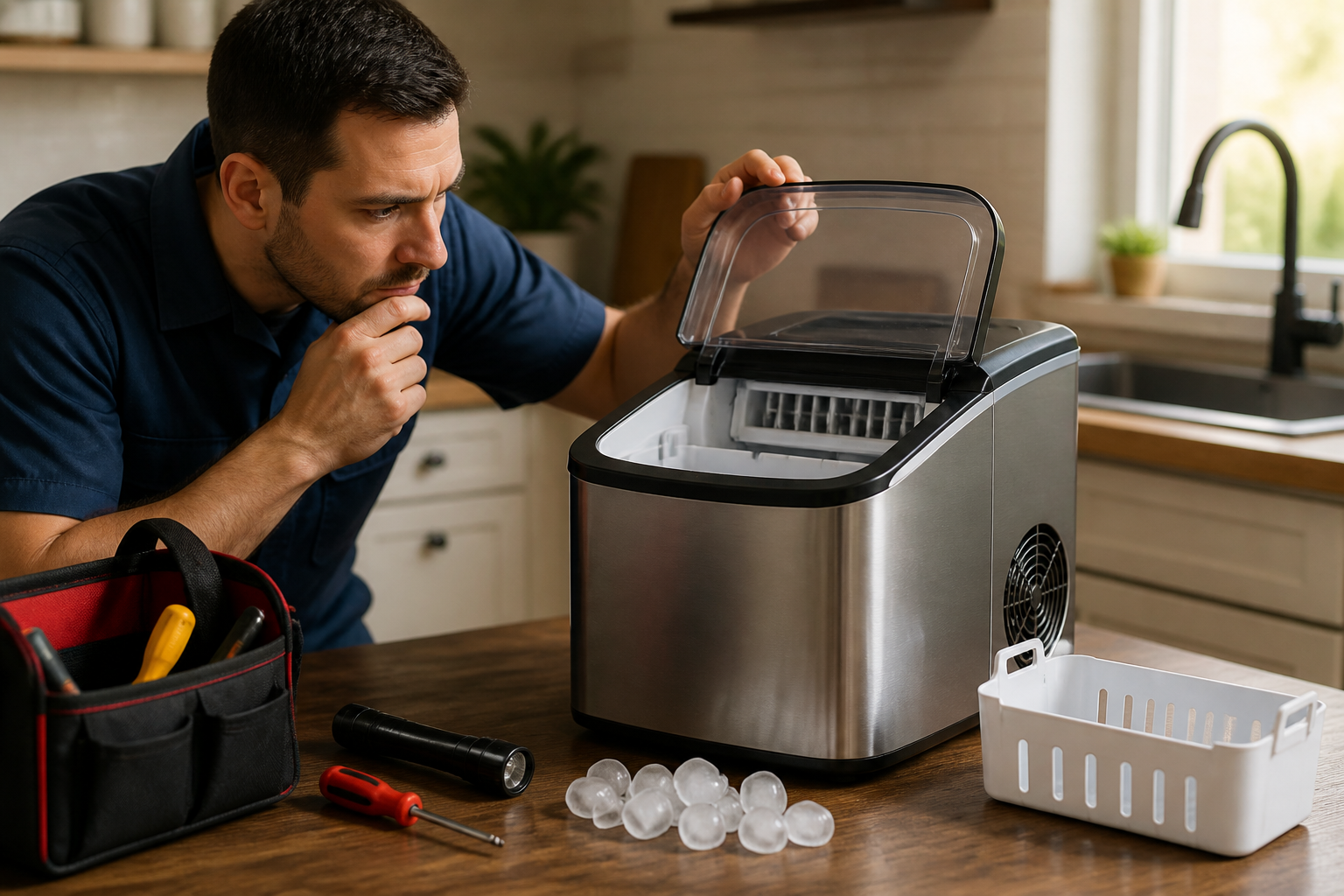
Frigidaire EFIC189 Ice Maker Not Making Ice: Complete Troubleshooting & Repair Guide
Today I’m here to help you troubleshoot your Frigidaire EFIC189 portable countertop ice maker, a compact unit that produces up to 26 pounds of ice daily. Like any appliance, it can run into issues that keep it from making ice. This guide will walk you through every troubleshooting step, diagnostic procedure, and repair technique to get your EFIC189 back in action.
Safety Warning
⚠️ Electrical Safety: Before diving into any repairs on your Frigidaire EFIC189, make sure to unplug it from the electrical outlet. Handling internal electrical components or the compressor on your own can be dangerous. The EFIC189 has a sealed refrigeration system and high-voltage components that can lead to serious injury or even death if mishandled. If you suspect a compressor failure or refrigerant leaks, stop using the unit immediately and reach out to a professional appliance technician.
Step 1: Perform Quick Diagnostic Checks
Before getting into the weeds with troubleshooting, let’s verify some basic operating conditions. Most EFIC189 failures stem from simple issues that can be resolved in seconds.
Check the ADD WATER Light
Your Frigidaire EFIC189 has a water level indicator on the control panel. If the “ADD WATER” light is on, the water reservoir is below the minimum operating level.
- Open the access panel on top of the EFIC189
- Locate the water reservoir fill line (usually marked with a line or indicator inside the tank)
- Fill with filtered water to the maximum fill line
- Use cold tap water or filtered water—avoid distilled water, which can damage the water pump over time
- Close the access panel and press the power button
Low water level is the most common reason the EFIC189 stops producing ice. The water level sensor triggers the ADD WATER indicator when the reservoir drops below operational capacity. Most owners find that refilling the water restores normal operation.
Check for ICE FULL Indicator
Your EFIC189 has an automatic shutoff feature. When the ice bin is full, the ICE FULL light turns on, halting production.
- Open the ice bin door on the front of the EFIC189
- Remove all accumulated ice from the bin
- Press the ICE FULL reset button on the control panel (usually located next to the indicator light)
- Close the door and restart the cycle
If ice has melted or compacted in the bin, it may not appear “full” but could still trigger the sensor. Remove all ice and make sure the bin is dry before restarting the EFIC189.
Verify Ambient Temperature Conditions
The EFIC189 operates efficiently between 60°F and 90°F ambient temperature. Outside this range, ice production can slow or stop altogether.
- Measure the room temperature where the EFIC189 is located
- If it’s below 60°F, move the unit to a warmer spot
- If it’s above 90°F, ensure there’s enough ventilation around the EFIC189 (at least 4-6 inches of clearance on all sides)
- Avoid placing it in direct sunlight or near heat sources like ovens or other refrigerators
- High humidity can also reduce efficiency—target relative humidity below 80%
Step 2: Test the Water Pump
In my experience, the water pump is the most frequently failing component in the EFIC189. A malfunctioning pump prevents water from reaching the evaporator prongs, meaning no ice forms. Many units fail because the pump fails silently.
Listen and Look for Pump Operation
The EFIC189’s water pump should produce a noticeable humming sound during the ice-making cycle. Here’s how to test it:
- Ensure the EFIC189 is plugged in and the water reservoir is filled above the minimum line
- Press the power button to start an ice cycle
- Listen for a faint humming sound coming from inside the unit (typically from the lower left compartment)
- Lean in close to the air vents on the sides of the EFIC189
- The humming should start within 10-15 seconds of pressing the power button
If you hear the humming, the pump is working. Next, check if water is spraying over the evaporator prongs:
- Open the ice bin door carefully
- Look upward into the EFIC189 and check the metal evaporator prongs (the vertical metallic fingers in the freezing chamber)
- You should see a fine spray or mist of water cascading over these prongs
- Watch for at least 30 seconds during the cooling cycle
If you hear humming but see no water spray: The pump is running but not supplying water. This indicates a clogged pump inlet, blocked water line, or internal pump failure. Proceed to the descaling section below.
If you hear no humming at all: The pump isn’t receiving power or has failed electrically. This typically requires replacing the pump assembly, which is a more complex repair.
Testing With a Multimeter (Advanced)
If you’re comfortable with electrical testing, you can directly test the pump motor using a multimeter:
- Unplug the EFIC189 completely from the wall outlet
- Locate the pump connector inside the unit (usually a two-pin or three-pin connector near the water pump)
- Carefully disconnect the pump power connector
- Set your digital multimeter to AC voltage mode (usually marked with a “~” symbol)
- Have someone plug the EFIC189 back in and press the power button
- Carefully touch the multimeter probes to the two terminals of the pump connector (avoid touching the connector itself to prevent shock)
- You should read between 110-120 volts AC during the active cycle
If the multimeter reads 0 volts, the control board isn’t sending power to the pump. If it reads 110+ volts but the pump doesn’t run, the pump motor has failed internally.
Step 3: Descale and Clean the EFIC189
Mineral buildup is the second most common cause of ice production failure in the EFIC189. Hard water deposits can clog the water pump intake, the distribution tubes, and the evaporator prongs, preventing ice from forming correctly.
Descaling Process Using Citric Acid Solution
Citric acid is a safe and effective choice for descaling the EFIC189. It dissolves mineral deposits without damaging rubber seals or plastic components.
- Prepare the descaling solution: Mix one cup of food-grade citric acid powder with one gallon of water. Stir until fully dissolved. If you can’t find citric acid, white vinegar (5% acidity) can substitute, though it’s less effective.
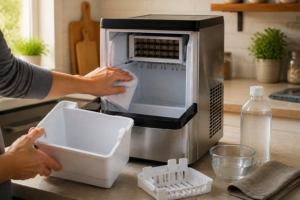
- Empty the ice bin: Remove all ice from the EFIC189 bin and discard it. Open the front access door.
- Fill the reservoir: Pour the citric acid solution into the water reservoir until it reaches the maximum fill line.
- Start the cleaning cycle: Press the power button to begin operation. The EFIC189 will pump the solution over the evaporator prongs for approximately 8-10 minutes.
- Monitor the discharge: Watch the solution drip from the evaporator prongs into the ice bin and drain. The solution will appear yellow or slightly discolored as it dissolves mineral buildup.
- Complete the cycle: Let the EFIC189 run until it stops automatically (usually 10-15 minutes after starting).
- Empty the bin: The citric acid solution will accumulate in the bin. Carefully pour it down the drain.
- Refill and repeat: Refill the reservoir with a fresh citric acid solution and run a second cycle. This ensures complete mineral removal.
- Rinse thoroughly: Empty the bin again, then fill the reservoir with fresh filtered water (no additives). Run the EFIC189 through 2-3 complete cycles using only water to rinse away all citric acid residue.
- Final cycle: Empty any water from the bin, refill the reservoir with fresh drinking water, and run one last ice-making cycle. The ice produced should now be clear and normal in appearance.
When to Descale the EFIC189
Descale your Frigidaire EFIC189 every 2-3 months if you have hard water (mineral-rich tap water). If you use filtered or soft water, aim for every 6 months. Signs you need to descale include:
- Reduced ice production (fewer ice cubes per cycle)
- Cloudy or discolored ice
- Slow water spray over the evaporator prongs
- Grinding or squealing sounds from the pump
- The EFIC189 taking longer than usual to complete a cycle
Step 4: Check the Ice Size Selector and Clearance
The EFIC189 has a small/large ice size selector on the control panel. If set incorrectly or if the selector mechanism is stuck, ice production can halt or become inconsistent.
Verify Ice Size Setting
- Locate the small/large ice selector button on the EFIC189 control panel
- Press it to toggle between small and large ice size modes
- Try both settings to see if one produces ice while the other doesn’t
- Small ice cubes (approximately 0.75 inches) are produced more frequently
- Large ice cubes (approximately 1.25 inches) take longer per cycle but are larger
If the selector button feels stuck or doesn’t click, it may be jammed by ice or debris. Unplug the EFIC189, locate the selector button assembly on the inside of the control panel, and gently clean around the button with a damp cloth.
Check for Clogs in the Ice Chute
Sometimes, ice cubes can get stuck in the delivery chute of the EFIC189, preventing new ice from falling into the bin and triggering the full-bin sensor.
- Open the ice bin door and look up into the EFIC189
- Shine a flashlight into the delivery chute (the opening where ice falls into the bin)
- If you see stuck ice or debris, use a plastic stick or wooden spoon to gently dislodge it
- Don’t use metal objects, as they can damage the evaporator prongs
- Remove any debris and make sure the chute is clear
Step 5: Perform a Full System Reset
Sometimes, the EFIC189 control board gets stuck in an error state and stops responding to normal commands. A full reset often clears these faults and restores operation.
- Unplug the EFIC189 from the electrical outlet
- Wait 30 seconds
- Plug the unit back in
- Press the power button
- The control panel lights should flash briefly, indicating the system is re-initializing
- Wait 2-3 minutes for the compressor to start
- The EFIC189 should begin a new ice-making cycle
If the reset doesn’t restore operation and the unit remains unresponsive, the control board itself may have failed, which typically requires professional service.
Step 6: Diagnose Evaporator Prong Icing
In some cases, the evaporator prongs on the EFIC189 freeze over completely, preventing new ice from forming and disrupting the ice production cycle. This happens when water doesn’t drain properly from the prongs between cycles.
Visual Inspection
- Open the ice bin door on the EFIC189
- Inspect the vertical metal prongs in the freezing chamber
- Excessive thick ice buildup on the prongs indicates a drainage problem
- Normal operation shows thin ice only on the very tips of the prongs
Clearing Frozen Prongs
- Unplug the EFIC189 from the wall outlet
- Allow the unit to sit at room temperature for 2-3 hours to naturally melt the ice buildup
- Do not use hot water or direct heat, which can damage seals and plastic components
- Once the ice melts, use a soft cloth to wipe away any remaining moisture
- Plug the EFIC189 back in and restart the ice-making cycle
If the prongs re-freeze immediately after clearing, the issue is likely a clogged drain tube or a non-functional drain pump, which requires internal service beyond DIY repair scope.
When NOT to Repair: Refrigeration System Failures
The EFIC189 has a sealed refrigeration system with a compressor, condenser, and evaporator coils. If your unit shows any of the following symptoms, professional service is required—don’t attempt DIY repair:
- Compressor runs but unit produces no ice or doesn’t get cold: This indicates a refrigerant leak. The sealed system cannot be recharged by consumers.
- Oil leaking from the compressor area: The compressor seal has failed. This requires compressor replacement by a certified technician.
- Burning smell or hissing sounds from the compressor: The motor may be overheating, or the system may be overcharged. Stop using the unit immediately.
- Frost accumulation on the condenser coils (visible on the back or sides of the EFIC189): The refrigeration cycle is malfunctioning and requires a professional diagnosis.
Repair vs. Replace Decision for the EFIC189
The EFIC189 is an affordable portable ice maker, usually retailing between $200-$350. This low price point affects repair economics:
- Water pump replacement: Approximately $40-$80 for the part plus your labor. Definitely worth repairing.
- Compressor or sealed system failure: Professional service costs $250-$500+, surpassing the value of the EFIC189. Replacement is recommended.
- Control board failure: Replacement boards cost $80-$150. This is a borderline repair decision. If your EFIC189 is under 1 year old, pursue service. If over 2 years old, replacement may be more economical.
- Descaling or minor cleaning issues: Always repair these. They cost under $10 and take about 30 minutes.
If you’ve completed all troubleshooting steps above and your EFIC189 still doesn’t produce ice, professional diagnosis is the next step. However, for most owners, descaling, refilling water, or performing a reset will restore full operation.
Frequently Asked Questions
Why does my Frigidaire EFIC189 make ice but very slowly?
Slow ice production on the EFIC189 is usually due to mineral buildup in the water system or an ambient temperature that’s too high. Start by descaling the unit using the citric acid method I described above. If production doesn’t improve, measure the room temperature—the EFIC189 operates best between 70°F and 75°F. Temperatures above 85°F will significantly slow production. Also, make sure the condenser coils on the back of the unit are clean and dust-free; dust buildup restricts airflow and reduces cooling efficiency.
What does the ADD WATER light mean on the EFIC189?
The ADD WATER light on your Frigidaire EFIC189 turns on when the water reservoir level drops below the minimum operating threshold. This is a safety feature that prevents the pump from running dry, which would cause damage. Just refill the reservoir with filtered water to the maximum fill line, and the light will turn off within seconds. The EFIC189 will resume normal operation on the next cycle.
Can I use tap water in my EFIC189 ice maker?
Yes, tap water is acceptable for the Frigidaire EFIC189, though filtered water is preferable, especially if you have hard water. If your tap water is high in minerals (calcium and magnesium), the EFIC189 will need descaling every 2-3 months instead of every 6 months. You can test your water hardness with an inexpensive kit from any hardware store. Avoid distilled water, as it lacks the minerals that the water level sensor relies on to function properly.
How long does it take for the EFIC189 to make ice?
Under optimal conditions (room temperature 70-75°F, filled water reservoir, small ice setting), the Frigidaire EFIC189 produces the first batch of ice within 7-15 minutes of starting a cycle.
Recommended Parts & Tools
Frigidaire EFIC189 Water Inlet Valve
The water inlet valve is one of the most common failure points in portable ice makers that stop producing ice. If water isn’t flowing into the ice maker’s reservoir, no ice can be formed, making this replacement part essential for restoring function.
Descaling Solution for Ice Makers
Mineral buildup and scale inside the water lines and evaporator coils prevent ice production in most cases. This specially formulated descaling solution safely removes calcium and lime deposits without damaging internal components of your ice maker.
Digital Multimeter
Testing the thermostat, water inlet valve solenoid, and other electrical components requires a reliable multimeter to diagnose what’s preventing ice formation. This essential diagnostic tool helps you determine whether electrical components need replacement before ordering parts.
The Descaling Solution That Actually Restores Water Flow in the EFIC189
Mineral buildup is the silent culprit behind most EFIC189 ice-making failures, and a proper descaling solution cuts through it faster and more effectively than vinegar or DIY alternatives. If your unit is running but producing no ice or running slow cycles, descaling should be your first troubleshooting step before you start diagnosing electrical components.
What works
- Dissolves calcium deposits inside the water inlet valve and fill tube that block water flow without damaging plastic components—vinegar takes twice as long and leaves residue.
- Safe to run through the entire cycle without disassembly, so you can confirm whether the problem is mineral buildup or an electrical/mechanical fault in under an hour.
- Works on hard water areas where ice makers accumulate scale after just a few weeks of use—this is the difference between a one-time fix and repeated failures.
What doesn’t
- Won’t help if the water inlet valve is electrically dead or mechanically stuck open—you’ll still need to test with a multimeter or replace the valve.
- Requires you to follow the manufacturer’s dilution ratio exactly; too strong and you risk corrosion, too weak and you’re back to vinegar-level results.
I’ve watched too many people order a replacement inlet valve only to discover the original valve was fine—just clogged with scale that descaling would have cleared in 45 minutes. Descaling solution for ice makers costs less than a single service call and eliminates the most common no-ice failure mode before you commit to parts replacement.
About This Article

Written by Dave Holt. Dave Holt has been taking apart and fixing household appliances since he was a teenager who couldn't leave a broken one alone. Eighteen years later, after fixing things for neighbors, friends, and anyone who'd let him, he's seen almost every failure mode there is. When he writes a repair guide here, it's based on the actual job, not a manufacturer overview. More about this site.
Scope and limits. Dave is a self-taught repairer, not a certified appliance technician. Unplug before you open anything, and leave sealed refrigeration systems, gas connections, and hardwired circuits to a qualified technician.