Complete Guide to Repairing the Maytag MFI2570FEZ Ice Maker Solenoid
The ice maker solenoid in your Maytag MFI2570FEZ refrigerator is a critical component that controls water flow into the ice maker assembly. When this solenoid fails, your ice maker will stop producing ice entirely, even though the mechanical cycles continue. This comprehensive guide walks you through identifying a bad solenoid, testing it properly, and replacing the entire water inlet valve assembly on the MFI2570FEZ.
Understanding the Ice Maker Solenoid on the MFI2570FEZ
What the Solenoid Does
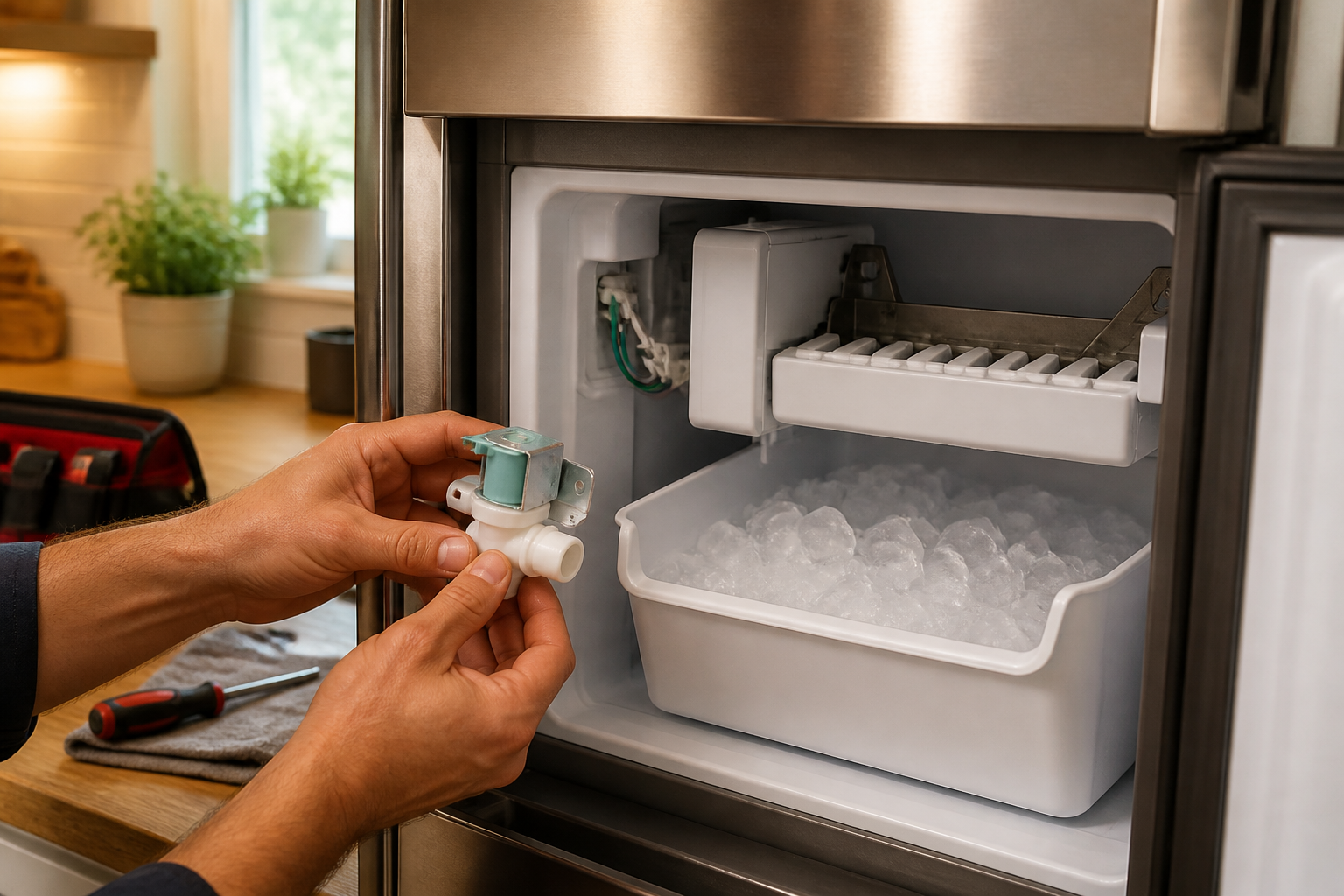
The ice maker solenoid is an electromagnetic coil housed inside the water inlet valve. During each ice maker cycle, the solenoid receives an electrical signal from the ice maker control module. This signal energizes the coil, which creates a magnetic field that pulls open an internal plunger. The plunger unseats a valve ball, allowing pressurized water from your home’s supply line to flow into the ice maker mold. Without this solenoid working properly, water never enters the mold, and no ice forms.
On the MFI2570FEZ, the solenoid cannot be replaced separately from the water inlet valve assembly. You must replace the entire valve unit, which includes the solenoid coil, valve body, and inlet connection ports. The valve is a normally-closed design, meaning it requires electrical power to open—a safety feature that prevents continuous water flow if power is lost.
How the Solenoid Integrates with Your MFI2570FEZ System
The MFI2570FEZ ice maker system works through a precise sequence: the ice maker motor rotates a cam that triggers a fill valve switch. This switch sends 120 volts AC to the solenoid coil through a two-wire harness. The solenoid energizes for approximately 6-8 seconds, allowing water to fill the ice tray. Once the fill time expires, the control module de-energizes the solenoid, the valve closes, and the freezing cycle begins. The entire cycle repeats every 6-8 hours until ice cubes are ejected and the cycle restarts.
Symptoms of a Failed Solenoid in the MFI2570FEZ
Primary Failure Indicators
- Ice maker cycles through its mechanical rotation, but the ice tray remains completely empty
- Clicking or buzzing sound from the water inlet valve during the fill cycle, but no water enters the ice maker
- Water leaks from the valve connection point or along the inlet water line
- Ice maker begins working intermittently, then stops producing ice altogether
- No water flow when you manually test the fill valve
The most telltale sign of a failed solenoid on the MFI2570FEZ is the clicking sound combined with no water flow. You will hear the solenoid attempting to energize—producing an audible click—but the valve does not actually open because the internal plunger is stuck or the coil has lost its electromagnetic strength.
Distinguishing Solenoid Failure from Other Issues
Before concluding the solenoid is bad, verify that water actually reaches the water inlet valve. Low water pressure, kinked inlet lines, or frozen water supply lines will prevent water flow even if the solenoid is functional. The MFI2570FEZ ice maker requires a minimum of 20 PSI of water pressure to operate. If your home’s water pressure is below this threshold, the valve cannot open properly even if the solenoid energizes.
Also check that the ice maker is enabled in your refrigerator’s settings and that the freezer temperature is set to 0°F or below. If the freezer is warmer than 15°F, the ice maker control module may disable the fill cycle as a safety measure.
Locating the Water Inlet Valve on the MFI2570FEZ
Access and Physical Location
The water inlet valve assembly on the MFI2570FEZ is located on the rear bottom panel of the refrigerator, typically 6-10 inches from the floor and positioned toward the center-rear of the unit. To access it, you must pull the refrigerator away from the wall and remove the rear base cover panel. This panel is usually held in place with 3-4 Phillips head screws along the bottom edge.
Once the rear panel is removed, look for a metal box-shaped component approximately 2 inches wide by 3 inches tall. This is the water inlet valve. You will see two water hose connections: one larger inlet hose coming from the water supply line and one smaller outlet hose leading to the ice maker or water dispenser. A two-wire electrical connector plugs into the top or side of the valve body.
Safety Considerations Before Access
Before accessing the water inlet valve area on the MFI2570FEZ, ensure the refrigerator is unplugged from the electrical outlet and the water supply shut-off valve is closed. The water shut-off valve is typically located under your kitchen sink or in the basement/crawlspace where the water line enters your home. Closing this valve prevents water from spraying when you disconnect the inlet hose.
⚠️ Safety Warning
The MFI2570FEZ uses 120 volts AC to energize the solenoid coil. If you perform electrical testing with the refrigerator plugged in, you risk electrical shock. Always unplug the refrigerator before disconnecting the solenoid wires. Water and electricity are an extremely dangerous combination. When testing the solenoid with voltage (advanced testing only), ensure you are wearing insulated gloves and your hands are completely dry. Never perform this test if water is present near the valve or if any hoses are wet.
Testing the Solenoid Coil with a Multimeter
Resistance Testing (Basic Diagnostic)
This test determines whether the solenoid coil is mechanically intact or open-circuit (broken). You will need a digital multimeter set to the resistance (ohms) function. A typical solenoid coil in the MFI2570FEZ water inlet valve measures between 200 and 500 ohms at room temperature. Some valves may read as high as 600 ohms, depending on the specific winding configuration.
- Unplug the MFI2570FEZ from the electrical outlet completely
- Remove the rear base cover panel to expose the water inlet valve
- Locate the two-wire electrical connector plugged into the solenoid. Gently disconnect this connector by pressing the release tab or clip
- Set your multimeter to the resistance (Ω) setting, typically using the 200 ohm or 2000 ohm scale
- Touch one multimeter probe to each of the two connector pins on the solenoid coil terminals
- Read the resistance value on your multimeter display
Interpreting Your Results: If your reading is between 200-500 ohms, the solenoid coil is likely functional, and the problem may be internal valve sticking or an electrical supply issue. If your reading is 0 ohms or very close to 0, the coil wire is shorted. If your reading shows “OL” (open line) or infinity, the coil wire is completely broken or disconnected internally, and the solenoid is definitely defective.
A reading outside the normal range on the MFI2570FEZ indicates a failed solenoid that cannot be repaired. The coil is sealed inside the valve body and cannot be accessed or rewound. You must replace the entire water inlet valve assembly.
Recording Your Baseline Reading
Before disconnecting the valve, write down the solenoid resistance value. This gives you a baseline to compare if you ever need to troubleshoot the ice maker again. Keep this information with your refrigerator’s documentation or in a service log.
Advanced Testing: Energizing the Solenoid with 120V
What This Test Reveals
This test checks whether the solenoid coil can actually create enough magnetic force to open the internal plunger valve when energized. Even if the solenoid coil has acceptable resistance, the magnetic field may be too weak to move the plunger, or internal corrosion may lock the plunger in the closed position. This test is advanced and should only be performed if you are confident working with household electrical voltage.
⚠️ Safety Warning for 120V Testing
This procedure exposes you to 120 volts AC, which can cause serious injury or death. Perform this test only if you are experienced with electrical systems. Wear insulated gloves. Keep one hand behind your back or in your pocket to prevent current from crossing your chest. Have another person nearby who can turn off power immediately if needed. Do not perform this test if you are standing on a wet floor, if water is present near the valve, or if the area is damp. If you are uncomfortable working with live electrical current, skip this test and proceed directly to water inlet valve replacement.
Test Procedure for the MFI2570FEZ Solenoid
- Close the water shut-off valve to prevent water discharge during testing
- Remove the rear base panel to access the water inlet valve
- Locate the two-wire connector but do NOT disconnect it yet
- Prepare a test lead: a standard 120V extension cord with insulated alligator clip leads works well. Alternatively, you can use a solenoid test jumper specifically designed for refrigerator valves
- Insert the extension cord plug into a nearby electrical outlet
- Touch the two alligator clips to the two connector pins on the solenoid (one clip per pin). Do not hold the clips in place—use a stable clamp or have another person hold them steady while you listen and observe
- When 120V is applied, you should hear a distinct click from the solenoid and may feel it vibrate slightly if you lightly touch the valve body
- Immediately remove the test leads. Do not energize the solenoid for more than 5-10 seconds at a time during testing
Interpreting the Results: If you hear a distinct click and the solenoid vibrates when 120V is applied, the coil is functional. The absence of any click or vibration suggests a failed solenoid. However, even a functional coil may not open the valve if internal mineral deposits or corrosion have locked the plunger. In either case, the solution is the same: replace the water inlet valve.
Water Inlet Valve Part Numbers for the MFI2570FEZ
Identifying the Correct Replacement Valve
Before purchasing a replacement valve for your MFI2570FEZ, confirm the exact part number. The primary OEM (Original Equipment Manufacturer) water inlet valve for the MFI2570FEZ is part number W10498976. This is a two-outlet valve designed to supply water to both the ice maker and the water dispenser on your model. However, Maytag has released several updated versions of this valve, so verify against your model number before ordering.
Alternative part numbers that may be compatible with the MFI2570FEZ include W10411576 and W10782619, depending on the manufacturing year of your refrigerator. Always verify the part number on Maytag’s official parts website or contact a certified Maytag dealer to ensure compatibility before purchasing.
Where to Purchase the Valve
Genuine OEM valves for the MFI2570FEZ are available from Maytag authorized parts distributors, major appliance parts retailers, and online suppliers specializing in refrigerator components. When ordering, specify your full model number (MFI2570FEZ) and the serial number from your refrigerator’s rating plate. This ensures you receive the correct valve with proper hose connection sizes and solenoid specifications.
Step-by-Step Water Inlet Valve Replacement for the MFI2570FEZ
Tools and Materials You’ll Need
- Adjustable wrench (for hose clamp removal)
- Needle-nose pliers (for wire connector release)
- New water inlet valve (W10498976 or compatible for MFI2570FEZ)
- Small bowl or bucket to catch water spillage
- Two clean rags
- Flashlight
- Replacement hose clamps (optional, in case existing clamps are damaged)
Detailed Replacement Procedure
- Prepare Your MFI2570FEZ: Unplug the refrigerator from the electrical outlet. Locate the water supply shut-off valve in your home (typically under the kitchen sink or in the basement) and turn it clockwise to the closed position. Turn on your kitchen faucet to depressurize the water line.
- Access the Valve: Pull the MFI2570FEZ away from the wall, creating enough space to work behind it. Use a flashlight to locate the rear base cover panel. Remove the 3-4 Phillips head screws holding the panel in place and set the panel aside.
- Position Your Bucket: Place a small bucket or bowl directly under the water inlet valve to catch any remaining water in the supply line or valve body. Position a rag nearby to wipe up spills.
- Disconnect the Water Inlet Hose: Locate the large inlet hose connected to the water inlet valve. This hose carries pressurized water from your home’s supply line. Using an adjustable wrench, loosen the hose clamp by turning the clamp screw counterclockwise approximately 2-3 full turns. Do not completely remove the clamp yet. Gently wiggle the hose to break the seal, then slide the hose off the valve inlet port. Water may drip from the hose end, so have your bucket ready. Slide the hose clamp further down the hose and set it aside.
- Disconnect the Ice Maker Supply Hose: Locate the smaller outlet hose exiting the water inlet valve toward the ice maker. Loosen this hose clamp the same way, wiggle the hose gently, and disconnect it from the valve outlet port. Again, have your bucket ready for any water spillage. Set this hose clamp aside as well.
- Disconnect the Electrical Connector: Locate the two-wire electrical connector plugged into the solenoid on the water inlet valve. Press the release tab or clip on the connector (typically a small plastic tab on the side) and gently pull the connector straight out. Do not twist or pull at an angle, as this can damage the connector pins.
- Remove the Old Valve: The water inlet valve on the MFI2570FEZ is typically held in place by one or two mounting brackets or clips. Locate these mounting points and remove any screws or clips securing the valve. In most cases, the valve simply lifts out once hose clamps and electrical connectors are disconnected. If the valve is stubborn, do not force it—check for any additional mounting screws you may have missed.
- Install the New Valve: Position the new water inlet valve (W10498976 or compatible) in the same location where the old valve was mounted. If mounting brackets are used, align the valve correctly and reinstall any mounting screws or clips. Ensure the valve is oriented the same direction as the original—check that inlet and outlet ports face the correct directions.
- Reconnect the Electrical Connector: Plug the two-wire electrical connector into the new solenoid coil. Push firmly until you hear a distinct click, indicating the connector is fully seated. Gently tug on the connector to verify it is secure.
- Reconnect the Ice Maker Supply Hose: Position the smaller outlet hose onto the valve’s outlet port. Slide the hose clamp up the hose and tighten it by turning the clamp screw clockwise until snug. Tighten firmly, but do not over-tighten—a snug connection should not leak, but excessive force can crack the hose.
- Reconnect the Water Inlet Hose: Position the large inlet hose onto the valve’s inlet port. Slide the hose clamp up and tighten it the same way. Ensure this connection is secure, as it carries pressurized water.
- Restore Water Supply: Return to your home’s water shut-off valve and turn it counterclockwise to the open position. Turn on your kitchen faucet to verify water flow. You should see water running from the faucet within a few seconds.
- Inspect for Leaks: Return to your MFI2570FEZ and inspect the water inlet valve area for any active leaks. Look at both hose connection points and the valve body itself. If you see dripping water, turn off the water supply, disconnect the leaking hose, and re-tighten the hose clamp. Then restore water supply and recheck.
- Reassemble the Refrigerator: Close and latch any panels you removed. Push the MFI2570FEZ back into its normal position against the wall, ensuring the refrigerator is level and stable.
- Plug In and Test: Plug the MFI2570FEZ back into the electrical outlet. The ice maker may take 10-15 minutes to enter a fill cycle. Listen for the solenoid to click during the fill cycle, and observe whether water now flows into the ice maker mold.
After Replacement: Flushing and Testing the MFI2570FEZ Ice Maker System
Why Flushing Is Important
After replacing the water inlet valve on your MFI2570FEZ, you should flush the water line to clear any air bubbles and debris that may have entered during the disconnection process. Air in the line can prevent proper water flow into the ice maker, causing incomplete fills or no fill at all. Flushing ensures clean water reaches the ice maker.
Flushing Procedure
- Access the rear of the MFI2570FEZ and locate the small outlet hose connected to the new water inlet valve (the hose leading to the ice maker)
- Direct fit for the MFI2570FEZ without any adapter brackets or modification—connectors line up exactly as they should.
- Comes with the internal plunger assembly intact, so you’re not swapping parts midway through the job if the original plunger is stuck or corroded.
- Reasonable price point compared to ordering from Maytag directly, which for this model runs nearly double once you factor in shipping.
- Installation requires shutting off water to the fridge and draining the lines—if you’re not comfortable doing that, this job gets more involved than expected.
- The solenoid itself is a symptom fix, not a diagnostic; if your water inlet valve is actually blocked or your fill tube is kinked, replacing this won’t solve your problem.
Recommended Parts & Tools
Ice Maker Solenoid Valve for Maytag Refrigerators
This is the primary replacement part you’ll need for this repair—the solenoid that controls water flow to the ice maker. A faulty solenoid is the most common cause of “no ice” problems in Maytag MFI2570FEZ models. Check current pricing on Amazon.
Craftsman 11-Piece Screwdriver Set
You’ll need various screwdrivers to remove panels and access the ice maker assembly on your Maytag refrigerator. This comprehensive set includes both Phillips and flathead options in multiple sizes to handle any fasteners you’ll encounter. Check current pricing on Amazon.
Ecos Hypoallergenic All-Purpose Cleaner
After replacing the solenoid, use this safe cleaner to wipe down internal components and remove any mineral deposits or debris that may have accumulated in the water lines. A clean ice maker system ensures optimal performance after your repair. Check current pricing on Amazon.
The Solenoid That Actually Controls Water Flow to Your MFI2570FEZ Ice Maker
If your ice maker cycles but produces nothing, the solenoid valve is the first part to replace—it’s the gatekeeper that tells water whether to flow into the ice maker or stay shut. I’ve pulled plenty of these Maytag units apart, and nine times out of ten when you hear the familiar mechanical whir but get zero ice, this solenoid has failed electrically.
What works
What doesn’t
I’ve had homeowners order this solenoid first only to discover their real issue was a frozen water line in the door—so test the solenoid with a multimeter before you commit to the replacement, because swapping the wrong part wastes time. When you’re confident the solenoid is the culprit, grab the Ice Maker Solenoid Valve for Maytag Refrigerators and you’ll have your ice maker back in business within an hour.
This post contains affiliate links. As an Amazon Associate, I earn from qualifying purchases at no extra cost to you.