Ice Maker Making Noise – Frigidaire FFHB2750TS French Door Refrigerator
The Frigidaire FFHB2750TS French Door Refrigerator features an integrated ice maker that can develop various noise issues over time. Common causes include worn gears in the ice maker motor assembly, damaged ejector arms, loose mounting brackets, ice buildup in the mechanism, or a failing harvest motor. These noises typically present as grinding, clicking, knocking, or continuous humming sounds during ice production cycles. This repair is classified as MODERATE difficulty, requiring basic electrical knowledge and the ability to work in confined spaces within the freezer compartment. The repair typically takes 2-3 hours and involves accessing internal components of the ice maker assembly.
Symptoms
- Loud grinding or scraping noise during ice harvest cycle, typically every 2-3 hours
- Repetitive clicking or knocking sounds when ice maker attempts to cycle but fails to complete
- Continuous humming or buzzing noise from the ice maker even when not actively producing ice
- Squealing or high-pitched whining during the ice ejection process
- Intermittent banging or clunking sounds when ice cubes drop into the storage bin
- Unusual rattling noise from the ice maker assembly when the refrigerator door is opened or closed
⚠️ Safety Warning
Before beginning any repair work on your Frigidaire FFHB2750TS, disconnect power at the electrical panel or unplug the unit from the wall outlet. Never work on electrical components while the refrigerator is energized. Turn off the water supply to the ice maker at the shut-off valve, typically located behind or beneath the refrigerator. Be aware that the ice maker assembly contains both 115V electrical connections and pressurized water lines. Use proper lifting techniques when removing the ice maker assembly, as it weighs approximately 8-12 pounds. Ensure adequate ventilation when working inside the freezer compartment for extended periods. Keep the freezer door open minimally to prevent temperature rise and potential food spoilage.
Parts Needed
- Ice Maker Motor Module – Part #5304458371 (if motor assembly is damaged)
- Ice Maker Ejector Arm Assembly – Part #297147700 (for worn or broken ejector arms)
- Ice Maker Mounting Bracket Kit – Part #5304505463 (if brackets are loose or damaged)
- Ice Maker Wire Harness – Part #5304505524 (if electrical connections are corroded)
- Ice Maker Gearbox Assembly – Part #5304458590 (for internal gear wear)
- Food-grade silicone lubricant for mechanical components
- Electrical contact cleaner for connection maintenance
Tools Required
- Digital multimeter with AC/DC voltage capability
- 1/4-inch and 5/16-inch nut drivers
- Phillips head screwdriver (size #1 and #2)
- Needle-nose pliers with insulated handles
- Flashlight or headlamp for freezer compartment visibility
- Hair dryer or heat gun for ice removal
- Clean towels for water cleanup
Step-by-Step Instructions
Step 1: Power Down and Access Ice Maker
🔨 Pro Tip from Dave
On the FFHB2750TS specifically, before you assume the harvest motor is bad because of a grinding noise, check that the small plastic cam gear on the motor output shaft hasn’t cracked at the hub — it’s a $6 part that mimics the exact same symptom as a $45 motor failure, and I’ve seen techs replace the whole motor assembly unnecessarily more times than I can count. The crack is hairline and easy to miss under poor lighting, so use a flashlight and flex the gear slightly with your thumb to reveal it.
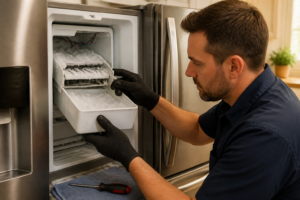
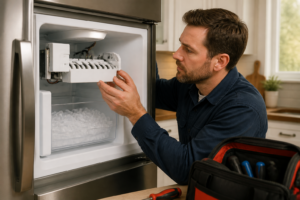
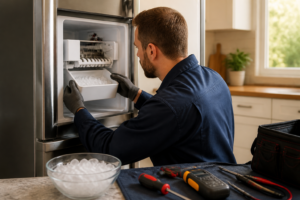
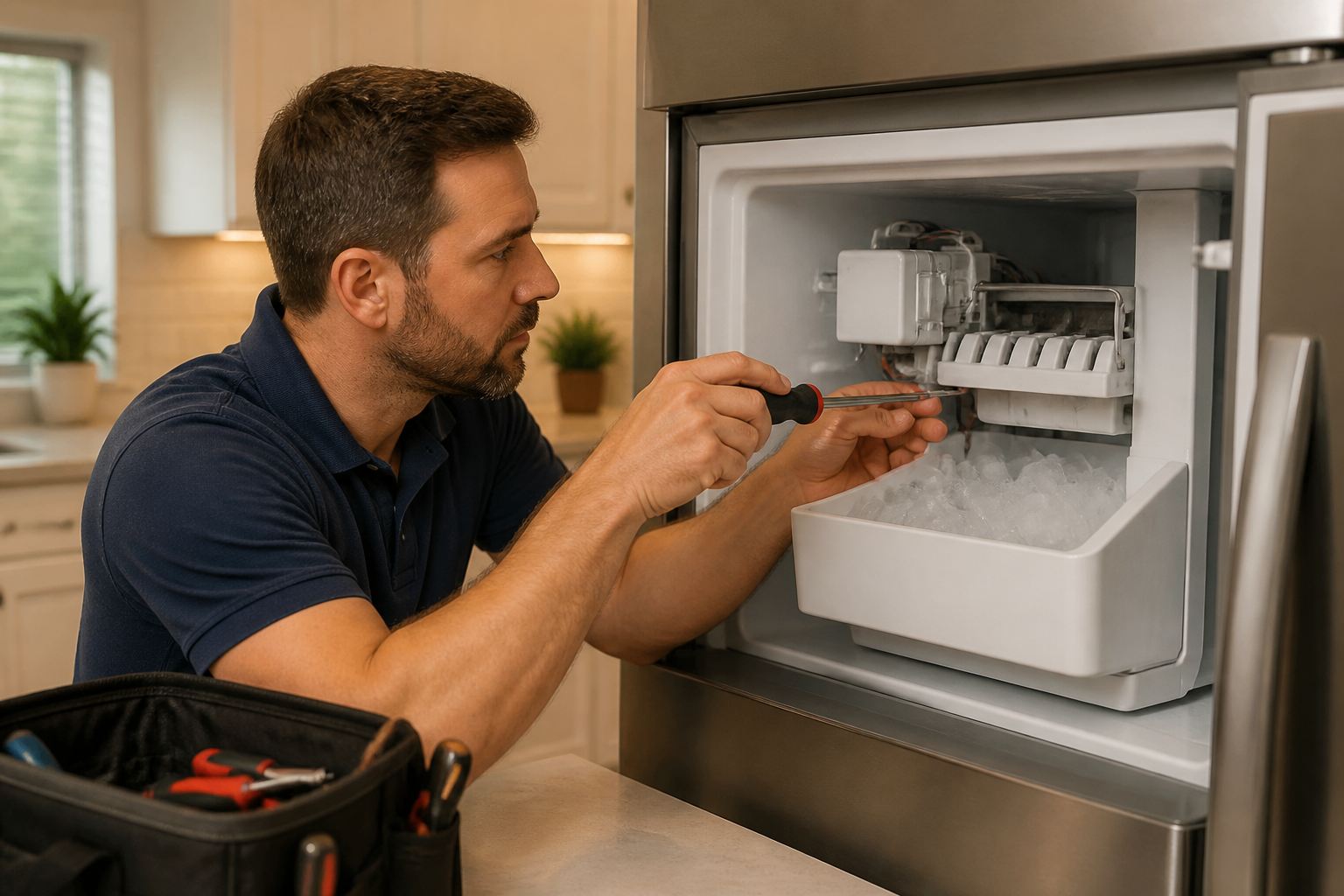
Disconnect power to the Frigidaire FFHB2750TS and turn off the water supply. Remove all ice from the storage bin and any food items from the upper freezer shelf. Locate the ice maker assembly mounted on the left side wall of the freezer compartment, approximately 8 inches from the top. Remove the wire storage basket by lifting it straight up to provide clear access to the ice maker mounting area.
Step 2: Remove Ice Maker Cover and Test Components
Remove the clear plastic ice maker cover by pressing the two release tabs located at the front corners and lifting upward. This exposes the internal mechanism including the ejector arm assembly and motor housing. Use your multimeter to test voltage at the ice maker connector – you should read 0V with power disconnected. Examine the ejector arm for visible damage, loose connections, or ice buildup that could cause binding.
Step 3: Disconnect Electrical Connections
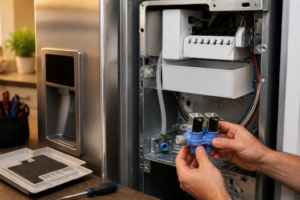
Locate the main electrical harness connector on the rear right side of the ice maker assembly. This is typically a white 6-pin connector. Carefully disconnect this harness by squeezing the locking tabs and pulling straight back. Also disconnect the smaller 2-pin connector for the fill sensor, located adjacent to the main harness. Take a photo of the wire routing before disconnection to ensure proper reassembly.
Step 4: Remove Water Line Connection
Locate the water supply line connection at the rear of the ice maker, typically a 1/4-inch compression fitting. Place towels beneath the work area to catch any residual water. Using needle-nose pliers, carefully disconnect the water line by loosening the compression nut counterclockwise. Some water spillage is normal – ensure the water supply valve is fully closed to minimize flow.
Step 5: Remove Ice Maker Mounting Screws
Identify the three mounting screws securing the ice maker assembly to the freezer wall bracket. These are typically 1/4-inch hex head screws located at the top-left, top-right, and bottom-center positions. Using your 1/4-inch nut driver, remove all three mounting screws while supporting the ice maker weight with your free hand to prevent the assembly from falling.
Step 6: Extract and Inspect Ice Maker Assembly
Carefully lift the ice maker assembly straight out from the freezer compartment, supporting both the motor end and the ejector arm end. Place the assembly on a clean work surface with the motor housing facing up. Inspect the motor mounting area for loose screws – there should be four Phillips head screws securing the motor to the main housing. Check for obvious signs of wear, damage, or foreign objects in the mechanism.
Step 7: Test Motor and Electrical Components
Reconnect power temporarily to test the ice maker motor outside the freezer. Connect your multimeter probes to pins 1 and 3 of the main connector (typically marked) – you should read 115V AC during harvest cycle initiation. Test motor resistance between the motor terminals – normal reading is 8-12 ohms. If readings are outside this range or if you observe sparking, replace the motor module assembly.
Step 8: Inspect and Service Ejector Mechanism
Manually rotate the ejector arm assembly clockwise to check for binding or resistance. The arm should move smoothly through its full range of motion with only slight resistance from the gears. If you hear grinding or feel excessive resistance, remove the ejector arm by removing the center retaining screw and inspect the plastic gears for wear. Apply a small amount of food-grade silicone lubricant to the gear teeth if they appear dry but undamaged.
Step 9: Check and Tighten All Mounting Points
Inspect all internal mounting screws within the ice maker assembly. The motor should be secured with four screws torqued to finger-tight plus 1/4 turn. Check that the ejector arm pivot point is properly seated and the retaining screw is snug. Examine the main housing for cracks or damage that could cause vibration noises during operation.
Step 10: Clean and Prepare for Reinstallation
Clean all ice residue and debris from the ice maker assembly using warm water and a soft brush. Ensure all water is completely drained before reinstallation. Clean the mounting area in the freezer compartment and inspect the wall bracket for damage or loose mounting points. Apply a thin coat of food-grade lubricant to moving parts as needed.
Step 11: Reinstall Ice Maker Assembly
Position the ice maker assembly back into the freezer compartment, aligning the mounting holes with the wall bracket. Install the three mounting screws hand-tight first, then torque to snug with your nut driver. Reconnect the water line by threading the compression fitting clockwise until hand-tight, then add 1/4 turn with pliers. Reconnect both electrical harnesses, ensuring proper seating and locking tab engagement.
Step 12: Test Operation and Final Adjustments
Restore power and water supply to the Frigidaire FFHB2750TS. Initiate a test cycle by moving the wire arm to the down position or pressing the test button if equipped. Listen carefully during the harvest cycle for any remaining unusual noises. The complete cycle should take 6-10 minutes and should operate smoothly without grinding, clicking, or excessive vibration. Replace the ice maker cover and freezer basket once proper operation is confirmed.
Troubleshooting
- If noise persists after motor replacement, check for proper alignment of the ejector arm assembly and verify all mounting screws are properly torqued
- Continued clicking noises may indicate a faulty fill sensor or water supply issue – verify water pressure is between 20-125 PSI at the connection
- If the ice maker runs continuously, test the thermostat sensor with your multimeter – it should show continuity when cold and open circuit when warm
- Grinding noises during operation often indicate gear wear in the ejector mechanism – inspect plastic gears for stripped teeth or damage
- If electrical connections repeatedly fail, inspect the main wiring harness for damage and consider replacement of the entire harness assembly
- Rattling noises may be caused by loose mounting of the entire ice maker assembly – recheck all mounting hardware and brackets
When to Call a Professional
- If multiple electrical components test faulty simultaneously, indicating a potential control board or power supply issue
- When water line connections show signs of leakage behind the refrigerator wall requiring access to internal plumbing
- If the freezer compartment requires removal for ice maker access due to unusual mounting configuration
- When specialized tools or refrigeration system knowledge is needed to diagnose compressor-related noise issues affecting the ice maker
When to Call a Professional
Most of the repairs in this guide are within reach for a careful DIYer with basic tools. In my experience, if you’ve cleared the ice buildup, replaced the cam gear, and the unit is still producing a grinding or knocking noise after a full harvest cycle, that’s the point where a refrigeration tech should take over — because you’re likely looking at a failing icemaker mold heater or a control board timing issue that requires live-circuit diagnostics and calibrated testing equipment to diagnose safely and accurately. When in doubt, a diagnostic service call typically costs $80–$120 and can save you from a misdiagnosis that costs more in parts.
Recommended Parts & Tools
Frigidaire Ice Maker Assembly Replacement for French Door Refrigerators
This genuine Frigidaire ice maker assembly is designed specifically for French door models including the FFHB2750TS and directly addresses noisy ice maker issues caused by worn internal components. The complete assembly replacement eliminates grinding, clicking, and rattling sounds that develop over time. Check current pricing on Amazon.
Refrigerator Ice Maker Water Inlet Valve – Compatible with Frigidaire Models
A faulty water inlet valve is often the source of unusual noises in ice makers, causing humming, buzzing, or clicking sounds when water flow is restricted or irregular. This replacement valve is compatible with the Frigidaire FFHB2750TS and restores proper water flow to eliminate noise issues. Check current pricing on Amazon.