⚠️ Safety Warning
Before beginning any refrigerator repair, disconnect the power supply by unplugging the unit or switching off the circuit breaker. The glass door-in-door panel is heavy and fragile – have an assistant help support the door during repairs. Wear safety glasses when working with glass components. If you notice any cracks in the glass panel, stop immediately and contact a professional technician, as the entire door assembly may need replacement.
LG InstaView Models Affected by Door Clasp Issues
The door-in-door clasp mechanism failure is a common issue across multiple LG InstaView refrigerator models manufactured between 2016 and 2022. The most frequently affected models include:
- LRFVS3006S – 30 cu. ft. French Door with InstaView
- LRMVS3006S – 30 cu. ft. Side-by-Side with InstaView
- LFXS26596S – 26 cu. ft. French Door with InstaView
- LRFVC2406S – 24 cu. ft. Counter-Depth French Door
- LRFXC2416S – 24 cu. ft. Counter-Depth with InstaView
- LRFVS3006D – 30 cu. ft. French Door (Black Stainless)
- LMXS28596S – 28 cu. ft. French Door with InstaView
These models share similar door-in-door mechanisms, though clasp positioning may vary between French door and side-by-side configurations. The clasp assembly part numbers differ slightly between model years, so proper identification is crucial for ordering the correct replacement.
Symptoms of Door Clasp Failure
A failing door-in-door clasp exhibits several distinct symptoms that worsen over time:
- Incomplete closure: The door-in-door panel doesn’t fully close or requires excessive force to latch
- No audible click: The clasp mechanism fails to produce the characteristic clicking sound when engaging
- Spontaneous opening: The door swings open during normal refrigerator operation or when the main door is opened
- Visible wear on clasp: Plastic components show cracking, chipping, or complete breakage
- Misalignment: The door panel sits crooked or doesn’t align flush with the main door surface
- Temperature fluctuations: Poor sealing leads to temperature inconsistencies in the door-in-door compartment
Early intervention prevents food spoilage and reduces energy consumption caused by poor door sealing.
Identifying the Correct Replacement Clasp Part
LG uses different clasp mechanisms depending on the model and door configuration. Locate your model number on the rating label inside the fresh food compartment (typically on the left wall) to identify the correct replacement part:
- Part AED73273802: Standard clasp for most French door InstaView models (LRFVS3006S, LFXS26596S)
- Part AED73273803: Modified clasp for 2019+ French door models with reinforced housing
- Part AED73273801: Side-by-side door clasp for LRMVS3006S and similar models
- Part AED73273805: Counter-depth specific clasp for LRFVC2406S and LRFXC2416S
The clasp assembly includes the plastic housing, spring mechanism, and mounting hardware. Some kits also include alignment guides and installation templates. Verify compatibility by cross-referencing your model number with LG’s parts database or consulting your owner’s manual.
Required Tools and Materials
Gather these tools before starting the repair to ensure efficient completion:
- Phillips head screwdriver (magnetic tip recommended)
- Flat-head screwdriver or plastic prying tool
- Needle-nose pliers
- Flashlight or headlamp
- Digital camera or smartphone (for reference photos)
- Painter’s tape for marking positions
- Clean cloth for cleaning mounting surfaces
- Replacement clasp assembly (verified part number)
- Assistant to help support the door panel
Step-by-Step Door Clasp Replacement
Step 1: Prepare the Work Area
🔨 Pro Tip from Dave
On LG InstaView models, the clasp retaining screws are torqued from the factory with a thread-locking compound, so if you feel resistance when backing them out, apply gentle, steady pressure rather than forcing it — stripping those screw heads is the number-one mistake I see that turns a 20-minute job into a parts-sourcing headache. Keep the replacement clasp and bracket aligned before tightening any fasteners, because tightening them sequentially out of alignment will pre-stress the new clasp and you’ll be doing this repair again within a year.
Clear the door-in-door compartment completely, removing all food items, shelves, and door bins. This reduces weight and provides unobstructed access to the clasp mechanism. Open the main refrigerator door fully and ensure adequate lighting in the work area.
Step 2: Document Current Configuration
Take detailed photos of the clasp mechanism from multiple angles before disassembly. Pay particular attention to spring orientation, mounting screw positions, and any adjustment markings. This documentation proves invaluable during reassembly.
Step 3: Open and Support the Door-in-Door Panel
Open the door-in-door panel to its maximum extension (typically 90-100 degrees). Have your assistant support the panel weight while you work. The clasp mechanism is located either at the top center of the door (French door models) or on the right edge (side-by-side models).
Step 4: Remove the Clasp Cover
Most LG InstaView models have a decorative plastic cover concealing the clasp mechanism. Locate the small tabs or clips securing this cover – typically two clips on the sides. Gently press these tabs inward while lifting the cover straight up. Some models require removing a single Phillips screw before the cover lifts off.
Step 5: Disconnect the Clasp Assembly
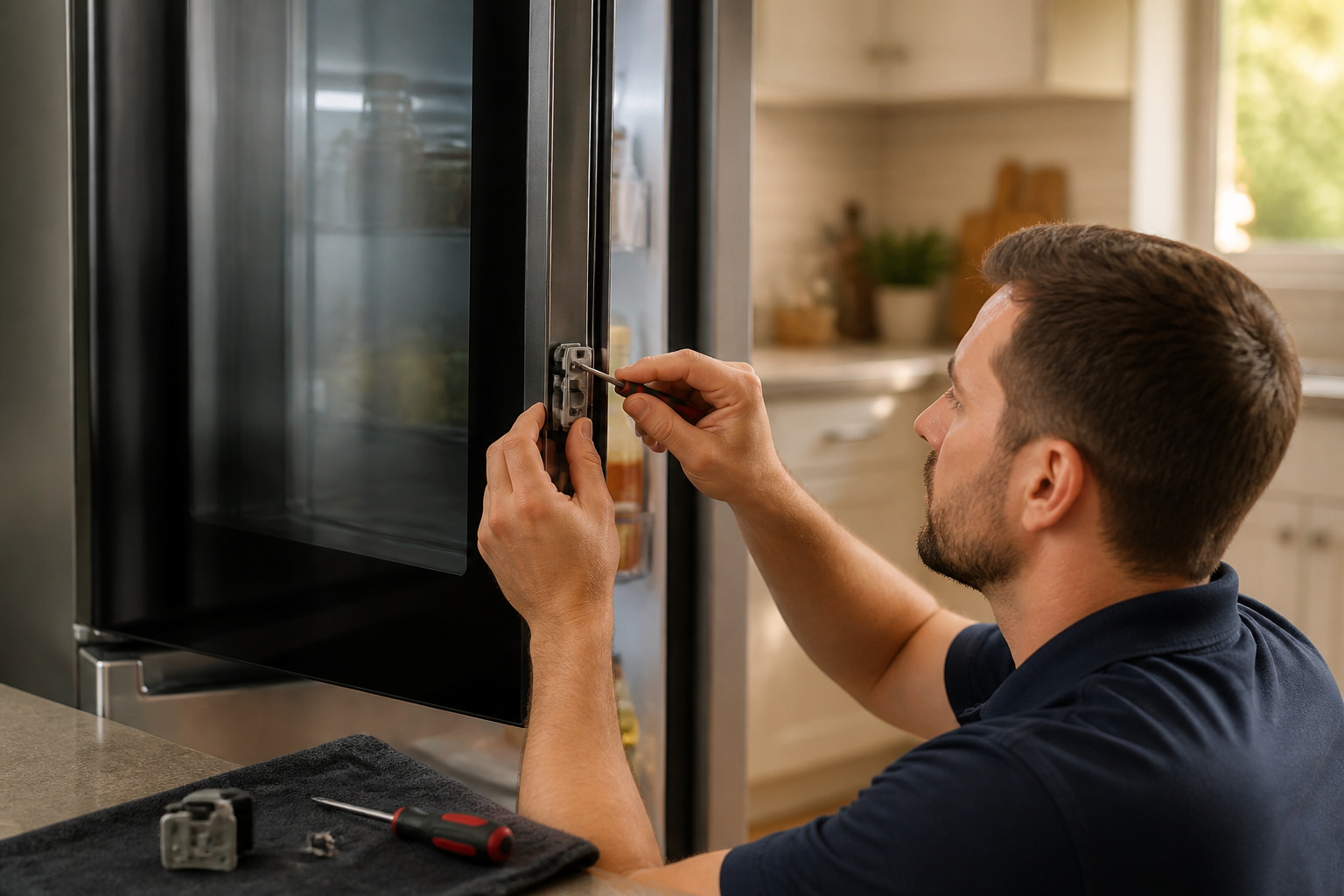
The clasp assembly connects to the door frame via 2-3 Phillips head screws (usually #2 Phillips). Remove these screws carefully, as they’re often coated with thread-locking compound. Clean the screw threads with a cloth to remove any residue. The clasp assembly may also have a small wiring harness for LED indicators – disconnect this by gently pulling the connector apart.
Step 6: Remove the Old Clasp
With mounting screws removed, the old clasp assembly should lift straight out of its housing. If resistance is encountered, check for additional clips or catches holding the assembly in place. Note the orientation of any springs or moving parts before complete removal.
Step 7: Prepare the New Clasp
Unpack the replacement clasp assembly and compare it directly with the old part to confirm proper fit. Some replacement kits include updated spring mechanisms or reinforced mounting points. Apply a small amount of white lithium grease to any pivot points as specified in the installation instructions.
Step 8: Install the New Clasp Assembly
Position the new clasp assembly in the mounting location, ensuring proper alignment with the door frame. Thread the mounting screws by hand initially to prevent cross-threading. Tighten screws to 15-20 inch-pounds using a torque-limiting screwdriver if available. Over-tightening can crack the plastic housing.
Step 9: Reconnect Electrical Components
If your model includes LED indicators or electronic latching, reconnect the small wiring harness. Ensure the connector clicks securely into place and that no wires are pinched or strained during door operation.
Step 10: Test and Adjust Alignment
Slowly close the door-in-door panel while observing the clasp engagement. The mechanism should engage smoothly with an audible click approximately 1/4 inch before the door reaches full closure. If adjustment is needed, most clasps have slotted mounting holes allowing 2-3mm of positioning adjustment.
Step 11: Final Testing
Operate the door through several open/close cycles to verify proper operation. Check for consistent engagement, proper sealing around the door gasket, and smooth operation without binding. Replace the decorative cover and any removed shelving.
When the Issue is the Hinge Rather Than the Clasp
Sometimes door alignment problems stem from worn hinges rather than clasp failure. Hinge-related symptoms include:
- Door panel sagging or sitting lower than normal
- Visible gaps at the top or bottom of the door when closed
- Grinding or squeaking sounds during door operation
- Excessive play or looseness in the door panel
The door-in-door hinges are located at the bottom of the panel and consist of a pivot pin assembly (part AED73174301 for most models). Hinge replacement follows a similar process but requires complete door removal and may need spring tension adjustment. This repair typically requires professional service due to the precise calibration needed for proper door alignment.
Temporary Fixes While Waiting for Parts
If replacement parts are delayed, these temporary solutions can restore basic functionality:
- Magnetic strips: Apply thin magnetic tape along the door edge to provide additional holding force
- Adjustment shimming: Use thin plastic washers behind the clasp mounting points to improve engagement
- Spring reinforcement: Carefully stretch existing springs slightly to increase tension (risk of breakage)
- External latch: Install a small cabinet latch on the door exterior as a backup securing method
These solutions are temporary only and may affect the door’s appearance or warranty coverage. Order proper replacement parts as soon as possible for permanent repair.
Frequently Asked Questions
How long does a door clasp replacement take?
A complete door clasp replacement typically takes 45-60 minutes for experienced DIY repair persons. First-time repairs may require 90 minutes, particularly if door alignment adjustment is needed. The majority of time is spent in careful disassembly and testing rather than actual part replacement.
Why do LG InstaView door clasps fail so frequently?
The door-in-door mechanism experiences significantly more operating cycles than traditional refrigerator doors – often 10-15 times daily compared to 3-5 for main doors. The plastic clasp components undergo repeated stress loading, and the spring mechanisms lose tension over time. Additionally, the heavy glass panel creates substantial leverage forces on the clasp assembly during operation.
Can I prevent future clasp failures?
Yes, several maintenance practices extend clasp life: avoid slamming the door closed, ensure the door isn’t overloaded with heavy items, clean the clasp mechanism monthly with a damp cloth, and address alignment issues promptly before they cause uneven wear. Lubricating pivot points annually with white lithium grease also helps prevent premature wear.
Is this repair covered under LG’s warranty?
Door clasp failures are typically covered under LG’s standard parts warranty for the first year, and some extended warranties may cover this repair up to 5 years. However, warranty coverage requires professional installation. DIY repairs may void warranty coverage, so check your warranty status before proceeding with self-repair.
What if the new clasp doesn’t align properly?
Misalignment usually results from incorrect installation sequence or worn door hinges. First, verify the clasp is mounted in the exact position as the original using your reference photos. If alignment remains poor, check door hinge condition and adjust the clasp position using the slotted mounting holes. Severe misalignment may indicate hinge replacement is needed.
Can I upgrade to a more durable clasp mechanism?
LG has issued updated clasp assemblies for some models that address early failure issues. These updated parts (typically identified by a different final digit in the part number) feature reinforced mounting points and improved spring mechanisms. Contact LG customer service with your model number to confirm if an updated clasp assembly is available for your specific refrigerator.
When to Call a Professional
Most of the repairs in this guide are within reach for a careful DIYer with basic tools. In my experience, if you see any spiderwebbing, chips, or stress cracks radiating from the clasp mounting point on the glass panel itself — not just the clasp or bracket — stop immediately and call a certified technician, because that glass is under tension and handling it further without proper support equipment creates a serious injury risk. When in doubt, a diagnostic service call typically costs $80–$120 and can save you from a misdiagnosis that costs more in parts.
Recommended Parts & Tools
LG Refrigerator Door Hinge and Clasp Assembly Kit
This OEM replacement kit includes the door clasp mechanism and associated hardware specifically designed for LG InstaView refrigerators. The kit ensures proper alignment and secure closure of your glass door panel. Check current pricing on Amazon.
TEKTON 3/8-Inch Drive Socket and Ratchet Set
You’ll need various socket sizes to remove the door panel and access the clasp assembly bolts. This comprehensive set includes both metric and standard sizes commonly used in appliance repairs. Check current pricing on Amazon.
Weiman Stainless Steel Cleaner and Polish
After completing the repair, you’ll want to clean fingerprints and restore shine to your InstaView glass door. This streak-free formula is safe for both stainless steel surfaces and glass panels. Check current pricing on Amazon.