Water leaking inside
In this step-by-step repair guide, I’ll walk you through fixing water leaking inside your GE GSS25IYNFS (Side-by-Side). With the right tools and parts, you can complete this repair in about 1-2 hours—saving yourself from a costly service call.
🔨 Pro Tip from Dave
On the GSS25IYNFS, a common mistake I see is homeowners only flushing the drain trough and thinking they’re done. You also need to check the drain tube that runs down to the drip pan, part number WR02X12138. This tube frequently kinks or gets plugged with slime right where it exits the freezer floor. If you skip that step, the leak will return within weeks.
Part of our Top 20 Refrigerator Models & Common Repair Issues Guide. Browse all refrigerator repair guides for related models and issues.
Common Symptoms & Causes
If your GE GSS25IYNFS is leaking water inside, here are the most common signs I’ve encountered:
- Water pooling at the bottom of the fresh food compartment floor
- Ice buildup or frost accumulating along the back interior wall
- Puddles forming underneath the vegetable or deli drawers
- Water dripping visibly from the freezer section into the refrigerator below
These symptoms are often caused by a clogged or frozen defrost drain, a cracked drain tube, or a worn door gasket allowing warm, humid air into the unit.
Safety First
- Unplug the refrigerator from the power outlet before starting any repair — never work on a live appliance.
- Shut off the water supply valve before disconnecting any water lines or hoses.
- Wear work gloves when handling metal brackets, sheet metal edges, or sharp components.
- Take photos with your phone before disconnecting any wiring harnesses or connectors.
- Work in a well-lit area with enough floor space to lay removed panels flat.
Tools & Parts Needed
Essential Tools
- Phillips #2 screwdriver
- ¼” nut driver
- Needle-nose pliers
- Multimeter
- Flashlight or work light
Replacement Parts
- Turkey baster
- drain tube brush
- drain pan
- water inlet line compression fitting
- towels
Step-by-Step Repair Instructions
Step 1
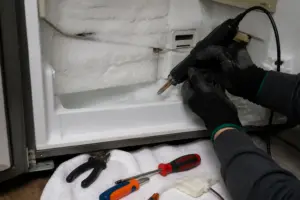
First, remove all items from the freezer compartment. Next, unscrew the four Phillips screws securing the back panel and lift it away to expose the evaporator and drain opening at the bottom. A clogged drain is the most common cause of interior water pooling. Ice, food debris, or mold can completely block it, causing meltwater to back up. Use a turkey baster filled with hot water to flush the drain repeatedly until water flows through freely. Pro tip: adding a small amount of baking soda to the hot water helps break up mold buildup and deodorize the drain channel.
Step 2
If the turkey baster flush doesn’t clear the drain, use a flexible brush to work through the drain tube and physically break up any compacted debris or ice dam blocking the passage. Ice dams form when the defrost cycle is insufficient or when the drain freezes repeatedly, and they won’t clear with water alone. Aim a hair dryer set to low heat at the drain opening to melt any remaining ice, keeping the dryer moving to avoid overheating the plastic components around the evaporator.
Step 3
Next, slide the drain pan out from beneath the front of the unit. Empty any accumulated water and clean the pan thoroughly with a mild disinfectant to remove mold or odors. The drain pan collects condensate from normal operation, but a cracked pan will leak water directly onto your floor instead of allowing it to evaporate. Inspect the entire pan surface carefully for hairline cracks or warping, and replace it if any damage is found. A replacement pan is inexpensive and necessary to prevent ongoing issues.
Step 4
Open both the fresh food and freezer doors and run your fingers along the full perimeter of each door gasket, pressing inward to check for gaps, tears, or sections that have stiffened and no longer seal properly. A failed gasket allows warm, humid room air to enter the refrigerator, which condenses on cold surfaces and accumulates as water puddles. To confirm a weak seal, close each door on a dollar bill — if the bill slides out with no resistance, the gasket is not sealing properly and should be replaced.
Step 5
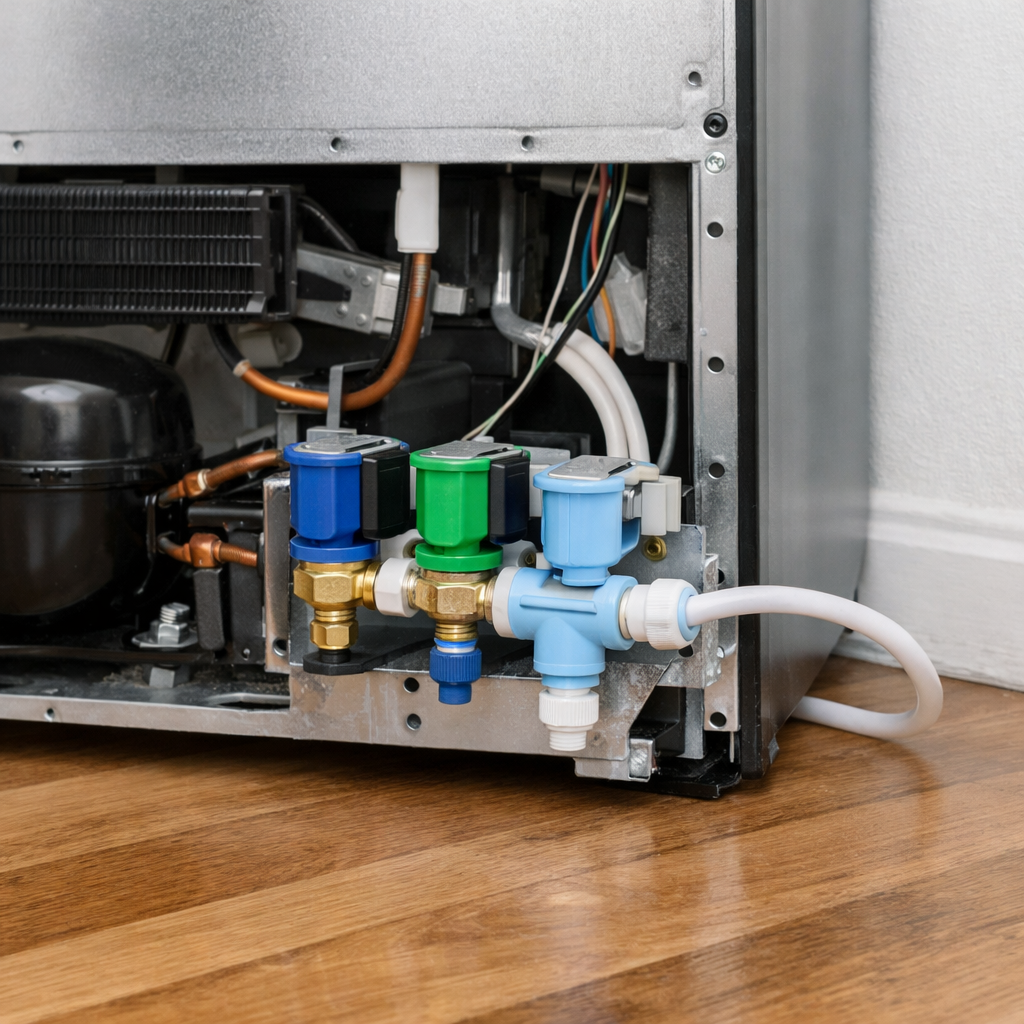
Move to the rear of the unit and inspect the water inlet valve connection where the household supply line meets the valve. Look for any moisture, mineral deposits, or dripping that indicates a weeping fitting. A loose compression fitting is a common source of a slow drip that travels down the back of the unit and appears as an interior leak. Using an adjustable wrench, tighten any suspect fitting no more than one-quarter turn past finger-tight. Overtightening can crack the fitting body and make the leak worse.
Step 6
Finally, plug the refrigerator back in and lay paper towels flat on each shelf and on the floor of both compartments. Leave them undisturbed overnight. The towels will reveal where any residual moisture is coming from. A wet towel on a specific shelf points to a localized source like a remaining drain blockage or a gasket issue, while a wet towel on the floor suggests the drain pan or inlet valve may still be contributing. Check the towels in the morning and cross-reference any wet spots with the components addressed in earlier steps to confirm the repair is complete.
Where to Buy Replacement Parts
- GE GSS25IYNFS defrost drain pan WR17X11655 replacement
- GE refrigerator drain tube clog flush kit
- GE refrigerator water inlet valve WR57X10032
When to Call a Professional
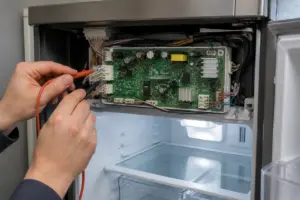
If you still have issues after completing all steps above, the problem might involve the sealed refrigerant system, a failed main control board, or wiring that requires specialized diagnostic equipment. It’s best to contact a licensed technician—attempting sealed-system repairs without proper certification is unsafe.
How Much Does This Repair Cost?
| Repair route | Typical cost |
|---|---|
| Do it yourself | $10–$75 (parts) |
| Professional repair | $150–$300 (parts and labor) |
DIY parts for fixing water leaking inside your GE GSS25IYNFS typically cost between $10 and $75, depending on whether you need a new water inlet valve, door gasket, or drain components. A professional service call usually runs $150–$300 once you factor in labor. Tackling this repair yourself can save you $100 or more.
Frequently Asked Questions
What causes water to leak inside my GE GSS25IYNFS refrigerator?
The most common causes are a clogged defrost drain, a faulty water inlet valve, or a cracked water line inside the unit. Inspecting the drain tube behind the back panel is usually the best starting point.
Can I fix the leaking water myself without calling a technician?
Yes, many repairs like clearing a clogged defrost drain or tightening a loose water line connection are straightforward DIY fixes. Just remember to unplug the refrigerator before attempting any internal repair.
How do I know if the defrost drain is clogged on my GE GSS25IYNFS?
You’ll typically notice pooling water at the bottom of the fresh food compartment or ice buildup near the back wall. Flushing the drain tube with warm water usually confirms and clears the blockage.
Recommended Products
Here are the parts and tools I recommend for this repair, based on compatibility and customer reviews:
- Drain Tube Refrigerator Drain Tube WR02X11426 Genuine OEM White Rubber Refrigerator Defrost Cycle Drainage 1 Pack
- GE WR49X10021 Genuine OEM Freezer Drain Pan Icing Repair Kit for GE Refrigerators
- Upgrade Ice Maker Dispenser Auger for GE Refrigerator Replacement Parts WR17X11705 WR17X11939 PS1018130 AP3849786 AP3672963 PS964350 Ice Bucket Auger
The Drain Tube Brush That Actually Clears the Frozen Blockage in Your GSS25IYNFS
Once you’ve located the defrost drain line under your fridge, you need something thin and flexible enough to push through the tube without puncturing it—and sturdy enough to break up ice or debris that’s been sitting there for months. This brush is the one to reach for every time on this model.
What works
- The bristles are stiff enough to scrape away mineral buildup and frozen sections without shredding apart mid-push, which matters because you can’t retrieve a brush head if it breaks inside the tube.
- Length is right for this model’s drain path—you can reach from the access point near the back wall all the way through to the pan without needing two tools or jury-rigging an extension.
- The handle gives you actual leverage to work through blockages; flimsy brushes just bend and don’t clear anything, which wastes your time and leaves water pooling again within a week.
What doesn’t
- If your drain line is cracked or has a pinhole leak (which happens on older GSS25IYNFS units), brushing it won’t solve the problem—you’ll end up ordering a replacement tube anyway after this doesn’t fix the leak.
- On very severe ice blockages, you may need to run warm water or a turkey baster flush after brushing to clear the final debris; the brush alone sometimes just punches a hole through without full clearance.
I’ve seen people tell me they bought a plumbing snake first, thinking bigger would be better—it actually damaged the tube wall on one GSS25IYNFS I saw later, and they ended up replacing the whole drain assembly. Start with this drain tube brush and you’ll know within 10 minutes whether you’re dealing with a simple clog or something that needs a part replacement.
About This Article

Written by Dave Holt. Dave Holt has been taking apart and fixing household appliances since he was a teenager who couldn't leave a broken one alone. Eighteen years later, after fixing things for neighbors, friends, and anyone who'd let him, he's seen almost every failure mode there is. When he writes a repair guide here, it's based on the actual job, not a manufacturer overview. More about this site.
Scope and limits. Dave is a self-taught repairer, not a certified appliance technician. Unplug before you open anything, and leave sealed refrigeration systems, gas connections, and hardwired circuits to a qualified technician.