Rinse aid not dispensing
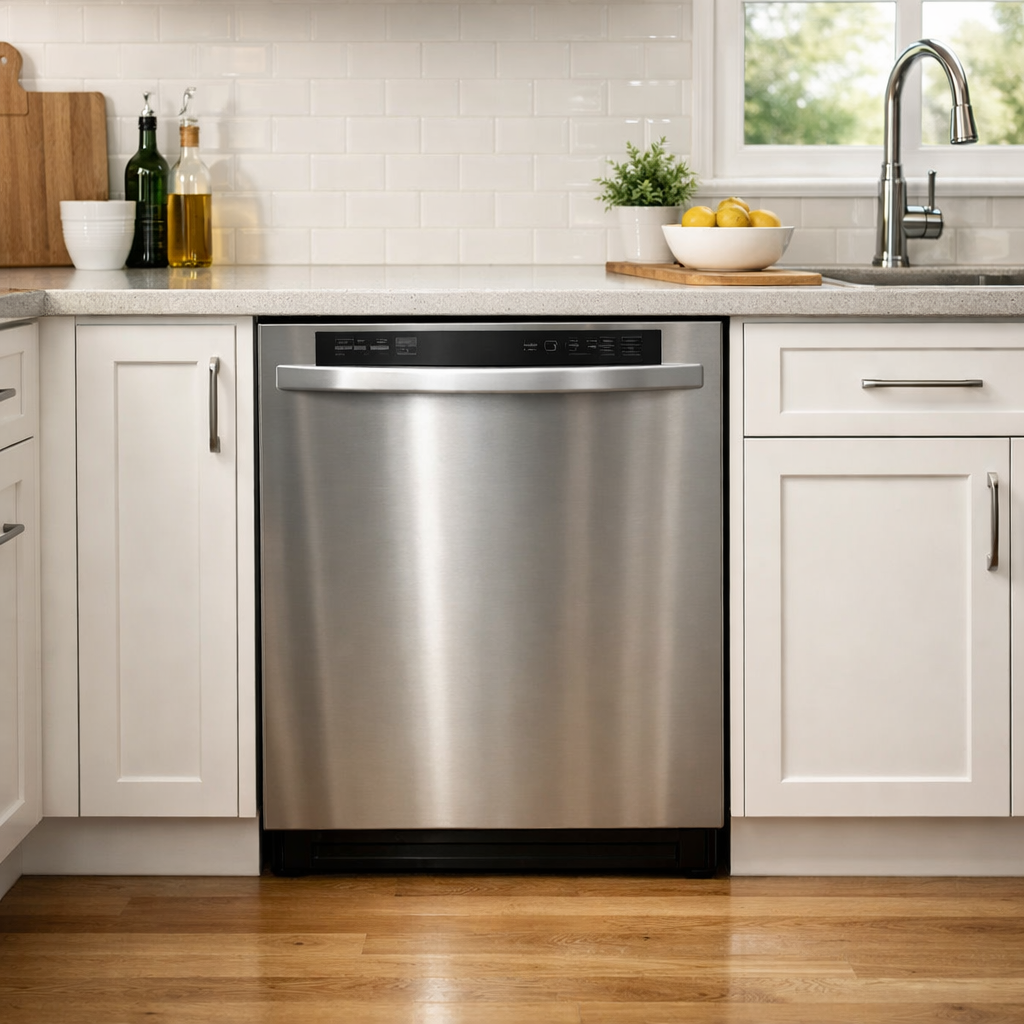
In this step-by-step repair guide, I’ll walk you through fixing the issue of rinse aid not dispensing on your Maytag MDB8959SKZ. With the right tools and parts, you can complete this repair in just 1–2 hours and avoid a costly service call.
🔨 Pro Tip from Dave
In my experience with the MDB8959SKZ, one often overlooked cause is the rinse aid dispenser’s actuator not fully retracting. Many technicians miss this and unnecessarily replace the entire door panel. Before ordering parts, pop off the dispenser cap and manually depress the actuator pin; if it doesn’t spring back freely, test the wax motor (see Step 4) before replacing the entire dispenser assembly.
Part of our Top 20 Dishwasher Models & Common Repair Issues Guide. Browse all dishwasher repair guides for related models and issues.
Common Symptoms & Causes
If you’re experiencing issues with your Maytag MDB8959SKZ, these symptoms typically indicate that the rinse aid is not dispensing correctly during the wash cycle.
- Dishes and glasses come out with water spots or streaks after a full cycle
- The rinse aid indicator light stays on even after refilling the dispenser reservoir
- Dishes feel wet or fail to dry properly at the end of the cycle
- The rinse aid cap or dispenser door does not open during the rinse cycle
These problems are usually caused by a faulty rinse aid dispenser assembly, a worn or cracked dispenser cap, or a failed wax motor that controls the dispenser door opening mechanism.
Safety First
- Unplug the dishwasher from the power outlet before starting any repair — never work on a live appliance.
- Shut off the water supply valve before disconnecting any water lines or hoses.
- Wear work gloves when handling metal brackets, sheet metal edges, or sharp components.
- Take photos with your phone before disconnecting any wiring harnesses or connectors.
- Work in a well-lit area with enough floor space to lay removed panels flat.
Tools & Parts Needed
Essential Tools
- Phillips #2 screwdriver
- Torx T20 screwdriver
- Needle-nose pliers
- Multimeter
- Flashlight
Replacement Parts
- Rinse aid dispenser cap
- rinse aid wax motor
- flat-head screwdriver
Step-by-Step Repair Instructions
Step 1
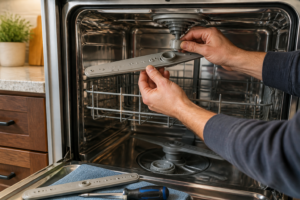
Start by opening the dishwasher and removing the rinse aid cap by turning it counter-clockwise. Check that the rinse aid level reaches the fill line inside the dispenser reservoir. If the dispenser is empty despite recent filling, the rinse aid is either not being dispensed or is leaking out. Knowing the starting level rules out user error before you dig deeper. Pro tip: use a flashlight to clearly see the fill line, as rinse aid is nearly clear and easy to misjudge.
Step 2
After removing the cap, inspect the rubber O-ring seated around its base for any cracks, flattening, or deformation. A damaged O-ring breaks the seal and allows rinse aid to leak directly into the tub between cycles, causing the reservoir to drain without dispensing during the rinse phase. Replace the cap assembly if the O-ring shows any wear — it’s inexpensive and sold as a unit.
Step 3
Next, locate the rinse aid dosage dial inside the dispenser compartment and turn it between settings, feeling for resistance as it clicks through positions. The dial controls how much rinse aid is released per cycle, and if it spins freely with no detectable clicks or resistance, the dial mechanism is stripped and will not hold a setting. A stripped dial means the dispenser cannot regulate output reliably, so the entire dispenser assembly must be replaced.
Step 4
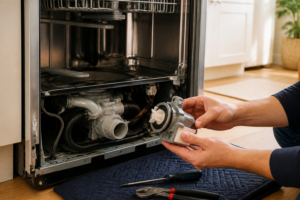
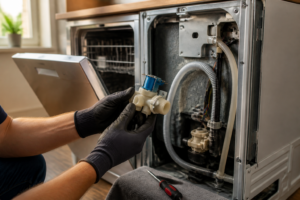
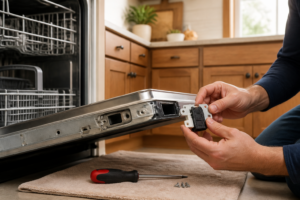
Before proceeding, disconnect power to the dishwasher at the breaker — you will be working inside the inner door panel with exposed wiring. Remove the inner door panel by unscrewing the four T20 Torx screws to access the rinse aid wax motor located behind the dispenser housing. Disconnect its harness and test resistance across its terminals with a multimeter set to Rx1; a healthy motor reads 300–500Ω. A reading of infinite resistance (open circuit) means the wax motor has failed and will not open the dispenser door during the rinse cycle — replace the motor.
Step 5
With the dispenser compartment open and dry, locate the small vent opening inside the compartment — this opening allows air displacement so rinse aid can flow out freely during dispensing. If it is clogged with dried or crystallized rinse aid residue, a vacuum lock forms and prevents the rinse aid from releasing even when the wax motor is functioning correctly. Gently clear the opening with a toothpick, being careful not to enlarge or damage the vent hole.
Step 6
Reassemble the door, restore power, and run three consecutive normal wash cycles with the dosage dial set to the mid-range position. After each cycle, open the dispenser and check the fill level — at a mid setting, you should see the level drop approximately one-eighth of the reservoir capacity per cycle. If the level does not change across all three cycles despite the previous steps checking out, the dispenser assembly has an internal mechanical failure and should be replaced as a unit.
Where to Buy Replacement Parts
- Maytag MDB8959SKZ rinse aid dispenser cap WPW10524922 replacement
- Maytag dishwasher rinse aid wax motor replacement
- Maytag dishwasher dispenser dial broken — search PartSelect or RepairClinic for the correct rinse aid dispenser part
When to Call a Professional
If the issue persists after completing all steps above, the problem may involve a failed main control board, a seized circulation or drain pump, or wiring that requires specialized diagnostic equipment. At this point, it’s time to contact a licensed appliance technician — and remember to shut off the water supply valve before any work that opens the fill or drain circuit.
How Much Does This Repair Cost?
| Repair route | Typical cost |
|---|---|
| Do it yourself | $10–$50 (parts) |
| Professional repair | $150–$300 (parts and labor) |
The DIY parts for fixing a rinse aid dispensing issue on the Maytag MDB8959SKZ typically cost between $10 and $50, depending on whether you need a new dispenser cap, actuator, or full dispenser assembly. A professional service call usually runs $150–$300 once you factor in labor and parts. Tackling this repair yourself can save you $100 or more.
Frequently Asked Questions
How do I know if the rinse aid dispenser on my Maytag MDB8959SKZ is clogged?
Check the dispenser opening for dried residue or buildup that may be blocking the release. Clean it with warm water and a soft cloth to restore proper flow.
How often should I refill the rinse aid on my Maytag MDB8959SKZ?
Most households need to refill the rinse aid reservoir approximately once a month. Your dishwasher’s indicator light will alert you when the level is low.
Can a faulty dispenser cap cause rinse aid not to dispense?
Absolutely, a cracked or improperly sealed cap can prevent the dispenser from releasing rinse aid correctly. Inspect the cap for damage and replace it if necessary.
Recommended Products
These are the parts and tools I recommend for this repair, based on compatibility and customer reviews:
- BlueStars 8558307 Dishwasher Dispenser Cap – Ultra Durable Rinse Aid Cap Compatible with Whirlpool Kenmore Dishwashers – Replaces WP8558307 8193984 8539095 PS11746426 AP6013204
The Rinse Aid Dispenser Cap That Actually Solves the MDB8959SKZ Dispensing Problem
When rinse aid won’t dispense on this Maytag model, nine times out of ten it’s the cap itself — either the seal has hardened, cracked, or the spring mechanism inside has given up. This is the first part I pull, and replacing it solves the issue before you even need to think about the wax motor.
What works
- The spring and seal inside are stiff enough to actually hold pressure — most aftermarket caps have weak springs that fail within a year.
- Installation is five minutes tops; you unscrew the old cap counterclockwise, wipe the threads clean of dried rinse aid residue, and screw the new one on hand-tight.
- The fit is snug on the MDB8959SKZ dispenser assembly — no wobbling or leaking around the threads after you’ve seated it properly.
What doesn’t
- If your dispenser assembly itself is cracked (you’ll see actual damage to the plastic housing), a new cap won’t fix it — you’ll need the whole dispenser unit.
- The cap alone won’t help if the wax motor inside the dispenser has failed; you’ll still get no dispensing, but that’s a much rarer scenario than a bad cap.
I’ve seen someone order the wax motor first because they thought the dispenser was completely dead — turned out the cap was just cracked and leaking. Start here with the rinse aid dispenser cap before you spend money on costlier parts.
About This Article

Written by Dave Holt. Dave Holt has been taking apart and fixing household appliances since he was a teenager who couldn't leave a broken one alone. Eighteen years later, after fixing things for neighbors, friends, and anyone who'd let him, he's seen almost every failure mode there is. When he writes a repair guide here, it's based on the actual job, not a manufacturer overview. More about this site.
Scope and limits. Dave is a self-taught repairer, not a certified appliance technician. Unplug before you open anything, and leave sealed refrigeration systems, gas connections, and hardwired circuits to a qualified technician.