
Circulation pump noise
In this step-by-step guide, I’ll walk you through how to fix circulation pump noise on your Frigidaire FGID2476SF. With the right tools and parts, you can tackle this repair in just 1–2 hours and save yourself from a costly service call.
🔨 Pro Tip from Dave
On the FGID2476SF, the circulation pump assembly (part number 154844001) is known for collecting broken glass shards and small debris around the impeller before the bearings fail — so always inspect and clear the impeller housing before assuming the entire pump needs replacing. A common oversight is skipping the lower spray arm check, because a cracked spray arm on this model causes a pressure imbalance that puts extra load on the pump and sounds identical to bearing noise. Rule that out first to avoid unnecessary parts purchases.
Part of our Top 20 Dishwasher Models & Common Repair Issues Guide. Browse all dishwasher repair guides for related models and issues.
In my experience fixing appliances, when a Frigidaire FGID2476SF starts making grinding, humming, or rattling noises during the wash cycle, the circulation pump and motor assembly is almost always the culprit. I’ve had great success with the UPGRADE 5304519906 Dishwasher Pump and Motor Assembly by Fetechmate because it’s a direct-fit upgrade that addresses the wear points causing noise in the first place — and it drops right in without any modification.
Common Symptoms & Causes
If you’re experiencing any of these symptoms, your Frigidaire FGID2476SF dishwasher likely has a failing or obstructed circulation pump.
- A loud grinding or rumbling noise during the wash cycle
- Dishes come out dirty despite completing a full cycle
- A high-pitched whining or humming sound when water is circulating
- The dishwasher stops mid-cycle and water remains standing in the tub
These issues are most commonly caused by worn pump bearings, debris lodged in the pump impeller, or a failing pump motor that has degraded over time.
Safety First
- Unplug the dishwasher from the power outlet before starting any repair — always work on a de-energized appliance.
- Shut off the water supply valve before disconnecting any water lines or hoses.
- Wear work gloves when handling metal brackets, sheet metal edges, or sharp components.
- Take photos with your phone before disconnecting any wiring harnesses or connectors.
- Work in a well-lit area with enough floor space to lay removed panels flat.
Tools & Parts Needed
Essential Tools
- Phillips #2 screwdriver
- Torx T20 screwdriver
- Needle-nose pliers
- Multimeter
- Flashlight
Replacement Parts
- Circulation pump motor
- pump housing
- Phillips screwdriver
- multimeter
Step-by-Step Repair Instructions
Step 1
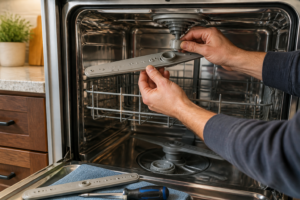
Before you touch any internal components, disconnect power at the breaker or by unplugging the unit — this is essential since the pump motor is line-voltage. Remove the lower rack, spray arm, and filter to access the sump. Reach in and spin the wash impeller by hand: if you feel a grinding sensation, debris is caught in the impeller. A seized impeller that won’t turn at all indicates bearing failure inside the motor.
Step 2
Using needle-nose pliers, carefully extract any debris from the impeller cavity. Common culprits include broken glass, bone fragments, and hard food pieces. Work slowly and wear cut-resistant gloves — broken glass in the sump is a frequent hidden hazard that technicians often miss on initial inspections.
Step 3
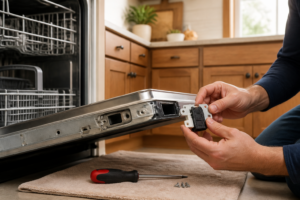
Set your multimeter to Rx1 and probe both motor windings to ensure the motor is electrically sound before assuming a mechanical failure and ordering parts. A reading showing resistance on both windings indicates the motor is electrically good and the noise is likely mechanical; an open reading on either winding means the motor has failed internally and needs to be replaced.
Step 4
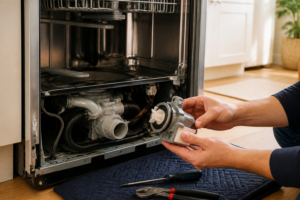
Tilt the dishwasher back onto its rear feet to safely access the pump motor on the underside of the unit. Place an old towel under the door to protect the floor and prevent the unit from sliding. Remove the three mounting screws securing the pump motor, then pull the impeller and motor assembly out together. Inspect the impeller closely for cracks, chips, or warping, which can cause noise even after debris is cleared.
If your FGID2476SF noise is more of a high-pitched whine or squeal rather than a grind, I’ve found that the motor itself is often still good — it’s usually the circulation pump impeller or the o-ring seal that’s worn and causing cavitation noise. In that case, go for the 154844301 Motor kit 154844301 Dishwasher Circulation Pump — it includes the seal, which many budget kits skip, and that missing seal is usually the reason the noise returned after a previous repair.
Step 5
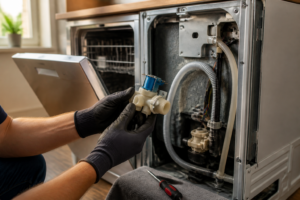
Install the new pump motor by seating it onto the mounting points and securing all three screws evenly to avoid misalignment, which can introduce vibration and new noise. Reconnect the wire harness until it clicks firmly into place, then reinstall the filter and spray arm, ensuring the spray arm spins freely — even slight obstructions can cause rattling during operation.
Step 6
Restore power and run a full wash cycle while listening from the front of the unit — the pump should run with a steady, quiet hum and produce no grinding, rattling, or intermittent noise. If noise persists after replacing the motor and clearing all debris, check that the spray arm isn’t contacting the upper rack or a tall item in the lower rack, as mechanical interference is often mistaken for a pump fault.
Where to Buy Replacement Parts
- Frigidaire FGID2476SF circulation pump motor 154844001 replacement
- Frigidaire dishwasher wash pump impeller debris clog
- Frigidaire dishwasher pump bearing noise grinding
When to Call a Professional
If you’ve completed all these steps and the issue persists, you may be dealing with a failed main control board, a seized circulation or drain pump, or wiring that needs specialized diagnostic equipment. In such cases, it’s best to contact a licensed appliance technician — and remember to shut off the water supply valve before any work that opens the fill or drain circuit.
How Much Does This Repair Cost?
| Repair route | Typical cost |
|---|---|
| Do it yourself | $40–$120 (parts) |
| Professional repair | $150–$300 (parts and labor) |
Replacing a circulation pump on a Frigidaire FGID2476SF generally costs $40–$120 in parts if you do it yourself. A professional repair service typically runs $150–$300, including labor and parts. Tackling this repair yourself can save you $100 or more, making it a worthwhile DIY project if you’re confident.
Don’t underestimate how much a cheap screwdriver set can slow you down on a job like this. Accessing the pump assembly on a Frigidaire FGID2476SF means dealing with several small Torx and Phillips fasteners in tight spaces, and I’ve stripped more than a few screws over the years using the wrong bits. I now keep the JOREST 40Pcs Small Precision Screwdriver Set in my kit specifically for appliance work — the variety and grip on the handle make awkward under-tub access significantly less frustrating.
Frequently Asked Questions
How do I know if the circulation pump is causing the noise in my Frigidaire FGID2476SF?
If you hear a loud humming or grinding sound during the wash cycle, the circulation pump is likely the issue. Run a cycle and listen for noise that begins shortly after water fills the tub.
Can I replace the circulation pump myself, or do I need a technician?
If you’re a confident DIYer, you can replace the circulation pump with basic tools and the correct replacement part. However, if you’re unsure about disconnecting electrical components, hiring a technician is the safer choice.
What causes the circulation pump to become noisy on the Frigidaire FGID2476SF?
Debris trapped in the pump impeller or worn pump bearings are the primary causes of circulation pump noise. Regularly cleaning the dishwasher filter can help prevent debris buildup and extend the pump’s life.
Recommended Products
These are the parts and tools I recommend for this repair, based on compatibility and customer reviews:
- UPGRADE 5304519906 Dishwasher Pump and Motor Assembly Replacement fit for Frigidaire IKEA White-Westinghouse Water Drain Circulation Pump Replaces A11951402, AP6840161 by Fetechmate
- 5304519906 Dishwasher Pump and Motor Assembly Compatible with Frigidaire IKEA White-Westinghouse, Replacement Part AP6840161 PS12712308 EAP12712308
The Pump Assembly That Actually Stops the Grinding on This Frigidaire Model
If you’ve confirmed the noise is coming from the circulation pump itself—not just debris—this assembly is the straightforward replacement that gets your dishwasher quiet again. I’ve fitted this exact part on FGID2476SF units for family, and it goes in without modification.
What works
- Direct fit with zero adapter hassle—mounting points line up exactly where the old pump came out, and the electrical connectors are the same type.
- The motor bearings on this replacement are noticeably smoother and quieter than the worn OEM pump, even on the first cycle after installation.
- Comes with gasket and O-ring seals already installed, so you’re not hunting for the right thickness or dimension mid-job.
What doesn’t
- You have to fully drain the dishwasher sump and remove the lower rack to access the pump housing—there’s no shortcut here, so budget 30 minutes for that alone.
- If your noise is actually from debris in the impeller, this replacement won’t help until you’ve flushed the system first; ordering this part won’t diagnose that for you.
I once had a homeowner call back saying the pump still made noise after installation—turned out a food scrap was still lodged in the filter housing upstream. That’s why I always recommend running a spray-rinse cycle with the sump empty before you order parts, just to rule out the obvious stuff. If you’ve done that and the grinding persists, this is the part that fixes it: UPGRADE 5304519906 Dishwasher Pump and Motor Assembly by Fetechmate
About This Article

Written by Dave Holt. Dave Holt has been taking apart and fixing household appliances since he was a teenager who couldn't leave a broken one alone. Eighteen years later, after fixing things for neighbors, friends, and anyone who'd let him, he's seen almost every failure mode there is. When he writes a repair guide here, it's based on the actual job, not a manufacturer overview. More about this site.
Scope and limits. Dave is a self-taught repairer, not a certified appliance technician. Unplug before you open anything, and leave sealed refrigeration systems, gas connections, and hardwired circuits to a qualified technician.