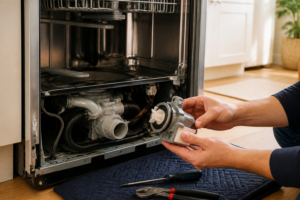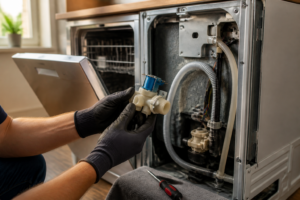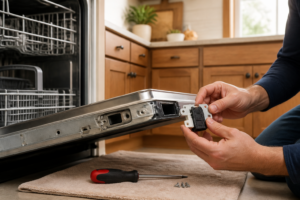
Pump filter clog
In this step-by-step guide, I’ll walk you through how to fix a pump filter clog on your LG LDF7774ST. With just a few tools and some elbow grease, most homeowners can complete this repair in about 1–2 hours, saving themselves the expense of a service call.
🔨 Pro Tip from Dave
On the LDF7774ST, the cylindrical filter (part #5231ED3003A) has a fine mesh inner screen that often goes unnoticed during cleaning. Food debris can accumulate there, leading to ongoing drainage issues even after you’ve cleaned the outer filter. When reinstalling the filter, ensure you turn it firmly clockwise to lock it into place; a poorly seated filter will allow debris to bypass and cause clogs again within weeks.
Part of our Top 20 Dishwasher Models & Common Repair Issues Guide. Browse all dishwasher repair guides for related models and issues.
Common Symptoms & Causes
If your LG LDF7774ST is showing signs of a pump filter clog, you may notice one or more of these symptoms.
- Dishes come out dirty or covered in gritty residue after a full wash cycle
- Standing water remains at the bottom of the dishwasher tub after draining
- The dishwasher displays an “OE” drain error code during or after a cycle
- Unusual humming or straining noise coming from the bottom of the unit while running
This issue is usually caused by a buildup of food debris, grease, and mineral deposits inside the pump filter, which restricts proper water flow and drainage.
Safety First
- Unplug the dishwasher from the power outlet before starting any repair — never work on a live appliance.
- Shut off the water supply valve before disconnecting any water lines or hoses.
- Wear work gloves when handling metal brackets, sheet metal edges, or sharp components.
- Take photos with your phone before disconnecting any wiring harnesses or connectors.
- Work in a well-lit area with enough floor space to lay removed panels flat.
Tools & Parts Needed
Essential Tools
- Phillips #2 screwdriver
- Torx T20 screwdriver
- Needle-nose pliers
- Multimeter
- Flashlight
Replacement Parts
- Filter assembly
- O-ring seal
- soft brush
- white vinegar
Step-by-Step Repair Instructions
Step 1
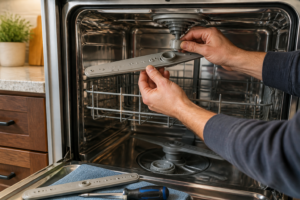
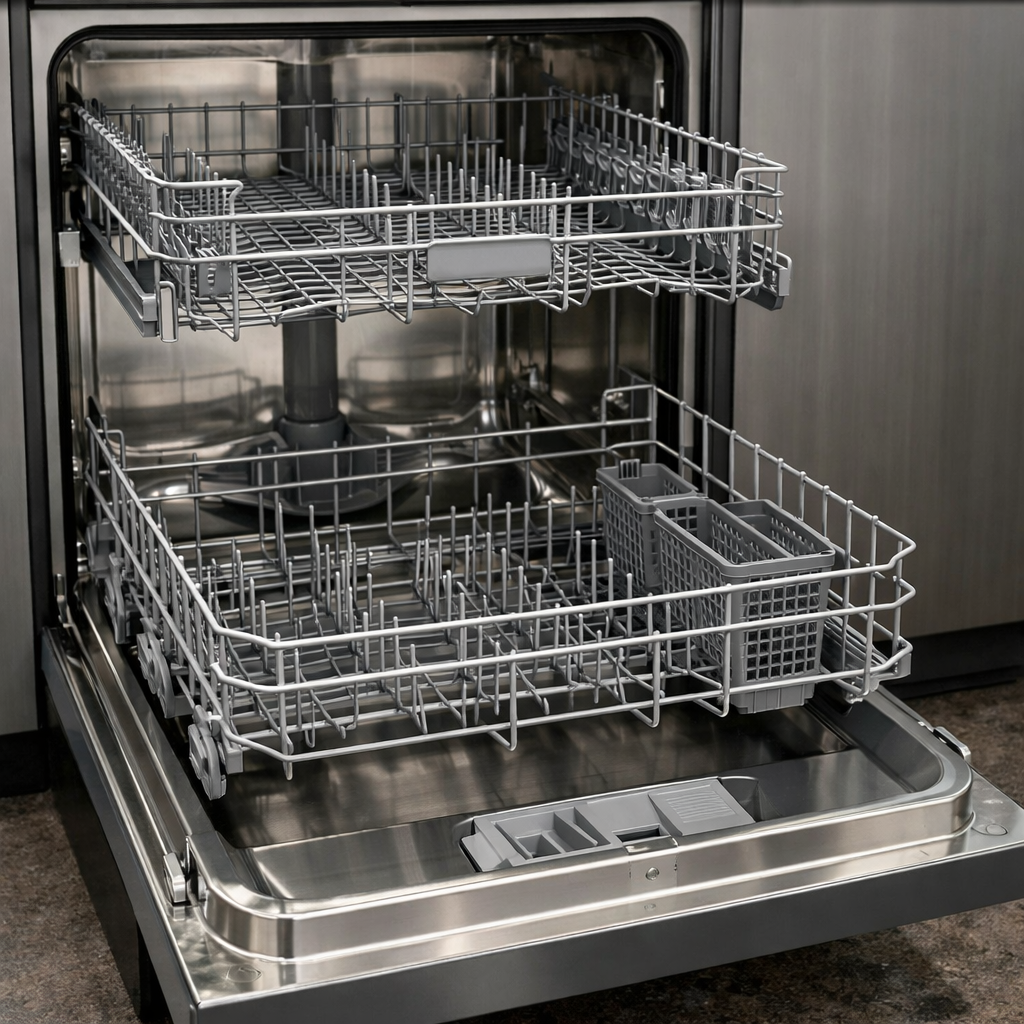
Start by pulling out the lower dish rack completely to give yourself clear access to the tub floor. Next, remove the lower spray arm by twisting it counter-clockwise until it releases. Locate the round filter assembly in the center of the tub floor — it has a center handle and is your primary defense against food debris reaching the pump. Skipping the spray arm removal risks knocking it loose during filter work and misaligning it upon reinstallation.
Step 2
Twist the filter assembly counter-clockwise a quarter turn to unlock it, then lift it straight up and separate the fine mesh inner filter from the coarse outer filter. These two filters work together — the coarse filter catches large debris while the fine mesh stops smaller particles from entering the pump. A clog in either one restricts drainage and can leave standing water in the tub. Handle the fine mesh filter gently, as forcing the two pieces apart can bend or tear the mesh.
Step 3
Rinse both filters under warm running water and scrub gently with a soft brush to dislodge food particles. Be careful not to use anything abrasive that could damage the mesh. If you see white mineral scale or a greasy film—both of which restrict water flow through the filter—soak the filters in undiluted white vinegar for 15 minutes, then rinse thoroughly. Avoid bleach, as it can degrade the mesh material over time.
Step 4
Before reinstalling, carefully inspect the O-ring seated around the base of the filter for cracks or deformation—this small rubber seal is critical. A compromised O-ring allows dirty, debris-laden water to bypass the filter entirely and flow directly to the pump. If the O-ring looks damaged or is missing, replace it before proceeding; a correct replacement O-ring for the LDF7774ST is inexpensive and available from LG parts suppliers. Pro tip: lightly moisten the O-ring with water before reinstall to help it seat properly and prevent tearing.
Step 5
Use a soft brush or damp cloth to clean out the filter housing recess in the tub floor, removing any debris or buildup that has accumulated there. This step is crucial because leaving residue in the housing means the tub floor gunk will immediately re-clog your freshly cleaned filter, and it can also prevent the filter from sitting flush and locking correctly. Take a moment to wipe around the housing rim where the O-ring will seat to ensure a clean, secure seal.
Step 6
Reinstall the filter assembly by inserting it into the housing and twisting clockwise a quarter turn until it locks firmly. An unlocked filter can vibrate loose during a cycle, allowing unfiltered water to reach the pump and cause damage. Reattach the lower spray arm by positioning it over its mount and twisting clockwise until you feel and hear it click into place. Finally, run a Normal cycle and observe the wash for proper drainage and water pooling issues to confirm the clog has been resolved.
Where to Buy Replacement Parts
- LG LDF7774ST filter assembly 5231DD3003B replacement
- LG dishwasher sump filter mesh cleaning coarse fine
- LG dishwasher filter O-ring replacement kit
When to Call a Professional
If the issue persists after you’ve followed all these steps, the problem may involve a failed main control board, a seized circulation or drain pump, or wiring that requires specialized diagnostic equipment. At that point, it’s wise to contact a licensed appliance technician — and don’t forget to shut off the water supply valve before any work that opens the fill or drain circuit.
How Much Does This Repair Cost?
| Repair route | Typical cost |
|---|---|
| Do it yourself | Free, or $10–$30 (replacement filter) |
| Professional repair | $150–$300 (parts and labor) |
Clearing a pump filter clog on the LG LDF7774ST can be virtually cost-free as a DIY repair, often requiring no replacement parts. If a damaged filter needs replacing, expect to spend around $10–$30 for the part. Hiring a professional can typically run $150–$300, making the DIY route a smart way to save some serious cash.
Frequently Asked Questions
How often should I clean the pump filter on my LG LDF7774ST?
I recommend cleaning the pump filter on your LG LDF7774ST every one to two months to prevent clogs and maintain optimal washing performance. If you notice standing water or poor cleaning results, check the filter immediately.
Where is the pump filter located on the LG LDF7774ST?
The pump filter is located at the bottom of the dishwasher tub, beneath the lower spray arm. You’ll need to remove the spray arm and filter cover to access it.
Can a clogged pump filter damage my LG LDF7774ST?
Absolutely, a severely clogged filter can strain the pump motor, leading to premature failure and costly repairs. Cleaning it regularly protects your appliance and extends its lifespan.
Recommended Products
Here are the parts and tools I recommend for this repair, based on compatibility and customer reviews:
- GenuineOEMLG OEM LG Dishwasher Mesh Filter for LDF7551ST, LDF7774ST, Silver
- Upgraded 3751DD1001J 3751DD1001C Dishwasher Lower Rack
- Dishwasher Filter Compatible with LG Model Numbers LDF7551BB, LDF7551ST, LDF7551WW, LDF7561ST, LDF7774BB, LDF7774BD, LDF7774ST
The Filter Assembly Replacement That Stops Repeat Clogs on the LG LDF7774ST
If you’ve cleaned out the sump and pump filter multiple times in a season and the water still won’t drain, the filter assembly itself is likely warped or cracked — and cleaning alone won’t fix it. This is the part to go to when a DIYer has already tried the basic sump cleaning and the dishwasher still backs up.
What works
- Fits the LDF7774ST without modification — the LG part number matches exactly, and installation takes about 10 minutes if you’ve already drained the unit.
- The mesh screening is tighter and more durable than the original on older units, which means fewer repeat clogs from food particles slipping through degraded mesh.
- Once installed, drainage improves immediately — no guesswork about whether the problem is really solved.
What doesn’t
- This won’t help if your actual problem is a clogged drain hose or kinked drain line — I’ve had homeowners order this thinking it’s a universal fix for all drainage issues.
- Installation requires draining the dishwasher completely and removing the lower rack, so it’s not a five-minute fix like a basic filter cleaning.
The mistake I see most often is homeowners buying this assembly when the real culprit is actually a kinked or disconnected drain hose behind the unit — always check that first before ordering parts. But if the filter housing itself is visibly cracked or warped, Filter assembly is the right call.
About This Article

Written by Dave Holt. Dave Holt has been taking apart and fixing household appliances since he was a teenager who couldn't leave a broken one alone. Eighteen years later, after fixing things for neighbors, friends, and anyone who'd let him, he's seen almost every failure mode there is. When he writes a repair guide here, it's based on the actual job, not a manufacturer overview. More about this site.
Scope and limits. Dave is a self-taught repairer, not a certified appliance technician. Unplug before you open anything, and leave sealed refrigeration systems, gas connections, and hardwired circuits to a qualified technician.