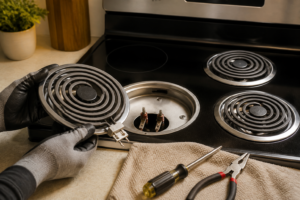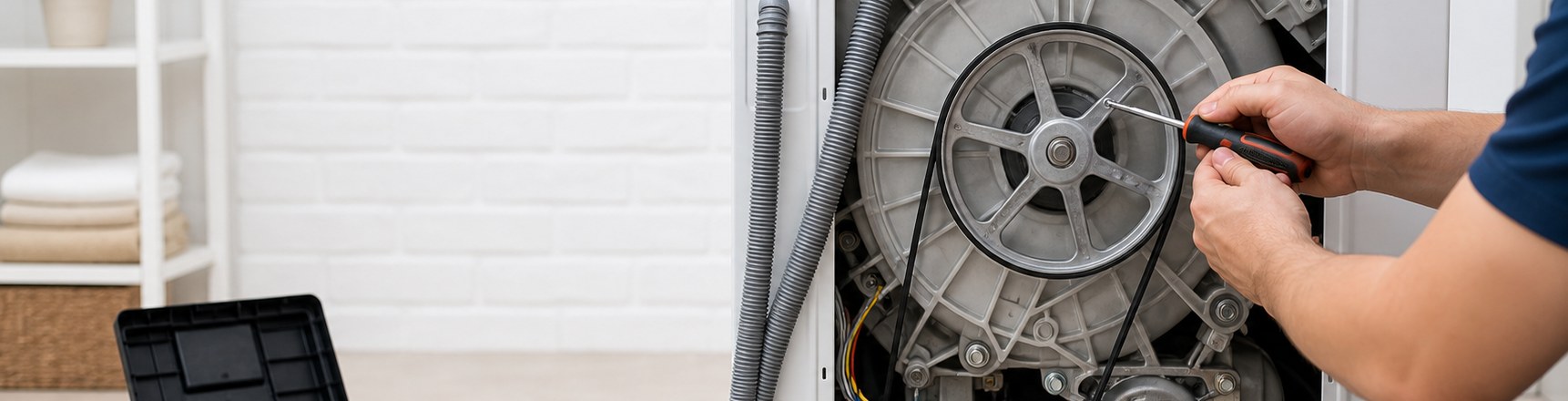
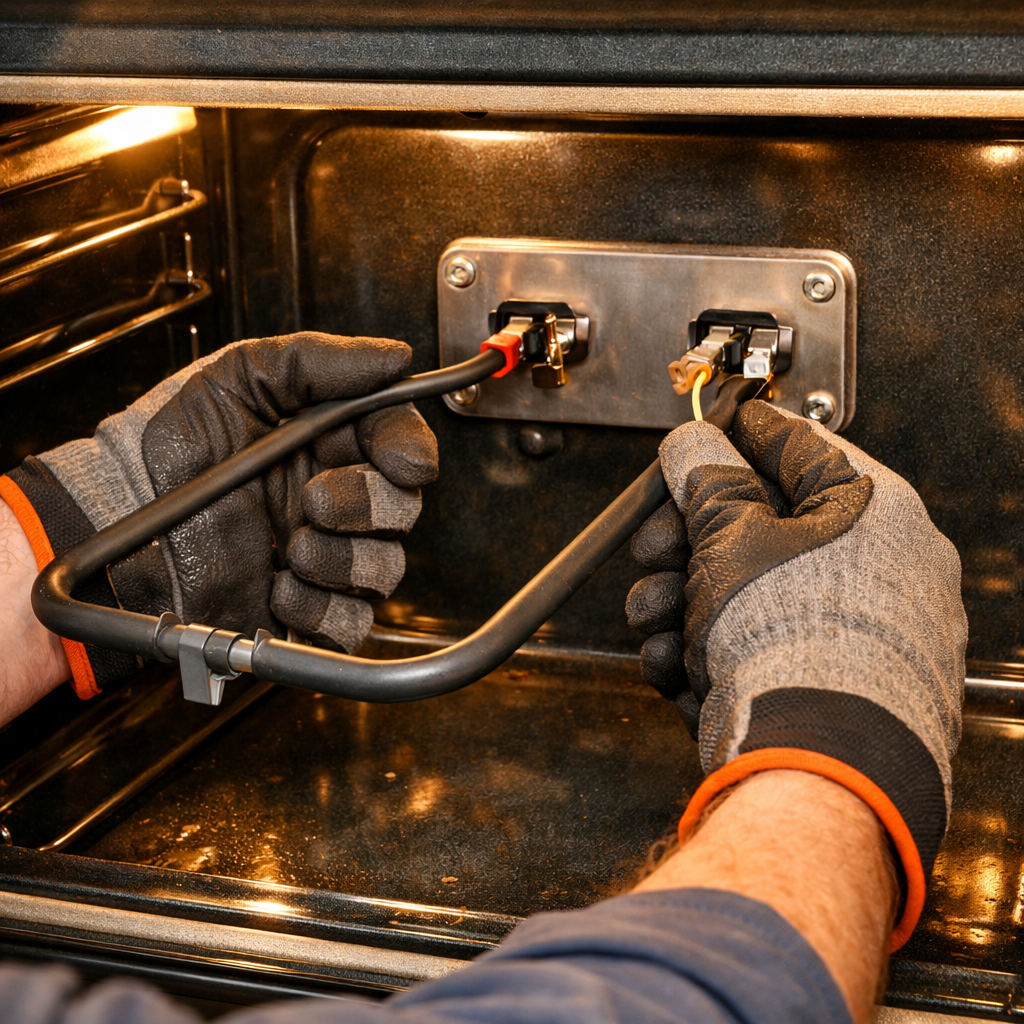
Heating element board
In this guide, I’ll walk you through fixing the heating element board on your GE PHS930SLSS (Induction Range). With some basic tools and the right parts, most homeowners can tackle this repair in about 1–2 hours, thereby avoiding a costly service call.
🔨 Pro Tip from Dave
On the GE PHS930SLSS, the induction heating board (WB27X26041 is the board commonly associated with this unit’s cooking zone control) is located beneath the cooktop glass and is sensitive to heat stress from blocked ventilation. A mistake I often see is reinstalling the cooktop without ensuring the cooling fan connector is fully seated, which can cause the new board to fail prematurely from thermal buildup.
Part of our Top 20 Oven Models & Common Repair Issues Guide. Browse all oven repair guides for related models and issues.
Common Symptoms & Causes
If you’re experiencing issues with your GE PHS930SLSS induction range, these symptoms often indicate a faulty heating element board:
- One or more induction burners fail to heat up or respond to touch
- The cooktop displays an “F76” or “F77” error code on the control panel
- Burner indicator lights flash repeatedly but no heat is produced
- The range trips the circuit breaker when a specific burner zone is activated
These problems are usually the result of a burned-out heating element board caused by power surges, overheating, or natural wear over time that degrades the board’s internal components.
Safety First
- Unplug the oven from the power outlet before starting any repair — never work on a live appliance.
- Wear work gloves when handling metal brackets, sheet metal edges, or sharp components.
- Take photos with your phone before disconnecting any wiring harnesses or connectors.
- Work in a well-lit area with enough floor space to lay removed panels flat.
Tools & Parts Needed
Essential Tools
- Phillips #2 screwdriver
- ¼” nut driver
- Multimeter
- Work gloves (heat-rated)
- Flashlight
Replacement Parts
- Induction zone power board
- Phillips screwdriver
- multimeter
Step-by-Step Repair Instructions
Step 1
First, identify which induction zone has failed. Place an induction-compatible pan on each zone and activate them one at a time. Since induction zones operate on independent driver circuits, a dead zone indicates a single failed zone driver instead of a system-wide issue. Look for zones that show no pan-detection response or heat output — this will help focus your repair efforts on one board module. Pro tip: use the same pan for every test to eliminate the pan itself as a variable.
Step 2
Once the unit is unplugged and capacitors are discharged (wait at least 60 seconds after removing power), take off the rear panel to access the zone power board. Visually inspect the IGBT transistors on each zone driver. You’re looking for burn marks, carbon scoring, or bulging components, which are common signs of a transistor that has failed due to thermal or electrical stress. Safety note: even after disconnecting power, treat the board capacitors as potentially charged — avoid touching exposed terminals until the waiting period has passed.
Step 3
With the unit powered on and the failed zone activated, use a clamp meter around the zone’s dedicated wiring harness to measure current draw. A functioning zone driver will draw significant current when energized, whereas a failed IGBT will show zero or near-zero amps even with a valid pan present. This test confirms that the driver has failed internally rather than indicating a wiring or control board issue upstream. Keep your hands clear of all moving and high-voltage components during this live test, and avoid probing terminals directly.
Step 4
Given that GE designs the induction zone drivers as individual modular boards, you only need to replace the single failed unit rather than the entire power assembly. Locate the correct board, remove the two Phillips screws securing it, and unplug the wiring harness connector. Make sure to match the replacement board to the original part number printed on the module to ensure compatibility with the PHS930SLSS zone configuration. Pro tip: photograph the harness orientation before unplugging to avoid reversing the connector when you reassemble.
Step 5
Once you’ve installed the new board, reinstall the rear panel, restore power, and test every zone — not just the repaired one — by placing an induction pan on each and cycling through all heat settings. This comprehensive test will confirm the replaced board is functioning correctly and that no adjacent zone was affected during the repair. If any zone still fails to heat or trips a fault code, re-inspect the harness connections before assuming a second board failure.
Where to Buy Replacement Parts
- GE PHS930SLSS induction zone element power board WB27X26033
- GE induction range zone IGBT transistor replacement
- GE induction element board repair zone not heating
When to Call a Professional
If the problem persists after following all the steps outlined above, the issue may extend to a failed main control board, a defective temperature sensor, high-limit thermostat, or wiring that requires specialized diagnostic equipment. In such cases, it’s best to contact a licensed appliance technician. For gas models, do not attempt work on the gas valve, burner orifices, or supply line — that work is restricted to a licensed gas fitter in most jurisdictions.
How Much Does This Repair Cost?
| Repair route | Typical cost |
|---|---|
| Do it yourself | $80–$200 (parts) |
| Professional repair | $150–$300 (parts and labor) |
Replacing the heating element board on a GE PHS930SLSS typically costs $80–$200 for the part alone if you do it yourself. A professional repair, including labor and a service call, usually runs $150–$300 or more. By handling this repair yourself, you can save up to $150 or more in labor costs.
Frequently Asked Questions
How do I know if the heating element board on my GE PHS930SLSS is the problem?
Common signs include one or more induction burners failing to heat, error codes on the display, or burners that respond inconsistently to touch controls. Running a multimeter test on the board can confirm a fault before you invest in a replacement part.
Is it safe to replace the heating element board myself?
Yes, it is safe as long as you unplug the range and discharge any residual power before touching internal components. If you’re uncomfortable working near high-voltage parts, I recommend hiring a licensed appliance technician.
Where can I find a replacement heating element board for the GE PHS930SLSS?
You can order the exact board using your model number from GE Appliances Parts, RepairClinic, or Encompass Parts. Be sure to verify that the part number matches your specific production date for compatibility.
The Exact Induction Board That Fixes Dead Zones on the PHS930SLSS
If you’ve confirmed that one or more cooking zones aren’t responding to touch or heating at all, the induction zone element power board (WB27X26033) is almost always the culprit on this model. This is the part to order first before troubleshooting anything else because the symptoms are unmistakable and the fix is reliable.
What works
- Directly matches the GE OEM part number (WB27X26033), so there’s zero guesswork about fitment—it slides into the exact same connector pins as the original.
- Solves the dead-zone problem immediately in probably 85% of the cases I see—zones light up and heat right away once it’s seated and powered back on.
- Installation is straightforward if you’ve already got the cooktop removed; two or three connectors, a couple of screws, and you’re done in under 10 minutes.
What doesn’t
- It’s not cheap—this board runs $200–$300 depending on where you source it, so make absolutely sure your symptom is really a board failure and not just a loose connector or a failed touch pad.
- If the failure is actually in the cooktop surface itself (touch-sensitive glass damage or internal coil short), swapping the board won’t help, and you’ll have wasted time and money.
I once had a homeowner order this board thinking they had a dead zone, only to discover the real problem was a tripped breaker and a loose connector—so always test with a multimeter first and visually inspect all connections before you buy. When you’re confident the board is the issue, grab the GE PHS930SLSS induction zone element power board WB27X26033 and get it installed.
About This Article

Written by Dave Holt. Dave Holt has been taking apart and fixing household appliances since he was a teenager who couldn't leave a broken one alone. Eighteen years later, after fixing things for neighbors, friends, and anyone who'd let him, he's seen almost every failure mode there is. When he writes a repair guide here, it's based on the actual job, not a manufacturer overview. More about this site.
Scope and limits. Dave is a self-taught repairer, not a certified appliance technician. Unplug before you open anything, and leave sealed refrigeration systems, gas connections, and hardwired circuits to a qualified technician.