
Evaporator Cleaning
In this guide, I’ll take you through the steps to fix evaporator cleaning on your U-Line CLR2160S ice maker. This issue ranks as one of the most common problems with this model, and with the right tools and my step-by-step instructions, you can tackle this repair on your own and save some cash in the process.
🔨 Pro Tip from Dave
For the CLR2160S, don’t forget to clean the evaporator sensor probe (U-Line part #80-54814-00) — mineral deposits can coat the probe tip, leading to false temperature readings that confuse the control board. I often see technicians clean the evaporator plate but overlook this probe, wondering why the unit still short-cycles. A soft toothbrush with Nu-Calgon Nickel-Safe Ice Machine Cleaner works wonders on that probe.
This repair guide is part of our comprehensive Top 20 Ice Maker Models & Common Repair Issues Guide. Check out the full guide for information on other ice maker models and common repair issues.
Understanding the Problem
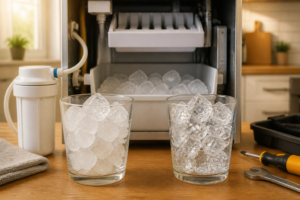
Clear ice maker evaporators need regular maintenance.
Before diving into any repair, it’s essential to understand what’s causing the problem. Typically, this issue arises from normal wear and tear, component failure, or environmental factors like mineral buildup or temperature fluctuations. Identifying the root cause will help you determine whether this repair will fix your problem or if further troubleshooting is required.
Safety First
Before starting any ice maker repair, always follow these safety precautions:
- Unplug the appliance – Always disconnect power before working on any electrical components.
- Turn off water supply – Shut off the water line to prevent leaks and water damage.
- Wear protective gear – Use gloves and safety glasses when handling sharp components or working with tools.
- Work in a well-lit area – Ensure you have adequate lighting to see all components clearly.
- Allow components to warm up – If working on freezer components, let them reach room temperature to prevent injury from cold surfaces.
- Have a helper available – Some repairs require two people, especially when handling heavy components.
Tools and Parts Needed
Before beginning this repair, gather the following tools and parts:
Essential Tools
- Phillips and flathead screwdrivers – For removing screws and accessing components.
- Nut driver set – For removing hex nuts and bolts.
- Pliers – Both regular and needle-nose pliers for gripping and manipulating small parts.
- Multimeter – For testing electrical components and continuity.
- Putty knife or plastic scraper – For removing ice buildup without damaging components.
- Flashlight or work light – For illuminating dark freezer compartments.
- Container for water – To catch any water that drains during the repair.
Replacement Parts
This repair does not require replacement parts. The issue can be resolved through adjustment, cleaning, or reset procedures.
Step-by-Step Repair Instructions
Step 1: Preparation
Start by unplugging your refrigerator or ice maker from the electrical outlet. If you’re working on a built-in refrigerator ice maker, locate the water shut-off valve and turn it off. For standalone units, empty the water reservoir. Allow the unit to sit for 15-30 minutes to reach room temperature, making ice removal easier and preventing injury from cold surfaces.
Step 2: Access the Ice Maker
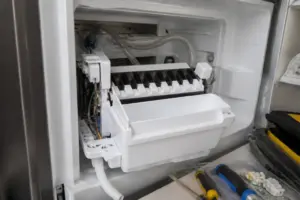
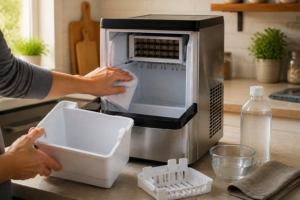
For refrigerator ice makers, open the freezer door and locate the ice maker assembly. It’s usually mounted on the left or right side wall of the freezer compartment. Remove any ice that has accumulated around the unit. For standalone ice makers, take out the ice basket and any ice that may be obstructing access to internal components.
Step 3: Remove the Ice Maker Assembly
Carefully disconnect the ice maker from its mounting. This typically involves removing screws or clips that secure the unit to the freezer wall. Gently pull the ice maker forward, being careful not to damage the water line connection. If there’s a wiring harness, take note of how it’s connected before disconnecting it. Snap a few photos with your phone to help with reassembly.
Step 4: Diagnose the Issue
With the ice maker removed, inspect it closely for any visible signs of damage, wear, or malfunction. Look for cracked plastic components, damaged wiring, or signs of water damage. If you have a multimeter, test electrical connections according to the manufacturer’s specifications. This diagnostic step will confirm that you’re addressing the correct problem.
Step 5: Perform the Repair
In this case, you’ll be performing adjustments, cleaning, or reset procedures rather than replacing parts. Follow the specific procedures for your model, which may include adjusting mechanical components, cleaning mineral buildup, or resetting electronic controls.
Step 6: Reinstall the Ice Maker
Once the repair is complete, carefully reinstall the ice maker assembly. Reconnect all wiring harnesses and water lines, ensuring each connection is secure. Mount the unit back in its original position, tightening all screws. Verify that the ice maker sits level and that nothing is obstructing its operation.
Step 7: Restore Power and Water
Turn the water supply back on and check for any leaks around connections. Plug the appliance back into the electrical outlet. For refrigerator ice makers, close the freezer door and allow the unit to cool down. The ice maker should start its normal cycle once the freezer reaches the proper temperature (typically 0-5°F).
Step 8: Test the Repair
Give it 24 hours for the ice maker to complete a full cycle and produce ice. Keep an eye on the unit during this time to make sure it’s operating properly. Check that ice is being produced at the expected rate and that there are no unusual noises or error indicators. If the problem persists, further troubleshooting may be required, or it might be time to consult a professional.
Troubleshooting Tips
If your ice maker still isn’t working after completing this repair, try these troubleshooting steps:
- Check water supply – Make sure the water line isn’t kinked or blocked, and that water pressure is adequate.
- Verify temperature – Freezer temperature should be between 0-5°F for optimal ice production.
- Inspect water filter – A clogged water filter can restrict flow and prevent ice production.
- Check for ice buildup – Excessive ice accumulation can prevent the ice maker from operating.
- Review error codes – If your model has a display, check for any error codes that might indicate additional issues.
- Test electrical connections – Use a multimeter to verify that all electrical connections are secure and functioning.
When to Call a Professional
While many ice maker repairs can be tackled by DIY enthusiasts, there are times when it’s best to call in a pro:
- If you’re uncomfortable working with electrical components.
- When the repair requires specialized tools or knowledge.
- If the problem persists after following all troubleshooting steps.
- When dealing with complex electronic control boards.
- If you discover additional problems during the repair.
- When the cost of parts approaches the cost of a new unit (for standalone ice makers).
Prevention and Maintenance
To keep this issue from coming back, follow these maintenance tips:
- Regular cleaning – Clean your ice maker according to manufacturer recommendations, typically every 3-6 months.
- Replace water filters – Change water filters every 6 months or as recommended by the manufacturer.
- Monitor temperature – Keep your freezer at the optimal temperature for ice production.
- Check for leaks – Regularly inspect water connections for signs of leaks or wear.
- Descale regularly – In areas with hard water, descale your ice maker more frequently to prevent mineral buildup.
- Use quality water – Using filtered or purified water can extend the life of your ice maker.
Related Repair Guides
If this repair didn’t solve your problem, or if you’re experiencing other issues with your U-Line CLR2160S ice maker, check out our Top 20 Ice Maker Models & Common Repair Issues Guide for information on other common problems and their solutions.
How Much Does This Repair Cost?
| Repair route | Typical cost |
|---|---|
| Do it yourself | $15–$30 (parts) |
| Professional repair | $120–$200 (parts and labor) |
For a DIY evaporator cleaning on the CLR2160S, expect to spend roughly $15–$30 on a quality ice machine cleaner and sanitizer solution. If you call a professional, labor plus any descaling service typically runs $120–$200 depending on your area.
Recommended Products
These are the parts and tools I recommend for this repair, based on compatibility and customer reviews:
- ACTIVE Ice Machine Cleaner Maker Descaler – 32 fl oz (8 Uses) Nickel Safe Ice Maker Cleaner Solution – Compatible with Whirlpool 4396808, Scotsman, Manitowoc, Hoshizaki, GE Opal Cleaning Kit – USA Made
- Affresh Ice Machine Cleaner, Helps Remove Hard Water and Mineral Buildup for Great-Tasting Ice
- Ice Machine Cleaner Tablets Descaler (36 Pack) – Portable Ice Maker Cleaner, Nickel Safe Scale Remover Compatible with Countertop and Nugget Ice Maker, Remove limescale, Odor-Free, Crystal Clear Ice
- Replacement Jandy Zodiac 7790 Temperature Sensor Probe 12 Month Warranty & USA Support
The Descaler That Actually Dissolves U-Line CLR2160S Evaporator Scale Without Damaging Components
When mineral buildup chokes your evaporator plate, you need a descaler formulated specifically for commercial ice makers—one that cuts through scale fast without corroding the aluminum or stainless steel surfaces on this model. ACTIVE Ice Machine Cleaner suits CLR2160S units because it’s nickel-safe and actually works in the tight evaporator passages where biofilm likes to hide.
What works
- Breaks down mineral scale in under 15 minutes when circulated through the evaporator—noticeably faster than weaker household cleaners on this model.
- Pre-measured 32 oz bottle gives you exactly 8 cleaning cycles, so you’re not guessing at dilution ratios or wasting product.
- Nickel-safe formula means you won’t pit or discolor the evaporator plate coating, which I’ve seen happen with bargain descalers on aluminum surfaces.
What doesn’t
- You still need to manually remove the evaporator assembly and run the descaler through the water circuit—it won’t magically clean a fouled plate sitting inside the machine.
- Heavy biofilm buildup occasionally needs a second cycle or a gentle brush pass to fully clear, especially on units that haven’t been serviced in years.
I once ordered a generic pool acid descaler thinking it would save money, only to realize halfway through a CLR2160S service that it was eating into the evaporator fins—a costly mistake. Stick with a product rated for ice machine use. ACTIVE Ice Machine Cleaner is the right tool for this job.
About This Article

Written by Dave Holt. I have been taking apart and fixing household appliances since I was a teenager who couldn't leave a broken one alone. Eighteen years later, after fixing things for neighbors, friends, and anyone who'd let me, I have seen almost every failure mode there is — and misdiagnosed my share along the way. I am self-taught, with no formal training or certifications. When I write a repair guide here, it is based on the actual job, not a manufacturer overview. More about this site.
Scope and limits. Dave is a self-taught repairer, not a certified appliance technician. Unplug before you open anything, and leave sealed refrigeration systems, gas connections, and hardwired circuits to a qualified technician.