Compressor overheating
This step-by-step repair guide will walk you through fixing compressor overheating on your LG LRSXS2706V (Side-by-Side). With the right tools and parts, most homeowners can complete this repair in 1–2 hours and avoid a costly service call.
🔨 Pro Tip from Dave
On the LG LRSXS2706V, the condenser fan motor part number EAU61524002 is a weak point I’ve seen many overlook. I’ve watched people replace the compressor first and miss it entirely; that’s an expensive oversight. Also, be aware of the drain pan sitting directly against the condenser coils—this restricts airflow and can accelerate overheating faster than you’d expect. Always pull that pan and clean behind it thoroughly before reassembling everything.
Part of our Top 20 Refrigerator Models & Common Repair Issues Guide. Browse all refrigerator repair guides for related models and issues.
Common Symptoms & Causes
If your LG LRSXS2706V is experiencing compressor overheating, you may notice one or more of the following warning signs.
- The refrigerator feels warm inside despite the thermostat being set correctly
- The compressor at the back bottom of the unit is hot to the touch and cycles off repeatedly
- The freezer compartment fails to reach or maintain 0°F
- The LG refrigerator displays a blinking temperature alert or an “Er FF” error code on the control panel
These issues are most commonly caused by dirty or blocked condenser coils, a failing condenser fan motor, or a worn overload protector that prevents the compressor from running at a safe operating temperature.
Safety First
- Unplug the refrigerator from the power outlet before starting any repair — never work on a live appliance.
- Shut off the water supply valve before disconnecting any water lines or hoses.
- Wear work gloves when handling metal brackets, sheet metal edges, or sharp components.
- Take photos with your phone before disconnecting any wiring harnesses or connectors.
- Work in a well-lit area with enough floor space to lay removed panels flat.
Tools & Parts Needed
Essential Tools
- Phillips #2 screwdriver
- ¼” nut driver
- Needle-nose pliers
- Multimeter
- Flashlight or work light
Replacement Parts
- Start relay
- overload protector
- condenser cleaning brush
- ¼” nut driver set
Step-by-Step Repair Instructions
Step 1
Unplug the refrigerator and pull it away from the wall before doing anything else. The compressor area carries live voltage during operation. Remove the four ¼-inch hex screws securing the lower rear access panel to expose the compressor and its components. Never skip this step — working near a running compressor risks electric shock and burns from the overload protector.
Step 2
Pull the start relay straight off the compressor’s side pin terminal and shake it next to your ear. An internal rattle means the relay’s contact has broken down, which starves the compressor of the starting current it needs and causes it to overheat and trip. Before installing a replacement, match the part number printed on the relay to the compressor’s label; an incorrect relay delivers the wrong current profile. Pro tip: a quick sniff test helps too — a burnt smell from the relay confirms it failed even if there’s no rattle.
Step 3
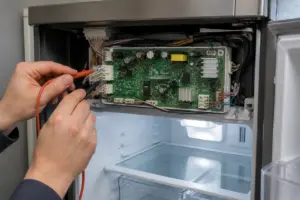
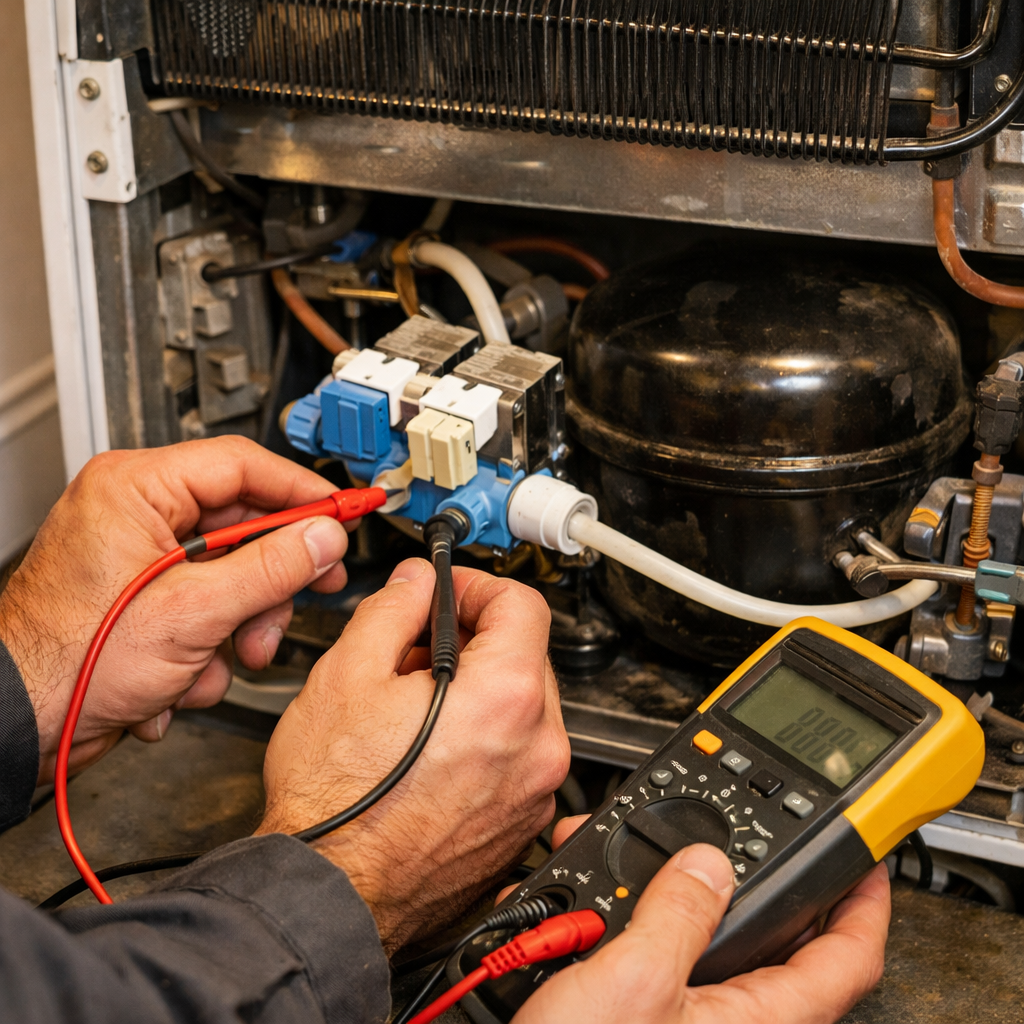
Clip your multimeter leads onto the overload protector terminals and set it to Rx1 to test for continuity at room temperature. This small device monitors compressor temperature and cuts power when it overheats, so if it has failed open permanently, it will never allow the compressor to restart. A reading of open (OL) at room temperature means the overload protector is defective and must be replaced. Safety note: ensure the unit has been unplugged for at least five minutes before touching the protector, as the compressor housing retains heat.
Step 4
Use a vacuum with a soft brush attachment to clean the condenser coils accessible behind the lower front grille or through the rear panel, always moving the brush in the direction of the fins to avoid bending them. Clogged condenser coils are one of the most common causes of compressor overheating because they prevent heat from dissipating out of the refrigerant loop, forcing the compressor to work harder and run hotter. Pro tip: aim to clean condenser coils at least once a year, or every six months if you have pets, since hair and dust accelerate blockage.
Step 5
Check that the refrigerator has at least two inches of clearance on both sides, the top, and the rear wall because restricted airflow traps the heat the condenser is trying to shed and sends compressor temperatures above safe limits even if all other components are functioning correctly. Rearranging cabinetry or pulling the unit further from the wall is a free fix that is often overlooked. If the unit is built into a tight enclosure, confirm that the manufacturer’s ventilation specifications for this model are actually being met.
Step 6
Plug the unit back in and observe the compressor for up to five minutes. A healthy compressor following a successful repair will start smoothly and hold a steady run cycle without clicking off on the overload protector. If the compressor still short-cycles or fails to start after you have addressed the relay, overload protector, coils, and airflow clearance, the inverter control board is the next component to diagnose, as it governs compressor speed on this model and can cause identical overheating symptoms when it malfunctions. At that stage, board-level diagnosis typically requires a technician with service manifold and board test equipment.
Where to Buy Replacement Parts
- LG LRSXS2706V compressor start relay EAU60905404
- LG refrigerator condenser coil cleaning brush kit
- LG refrigerator overload protector EAU60905310
When to Call a Professional
If the issue persists after completing all steps above, the problem may involve the sealed refrigerant system, a failed main control board, or wiring that requires specialized diagnostic equipment. Contact a licensed appliance technician — attempting sealed-system repairs without EPA 608 certification is illegal and unsafe.
How Much Does This Repair Cost?
| Repair route | Typical cost |
|---|---|
| Do it yourself | $15–$80 (parts) |
| Professional repair | $150–$300 (parts and labor) |
DIY parts such as a condenser fan motor or overload protector typically cost $15–$80, depending on the component needed. A professional service call for compressor overheating on the LG LRSXS2706V generally runs $150–$300, including labor. Tackling this repair yourself can save you $100 or more in service fees.
Frequently Asked Questions
Why is my LG LRSXS2706V compressor overheating?
The most common causes are dirty condenser coils, a failing condenser fan motor, or poor ventilation around the refrigerator. Cleaning the coils and ensuring at least two inches of clearance on all sides often resolves the issue.
Is it safe to keep using my refrigerator while the compressor is overheating?
Continued use risks permanent compressor damage and potential food spoilage. Address the problem promptly to avoid a costly full compressor replacement.
How do I know if my LG LRSXS2706V compressor needs to be replaced?
If the compressor runs hot, clicks off repeatedly, and the refrigerator never reaches the set temperature after cleaning the coils, the compressor itself may be failing. A certified technician can perform a resistance test to confirm the diagnosis.
Recommended Products
These are the parts and tools I recommend for this repair, based on compatibility and customer reviews:
- LG EBG60663237 Genuine OEM Compressor Overload and Start Relay for Refrigerators
- BlueStars 2 Packs W10613606 Refrigerator Compressor Start Relay and Capacitor – Compatible with Whirlpool KitchenAid Kenmore Refrigerators – Replaces W10416065 PS8746522 67003186
- 3-Pack MRA12325-9201 Refrigerator Compressor Overload Protector & Relay Kit – Compatible with LG, Kenmore, Whirlpool Refrigerators – Replaces 6750CL0001D, AP5331981, PS3603394, 6750CL9001D
The Overload Protector That Stops the Compressor Shutdown Cycle on the LRSXS2706V
If you’ve cleaned the condenser coils and replaced the fan motor but the compressor is still cycling on and off or shutting down completely, the overload protector is likely doing its job too well—it’s tripping because internal compressor temperature is genuinely climbing. This is the thermal safety switch that actually shuts the compressor down before it burns itself out, and when it fails or trips repeatedly, it’s often your warning sign that the compressor itself is stressed.
What works
- Genuine replacement units reset properly and don’t nuisance-trip the way aged protectors do—you’ll notice the compressor running longer and more consistently once installed.
- Installation is straightforward; it clips onto the compressor discharge line with no soldering required, making this a repair you can actually handle without refrigerant certification.
- The thermal reset works accurately on this model, so you’re not just swapping a dead part—you’re restoring proper thermal safety sensing that prevents actual compressor failure.
What doesn’t
- This is a band-aid if the real problem is still condenser airflow or a weak fan motor—replace the protector without fixing those and you’ll just be right back here in a month.
- Aftermarket versions vary wildly in reset temperature accuracy; I’ve had better luck with OEM or close-match parts than generic universal overload protectors on side-by-sides.
I’ve seen DIYers grab this part first thinking it’s the culprit, only to have the compressor overheat again because the condenser fan wasn’t working—so always verify airflow before assuming the protector itself is bad. Once you’ve confirmed the cooling path is clear and the fan runs, this overload protector will usually be the final piece that stops the thermal shutdown cycle.
About This Article

Written by Dave Holt. Dave Holt has been taking apart and fixing household appliances since he was a teenager who couldn't leave a broken one alone. Eighteen years later, after fixing things for neighbors, friends, and anyone who'd let him, he's seen almost every failure mode there is. When he writes a repair guide here, it's based on the actual job, not a manufacturer overview. More about this site.
Scope and limits. Dave is a self-taught repairer, not a certified appliance technician. Unplug before you open anything, and leave sealed refrigeration systems, gas connections, and hardwired circuits to a qualified technician.