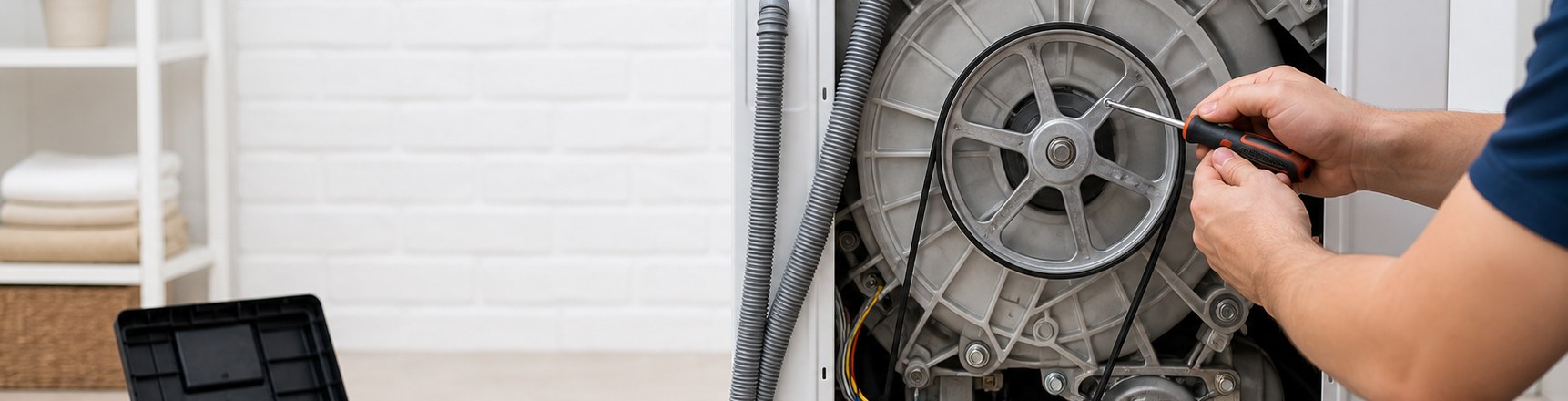
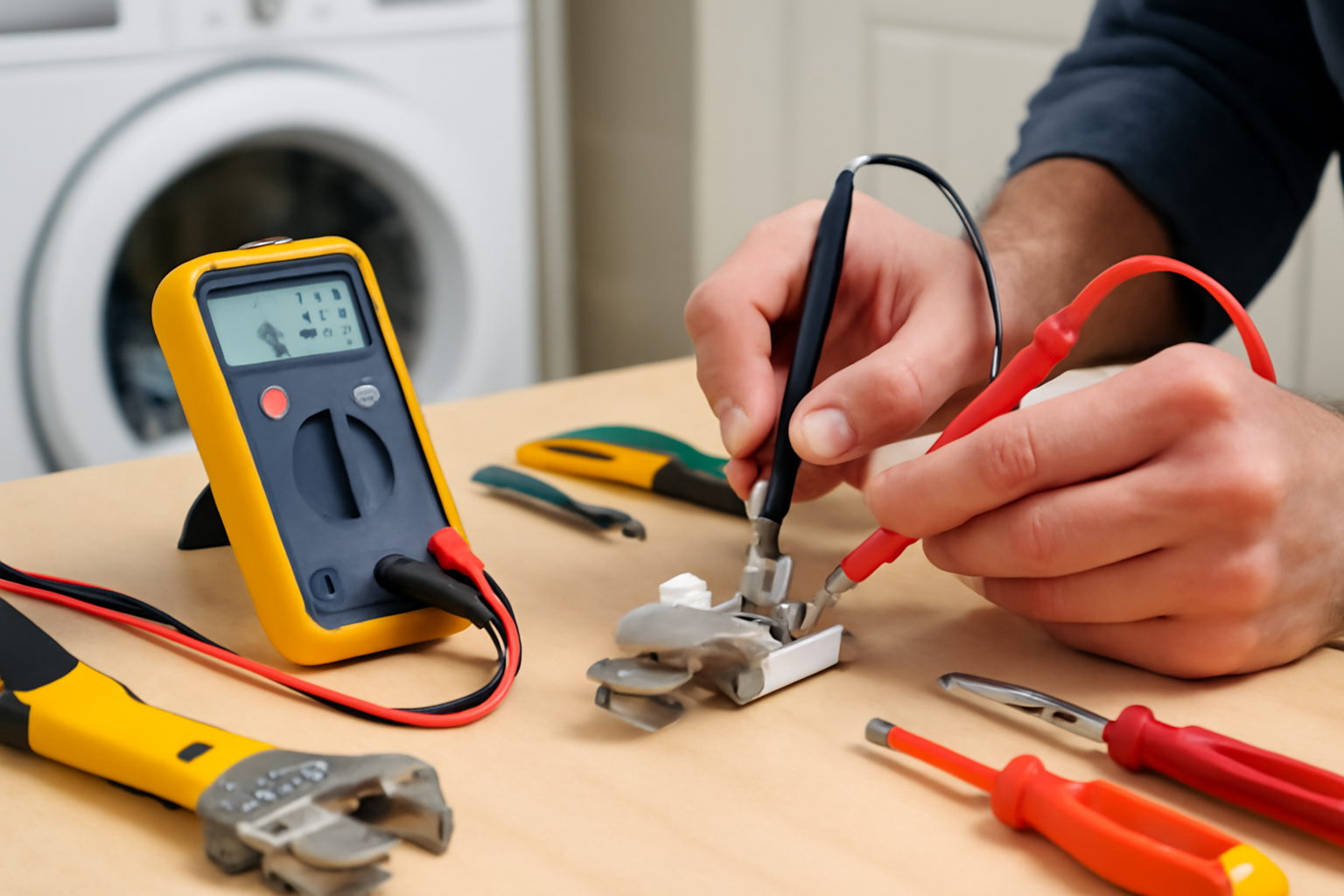
A multimeter is the tool to reach for on almost every repair. Eighteen years of fixing appliances — my own, my neighbours’, anyone’s who’d let me near a broken machine — has worn out more than one of them. From dryers and washers to fridges and ice makers, most of what I know was learned by taking something apart and working out why it quit. That’s why I want to share my thoughts on a tool that’s become essential in my everyday repairs: the Klein Tools multimeter.
There was a time when I relied on a cheap, no-name multimeter I found in a hardware store’s clearance bin. It worked well enough… until it didn’t. On one particularly frustrating dryer repair call, I received a wildly inconsistent resistance reading on a heating element. I ended up replacing it based on that faulty reading, only to discover later that the thermal fuse was the real issue. That costly mistake meant a return trip and a refund for parts I didn’t need. I knew something had to change, and fast.
As a long-time DIYer, I’ve spent years fixing appliances for friends and neighbours. Every single call I respond to requires me to take electrical measurements at some point. Whether it’s voltage checks on control boards, continuity tests on thermal fuses, or resistance readings on motor windings, having a reliable multimeter is crucial. After that mishap with the dryer, I made it a priority to budget for a proper replacement and started my research in earnest.
Eventually, I settled on the Klein Tools MM420 Digital Multimeter. Since then I’ve used it on well over a hundred repairs for friends, family and my own appliances. Here’s everything I’ve learned about it — including where it might fall a little short.
Why I Test Every Appliance Circuit with This Multimeter Before Ordering Parts
I’ve learned the hard way that a bad multimeter reading can lead to unnecessary time and expenses—ordering replacement parts when the real issue was something as simple as a loose connection or a tripped safety switch. That’s why I consistently reach for the MM420 on every call; it delivers reliable and consistent readings on heating elements, door switches, and thermal fuses, allowing me to confirm the issue before I commit to ordering parts.
What Works
- Auto-ranging is a game-changer. It eliminates the guesswork of dialing in the right scale—whether I’m checking a dryer heating element or a refrigerant circuit, it locks onto the correct reading effortlessly.
- The continuity beeper is loud and unmistakable, even in the noisy environment of a garage or basement. I know immediately whether a thermal fuse is blown or if a door latch is intact.
- It holds steady on the display, even when I’m precariously balancing the leads on a cramped terminal. No needle flutter or jumping numbers to make me second-guess my diagnosis.
What Doesn’t
- The display is smaller than some larger professional meters, which can be a bit of a strain if I’m trying to read resistance values from across the cramped confines of an appliance cabinet.
- It’s not a clamp meter—if I need to measure amperage on a live 240V circuit without breaking the connection, I’ll need to reach for a different tool.
One of my biggest lessons came the first time I tried diagnosing a no-heat dryer with that unreliable meter. I ended up wasting a friend’s money by ordering a heating element that was perfectly fine; the actual issue was a blown thermal fuse that I couldn’t confirm. I wouldn’t wish that mistake on anyone. So, do yourself a favor and grab a Klein Tools MM420 Digital Multimeter to verify your diagnosis before you order any parts.
About This Article

Written by Dave Holt. Dave Holt has been taking apart and fixing household appliances since he was a teenager who couldn't leave a broken one alone. Eighteen years later, after fixing things for neighbors, friends, and anyone who'd let him, he's seen almost every failure mode there is. When he writes a repair guide here, it's based on the actual job, not a manufacturer overview. More about this site.
Scope and limits. Dave is a self-taught repairer, not a certified appliance technician. Unplug before you open anything, and leave sealed refrigeration systems, gas connections, and hardwired circuits to a qualified technician.