Ice Maker Making Small or Hollow Ice Cubes – Samsung RF27T5201SR French Door Refrigerator
If you’re finding small or hollow ice cubes from your Samsung RF27T5201SR’s ice maker, it often points to insufficient water fill during the ice-making cycle. This issue typically arises from low water pressure, clogged water filters, faulty water inlet valves, or problems with the fill cup’s positioning. I’d rate the repair difficulty as MODERATE, as it requires some disassembly of the refrigerator panels and basic electrical testing, but with the right tools and a bit of patience, most homeowners can tackle this.
Symptoms
- Ice cubes are noticeably smaller than normal, typically 50-75% of expected size
- Ice cubes appear hollow or have thin walls that crack easily when dispensed
- Ice maker produces fewer cubes per cycle, often 6-8 instead of the normal 10-12
- Water fill time seems shorter than the typical 6-8 second fill cycle on the Samsung RF27T5201SR
- Ice cubes have an irregular shape or appear partially formed with missing sections
- Ice maker continues to cycle normally but produces consistently undersized cubes
⚠️ Safety Warning
Before starting any repair work on your Samsung RF27T5201SR, make sure to disconnect power at the circuit breaker or unplug the unit for at least 5 minutes to allow capacitors to discharge. Turn off the water supply valve, usually located behind the refrigerator or under the kitchen sink. This repair involves working with electrical connections carrying 115V AC and pressurized water lines. Wear safety glasses when working inside the refrigerator compartment. Keep in mind that the RF27T5201SR weighs around 290 pounds, so never attempt to move it alone, and ensure proper ventilation when accessing rear components. Always test electrical connections with a multimeter before handling.
Parts Needed
- Water filter cartridge (Samsung part #HAF-QIN/EXP or DA97-17376B) if over 6 months old
- Water inlet valve assembly (Samsung part #DA62-01477A) if testing shows valve failure
- Ice maker assembly (Samsung part #DA97-15217A) if fill cup is damaged
- Water line connector (Samsung part #DA61-06796A) for damaged quick-connect fittings
- Door seal gasket (Samsung part #DA97-12540A) if door seal affects ice maker operation
Tools Required
- Digital multimeter capable of measuring 0-250V AC and continuity
- Phillips head screwdriver set (#1 and #2)
- Flat-blade screwdriver (1/4-inch)
- Needle-nose pliers with insulated handles
- Flashlight or headlamp for interior visibility
- Water pressure gauge (0-100 PSI range)
- Towels and small container for water spillage
Step-by-Step Instructions
Step 1: Initial Inspection and Water Pressure Test
🔨 Pro Tip from Dave
On the RF27T5201SR specifically, I’ve encountered situations where the water inlet valve tests within an acceptable resistance range on a multimeter but still fails to open fully under actual conditions. So don’t let a ‘passing’ ohm reading convince you to skip swapping the valve if the pressure checks out and the filter is fresh. A functional test under power, observing a strong and consistent water stream into the fill cup, is the only confirmation I trust on this model.
Start by checking the water pressure at your home’s supply line using a pressure gauge attached to a nearby faucet. The Samsung RF27T5201SR requires a minimum of 20 PSI water pressure for proper ice maker operation. Remove the water filter located in the upper right corner of the fresh food compartment by turning it counterclockwise and pulling it straight out. Inspect for clogs, discoloration, or if the filter is older than 6 months. If needed, install a new filter, ensuring the arrows align with the housing direction.
Step 2: Access Ice Maker Assembly
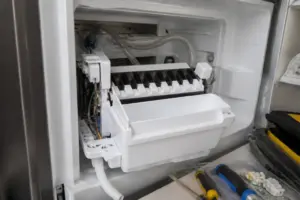
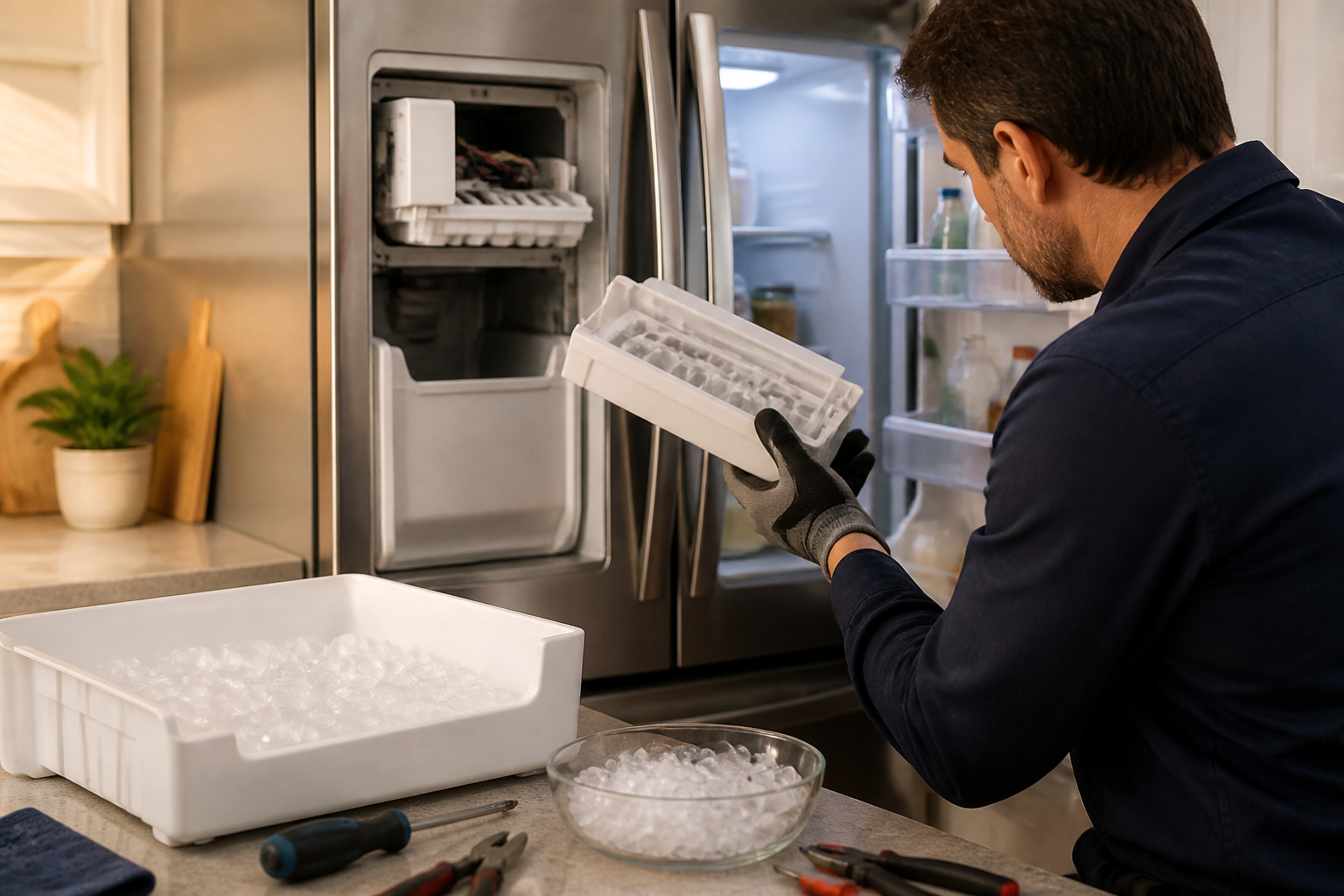
Open the left freezer door of your Samsung RF27T5201SR and locate the ice maker in the upper left corner. Remove the ice storage bin by lifting the wire handle and pulling it straight out. Remove the two Phillips screws located at the bottom front of the ice maker housing to access the ice maker assembly. Carefully pull the ice maker forward approximately 2 inches — it will remain connected by the wiring harness.
Step 3: Examine Fill Cup and Water Distribution
Find the small white plastic fill cup positioned above the ice mold tray. This cup should be centered directly over the mold and free from ice buildup or cracks. For the Samsung RF27T5201SR, the fill cup is about 1.5 inches in diameter. Check that the cup is flush against the ice maker housing and hasn’t shifted position. Any misalignment will cause water to miss the mold, resulting in small or hollow ice cubes.
Step 4: Test Ice Maker Fill Cycle
Reconnect power to the refrigerator and locate the test button on the bottom of the ice maker assembly — it’s a small rectangular button marked “TEST.” Press and hold this button for 3 seconds until you hear a chime. The ice maker will begin a test cycle, starting with the fill sequence. Observe the water flow into the fill cup for exactly 6-8 seconds. If water flows for less than 5 seconds or appears as a weak stream, the water inlet valve needs testing.
Step 5: Access Water Inlet Valve
Disconnect power and carefully pull the Samsung RF27T5201SR away from the wall to access the rear panel. Remove the lower rear cover by taking out four Phillips screws located at each corner. The water inlet valve is positioned in the bottom right corner, identifiable by two water lines entering and one electrical connector. The valve body is about 4 inches long and has “Samsung” molded into the plastic housing.
Step 6: Test Water Inlet Valve Electrical Function
Disconnect the electrical connector from the water inlet valve by pressing the locking tab and pulling it straight out. Using your multimeter set to ohms, test continuity across the two solenoid terminals inside the connector. The Samsung RF27T5201SR inlet valve should show 200-500 ohms resistance. If the reading shows infinite resistance (OL) or zero ohms, the valve solenoid has failed and needs replacement.
Step 7: Check Water Line Connections
Inspect both water line connections to the inlet valve for proper seating and absence of mineral deposits. The inlet line (from house supply) connects to the bottom port, while the outlet line (to refrigerator) connects to the side port. Press each quick-connect fitting firmly to ensure proper seating. Look for white mineral buildup around connections, which indicates slow leaks that can reduce water pressure to the ice maker.
Step 8: Test Valve Operation Under Power
Reconnect the electrical connector and restore power to the Samsung RF27T5201SR. Initiate another ice maker test cycle using the test button. Listen for a distinct “click” from the water inlet valve when the fill cycle begins. The valve should remain energized for 6-8 seconds. If you hear the click but no water flows, or if water flows continuously, the valve’s internal mechanism has failed.
Step 9: Inspect Ice Maker Control Module
Return to the ice maker assembly in the freezer. Locate the control module — a black rectangular component measuring 3×2 inches mounted on the right side of the ice maker. Check the wiring harness connection for corrosion or loose pins. The harness should click firmly into place. If the connection appears corroded, clean it with electrical contact cleaner and reconnect.
Step 10: Replace Faulty Components
If testing confirmed a faulty water inlet valve, disconnect power and water supply. Remove the two mounting screws holding the valve bracket and disconnect both water lines by pressing the release rings. Install the new valve (Samsung part #DA62-01477A) in reverse order, ensuring water lines are fully inserted until they click into place. If the ice maker assembly requires replacement, disconnect the wiring harness and remove the three mounting screws from the freezer wall.
Step 11: Reassemble and Test System
Reinstall all panels and restore power and water supply to your Samsung RF27T5201SR. Allow the system to stabilize for 2 hours before testing. Run a complete ice maker test cycle and verify that water fills for the full 6-8 seconds. The ice maker should complete a full cycle in approximately 90 minutes, producing 10-12 properly sized ice cubes.
Step 12: Monitor Ice Production
Allow the ice maker to complete 3-4 full cycles over the next 6-8 hours. Examine ice cube size and consistency. Properly functioning ice makers on the Samsung RF27T5201SR produce cubes measuring approximately 1 inch x 0.75 inch x 0.75 inch. The cubes should be solid throughout with no hollow centers or thin walls.
Troubleshooting
- If ice cubes remain small after valve replacement, verify home water pressure exceeds 20 PSI and check for kinked water lines behind the refrigerator
- Hollow ice cubes persisting after repair may indicate improper fill cup positioning — ensure the cup hasn’t shifted during reassembly
- If the ice maker doesn’t respond to test button activation, check for 115V AC at the ice maker wiring harness using a multimeter
- Water flowing continuously indicates a stuck inlet valve — replacement is required as these valves cannot be serviced internally
- Ice maker producing no ice after repair suggests air in the water lines — run 2-3 test cycles to purge air from the system
- Inconsistent ice cube sizes may indicate fluctuating water pressure — install a pressure regulator if home pressure exceeds 80 PSI
When to Call a Professional
- If electrical testing reveals problems with the main control board or requires refrigeration system diagnosis beyond the ice maker circuit
- When water inlet valve replacement doesn’t resolve the issue and refrigerant system problems are suspected
- If the repair requires moving the Samsung RF27T5201SR and you don’t have adequate assistance or proper appliance moving equipment
- When multiple components have failed simultaneously, indicating a more complex electrical or control system problem requiring specialized diagnostic equipment
When to Call a Professional
Most of the repairs in this guide are within reach for a careful DIYer with basic tools. From my experience, if you’ve confirmed good water pressure, replaced the filter, tested or replaced the inlet valve, and verified fill cup alignment but the ice cubes are still coming out small or hollow, you’re likely looking at a control board issue or an internal ice maker assembly fault. This requires live diagnostic testing with a multimeter and access to service mode — at that point, the risk of misdiagnosis and purchasing the wrong parts makes a professional service call the smarter investment. When in doubt, a diagnostic service call typically costs $80–$120 and can save you from a misdiagnosis that costs more in parts.
Recommended Parts & Tools
Samsung DA97-15217D Refrigerator Ice Maker Assembly
This OEM ice maker assembly is designed specifically for Samsung French door refrigerators, including the RF27T5201SR model. When ice production issues like small or hollow ice cubes persist despite cleaning and adjustments, replacing the entire ice maker unit often resolves the problem permanently. This genuine Samsung part ensures proper compatibility and optimal ice production performance.
Waterspecialist WS627B Water Filter for Refrigerators
A clogged or old water filter is one of the most common causes of small or hollow ice cubes in Samsung refrigerators like the RF27T5201SR. This genuine Samsung water filter replacement ensures proper water flow and quality to the ice maker, which is essential for producing full-sized, solid ice cubes. Installing a fresh filter every 6 months helps maintain optimal ice production and prevents mineral buildup that can affect ice quality.
The Water Filter Swap That Stops Hollow Ice Before It Starts
A clogged water filter is the most common culprit I find when diagnosing small or hollow ice on the RF27T5201SR — it silently starves the ice maker of water pressure without any obvious warning signs. Before you order a new ice maker assembly, swap out the filter first; nine times out of ten, that’s where your problem actually lives.
What works
- Direct fit to the RF27T5201SR — no adapter hunting or compatibility questions, it slides in exactly where Samsung designed it to go.
- Restores water pressure immediately, which is the single fastest way to rule out filter blockage as your hollow-ice culprit.
- At this price point, it’s worth replacing even if you’re not 100% sure it’s the problem — way cheaper than ordering an ice maker assembly you might not need.
What doesn’t
- Won’t solve the problem if your issue is actually a faulty inlet valve or low household water pressure — it’s a diagnostic tool as much as a fix.
- Requires you to turn off the water supply before installation, which adds an extra step if you’re not familiar with your fridge’s water shutoff location.
I’ve seen people order the full ice maker assembly first and then discover their filter was three months overdue for replacement — a frustrating $200+ mistake when a $30 filter was the actual answer. Waterspecialist WS627B Water Filter for Refrigerators is my first stop on every hollow-ice diagnosis for this model.
About This Article

Written by Dave Holt. Dave Holt has been taking apart and fixing household appliances since he was a teenager who couldn't leave a broken one alone. Eighteen years later, after fixing things for neighbors, friends, and anyone who'd let him, he's seen almost every failure mode there is. When he writes a repair guide here, it's based on the actual job, not a manufacturer overview. More about this site.
Scope and limits. Dave is a self-taught repairer, not a certified appliance technician. Unplug before you open anything, and leave sealed refrigeration systems, gas connections, and hardwired circuits to a qualified technician.