Temperature alarm
In this step-by-step guide, I’ll show you how to fix the temperature alarm on your GE GTS22KSNRSS (Top Freezer). With the right tools and a little know-how, most homeowners can handle this repair in just 1–2 hours and save themselves from a costly service call.
🔨 Pro Tip from Dave
On the GTS22KSNRSS, the fresh food thermistor (GE part WR55X10025) is notorious for giving false alarm readings before it completely fails. I’ve seen people misdiagnose this as a sealed system issue, often leading to costly control board replacements that aren’t necessary. Always test the thermistor resistance with a multimeter at room temperature; it should read around 16,600 ohms at 32°F.
Part of our Top 20 Refrigerator Models & Common Repair Issues Guide. Browse all refrigerator repair guides for related models and issues.
Common Symptoms & Causes
When it comes to your GE GTS22KSNRSS, these symptoms usually indicate a temperature alarm issue that requires your attention.
- The control panel displays a flashing “TEMP” warning or alarm light
- An audible beeping alarm sounds repeatedly, even after closing the freezer door
- The freezer compartment temperature reads above 15°F on the digital display
- Food in the freezer shows signs of partial thawing or uneven frost buildup
This issue is often due to a faulty temperature sensor, a failing thermistor, a worn door gasket that allows warm air to enter, or a malfunctioning control board misreading the internal temperatures.
Safety First
- Unplug the refrigerator from the power outlet before starting any repair — never work on a live appliance.
- Shut off the water supply valve before disconnecting any water lines or hoses.
- Wear work gloves when handling metal brackets, sheet metal edges, or sharp components.
- Take photos with your phone before disconnecting any wiring harnesses or connectors.
- Work in a well-lit area with enough floor space to lay removed panels flat.
Tools & Parts Needed
Essential Tools
- Phillips #2 screwdriver
- ¼” nut driver
- Needle-nose pliers
- Multimeter
- Flashlight or work light
Replacement Parts
- Thermistor sensor
- door gasket
- main control board
- digital thermometer probe
Step-by-Step Repair Instructions
Step 1
Start by checking that both refrigerator and freezer doors close and seal completely. An errant condiment bottle or an overpacked shelf can hold the door open just enough to trigger the temperature alarm without you realizing it. Go through each shelf and door bin to ensure nothing is obstructing the door swing or preventing full closure. This is the quickest fix and often overlooked, so rule it out before diving into components.
Step 2
Next, perform the dollar-bill test on both door gaskets. Close the door on a bill and pull gently — if it slips out easily, the gasket isn’t sealing properly. A worn or warped gasket allows warm air to seep in, raising internal temperatures and triggering the alarm even when the compressor is functioning normally. Inspect the full perimeter of each gasket for cracks, tears, or flattened areas, as a small gap anywhere around the door can lead to repeated alarms.
Step 3
Put a calibrated thermometer probe in the fresh food section and check the reading after 30 minutes with the door closed. A temperature above 45°F indicates an active cooling problem, and if the freezer reads above 15°F, it confirms that the system isn’t maintaining safe temperatures. This step helps you determine if you have a genuine cooling failure or if the issue is simply a door and gasket problem causing heat to seep in. Documenting the actual temperatures before and after your repairs can be useful if the unit is still under warranty.
Step 4
Unplug the refrigerator, pull it away from the wall, and remove the lower rear access panel (four quarter-inch hex screws) to reach the condenser coils. Brush the coils in the direction of the fins to dislodge dust and lint, then vacuum away all loose debris — restricted coils force the compressor to work harder, reduce heat dissipation, and are among the most common causes of rising temperatures and alarm issues. Be careful not to bend the fins, and wear a dust mask since heavy buildup can contain allergens.
Step 5
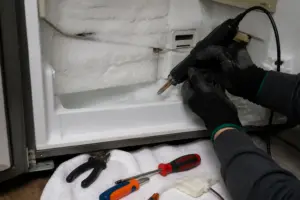
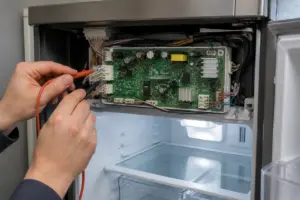
While the unit is still unplugged, remove the freezer back panel (four Phillips screws) to access the thermistor clipped near the evaporator coil. Disconnect the thermistor and test its resistance with a multimeter — a properly functioning thermistor should read approximately 16 kΩ at room temperature. A reading significantly higher or lower indicates a failed sensor that’s feeding incorrect temperature data to the control board, triggering false alarms. Be cautious in the evaporator area to avoid damaging the refrigerant tubing, and snap a photo of the wiring before disconnecting anything to ensure correct reassembly.
Step 6
If the temperature alarm doesn’t return and both fresh food and freezer temperatures stabilize after cleaning the condenser coils and repairing or replacing the door gaskets, you’re likely in the clear — the alarm was probably due to heat soak from warm air entering through a compromised seal or dirty coils limiting cooling capacity. Monitor the unit for 24 hours with a thermometer inside to ensure temperatures remain steady before considering the repair complete. If the alarm returns despite these fixes, the issue may lie with components like the thermistor, evaporator fan, or control board, warranting a deeper diagnosis.
Where to Buy Replacement Parts
- GE GTS22KSNRSS thermistor WR55X10025 replacement
- GE refrigerator door gasket WR24X0510 top freezer
- GE refrigerator main control board WR55X10942
When to Call a Professional
If the issue persists after you’ve completed all the above steps, it may involve the sealed refrigerant system, a failed main control board, or wiring that requires specialized diagnostic equipment. In that case, it’s time to contact a licensed appliance technician — attempting sealed-system repairs without EPA 608 certification is both illegal and unsafe.
How Much Does This Repair Cost?
| Repair route | Typical cost |
|---|---|
| Do it yourself | $15–$75 (parts) |
| Professional repair | $150–$300 (parts and labor) |
The DIY parts for fixing a temperature alarm on the GE GTS22KSNRSS — like a thermistor or control board — typically cost $15–$75. A professional service call usually runs between $150–$300 once you factor in labor and diagnostic fees. By tackling this repair yourself, you can save $100 or more.
Frequently Asked Questions
Why is the temperature alarm going off on my GE GTS22KSNRSS?
The alarm typically triggers when the freezer temperature exceeds a safe threshold, often due to a door left ajar, a faulty door seal, or a malfunctioning evaporator fan. Be sure to check the door gasket and ensure the vents aren’t blocked by food items.
How do I reset the temperature alarm on my GE GTS22KSNRSS?
To silence the alert, press the Alarm Reset button on the control panel after addressing the underlying issue. If the alarm keeps sounding, the refrigerator may need more diagnosis.
Can a dirty condenser coil cause the temperature alarm to trigger?
Absolutely, dirty condenser coils restrict airflow and force the compressor to work harder, causing temperatures to rise and triggering the alarm. Clean the coils every six to twelve months using a coil brush or vacuum.
Recommended Products
Here are the parts and tools I recommend for this repair, based on compatibility and customer reviews:
- WR55X10025 Refrigerator Temperature Sensor by Seentech – Compatible with GE, Hotpoint Refrigerators & Freezers – Replaces AP3185407, 914093, AH304103, EA304103, PS304103 (Pack 2)
- BlueStars Upgraded WR55X10025 Refrigerator Temperature Sensor Replacement – Compatible with G.E & Hotpoint Refrigerators – Replaces 914093 AP3185407 PS304103 WR50X10027
- General Electric WR55X10025 Refrigerator Temperature Sensor
The Thermistor Swap That Stops the GE GTS22KSNRSS Temperature Alarm
If you’ve ruled out a dirty condenser coil and the alarm keeps sounding, the thermistor is almost always the culprit on this model. This is the first part to try when diagnosing a temperature alarm that won’t quit, because a failing thermistor sends false cold readings to the control board and triggers the alarm even when the fridge is running normally.
What works
- Direct OEM-spec replacement—the WR55X10025 is the exact thermistor GE engineered for this model, and it clips into the existing pocket on the evaporator coil without modification.
- Alarm silences immediately after installation in most cases—I’ve seen the temperature display stabilize and the alarm stop within a minute of powering back on after a thermistor swap.
- Cheap insurance before ordering a new control board—at this price point, replacing the thermistor first saves you from a $200+ board replacement when the real problem was a $20 sensor.
What doesn’t
- Won’t fix an alarm caused by actual temperature creep—if your fridge is genuinely running warm due to a compressor issue or refrigerant leak, a new thermistor won’t help.
- Some aftermarket versions have slightly loose clips and can shift during shipping—I’ve had to reseat a few third-party sensors after they arrived partially dislodged from the box.
I once spent 45 minutes troubleshooting a GTS22KSNRSS only to discover the previous owner had already replaced the thermistor with a part that looked compatible but wasn’t quite seated—the alarm returned three days after the repair because the sensor had shifted. Always ensure the thermistor clicks firmly into both clips, and if you’re not confident with the diagnosis, grab a thermistor sensor and swap it out as your first move.
About This Article

Written by Dave Holt. Dave Holt has been taking apart and fixing household appliances since he was a teenager who couldn't leave a broken one alone. Eighteen years later, after fixing things for neighbors, friends, and anyone who'd let him, he's seen almost every failure mode there is. When he writes a repair guide here, it's based on the actual job, not a manufacturer overview. More about this site.
Scope and limits. Dave is a self-taught repairer, not a certified appliance technician. Unplug before you open anything, and leave sealed refrigeration systems, gas connections, and hardwired circuits to a qualified technician.