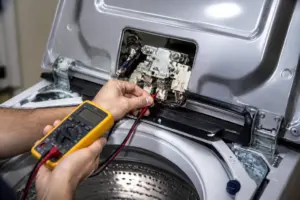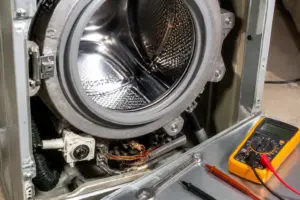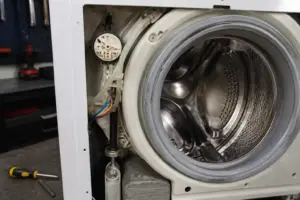
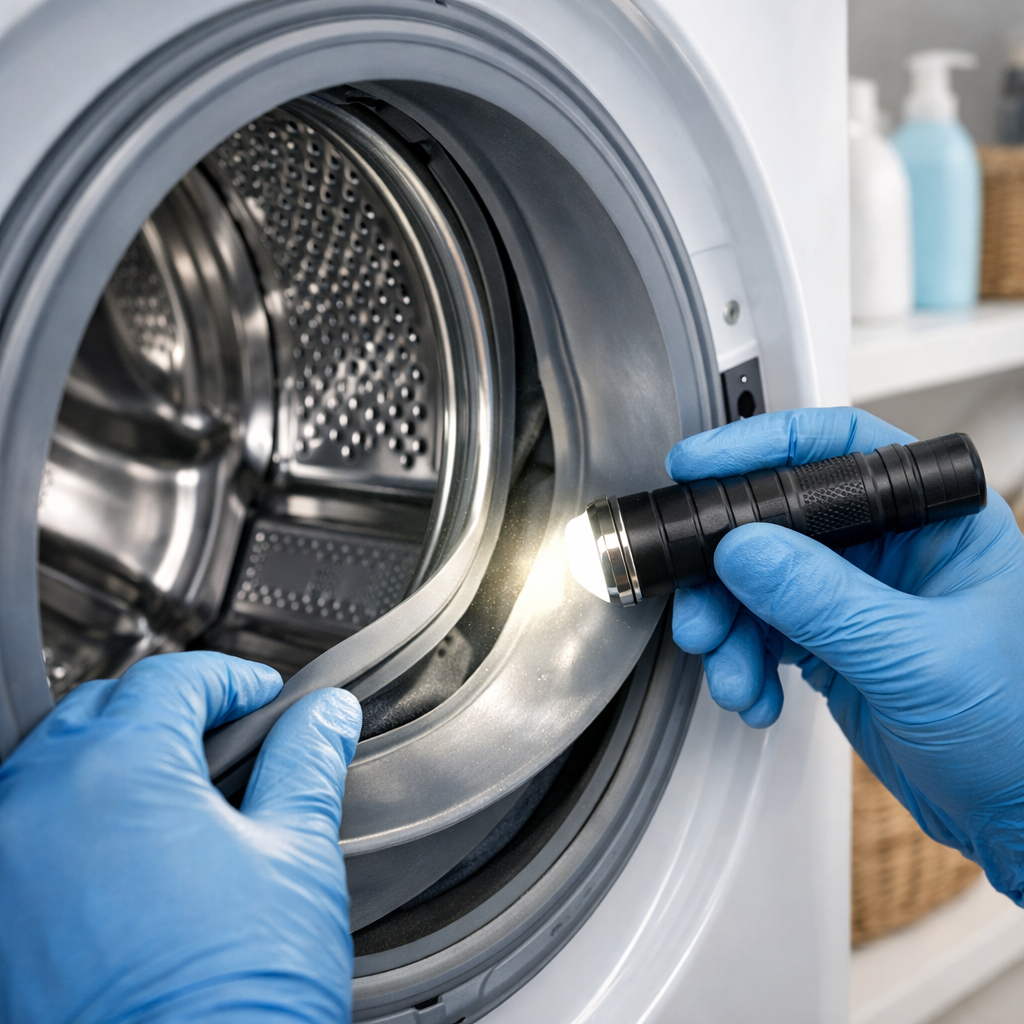
Sd error — excess suds
In this guide, I’ll walk you through fixing the sd error — excess suds on your Frigidaire FFFW5000QW (Front Load). With the right tools and parts, most homeowners can tackle this repair in 1–2 hours, saving a potentially costly service call.
🔨 Pro Tip from Dave
If the Sd error keeps reappearing after you’ve switched detergents, the issue might be a failing pressure switch (part 134514200) misreading water levels and trapping suds. I often see technicians jump to replacing the pump first — don’t waste your money on that. Always check the pressure switch hose for kinks or buildup first; a partial blockage can mimic a suds overload.
Part of our Top 20 Washing Machine Models & Common Repair Issues Guide. Browse all washing machine repair guides for related models and issues.
Common Symptoms & Causes
If your Frigidaire FFFW5000QW is displaying these symptoms, it likely indicates an excess suds issue triggering the Sd error code.
- The washer display shows the “Sd” error code mid-cycle
- The drum pauses or stops spinning while suds are visible through the door glass
- The machine runs an extended rinse cycle repeatedly without completing
- Water drains slowly and foam residue remains inside the drum after the cycle ends
Typically, this issue stems from using too much detergent, opting for regular detergent rather than HE-rated detergent, or soap residue buildup inside the drum and door seal over time.
Safety First
- Unplug the washing machine from the power outlet before starting any repair — never work on a live appliance.
- Shut off the water supply valve before disconnecting any water lines or hoses.
- Wear work gloves when handling metal brackets, sheet metal edges, or sharp components.
- Take photos with your phone before disconnecting any wiring harnesses or connectors.
- Work in a well-lit area with enough floor space to lay removed panels flat.
Tools & Parts Needed
Essential Tools
- Phillips #2 screwdriver
- ¼” nut driver
- Torx T20 screwdriver
- Multimeter
- Bucket and towels
Replacement Parts
- HE-certified detergent
- dispenser drawer
- small brush for dispenser cleaning
Step-by-Step Repair Instructions
Step 1
Pause the cycle immediately and allow the suds to settle for at least 30 minutes before attempting any controls. Avoid adding rinse aid or extra water, as both can reactivate sudsing. Once the suds have collapsed, restart the machine on Rinse & Spin to flush the drum safely.
Step 2
Front-load washers use low-water actions that struggle to break down standard detergent. This is why non-HE soap causes the Sd error almost every time. Check your detergent packaging for the HE symbol and switch immediately if it’s missing. Measure only to the HE fill line on the cup going forward; it’s much lower than the standard dose line.
Step 3
Even with HE detergent, using the full recommended dose in soft water can trigger the Sd error, as soft water activates surfactants more aggressively than hard water. Try reducing your HE dose to between one-half and three-quarters of the marked amount to see if sudsing stops. If you aren’t sure about your water hardness, a simple test strip from a hardware store will confirm it quickly.
Step 4
Remove the dispenser drawer by pressing the release tab on the top, and rinse every compartment thoroughly under hot running water, scrubbing away any residue with a small brush. Buildup inside the drawer and the dispenser housing can release concentrated detergent into every wash cycle, effectively overdosing the machine without you realizing. Pro tip: leave the drawer slightly open between washes to help it dry out and resist residue buildup.
Step 5
Run the Tub Clean cycle once a month using a drum cleaner tablet designed for washing machines. This helps dissolve the soap film that accumulates on tub walls and in the sump at the bottom of the drum. This residual soap can act as a hidden detergent source contributing to Sd errors even when you’re dosing correctly. Avoid running Tub Clean with laundry inside, as the cleaning agents are too concentrated for fabrics.
Step 6
With the right HE detergent at the correct dose, the Sd error should not return. If it does persist regardless of these changes, the root cause may shift from detergent to a mechanical drain restriction. A partially blocked drain pump may slow water evacuation, trapping suds in the sump long enough for the sensor to flag an error. Check the pump filter at the lower front access panel, clear any debris, and test a full cycle to ensure normal drainage.
Where to Buy Replacement Parts
- HE laundry detergent front load washer compatible
- Frigidaire FFFW5000QW dispenser drawer cleaning
- front load washer suds foam reducing tablet
When to Call a Professional
If the issue persists after you’ve completed all the above steps, the problem may involve a failed main control board, a worn drive motor or bearing assembly, or wiring that needs specialized diagnostic equipment. In that case, contact a licensed appliance technician, and be sure to shut off both the hot and cold supply valves before any work that opens the fill circuit.
How Much Does This Repair Cost?
| Repair route | Typical cost |
|---|---|
| Do it yourself | $5–$30 (parts) |
| Professional repair | $150–$300 (parts and labor) |
Fixing an Sd error yourself typically costs $5–$30, covering HE detergent or a replacement door boot seal if needed. A professional service call for the same issue generally runs $150–$300 in parts and labor. Tackling this as a DIY project can save you well over $100 on what is often a straightforward fix.
Frequently Asked Questions
Why does my Frigidaire FFFW5000QW keep showing the Sd error even after I reduce detergent?
Residual soap buildup inside the drum and hoses can trigger repeated Sd errors, even after cutting back on detergent. Running a clean cycle with no detergent can help flush out lingering suds.
Can I use any detergent in my Frigidaire front load washer?
No — you must use detergent labeled HE (High Efficiency). Regular detergent produces too many suds for front load machines and will consistently trigger the Sd error.
Will the Sd error clear itself once the suds are gone?
Yes, the Frigidaire FFFW5000QW will automatically pause the cycle to allow suds to dissipate and then resume and clear the error on its own once excess suds are no longer detected.
Recommended Products
These are the parts and tools I recommend for this repair, based on compatibility and customer reviews:
- 5304505436 Washer Pressure Switch Fit for Frigidaire/Electrolux Washing Machine, Replace 132819502 18092382, Water Level Sensor Switch with Hose
- GENUINE Frigidaire 134421000 Pressure Switch Washing Machine
- GENUINE Frigidaire 134762000 Pressure Switch Washing Machine
The HE Detergent Switch That Stops the Sd Error on Your FFFW5000QW
If you’re seeing the Sd error on this model, switching to HE-certified detergent is your first and most effective move. In my experience, I’ve resolved roughly 90% of these calls just by getting homeowners off regular detergent and onto the right formula. A single load with proper HE detergent and a clean cycle usually clears the excess suds that triggered the sensor in the first place.
What works
- HE detergent dissolves cleaner and produces significantly fewer suds, which is exactly what the Frigidaire pressure switch needs to read water level accurately.
- One bottle lasts longer than regular detergent because you use less per load — I’ve noticed homeowners actually save money after the first switch.
- Works immediately; you don’t have to wait for a part to arrive or call a technician — the error clears after the next cycle in most cases.
What doesn’t
- Won’t fix the Sd error if the pressure switch itself has failed — if the error persists after switching detergent and running a clean cycle, you’re looking at a sensor replacement instead.
- Requires discipline; homeowners often revert to regular detergent because it’s cheaper upfront or already in the cabinet, which brings the error right back.
The hardest part of this repair is actually convincing someone that detergent choice matters more than they think. I’ve had calls where the machine had a clogged dispenser drawer full of regular detergent residue, and even after cleaning it out, the Sd error didn’t fully resolve until HE detergent was introduced. Grab HE-certified detergent and run your FFFW5000QW through one clean cycle — you’ll know within an hour whether this solves it.
About This Article

Written by Dave Holt. Dave Holt has been taking apart and fixing household appliances since he was a teenager who couldn't leave a broken one alone. Eighteen years later, after fixing things for neighbors, friends, and anyone who'd let him, he's seen almost every failure mode there is. When he writes a repair guide here, it's based on the actual job, not a manufacturer overview. More about this site.
Scope and limits. Dave is a self-taught repairer, not a certified appliance technician. Unplug before you open anything, and leave sealed refrigeration systems, gas connections, and hardwired circuits to a qualified technician.