High-limit thermostat failure
In this step-by-step guide, I’ll walk you through fixing high-limit thermostat failure on your GE GTD33EASKWW (Electric). With the right tools and parts, you can handle this repair in 1–2 hours and save yourself a costly service call.
🔨 Pro Tip from Dave
On the GTD33EASKWW, the high-limit thermostat (part WE4M137) is located on the heater housing. It’s often misdiagnosed as a bad heating element — so always test continuity on the thermostat before replacing anything else. Also, make sure to inspect the exhaust vent for blockages, as restricted airflow is usually what caused the thermostat failure in the first place.
Part of our Top 20 Dryer Models & Common Repair Issues Guide. Browse all dryer repair guides for related models and issues.
Common Symptoms & Causes
If your GE GTD33EASKWW is suffering from high-limit thermostat failure, you might notice one or more of these symptoms:
- The dryer runs but produces no heat during the entire cycle
- Clothes remain completely damp after a full drying cycle
- The dryer shuts off prematurely before the cycle completes
- The drum spins normally but the heating element never activates
These issues are usually caused by a blown or failed high-limit thermostat, often due to repeated overheating, restricted airflow from a clogged lint trap or vent, or normal wear and tear over time.
Safety First
- Unplug the dryer from the power outlet before starting any repair — never work on a live appliance.
- Wear work gloves when handling metal brackets, sheet metal edges, or sharp components.
- Take photos with your phone before disconnecting any wiring harnesses or connectors.
- Work in a well-lit area with enough space to lay removed panels flat.
Tools & Parts Needed
Essential Tools
- Phillips #2 screwdriver
- ¼” nut driver
- Putty knife
- Multimeter
- Work gloves
Replacement Parts
- High-limit thermostat
- thermal fuse
- thermostat kit
- multimeter
Step-by-Step Repair Instructions
Step 1
The high-limit thermostat is a safety device that trips when the dryer overheats. The classic symptom is a dryer that runs but produces no heat, or one that heats briefly then shuts off as the cutout activates. Unlike the cycling thermostat that regulates normal temperature, a tripped high-limit means the dryer reached dangerously high temperatures. Identifying this symptom early helps avoid chasing unrelated components.
Step 2
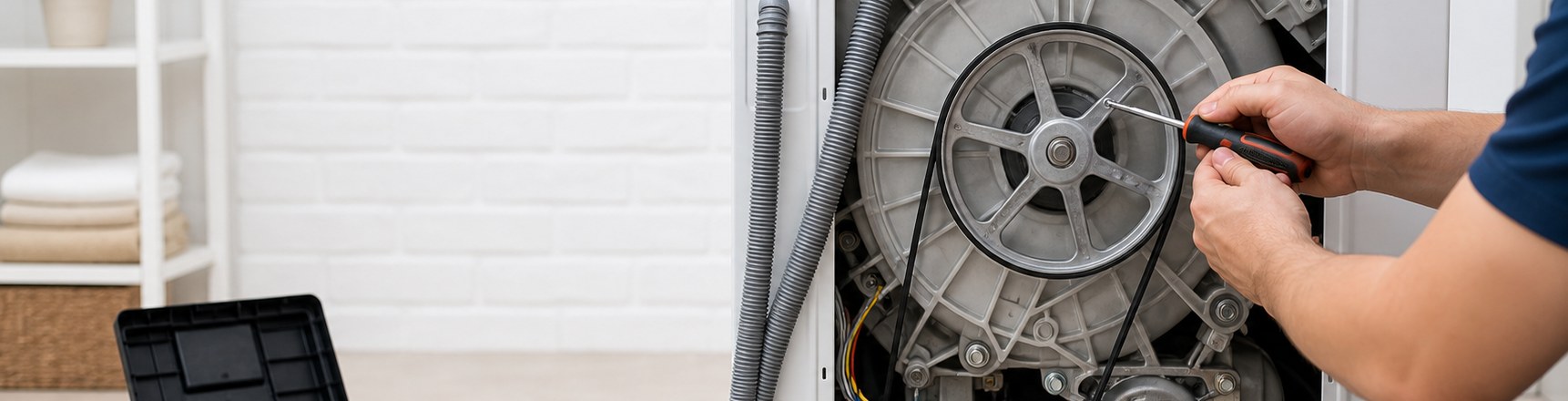
Before accessing any components, unplug the dryer from the wall — the heating element carries 240V and can be lethal. Remove the rear panel and locate the high-limit thermostat on the heater housing near the element outlet; it’s a disc-style safety device separate from the cycling thermostat, so confirm you have the right part before testing.
Step 3
Set your multimeter to Rx1 and probe both terminals of the high-limit thermostat. A working thermostat at room temperature should show full continuity (near-zero resistance), while an open reading confirms it has tripped or failed and needs replacing. This test takes only 30 seconds and definitively rules out or confirms the component as your fault. Don’t skip this step; assuming failure based on symptoms alone can lead to unnecessary part replacements.
Step 4
Before ordering a replacement, inspect the entire vent duct from the dryer to the exterior exhaust — the high-limit thermostat trips due to restricted airflow causing heat to build up. Replacing the thermostat without fixing this blockage will lead to failure again in no time. Use a vent brush or compressed air to clear lint buildup, and ensure the exterior damper opens freely. This step is crucial to avoid repeat repairs.
Step 5
Replace the high-limit thermostat and the thermal fuse together as a matched pair. If overheating was severe enough to trip the thermostat, it likely also blew the thermal fuse, even if it tests borderline. Replacing both now prevents another disassembly job soon. Reconnect all wire terminals firmly and ensure each connector is fully seated; a loose terminal on a high-current circuit can arc and cause a new failure. Pro tip: photograph the wiring before disconnecting anything for reference during reassembly.
Step 6
Plug the dryer back in and run a full timed cycle to verify the repair. The heating element should activate within the first few minutes, and you should feel consistent heat at the exhaust vent. A properly functioning dryer heats for roughly 60% of the cycle time and cycles off briefly as the cycling thermostat regulates temperature, so intermittent heat is normal. However, no heat or constant heat indicates a remaining fault. If the high-limit trips again quickly, recheck airflow before suspecting a faulty replacement part.
Where to Buy Replacement Parts
- GE GTD33EASKWW high limit thermostat WE4M127 replacement
- GE electric dryer thermal fuse WE4M137
- GE dryer thermostat kit WE4M416
When to Call a Professional
If the issue persists after completing all the steps above, the problem might involve a failed main control board, a defective heating element, or wiring that requires specialized diagnostic equipment. In that case, it’s best to contact a licensed appliance technician. On gas dryers, do not attempt work on the gas valve or supply line; that work requires a licensed gas fitter in most jurisdictions.
How Much Does This Repair Cost?
| Repair route | Typical cost |
|---|---|
| Do it yourself | $10–$30 (parts) |
| Professional repair | $150–$300 (parts and labor) |
A replacement high-limit thermostat for the GE GTD33EASKWW typically costs between $10 and $30 for parts. Professional appliance repair services generally charge $150 to $300 when you factor in the service call fee and labor. Tackling this repair yourself can save you $120 to $270, making DIY a smart, budget-friendly choice.
Frequently Asked Questions
How do I know if the high-limit thermostat is the problem on my GE GTD33EASKWW?
If your dryer runs but produces no heat, the high-limit thermostat is a common suspect. Test it with a multimeter for continuity — no continuity confirms it has failed.
Where is the high-limit thermostat located on the GTD33EASKWW?
It is mounted on the exhaust duct near the heating element housing at the back of the dryer. You can access it by removing the rear panel.
Can a failed high-limit thermostat damage other components?
Yes, running the dryer with a faulty thermostat can overheat and burn out the heating element. It’s essential to replace the thermostat promptly to avoid more costly repairs.
Recommended Products
Here are the parts and tools I recommend for this repair, based on compatibility and customer reviews:
- Hyaminu WE4M137 Dryer High-Limit Thermostat for GE Hotpoint
- WE4M137 Fits GE Dryer High Limit Thermostat Thermal Safety Fuse AP2042565 PS267900 l315-65f
- WE4M137 Fits GE Dryer High Limit Thermostat Thermal Safety
The High-Limit Thermostat That Actually Restores Heat to Your GTD33EASKWW
When a GE GTD33EASKWW runs but doesn’t heat, nine times out of ten it’s this thermostat that’s failed open. Order the correct part number and you’ll have heat back within an hour of installation.
What works
- Plug-and-play fit—no modification needed, and the terminals line up exactly as they should on this model’s heating assembly.
- Confirmed OEM-equivalent specs mean you’re not guessing whether this will actually cut out at the right temperature threshold like the original did.
- Eliminates the most common false diagnosis trap: many DIYers order a thermal fuse first when the real culprit is the high-limit thermostat that’s stuck open.
What doesn’t
- If your dryer is tripping a thermal fuse repeatedly, swapping just the thermostat won’t fix the underlying airflow or ventilation blockage causing the overheat.
- You do need to drain the booster heater coil and disconnect the high-voltage power before touching this part—not a five-minute job if you’ve never opened a dryer before.
I’ve seen jobs delayed because someone ordered a kit with both the thermostat and fuse, then realized halfway through that only the thermostat needed replacing—wasting money and time on unnecessary parts. Test continuity across the thermostat terminals first (they should show resistance change when heated), then order with confidence. Hyaminu WE4M137 Dryer High-Limit Thermostat for GE Hotpoint
About This Article

Written by Dave Holt. Dave Holt has been taking apart and fixing household appliances since he was a teenager who couldn't leave a broken one alone. Eighteen years later, after fixing things for neighbors, friends, and anyone who'd let him, he's seen almost every failure mode there is. When he writes a repair guide here, it's based on the actual job, not a manufacturer overview. More about this site.
Scope and limits. Dave is a self-taught repairer, not a certified appliance technician. Unplug before you open anything, and leave sealed refrigeration systems, gas connections, and hardwired circuits to a qualified technician.