Drum seal worn
In this step-by-step guide, I’ll show you how to fix a worn drum seal on your GE GTD33EASKWW (Electric). With the right tools and parts, you can usually handle this repair in 1–2 hours and save yourself a costly service call.
🔨 Pro Tip from Dave
On the GTD33EASKWW, the front drum seal and rear drum seal are two separate components. A common mistake is only replacing the front felt seal (WE9M30) and overlooking the rear seal, which often wears just as much. Always inspect both while you have the drum out. And remember, use high-temp adhesive sparingly; too much can cause the new felt to bunch and create new noise issues.
Part of our Top 20 Dryer Models & Common Repair Issues Guide. Browse all dryer repair guides for related models and issues.
Common Symptoms & Causes
If your GE GTD33EASKWW dryer has a worn drum seal, you might notice one or more of the following issues during operation:
- Clothes come out with black or gray streaks from contact with the drum edge
- A loud scraping or squealing noise occurs throughout the drying cycle
- Visible lint buildup around the front or rear of the drum opening
- Dryer takes significantly longer than normal to dry a load
These problems usually stem from normal wear and tear on the felt drum seal, which degrades over time and loses its ability to create a proper airtight seal around the drum.
Safety First
- Unplug the dryer from the power outlet before you start any repair — never work on a live appliance.
- Wear work gloves when handling metal brackets, sheet metal edges, or sharp components.
- Take photos with your phone before disconnecting any wiring harnesses or connectors.
- Work in a well-lit area with enough floor space to lay removed panels flat.
Tools & Parts Needed
Essential Tools
- Phillips #2 screwdriver
- ¼” nut driver
- Putty knife
- Multimeter
- Work gloves
Replacement Parts
- Drum felt seal kit (front and rear)
- drum bearing ring
- high-temp adhesive
Step-by-Step Repair Instructions
Step 1
First, check for a worn drum seal by listening for thumping during rotation, watching for clothes catching on the drum seam, or feeling for air or heat escaping from the drum gap. These signs point to a failed front seal or rear bearing. Addressing this early can prevent clothes from snagging and tearing, while keeping heated air inside the drum where it belongs for efficient drying.
Step 2
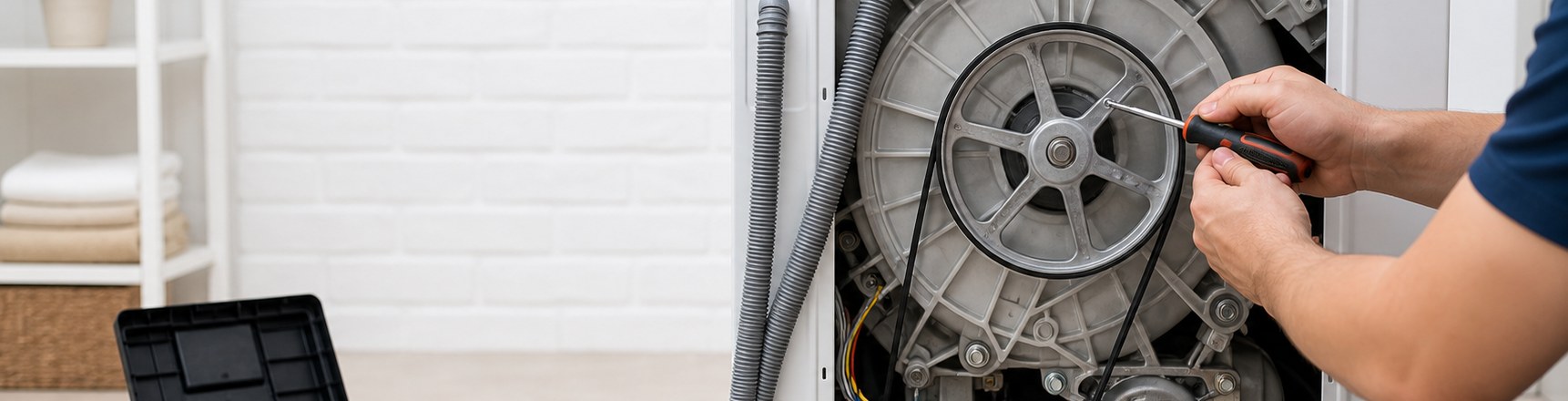
Before you begin disassembly, unplug the dryer to eliminate any shock risk. Remove the front panel by taking out the single Phillips screw inside the lint housing and the two screws along the lower panel edge. Then, pull the drum forward off the rear rollers; the drum simply slides free once the panel is out of the way.
Step 3
With the drum out, examine the felt strip glued around the front drum flange. Look for areas worn through to bare fabric, chunks missing, or sections pulling away from the flange. Any of these conditions allow hot air to escape and provide a snag point for clothes. If the felt shows any of these signs, replacement is necessary; partial wear will continue to deteriorate quickly under heat and friction.
Step 4
Use a putty knife to scrape off any traces of the old felt and adhesive from the drum flange, then wipe the surface clean to ensure the new adhesive bonds to bare metal. Apply high-temperature adhesive — standard craft glue won’t hold up under dryer heat — and press the new felt strip firmly around the full circumference. Allow at least 30 minutes of cure time before reinstalling the drum to ensure a strong bond.
Step 5
While the drum is still out, inspect the large plastic bearing ring at the rear center of the drum, which supports the drum’s weight and keeps it centered during rotation. Look for cracks, flat spots, or visible warping in this ring as they can be a source of thumping noise. If you find any damage, replace the ring now instead of reassembling and facing the same issue later.
Step 6
Reassemble the drum and front panel, plug the dryer back in, and run a full 30-minute cycle to confirm the repair. Listen for any thumping and check around the drum gap for escaping heat. If both are gone, you’ve successfully secured the new seal and bearing ring.
Where to Buy Replacement Parts
- GE GTD33EASKWW felt drum seal kit WE9M30 replacement
- GE electric dryer front drum seal replacement
- GE dryer drum bearing ring WE3M26 replacement
When to Call a Professional
If the issue persists after following all these steps, the problem may involve a failed main control board, a defective heating element, or wiring that requires specialized diagnostic equipment. In such cases, contact a licensed appliance technician. For gas dryers, avoid working on the gas valve or supply line — that requires a licensed gas fitter in most areas.
How Much Does This Repair Cost?
| Repair route | Typical cost |
|---|---|
| Do it yourself | $10–$30 (parts) |
| Professional repair | $150–$300 (parts and labor) |
Typically, a replacement drum seal for the GE GTD33EASKWW costs between $10 and $30 in parts if you take the DIY route. A professional service call for the same fix usually ranges from $150–$300 when you factor in labor and fees. Choosing the DIY path can save you $120 or more, making this a worthwhile repair to attempt at home.
Frequently Asked Questions
How do I know if the drum seal on my GE GTD33EASKWW is worn?
Common signs include clothes coming out with black marks or grease stains, unusual squealing noises during the cycle, or visible gaps around the drum felt. You may also notice increased lint buildup around the dryer cabinet.
Can I replace the drum seal on the GE GTD33EASKWW myself?
Absolutely, this is a DIY-friendly repair that requires basic tools such as a putty knife and screwdrivers. Having a second set of hands when reassembling the drum makes the job much easier.
What drum seal part do I need for the GE GTD33EASKWW?
You’ll need the front drum felt seal, which is commonly listed under GE part number WE9M30 or a compatible equivalent. Always verify the part number against your model’s wiring diagram or parts schematic before placing an order.
Recommended Products
Here are the parts and tools I recommend for this repair, based on compatibility and customer reviews:
- WE49X20697 Dryer Front Bearing Kit Contains Top Bearing
The Drum Felt Seal That Stops the Thumping on Your GTD33EASKWW
This is the part that actually wears out on this model—the felt seal deteriorates from heat cycling and lint buildup, and replacing it is the best way to eliminate that thumping noise and restore proper airflow. If you’re hearing squealing or noticing heat loss, this kit covers both the front and rear seals you’ll need.
What works
- Both seals come together, so you’re not ordering piecemeal or guessing which end needs replacement first.
- The felt material sits flush against the drum without binding, and the thumping typically stops within the first load after installation.
- Installation is straightforward on this model—no special tools needed beyond a screwdriver, and the old seal comes off cleanly if you take your time.
What doesn’t
- The adhesive backing isn’t always strong enough on the first press, especially if the drum housing is dusty—you’ll want to clean that surface thoroughly and sometimes apply a bit of high-temp adhesive to lock it in place.
- If your drum bearing is also worn (which you’ll know if the drum wobbles or makes a grinding noise), this seal alone won’t fix it—you’ll need to address the bearing separately.
A common hiccup I see is someone ordering just a front seal first because they assume that’s where the noise is coming from—half the time it’s actually the rear seal that’s the culprit, or both are worn. That’s why I always grab the kit with both seals included. Drum felt seal kit (front and rear)
About This Article

Written by Dave Holt. Dave Holt has been taking apart and fixing household appliances since he was a teenager who couldn't leave a broken one alone. Eighteen years later, after fixing things for neighbors, friends, and anyone who'd let him, he's seen almost every failure mode there is. When he writes a repair guide here, it's based on the actual job, not a manufacturer overview. More about this site.
Scope and limits. Dave is a self-taught repairer, not a certified appliance technician. Unplug before you open anything, and leave sealed refrigeration systems, gas connections, and hardwired circuits to a qualified technician.