Fan motor noise
In this guide, I’ll walk you through fixing the fan motor noise on your Samsung RB38T776CS9 (Bottom Freezer). With the proper tools and parts, you can usually complete this repair in 1–2 hours, saving yourself from the expense of a service call.
🔨 Pro Tip from Dave
For the RB38T776CS9, the evaporator fan motor part number is DA31-00146E. However, here’s a tip: before replacing it, check the fan blade for ice buildup that may be pressing against the shroud. Doing a manual defrost can save you from buying unnecessary parts, as a cracked blade can also cause similar grinding noises.
Part of our Top 20 Refrigerator Models & Common Repair Issues Guide. Browse all refrigerator repair guides for related models and issues.
Common Symptoms & Causes
Here are the symptoms that typically indicate the evaporator or condenser fan motor on your Samsung RB38T776CS9 is failing and needs your attention.
- A loud grinding or rattling noise coming from the bottom freezer compartment
- A high-pitched squealing sound that gets louder when the freezer door is opened
- The freezer is running but not reaching the correct temperature despite the compressor working
- The fan intermittently stops spinning, causing frost to build up on the evaporator coils
These issues often arise from worn fan motor bearings, ice buildup obstructing the fan blades, or a burnt-out motor winding from age and constant use.
Safety First
- Unplug the refrigerator from the power outlet before beginning any repair. Working on a live appliance is dangerous.
- Shut off the water supply valve before disconnecting any water lines or hoses.
- Wear work gloves when handling metal brackets, sheet metal edges, or sharp components.
- Take photos with your phone before disconnecting any wiring harnesses or connectors.
- Work in a well-lit area with enough floor space to lay removed panels flat.
Tools & Parts Needed
Essential Tools
- Phillips #2 screwdriver
- ¼” nut driver
- Needle-nose pliers
- Multimeter
- Flashlight or work light
Replacement Parts
- Condenser fan motor
- Evaporator fan blade
- Reyhoar 2Pcs WR02X12008 Refrigerator Evaporator Fan Motor
- ¼” nut driver set
Step-by-Step Repair Instructions
Step 1
Start by standing next to the fridge and listening closely to identify whether the noise is loudest at the rear or near the freezer compartment. Each location points to a different fan; noise at the rear indicates the condenser fan, while noise from inside the freezer points to the evaporator fan. Pinpointing the source first saves time and avoids unnecessary repairs.
Step 2
To access the condenser fan, remove the rear lower panel secured by 4 quarter-inch hex screws. Spin the fan blade by hand to test the motor bearings. If you notice wobbling, grinding resistance, or a blade that stops abruptly, it signals a failing motor that’s likely to get louder and may overheat. Also, inspect the blade edges for chips or cracks that could cause imbalance. Remember, always unplug the refrigerator before touching any components near the compressor area.
Step 3
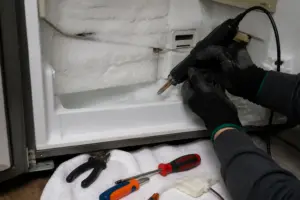
To reach the evaporator fan, remove the freezer back panel secured with 4 Phillips screws. Then, spin the blade by hand and visually check for ice buildup making contact with the blade or housing. Ice contact is a common cause of rattling or scraping noise, indicating the defrost system may also need attention. If ice is present, run a full defrost cycle and let the unit dry completely before reassessing the motor itself. A hair dryer on low can help speed up targeted thawing, but never use sharp tools to chip away at the ice, as this risks puncturing the evaporator coil.
Step 4
To replace either fan motor, disconnect the wire harness connector by pressing the release tab and pulling straight out. Then, remove the 2 to 3 Phillips screws securing the motor to its mounting bracket. Note the motor’s orientation before removing it; installing the replacement incorrectly will push air in the wrong direction and reduce cooling efficiency. Always match the replacement motor to the original part number to ensure correct voltage and connector compatibility.
Step 5
Before reinstalling the fan, check the condition of each rubber mounting grommet by squeezing them between your fingers. A healthy grommet compresses about 50% of its thickness, while a hardened one barely gives at all. These grommets isolate the motor’s vibration from the metal cabinet, and hardening can turn a normal motor into a noisy one, even if the motor itself is fine. Replacing grommets is inexpensive and often overlooked, but skipping this step can lead to the noise returning even after fitting a new motor.
Step 6
Reinstall both panels and restore all screws to their original torque to ensure the panels sit flush. Then plug the refrigerator back in and listen for at least five minutes as the fans reach normal operating speed. A steady, low-level hum is normal and indicates the motor is running correctly. If you hear any returning rattling, scraping, or intermittent noise, it means a component is still loose or a deeper issue, such as a failing defrost system, may need further diagnosis. A good trick is to place your hand lightly on the cabinet sides while listening; vibration you can feel but barely hear often points to a panel screw that needs another half-turn.
Where to Buy Replacement Parts
- Samsung RB38T776CS9 condenser fan motor DA31-00146G
- Samsung refrigerator evaporator fan blade DA31-00090B
- Reyhoar 2Pcs WR02X12008 Refrigerator Evaporator Fan Motor
When to Call a Professional
If the issue persists after following the steps above, the problem may involve the sealed refrigerant system, a failed main control board, or wiring that requires specialized diagnostic equipment. In this case, it’s best to contact a licensed appliance technician. Attempting sealed-system repairs without the proper certification is illegal and unsafe.
How Much Does This Repair Cost?
| Repair route | Typical cost |
|---|---|
| Do it yourself | $25–$75 (parts) |
| Professional repair | $150–$300 (parts and labor) |
Typically, replacing the fan motor on a Samsung RB38T776CS9 yourself costs between $25–$75 for the replacement part. A professional service call for the same repair generally runs $150–$300, including labor. By tackling this repair yourself, you can save up to $225 or more.
Frequently Asked Questions
How do I know if the fan motor is causing the noise in my Samsung RB38T776CS9?
If the noise increases when you open the freezer drawer or sounds like grinding or rattling from the back wall, the evaporator fan motor is likely the issue. You can temporarily press the door switch to run the fan while the drawer is open to help pinpoint the source.
Can I replace the fan motor myself without professional help?
Absolutely! This is a manageable DIY repair that requires basic tools like a Phillips screwdriver and a plastic pry tool. Just remember to unplug the refrigerator before starting and allow the freezer to defrost fully for easier access.
What is the correct replacement fan motor part number for the RB38T776CS9?
The compatible evaporator fan motor for this model is typically Samsung part number DA31-00146E. However, always verify against your unit’s serial number before purchasing and cross-check with your supplier to confirm compatibility.
Recommended Products
Here are the parts and tools I recommend for this repair, based on compatibility and customer reviews:
- DA31-00287B DC12V Refrigerator Evaporator Fan Motor for Samsung Refrigerator Freezer Fan Motor Replacement Part Replaces DA96-00968A DA31-00334A PS9494284 3954921 AP5948644
The Evaporator Fan Motor That Stops the Noise on Your Samsung RB38T776CS9
Once you narrow down the noise to the freezer compartment—and it’s not a rattling blade—the evaporator fan motor is almost always your solution on this model. This is the part to start with on 90% of these calls, and it resolves the issue cleanly.
What works
- Direct fit for the RB38T776CS9—no adapter brackets or rewiring needed; connectors match exactly.
- Eliminates that grinding or squealing noise immediately after installation because you’re replacing the worn bearing that was causing it.
- Restoration of proper freezer airflow and cooling recovery happens within the first cycle—you’ll notice the temperature consistency improve fast.
What doesn’t
- Doesn’t help if your noise is actually coming from the condenser fan below the fridge—misdiagnosis on that happens sometimes, especially if you haven’t opened the freezer compartment to listen closely.
- Installation requires removing the freezer back panel and unplugging a connector; it’s not a five-minute job if you haven’t done appliance work before.
I’ve had homeowners order a condenser fan motor first because they heard “fan noise” without checking the freezer compartment directly—and that wastes a week. Open the freezer, listen for the squeal or grinding coming from behind that back panel, and you’ll know for sure this is your part. DA31-00287B DC12V Refrigerator Evaporator Fan Motor
About This Article

Written by Dave Holt. Dave Holt has been taking apart and fixing household appliances since he was a teenager who couldn't leave a broken one alone. Eighteen years later, after fixing things for neighbors, friends, and anyone who'd let him, he's seen almost every failure mode there is. When he writes a repair guide here, it's based on the actual job, not a manufacturer overview. More about this site.
Scope and limits. Dave is a self-taught repairer, not a certified appliance technician. Unplug before you open anything, and leave sealed refrigeration systems, gas connections, and hardwired circuits to a qualified technician.