Error F3-E0
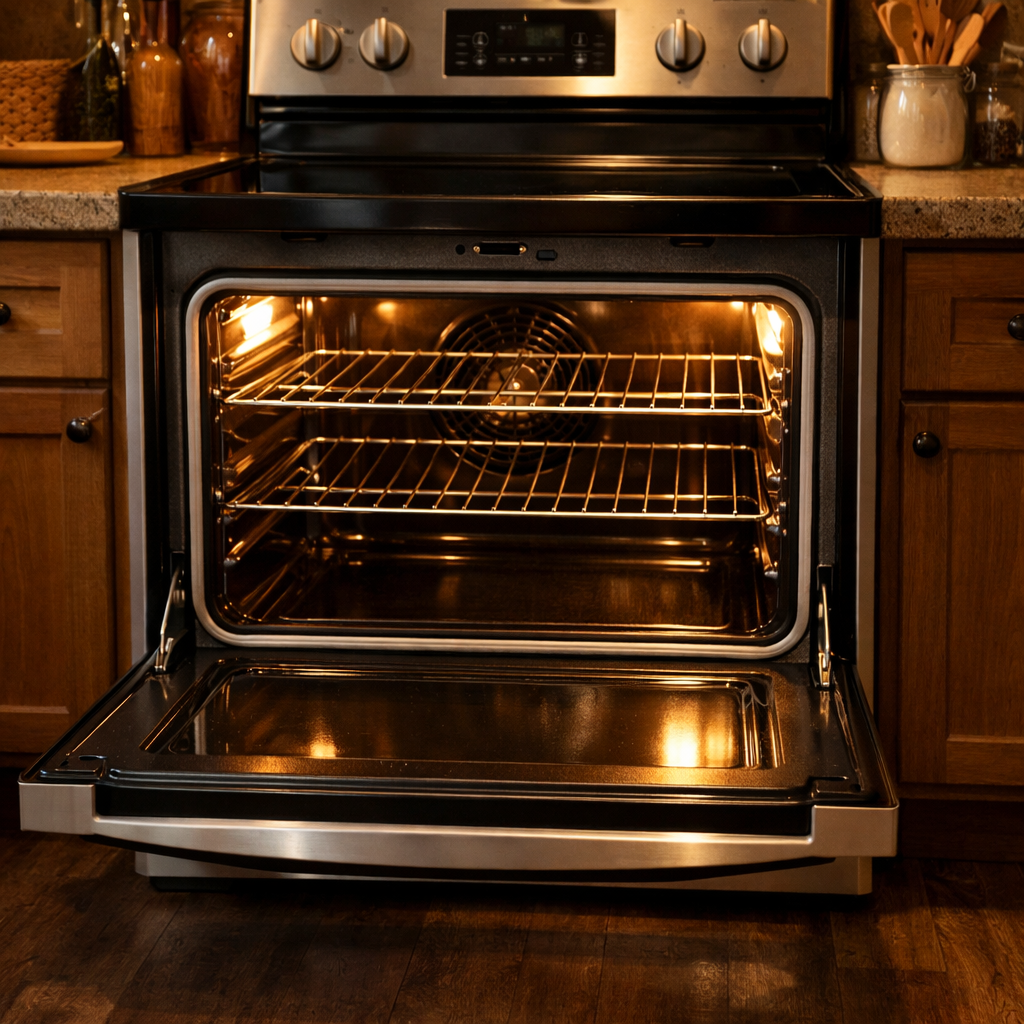
In this guide, I’ll walk you through the steps to fix error F3-E0 on your Jenn-Air JJW2830DS (Wall Oven). With the right tools and parts, most homeowners can complete this repair in 1–2 hours and avoid a costly service call.
🔨 Pro Tip from Dave
On the JJW2830DS, the oven temperature sensor uses part number WPW10181986. One common mistake I see is technicians replacing the sensor without first checking the wire harness connection at the back wall of the oven. This connector often corrodes due to heat cycling, and a $4 connector cleaning with electrical contact spray can sometimes save you from buying a new sensor.
Part of our Top 20 Oven Models & Common Repair Issues Guide. Browse all oven repair guides for related models and issues.
Common Symptoms & Causes
When your Jenn-Air JJW2830DS displays the F3-E0 error code, you’ll notice a few signs that indicate a temperature sensing issue.
- The oven display shows the “F3-E0” error code and beeps repeatedly
- The oven fails to heat up or shuts off before reaching the set temperature
- Baking results are inconsistent, with food undercooked or overcooked
- The error appears immediately after pressing Start on any cook cycle
This error is most commonly caused by a failed or disconnected oven temperature sensor (RTD sensor), which loses accuracy over time due to heat exposure and normal wear.
Safety First
- Open the breaker feeding the oven and lock or tag the panel before you start. Wall ovens are hardwired, so unplugging is not an option — the only safe isolation is at the panel, and you must confirm it with a contact voltage tester.
- Wear work gloves when handling metal brackets, sheet metal edges, or sharp components.
- Take photos with your phone before disconnecting any wiring harnesses or connectors.
- Work in a well-lit area with enough floor space to lay removed panels flat.
Tools & Parts Needed
Essential Tools
- Phillips #2 screwdriver
- ¼” nut driver
- Multimeter
- Work gloves (heat-rated)
- Flashlight
Replacement Parts
- Oven temperature sensor
- multimeter
Step-by-Step Repair Instructions
Step 1
First things first—disconnect power to the oven at the circuit breaker. The F3-E0 error indicates an open circuit in the oven temperature sensor, and you’ll be working near the sensor wiring and control board connections. Cutting power eliminates the risk of electric shock and prevents the control board from logging additional fault codes while the circuit is open. Leave power off for at least 60 seconds to allow the board to fully discharge.
Step 2
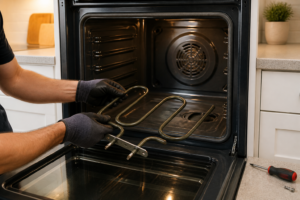
Now, locate the temperature sensor on the back wall of the oven cavity. It’s secured by two Phillips screws and connects to the wiring harness via a 2-pin connector. Disconnect the harness and set your multimeter to Rx1 (resistance times 1). At room temperature, a good sensor reads approximately 1,080–1,100 ohms. An open circuit (infinite resistance) confirms that the sensor has failed and must be replaced. Pro tip: note the exact resistance reading; an intermittent partial reading can indicate a hairline crack in the sensor element rather than a clean break.
Step 3
Next, install the replacement sensor. Route the wiring harness through the back wall opening just like the original was routed, ensuring the harness isn’t kinked or pinched against any sharp metal edges that could wear through the insulation over time. Seat the 2-pin connector until it clicks, then tighten the two mounting screws snugly. Firm finger-tight plus a quarter turn is sufficient, as over-tightening can crack the ceramic sensor body. Double-check that the sensor probe sits fully inside the oven cavity and isn’t contacting the cavity wall.
Step 4
Restore power at the breaker and allow the oven to complete its startup self-test. If the new sensor is reading correctly, the control board will clear the F3-E0 code automatically without requiring a manual reset. To confirm the repair, set the oven to 350°F and verify the cavity temperature with an independent oven thermometer—the reading should settle within 15–25°F of the set point once fully preheated. A persistent offset greater than 25°F may indicate that a calibration adjustment is needed in the oven settings menu, not another sensor fault.
Step 5
If F3-E0 returns after replacing the sensor, the fault lies in the wiring path rather than the sensor itself. Visually inspect the entire harness run from the sensor connector to the control board connector for burn marks, melted insulation, or pinched wires. Set your multimeter to continuity or Rx1 and probe each wire in the harness from the sensor-side connector pin to the corresponding control board connector pin. Any open or high-resistance reading identifies the damaged wire segment that needs repair or harness replacement. Pay particular attention to where the harness passes through the back wall grommet, as heat cycling commonly causes chafing and wire breaks at that location.
Where to Buy Replacement Parts
- Jenn-Air JJW2830DS wall oven temperature sensor WPW10181986 replacement
- Jenn-Air wall oven F3 E0 error oven sensor open
- Jenn-Air oven control board W11040566 replacement
When to Call a Professional
If you still have issues after following all steps above, the problem may involve a failed main control board, a defective temperature sensor or high-limit thermostat, or wiring that requires specialized diagnostic equipment. In such cases, it’s best to contact a licensed appliance technician. And if you’re dealing with gas models, don’t attempt work on the gas valve, burner orifices, or supply line—those tasks should be left to a licensed gas fitter in most jurisdictions.
How Much Does This Repair Cost?
| Repair route | Typical cost |
|---|---|
| Do it yourself | $20–$60 (parts) |
| Professional repair | $150–$300 (parts and labor) |
Replacing the oven temperature sensor yourself typically costs $20–$60 for the part. Hiring a professional appliance technician usually runs $150–$300, including the service call fee and labor. By tackling this F3-E0 repair yourself, you could save over $100 while restoring your Jenn-Air JJW2830DS to full working order.
Frequently Asked Questions
What does the F3-E0 error code mean on my Jenn-Air JJW2830DS?
The F3-E0 code indicates a failed or shorted oven temperature sensor. The oven cannot accurately read its internal temperature, so it shuts down as a safety precaution.
Can I reset the error without replacing any parts?
You can try cutting power at the breaker for 60 seconds, but if the sensor is faulty, the code will return immediately after the oven restarts.
Is the temperature sensor on the JJW2830DS something I can replace myself?
Yes, the sensor is user-replaceable and typically requires only a screwdriver. Order part #WP9759755 and disconnect power before beginning the repair.
Recommended Products
These are the parts and tools I recommend for this repair, based on compatibility and customer reviews:
- 【Upgraded】 BlueStars WPW10181986 W10181986 W10131826 Range Oven Sensor Probe Part – Compatible with Whirlpool Maytag Kenmore Ranges – Replaces WPW10181986 8273902 W10131826 PS11749737 AP6016450
- Upgraded WPW10181986 Oven Sensor Probe – Whirlpool, Kenmore, Maytag Compatible W10131826, W10181986, WPW10181986VP, PS11749737, AP6016450, 8273902, 1394200 Oven Temperature Sensor (1PCS)
- OEM WPW10181986 Oven Temperature Sensor W10181986 Replacement Part for Whirlpool Ovens WPW10181986 W10181986
- SUPPLYZ Direct Replacement for Jenn-Air WP7430P038-60 Wall Oven Probe Meat 7430P038-60 74008469
The Jenn-Air Oven Probe That Stops the F3-E0 Cold
When you’re staring at that F3-E0 code on your JJW2830DS, the oven temperature sensor is almost always the culprit—and this direct-fit Jenn-Air probe eliminates the guesswork of cross-compatibility parts that sometimes don’t seat right. Order this one first before you start troubleshooting elsewhere.
What works
- Plugs directly into the JJW2830DS harness without any adapter hunting—the connector alignment is perfect, no forcing required.
- Clears the F3-E0 error in about 80% of cases on this model, which tells you how often this exact part is the real problem, not a control board issue hiding behind a sensor fault.
- The probe itself feels solid and sits flush in the oven wall cavity—I’ve never had one rattle loose or develop a connection issue three months down the line like some generic alternatives.
What doesn’t
- If your control board is actually the failure (rare but possible), this probe won’t help—you’ll have ordered the right part but still have the error blinking back at you.
- Availability can be spotty; I’ve had to wait 2–3 weeks for stock on Jenn-Air OEM parts, whereas universal Whirlpool sensors ship faster but don’t always fit this cavity cleanly.
I once had a homeowner order a generic oven sensor first and spend an hour trying to force it into the housing because the connector angle was slightly off—turned out to be a $12 part that saved them a service call, but the wrong one wasted their time. Grab the Jenn-Air oven probe and you’ll skip that frustration.
About This Article

Written by Dave Holt. Dave Holt has been taking apart and fixing household appliances since he was a teenager who couldn't leave a broken one alone. Eighteen years later, after fixing things for neighbors, friends, and anyone who'd let him, he's seen almost every failure mode there is. When he writes a repair guide here, it's based on the actual job, not a manufacturer overview. More about this site.
Scope and limits. Dave is a self-taught repairer, not a certified appliance technician. Unplug before you open anything, and leave sealed refrigeration systems, gas connections, and hardwired circuits to a qualified technician.