Drum glide worn
In this step-by-step guide, I’ll walk you through fixing the drum glide worn issue on your Speed Queen DR7000WG (Gas). With the right tools and parts, most homeowners can complete this repair in 1–2 hours and save themselves a costly service call.
🔨 Pro Tip from Dave
While you’re in there, don’t forget to check the felt drum seal part number 510772P. If the glides are worn, chances are the seal has degraded as well. Skipping this step means you might find yourself back in the machine within a year. Also, be careful with the retaining clips on the front bulkhead; they can be brittle and snap easily on older units.
Part of our Top 20 Dryer Models & Common Repair Issues Guide. Browse all dryer repair guides for related models and issues.
Common Symptoms & Causes
If your Speed Queen DR7000WG is showing signs of a worn drum glide, you may notice one or more of the following symptoms during operation.
- A loud squealing or scraping noise while the drum is spinning
- Clothes coming out with grease marks or black streaks along the edges
- The drum feels rough or uneven when rotated by hand
- A burning plastic or rubber smell during the drying cycle
These problems typically arise from the plastic drum glides wearing down over time due to friction, heat, and regular use, eventually allowing the drum to rub directly against the dryer cabinet.
Safety First
- Unplug the dryer from the power outlet before starting any repair — never work on a live appliance.
- Wear work gloves when handling metal brackets, sheet metal edges, or sharp components.
- Take photos with your phone before disconnecting any wiring harnesses or connectors.
- Work in a well-lit area with enough floor space to lay removed panels flat.
Tools & Parts Needed
Essential Tools
- Phillips #2 screwdriver
- ¼” nut driver
- Putty knife
- Multimeter
- Work gloves
Replacement Parts
- Drum glide pads (front)
- RB170003 Dryer Drum Front Glide Kit Replacement For Speed
- RB170002 ADE30RGS171TW01 3447593 Dryer Roller Kit Fit
Step-by-Step Repair Instructions
Step 1
First, unplug the dryer from the wall outlet and close the gas shut-off valve behind the unit. This is crucial; skipping either step can risk electrocution or a gas leak during disassembly. Remove the front panel by pulling out the lint screen and taking out the one screw beneath it, and then remove the two lower panel screws; the panel will release forward. Lift the drum slightly and pull it forward to free it from the rear bearing, then set it aside on a clean surface.
Step 2
Now, locate the front glide pads at the bottom corners of the front bulkhead. These plastic strips are the only thing separating the drum’s front edge from bare metal, absorbing constant rotational friction. Run your finger across each pad: if the plastic is worn through and you can feel or see exposed metal, that contact is what’s causing the squealing or rhythmic thumping you’ve been hearing. Replace both pads as a matched set even if only one looks damaged; they wear at similar rates.
Step 3
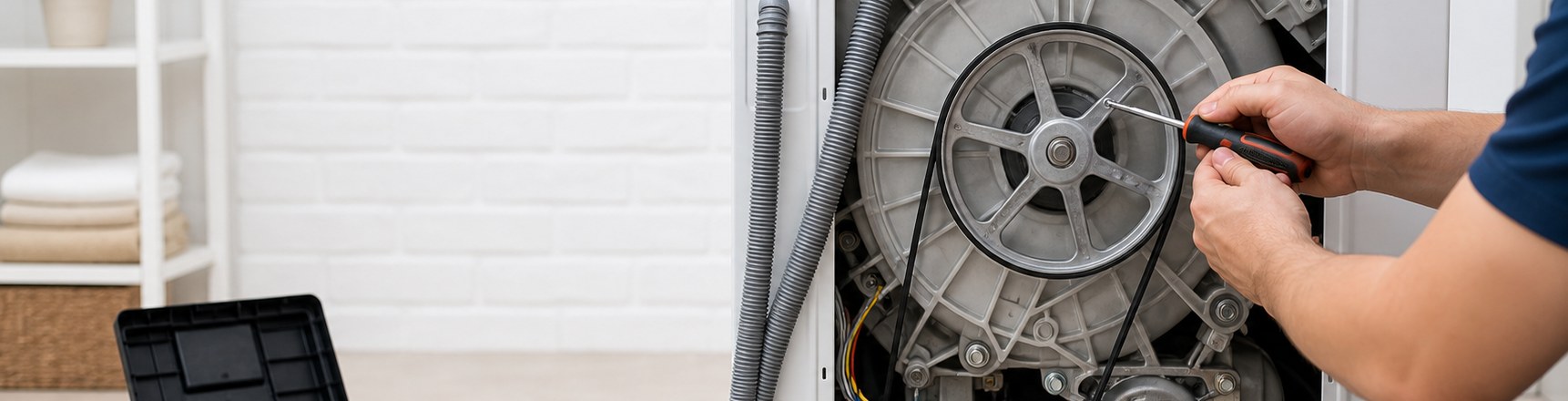
Next, move to the rear panel and find the two drum support rollers. These carry the entire weight of the drum and spin continuously during every cycle. Spin each roller by hand: it should turn freely and smoothly with no wobble, grinding, or flat spots. If a roller resists, wobbles, or feels rough, that’s likely the cause of any persistent thumping or vibration. Replace both rollers together so their wear rates stay matched, preventing the need to re-open the machine in six months.
Step 4
Speed Queen’s commercial-grade rollers and glide pads are built to a higher standard than most residential dryer parts, so they last longer — but they do eventually wear down, especially in high-usage households. Genuine or OEM-equivalent roller and glide kits typically run about $20–40 and are widely available; replacing them now is far cheaper than the bearing or drum damage that follows if metal-on-metal contact continues. Pro tip: apply a small amount of high-temperature bearing grease to the roller shafts during reassembly to maximize their lifespan.
Step 5
Before you reinstall the drum, visually confirm that the belt is undamaged — no fraying or cracking — since you have full access right now. Set the drum back onto the rear rollers first, then route the belt: loop it around the drum, thread it around the idler pulley to create tension, and seat it on the motor shaft pulley. Reattach the front panel and secure all three screws; make sure the panel sits flush or the drum alignment will be off.
Step 6
Finally, reopen the gas shut-off valve fully, then restore power at the outlet. Run a timed dry cycle for at least ten minutes, standing next to the dryer for the first few minutes, listening specifically for any return of squealing or thumping during drum rotation. Silence confirms the glide pads and rollers are seated and functioning correctly. If noise persists, shut down immediately and recheck belt tension and roller seating before running again.
Where to Buy Replacement Parts
- Speed Queen DR7000WG dryer drum glide kit 37001139 replacement
- RB170003 Dryer Drum Front Glide Kit Replacement For Speed
- RB170002 ADE30RGS171TW01 3447593 Dryer Roller Kit Fit
When to Call a Professional
If the issue persists after completing the steps above, the problem may involve a failed main control board, a defective heating element or thermal cutoff, or wiring that requires specialized diagnostic equipment. At this point, it’s best to contact a licensed appliance technician. On gas dryers, do not attempt work on the gas valve or supply line — that work is generally restricted to a licensed gas fitter in most jurisdictions.
How Much Does This Repair Cost?
| Repair route | Typical cost |
|---|---|
| Do it yourself | $15–$40 (parts) |
| Professional repair | $150–$300 (parts and labor) |
Replacing worn drum glides on a Speed Queen DR7000WG typically costs $15–$40 in parts if you do it yourself. A professional appliance repair service call for this issue usually runs $150–$300, including labor and parts. Tackling this repair yourself can save you over $100, making it a worthwhile DIY project.
Frequently Asked Questions
How do I know if the drum glides on my Speed Queen DR7000WG are worn out?
Listen for a loud scraping or squealing noise when the drum spins. Worn glides often cause the drum to rub directly against the front bulkhead, creating that distinctive grinding sound.
Can I replace the drum glides myself without professional help?
Yes, this is a manageable DIY repair with basic tools. You will need to remove the front panel to access and swap out the glides.
Will worn drum glides affect the gas dryer’s heating performance?
No, drum glides are purely mechanical components and do not impact gas flow or heating. However, ignoring worn glides can eventually damage the drum itself, leading to costlier repairs.
Recommended Products
Here are the parts and tools I recommend for this repair, based on compatibility and customer reviews:
- RB170003 Dryer Drum Front Glide Kit Replacement For Speed
- RB170003 Dryer Drum Front Glide Kit Compatible with Speed Queen 1992 Replaces PD00055354 AP5186012
- RB170003 Dryer Drum Front Glide Kit Replacement For Speed Queen 1992 and updated SM ADE30RGS171TW01 FGS17AWF LES17AWF LGH37A
- PartsBroz D510207P Dryer Drum Felt Seal – Compatible With Speed Queen Dryer – Replaces AP6284688 510207P 500006 501801 510207 PS17001050 Ultra Durable Replacement
The Front Drum Glide Pads That Stop That Maddening Thumping in Your Speed Queen
If you’re hearing a rhythmic thumping or squealing from the drum during the drying cycle, the front glide pads are almost certainly worn down — they’re what keep the rotating drum from rubbing directly against the cabinet frame. Replacing just these pads is the fastest way to restore quiet operation without replacing the entire drum assembly.
What works
- Direct fit for the DR7000WG — they slide into the front drum support slots exactly where the original pads wear through first, and you’ll feel them click into place.
- The noise stops immediately after installation; new glide pads cure the thumping symptom reliably.
- Installation takes about 15 minutes once you access the front panel — much faster than rear roller replacement and doesn’t require pulling the entire drum.
What doesn’t
- These are front-only; if your noise is actually coming from the rear drum rollers, these won’t help — you’ll need to diagnose which part is actually worn before ordering.
- You still need to remove the front panel and disconnect the door switch to access them — not difficult, but it’s an extra step some DIYers underestimate on first attempt.
I’ve had owners order the rear rollers first because they assumed the noise was from the back, only to install them and still hear thumping — that’s why I always recommend listening with the door open to pinpoint whether the sound comes from the front or rear of the drum. Once you confirm it’s the front glide pads, grab the Drum glide pads (front) and you’ll have the dryer back to silent operation.
About This Article

Written by Dave Holt. Dave Holt has been taking apart and fixing household appliances since he was a teenager who couldn't leave a broken one alone. Eighteen years later, after fixing things for neighbors, friends, and anyone who'd let him, he's seen almost every failure mode there is. When he writes a repair guide here, it's based on the actual job, not a manufacturer overview. More about this site.
Scope and limits. Dave is a self-taught repairer, not a certified appliance technician. Unplug before you open anything, and leave sealed refrigeration systems, gas connections, and hardwired circuits to a qualified technician.