Drum scratching clothes
In this step-by-step repair guide, I’m going to help you tackle the issue of drum scratching clothes on your Samsung DVE45T3400W (Electric). With the right tools and parts, most homeowners can complete this repair in 1–2 hours, ultimately avoiding a costly service call.
🔨 Pro Tip from Dave
On the DVE45T3400W, be particularly vigilant about the front drum bearing glides (part DC97-16782A) — these plastic slides tend to wear unevenly and often develop sharp edges that can be easily overlooked. A common misstep is replacing only the felt seal and reassembling, only to find that the glides were the real issue. Always replace all four glides as a set while you have the drum out.
Part of our Top 20 Dryer Models & Common Repair Issues Guide. Browse all dryer repair guides for related models and issues.
Common Symptoms & Causes
If your Samsung DVE45T3400W is causing damage to your laundry, look out for these specific symptoms that indicate a drum scratching problem.
- Clothes emerge with snag marks, pulls, or small holes after a regular dry cycle
- A rhythmic scraping or grinding noise is heard while the drum spins
- Visible rough spots, chips, or exposed metal edges found inside the drum
- Delicate fabrics or loose threads consistently catch and tear in the same area of the drum
Typically, this issue arises from worn or chipped drum baffles, damaged drum seals, or a broken drum lifter that has left rough edges exposed within the drum.
Safety First
- Unplug the dryer from the power outlet before starting any repairs — never work on a live appliance.
- Wear work gloves when handling metal brackets, sharp edges, or other components.
- Take photos with your phone before disconnecting any wiring harnesses or connectors.
- Work in a well-lit area with enough space to lay removed panels flat.
Tools & Parts Needed
Essential Tools
- Phillips #2 screwdriver
- ¼” nut driver
- Putty knife
- Multimeter
- Work gloves
Replacement Parts
- Drum baffle screws
- front drum seal/glide
- flat-head and Phillips screwdrivers
Step-by-Step Repair Instructions
Step 1
First things first, unplug the dryer before doing anything else. Contact with live components can lead to serious shock hazards. Open the door and shine a flashlight around the drum’s interior, specifically looking for loose screw heads, chipped or cracked baffle edges, and sharp burrs from weld seams; any of these can snag and tear fabric during tumbling. This visual inspection will help you identify the source of the damage before touching anything.
Step 2
The three plastic baffles (the curved scoops molded to the drum wall) lift and tumble your clothes during the cycle, and each is held by one to two screws that can become loose over time. From inside the drum, use a T20 Torx driver to tighten any loose screws until they sit flush. Pro tip: if a screw spins without tightening, the plastic boss behind it is stripped, meaning the entire baffle needs replacement rather than just re-tightening.
Step 3
Run your bare hand slowly along the entire circumference of the drum’s interior seam — a burr will catch your skin just like it catches clothing fibers. Any rough spot you feel needs to be smoothed with 220-grit sandpaper using three to four firm passes, then wipe the area clean with a damp cloth to remove all metal dust. Skipping the wipe step can leave abrasive grit in the drum that could damage fabrics in the next load.
Step 4
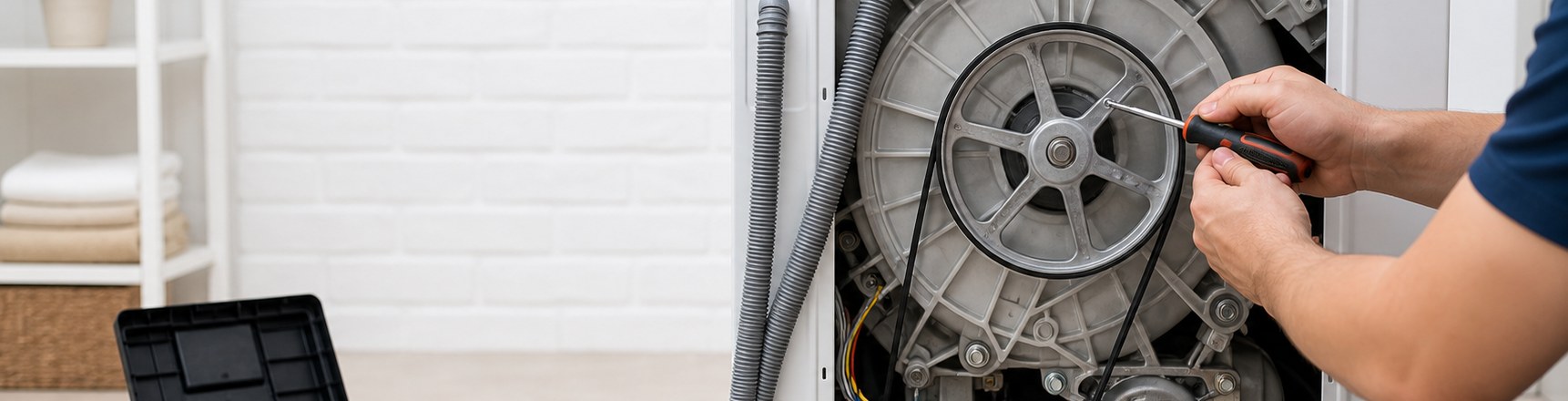
Next, remove the front panel by taking out the lint screen housing screw and the two lower access screws. Then, locate the front drum glide pads — these small plastic or nylon pads support the front edge of the drum as it spins. When these glides wear through completely, the metal drum flange directly contacts metal cabinet surfaces, creating both a scratching edge and a grinding noise. It’s best to replace the full glide set rather than just individual pads, as if one is worn through, the others are likely at the same wear stage.
Step 5
While the front panel is still open, inspect the felt seal that runs around the front drum flange — this strip creates a soft, close-fitting barrier between the rotating drum and the stationary cabinet. If the felt is torn, compressed, or bunching in certain spots, the exposed metal drum flange can make direct contact with the cabinet opening, snagging and tearing fabric that drifts near the door. Reattach or replace the seal using high-temperature adhesive rated for dryer use; standard craft or contact cement won’t hold up under heat and will cause the problem to return quickly.
Step 6
Finally, reassemble all panels, ensuring every screw is seated properly before plugging the dryer back in. Run an empty heat cycle first, then while the drum is still warm, slowly drag an old cotton T-shirt around the interior by hand, feeling for any snagging resistance. If the shirt moves smoothly with no catching, the repair is complete; any remaining snag points mean one of the earlier steps needs revisiting before running a real load.
Where to Buy Replacement Parts
- Samsung DVE45T3400W drum baffle screw kit DC61-01215A
- Samsung electric dryer front drum seal DC97-07694A replacement
- Samsung dryer drum glide replacement DC93-00634A
When to Call a Professional
If the problem persists after completing all the steps listed above, it might be related to a failed main control board, a defective heating element or thermal cutoff, or wiring that requires specialized diagnostic equipment. In such cases, it’s best to contact a licensed appliance technician. And remember, on gas dryers, do not attempt to work on the gas valve or supply line — that’s a job for a licensed gas fitter in most jurisdictions.
How Much Does This Repair Cost?
| Repair route | Typical cost |
|---|---|
| Do it yourself | $10–$60 (parts) |
| Professional repair | $150–$300 (parts and labor) |
DIY parts for fixing a scratching drum on the Samsung DVE45T3400W typically range from $10 to $60, depending on whether you need drum support rollers, glides, or a new felt seal. A professional repair service call generally costs between $150 and $300 once you factor in labor. By tackling this repair yourself, you could save over $100.
Frequently Asked Questions
How do I know if the drum seal is causing the scratching on my Samsung DVE45T3400W?
Inspect the felt drum seal around the front opening for tears, hardening, or missing sections. A damaged seal can expose metal edges that snag and scratch fabrics during the spin cycle.
Can a worn drum glide cause clothes to get scratched?
Absolutely, worn or broken drum glides allow the drum to shift and rub against the cabinet interior. Replacing these small plastic slides typically resolves scratching and unusual scraping noises.
Is it safe to keep using my dryer while it’s scratching clothes?
It’s best to stop using the dryer until the issue is resolved, as continued use can lead to more clothing damage and potentially worsen internal component wear. Addressing the repair promptly saves both your garments and your appliance.
Recommended Products
Here are the parts and tools I recommend for this repair, based on compatibility and customer reviews:
- Upgraded Sam-Sung Dryer Repair Kit for DC97-16782A Samsung Dryer Roller Replacement Kit, DC93-00634A Dryer Idler Pulley, 6602-001655 Dryer Belt, Replacement for Samsung Dryer Parts (Figures 6 and 7)
- (𝟐𝟎𝟐𝟔 𝙐𝙥𝙜𝙧𝙖𝙙𝙚𝙙) DC97-16782A Dryer Drum Roller with Update Bearings by Beaquicy – DC97-16782E Replacement for Samsung Dryer-Replaces DC97-07523A PS4221885 AP5325135 – Pack of 4
- Upgraded Sam-Sung Dryer Repair Kit Compatible with Samsung Dryer Roller Replacement Kit, Replacement for Samsung Dryer Parts DC97-16782A Dryer Roller, DC93-00634A Idler Pulley, 6602-001655 Belt
- FOMIUZY Dryer Drum Felt Gasket Seal Repair Replacement Kit DC97-07618A Fit for Samsung DV42H5200EP/A3 DV50K8600EV/A3 DV52J8700GP/A2 DV50K7500EV/A3 DV45K7600EW/A3 DV48J7700EW/A2 DV45H6300EG/A3 & More
The Drum Seal Felt That Stops Scratching Before It Damages Your Drum
If you’re catching clothes getting snagged during the tumble cycle on your DVE45T3400W, a worn or torn drum seal felt is almost always the first place to look—it’s the gasket that rides against the drum and deteriorates faster than most people realize. Replacing it early prevents the drum itself from getting permanently scored.
What works
- The felt strips come pre-cut and sized for this model, so you’re not wrestling with oversized material or trying to measure and trim—just peel and stick onto the drum opening.
- Catches debris and lint before it gets behind the drum, which is where the real damage starts accumulating on this dryer model.
- Replacement takes about 15 minutes once you’ve got the drum out, and the adhesive holds solid through hundreds of cycles without peeling.
What doesn’t
- If the drum itself is already cracked or deeply scored, replacing the seal alone won’t fix the scratching—you’ll need a new drum, which is a bigger job.
- Adhesive quality varies between suppliers; some kits use a weaker backing that doesn’t stay put if the drum gets too hot or if installation wasn’t perfectly clean.
I’ve seen DIYers jump the gun and order this part only to realize the real issue was a chipped drum roller bearing—so before you commit, spin the drum by hand and feel for any grinding or rough spots along the inside surface. Once you’re sure it’s the seal, front drum seal/glide is the quickest fix.
About This Article

Written by Dave Holt. Dave Holt has been taking apart and fixing household appliances since he was a teenager who couldn't leave a broken one alone. Eighteen years later, after fixing things for neighbors, friends, and anyone who'd let him, he's seen almost every failure mode there is. When he writes a repair guide here, it's based on the actual job, not a manufacturer overview. More about this site.
Scope and limits. Dave is a self-taught repairer, not a certified appliance technician. Unplug before you open anything, and leave sealed refrigeration systems, gas connections, and hardwired circuits to a qualified technician.