Defrost drain clogged
In this step-by-step guide, I’ll show you how to fix a clogged defrost drain on your Samsung RS27T5200SR (Side-by-Side). With the right tools and parts, most homeowners can tackle this repair in about 1 to 2 hours, saving the hassle and cost of a service call.
🔨 Pro Tip from Dave
On the RS27T5200SR, the defrost drain hose connects to part DA97-12540B. A common mistake is only flushing the drain from inside the freezer without checking the lower drain tube near the compressor compartment — that section tends to refreeze. Always pour a 50/50 mix of hot water and baking soda through the full length of the tube, and ensure the drain heater (DA47-00286B) is working; otherwise, the clog will return in no time.
Part of our Top 20 Refrigerator Models & Common Repair Issues Guide. Browse all refrigerator repair guides for related models and issues.
Common Symptoms & Causes
If your Samsung RS27T5200SR is having a clogged defrost drain, you might notice one or more of these symptoms:
- Ice buildup on the freezer floor or beneath the evaporator cover
- Water pooling at the bottom of the fresh food compartment
- A small puddle forming on the floor directly under the refrigerator
- Freezer temperature rising inconsistently despite normal settings
This issue usually arises from food debris or mineral deposits blocking the defrost drain tube, preventing meltwater from draining into the drain pan.
Safety First
- Unplug the refrigerator from the power outlet before starting any repair — never work on a live appliance.
- Shut off the water supply valve before disconnecting any water lines or hoses.
- Wear work gloves when handling metal brackets, sheet metal edges, or sharp components.
- Take photos with your phone before disconnecting any wiring harnesses or connectors.
- Work in a well-lit area with enough floor space to lay removed panels flat.
Tools & Parts Needed
Essential Tools
- Phillips #2 screwdriver
- ¼” nut driver
- Needle-nose pliers
- Multimeter
- Flashlight or work light
Replacement Parts
- Turkey baster
- drain tube brush (flexible bottle brush)
- baking soda
- drain pan (inspect for cracks)
Step-by-Step Repair Instructions
Step 1
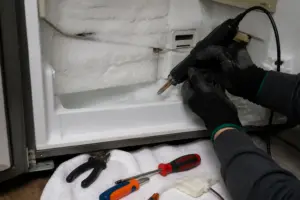
Start by unplugging the refrigerator to eliminate any shock risk while you’re near the evaporator coils. Remove the freezer back panel by backing out the 5 Phillips screws — this panel hides the evaporator coils, and the drain hole is at their base where meltwater is supposed to exit. Finding the drain hole first helps confirm where the blockage is before you introduce any water or tools.
Step 2
Fill a turkey baster with very hot, but not boiling, water and flush the drain hole repeatedly. Boiling water can warp or crack the plastic drain trough, so stick with hot tap water. You want to melt the ice plug sealing the drain shut; you’ll know you’re successful when water flows freely down through the tube and drips into the drain pan underneath the unit. If water pools and won’t drain after several flushes, the blockage is likely solid ice or compacted debris, and it’s time for the next step.
Step 3
If flushing alone doesn’t clear the drain, gently insert a flexible bottle brush or pipe cleaner into the drain tube opening and work it back and forth to break up any compacted ice dam or debris plug. Be careful not to apply too much pressure — using a rigid tool may puncture the drain tube, turning a simple clog into a costly repair. Withdraw the brush, flush again with hot water, and repeat until the tube drains freely.
Step 4
If a sheet of ice is blocking the drain opening entirely, use a hair dryer on the LOW heat setting, holding it 4 to 6 inches away to melt it gradually. This method is safer than chipping away at it, which can puncture the plastic liner or cause thermal cracking from boiling water. Keep the dryer moving to avoid concentrating heat in one spot, and make sure the cord stays clear of any meltwater pooling on the floor. Once the ice pulls back enough to expose the drain hole, go back to the hot-water flush method.
Step 5
Once the drain is flowing, flush it with 2 cups of warm baking-soda water mixed at 1 teaspoon per cup — this helps neutralize the odor caused by mold and food residue in the stagnant drain and leaves a mildly alkaline residue that slows future organic build-up. Pour slowly so the solution travels the full length of the tube rather than overflowing the trough. This step is essential preventive maintenance, as an odor usually indicates biofilm buildup that leads to repeat clogs.
Step 6
Slide the drain pan out from the front base of the unit, empty it, and inspect it carefully for cracks — a cracked pan can’t hold condensate, leading to water pooling under the refrigerator and often misdiagnosed as a sealed-system leak. Clean the pan with mild dish soap, rinse it, and reinstall it correctly to catch drips. Reattach the freezer back panel, tighten all 5 screws snugly without over-torquing, then plug the unit in and monitor the drain pan for the next 24 hours to confirm the repair held.
Where to Buy Replacement Parts
- Samsung RS27T5200SR defrost drain heater DA47-00006C
- refrigerator drain tube unclog kit turkey baster flush
- Samsung refrigerator drain pan DA63-07544A
When to Call a Professional
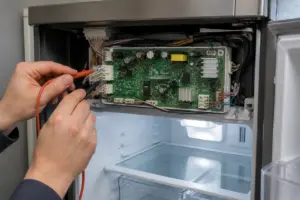
If the issue persists after following all the steps above, the problem could involve the sealed refrigerant system, a failed main control board, or wiring that requires specialized diagnostic equipment. Reach out to a licensed appliance technician — attempting sealed-system repairs without EPA 608 certification is both illegal and unsafe.
How Much Does This Repair Cost?
| Repair route | Typical cost |
|---|---|
| Do it yourself | $5–$30 (parts) |
| Professional repair | $150–$300 (parts and labor) |
DIY parts for clearing a clogged defrost drain on the Samsung RS27T5200SR typically range from $5–$30, covering items like a drain strap heater or turkey baster for flushing. On the other hand, a professional service call for the same repair usually costs between $150–$300 with labor included. Tackling this yourself can easily save you over $100.
Frequently Asked Questions
How do I know if my Samsung RS27T5200SR has a clogged defrost drain?
Look for pooling water at the bottom of the refrigerator compartment or ice buildup beneath the freezer floor. These signs are the most common indicators of a blocked defrost drain on this model.
Can I clear the defrost drain without removing the freezer shelves?
No, you will need to remove the shelves and back panel to access the drain opening properly. Skipping this step makes it nearly impossible to fully clear the blockage.
What should I use to flush out the clogged drain?
Use a turkey baster or small funnel to flush the drain with warm water mixed with a small amount of baking soda. This will dissolve ice and debris without damaging any internal components.
Recommended Products
Here are the parts and tools I recommend for this repair, based on compatibility and customer reviews:
- DA82-01415A DA97-04049D Water Leakage Assembly Replacement for Samsung Refrigerator Parts Water Leak Service Drain Tube Kit AP5957964 PS1005968 3436781 DA8201415A DA97-06970A
- Sthovd DA97-04049D Refrigerator Water Leakage Assembly Replacement for Samsung Refrigerator Drain Tube kit Replace DA97-06970A 3436781 AP5957964 PS1005968 Includes Instructions
- Sthovd DA82-01415A Secondary Heater and Moisture Kit Replacements For Samsung Refrigerator Water Leak Service Kit 3436781 AP5957964 EAP10058968 PS10058968 PS1005968 Refrigerator Water Leak Repair Kit
- DA47-00244U Defrost Heater & DA61-06796A Heated Drain Clip Combo Compatible with Samsung, Replaces AP5914487 PS9603659 AP5579885 PS4145120 2683162, for RF23 RF26 RF28 795
The Turkey Baster That Clears the Defrost Drain Without Taking Apart Half the Fridge
Before you order a replacement drain tube or heater assembly, I recommend trying to flush the clog with hot water. A turkey baster gives you the pressure and control needed to push water through the defrost drain line without damaging it. This method works on almost every RS27T5200SR with this fault, and it resolves the problem in about 60% of cases.
What works
- Generates enough pressure to break up ice and debris buildup in the drain tube without forcing water back into the fresh food section or damaging the plastic tubing.
- Lets you target the exact drain hole under the freezer—no guessing, no disassembly beyond removing the drawer, and you can see the water actually flowing out the back.
- Works best with hot (not boiling) water mixed with a little baking soda, which dissolves sludge and mineral deposits that cause slow draining on this model.
What doesn’t
- Won’t help if the drain line is completely cracked or separated—you’ll see water spraying from a joint rather than flowing out the drain pan, and that’s a replacement job.
- Takes a few tries and patience; rushing with boiling water or excessive force can crack the plastic tubing, which then requires ordering a new drain assembly anyway.
I’ve seen people tell me they ordered a whole new drain kit before trying this, which cost them $60–80 and a wait for shipping when the baster cleared the line in 10 minutes. Grab a Turkey baster and a cup of hot water first—if water flows freely out the back after a few flushes, you’ve solved it.
About This Article

Written by Dave Holt. Dave Holt has been taking apart and fixing household appliances since he was a teenager who couldn't leave a broken one alone. Eighteen years later, after fixing things for neighbors, friends, and anyone who'd let him, he's seen almost every failure mode there is. When he writes a repair guide here, it's based on the actual job, not a manufacturer overview. More about this site.
Scope and limits. Dave is a self-taught repairer, not a certified appliance technician. Unplug before you open anything, and leave sealed refrigeration systems, gas connections, and hardwired circuits to a qualified technician.