Compressor noise
In this step-by-step guide, I’ll walk you through fixing compressor noise on your LG LRMVS3006S (French Door). With the right tools and parts, most homeowners can tackle this repair in 1–2 hours, saving themselves from a costly service call.
🔨 Pro Tip from Dave
On the LG LRMVS3006S, I always start by checking the compressor mounting grommets (part number MCQ66921101) before concluding that the compressor itself has failed. Worn grommets can create rattling vibrations that mimic internal compressor failure and trick many technicians. A common mistake is to order a full compressor replacement when a simple grommet swap can resolve the noise. Also, ensure that the drain pan underneath isn’t vibrating against the compressor housing.
Part of our Top 20 Refrigerator Models & Common Repair Issues Guide. Browse all refrigerator repair guides for related models and issues.
Common Symptoms & Causes
The following symptoms can help confirm that your LG LRMVS3006S compressor is the source of the noise you’re hearing.
- A loud humming or buzzing sound coming from the bottom rear of the refrigerator
- A knocking or rattling noise that cycles on and off with the compressor
- The refrigerator vibrates noticeably on the floor during cooling cycles
- Interior temperature rises while the compressor runs louder than normal
These symptoms are typically caused by worn compressor mounts, a failing compressor motor, or refrigerant flow issues that put excessive strain on the compressor unit.
Safety First
- Unplug the refrigerator from the power outlet before starting any repair — never work on a live appliance.
- Shut off the water supply valve before disconnecting any water lines or hoses.
- Wear work gloves when handling metal brackets, sheet metal edges, or sharp components.
- Take photos with your phone before disconnecting any wiring harnesses or connectors.
- Work in a well-lit area with enough floor space to lay removed panels flat.
Tools & Parts Needed
Essential Tools
- Phillips #2 screwdriver
- ¼” nut driver
- Needle-nose pliers
- Multimeter
- Flashlight or work light
Replacement Parts
- Start relay
- overload protector
- condenser cleaning brush
- ¼” nut driver set
Step-by-Step Repair Instructions
Step 1
Unplug the refrigerator from the wall outlet and pull it 2–3 feet away from the wall to safely access the rear components. Working on a live appliance risks electrical shock, and you need clear access to the compressor area before touching anything. Never skip the unplug step even for a quick inspection.
Step 2
Remove the lower rear access panel by taking out the four ¼-inch hex screws using a ¼-inch nut driver. This panel covers the compressor, condenser coils, and associated electrical components that are the most common sources of abnormal noise. Set the screws aside in a small cup so they don’t get lost.
Step 3
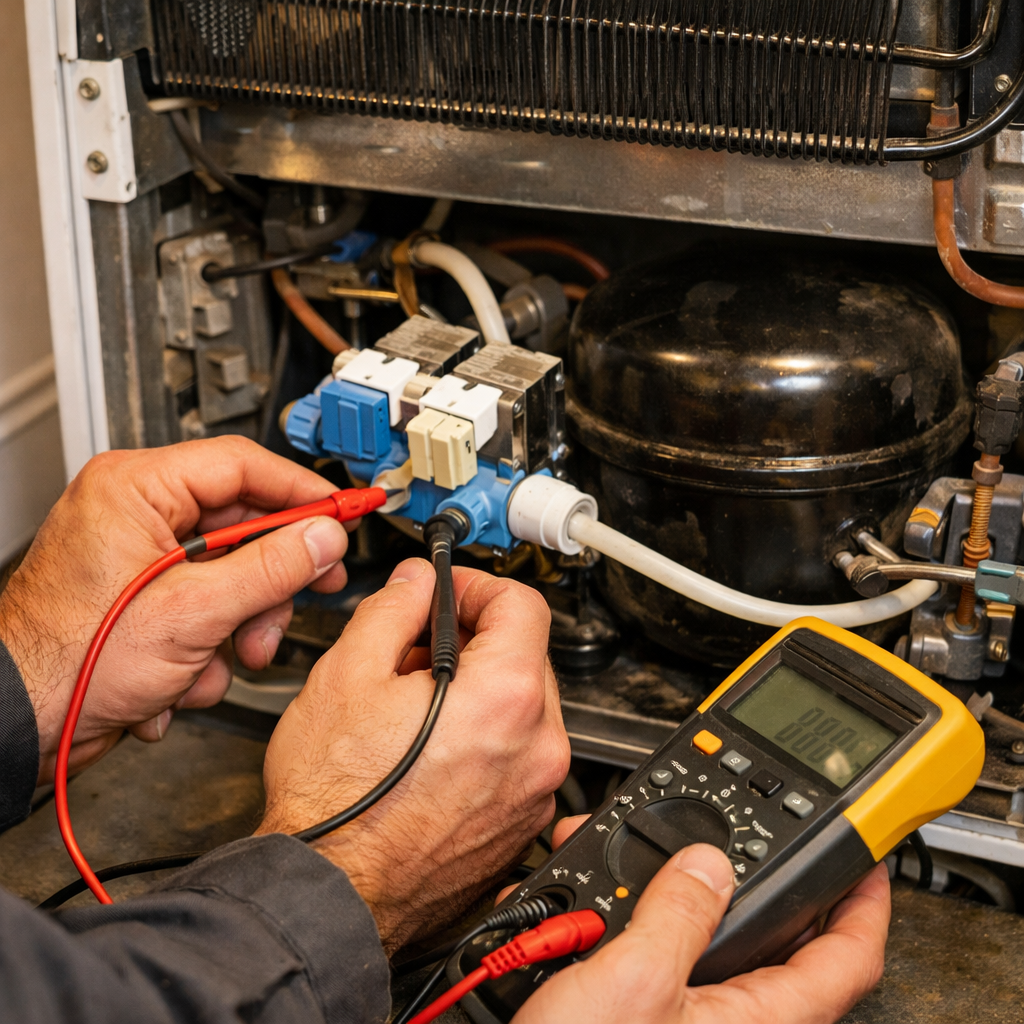
Locate the start relay — a small plug-in component on the side pin of the compressor — and pull it straight off without unscrewing anything. Give it a firm shake next to your ear; a rattling sound inside the relay indicates that the internal contact has broken down, causing the compressor to struggle or short-cycle loudly. Replacement relays for this model run $12–20 and are one of the most common and easiest fixes for compressor noise.
Step 4
With the start relay removed, test the adjacent overload protector, which clips onto the compressor and acts as a thermal safety cutoff. Set your multimeter to Rx1 and probe both terminals at room temperature — a continuous reading confirms it’s functioning, while an open circuit means it has failed and needs replacement. A faulty overload protector can cause the compressor to repeatedly attempt to start and shut off, producing a loud clicking or humming cycle.
Step 5
Use a vacuum with a soft brush attachment to thoroughly clean the condenser coils visible in the lower rear of the unit. Dust and debris buildup insulates the coils and causes the compressor to run hotter and longer than designed, which generates excessive noise and shortens its lifespan. Aim to clean the coils at least once a year as a preventive measure.
Step 6
Plug the refrigerator back in and monitor it for at least 30 minutes, listening for whether the noise has resolved. If the compressor still runs continuously, feels extremely hot to the touch, or produces a high-pitched whine after you’ve replaced the relay and cleaned the coils, the inverter compressor control board may be the source of the fault — a repair that requires a qualified technician and specialized diagnostics. Do not continue running the unit unattended if you notice burning smells or the compressor fails to cycle off at all.
Where to Buy Replacement Parts
- LG refrigerator compressor start relay
- LG refrigerator overload protector replacement (6750C-0004R / 6750C-0005P)
- refrigerator condenser coil cleaning brush kit
When to Call a Professional
If the issue persists after completing all steps above, the problem may involve the sealed refrigerant system, a failed main control board, or wiring that requires specialized diagnostic equipment. Contact a licensed appliance technician — attempting sealed-system repairs without EPA 608 certification is illegal and unsafe.
How Much Does This Repair Cost?
| Repair route | Typical cost |
|---|---|
| Do it yourself | $20–$150 (parts) |
| Professional repair | $150–$300 (parts and labor) |
DIY parts for fixing compressor noise on the LG LRMVS3006S typically run between $20–$150, depending on whether you need mounts, a relay, or a capacitor. A professional service call usually costs $150–$300 once you factor in labor and parts. Tackling this repair yourself can save you $100 or more.
Frequently Asked Questions
Is it safe to keep using my LG LRMVS3006S while the compressor is making noise?
Short-term use is generally okay, but prolonged operation with a noisy compressor can lead to complete cooling failure. Address the issue promptly to avoid spoiled food or a more costly repair.
Could the compressor noise on my LG LRMVS3006S be covered under warranty?
LG offers a 10-year limited warranty on the linear compressor in this model. Check your purchase date and contact LG support before paying for any repairs.
What does a failing compressor sound like on the LG LRMVS3006S?
A failing compressor typically produces a loud humming, clicking, or rattling noise coming from the rear of the refrigerator. If the noise occurs frequently or the fridge stops cooling, the compressor likely needs professional inspection.
Recommended Products
Here are the parts and tools I recommend for this repair, based on compatibility and customer reviews:
- LG MCQ66921101 Refrigerator Compressor Mounting Grommet (cross-refs AP5682785, 5040JA3044A, PS7795023)
- LG Electronics 5040JA2009B Refrigerator Evaporator Fan Motor Rubber Grommet
The Compressor Grommet That Stops the Rattling on Your LG French Door
If your LRMVS3006S is making a grinding or rattling noise from the compressor compartment, nine times out of ten it’s a worn or cracked mounting grommet allowing the compressor to vibrate against the frame. This is the first part I replace before even considering a compressor swap, and it’s a five-minute job that costs a fraction of what you’d spend on a full replacement.
What works
- OEM spec means it fits the exact cavity and dampening rating—no guessing whether a generic grommet will actually absorb vibration.
- The noise drop is immediate and noticeable once installed; you’ll hear the difference the moment the compressor cycles back on.
- LG linear compressors on this model are prone to grommet degradation after 5–7 years, so having the right part on hand saves a callback.
What doesn’t
- If the compressor itself is already failing electrically, a new grommet won’t fix the underlying mechanical issue—you’ll still need a relay or overload protector test first.
- Compressor access on this model requires pulling the fridge away from the wall and sometimes removing the bottom panel; it’s not difficult, but it’s a two-person job in tight kitchens.
I’ve seen people order a start relay or capacitor first because the noise is so loud they assume the compressor is failing—then they discover it was just the grommet all along. Save yourself the troubleshooting loop by checking the grommet condition first, and grab the LG refrigerator compressor grommet (MCQ66921101) while you’re under there.
About This Article

Written by Dave Holt. Dave Holt has been taking apart and fixing household appliances since he was a teenager who couldn't leave a broken one alone. Eighteen years later, after fixing things for neighbors, friends, and anyone who'd let him, he's seen almost every failure mode there is. When he writes a repair guide here, it's based on the actual job, not a manufacturer overview. More about this site.
Scope and limits. Dave is a self-taught repairer, not a certified appliance technician. Unplug before you open anything, and leave sealed refrigeration systems, gas connections, and hardwired circuits to a qualified technician.