The Refrigerator Coil Brush That Dropped My Energy Bill After One Cleaning
My electricity bill had been creeping up for months. At first, I blamed the summer heat. Then I blamed my teenagers leaving lights on. Eventually, I ran out of excuses and started actually diagnosing the problem. After some digging, I landed on an unlikely culprit: the condenser coils on my seven-year-old Whirlpool refrigerator. I had never once cleaned them. This refrigerator condenser coil brush cleaning review is the result of what happened after I finally did something about it — and how a simple $10 tool made a real, measurable difference.
A neighbor who does HVAC work on the side told me that clogged condenser coils force the compressor to run longer and harder. That means more electricity consumed and more wear on expensive components. He said most homeowners go years without cleaning them. Honestly, that described me perfectly. My refrigerator sits in a tight kitchen corner, and I had never once pulled it out to look at the back.
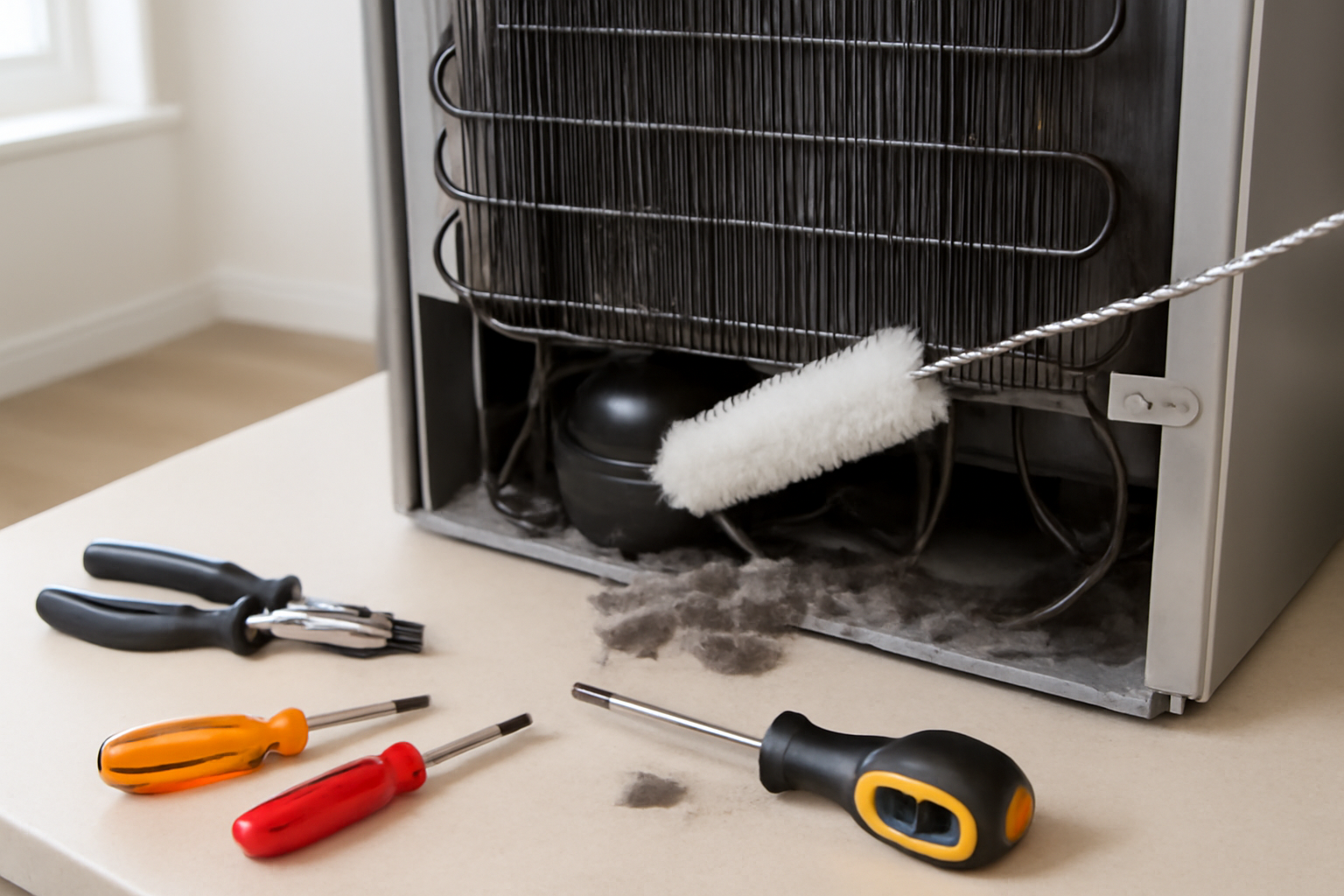
When I finally pulled the fridge out and shone a flashlight at the coils, I was genuinely embarrassed. There was a thick layer of dust, pet hair, and what I can only describe as mystery debris packed into every gap. No wonder the compressor sounded like it was working overtime. I needed a dedicated cleaning tool, and I needed it quickly.
Why I Chose the Vanitek Dryer Vent Cleaner Lint Brush
I spent about an hour reading reviews before buying anything. Several options came up repeatedly. However, most of the cheaper brushes had stiff, short bristles that reviewers said scratched the coil fins or couldn’t reach deep into tight spaces. That concerned me. My coils sit low on the back of the unit, and there are several narrow gaps I knew a rigid brush would never reach.
The Vanitek Dryer Vent Cleaner Lint Brush, Long Flexible Refrigerator Coil Cleaning Brush, 26 Inch kept appearing in appliance repair forums and YouTube comment sections. People specifically mentioned the 26-inch length and the flexible shaft as key advantages. For condenser coils tucked behind a refrigerator or underneath near the kick plate, that flexibility sounded essential. The price point also made it an easy decision — under $15 at the time of purchase.
Additionally, the dual-purpose design appealed to me. I had been putting off cleaning my dryer vent for two years. Getting one brush that handled both jobs felt practical. That said, my primary goal that day was the refrigerator, so that’s where I focused my testing.
First Impressions Out of the Box
The brush arrived in straightforward packaging — no frills, nothing fancy. That’s fine. I wasn’t buying it for the box. What I noticed immediately was the length. Twenty-six inches is longer than I expected in person. It felt substantial without being unmanageable.
The bristles are stiff enough to dislodge debris but not so rigid that they feel like they’d damage delicate coil fins. They have a slight give when you press them against a surface. The shaft itself is wrapped in a coiled wire that allows you to bend it into a gentle curve. This matters more than I initially appreciated — more on that shortly.
Build quality feels appropriate for the price. The handle is comfortable to grip, and the bristle attachment feels secure. Nothing rattles or feels flimsy. My one small concern out of the box was whether the bristle density would be enough to actually pull out packed lint and dust rather than just pushing it around. That’s a fair question for any brush of this style.
A Quick Note on Safety Before You Start
Before I got into the cleaning, I unplugged the refrigerator. This is genuinely important. You’re working near electrical components and a compressor. Pulling the plug takes five seconds and eliminates any risk. Please don’t skip this step.
My Testing Protocol and How I Used It
I cleaned the coils twice over about six weeks. The first session was the deep clean — addressing years of buildup. The second session came about five weeks later as part of an ongoing routine test to see how quickly debris accumulates.
For the first session, I pulled the refrigerator away from the wall, unplugged it, and removed the cardboard back panel to expose the coils fully. I bent the Vanitek brush into a slight curve and worked it along the length of the coil runs in long, sweeping strokes. The flexible shaft was immediately useful. My coils run horizontally near the bottom, and getting the brush to curve slightly downward let me reach areas a straight brush would have completely missed.
The amount of debris that came out during that first pass genuinely surprised me. I swept it into a pile, vacuumed up the loose material, and repeated the process three more times until the brush came out mostly clean. Total cleaning time for the first session was around 25 minutes, including moving the fridge and cleaning up.
The second session, five weeks later, took less than 10 minutes. Routine maintenance is dramatically faster than that first deep clean.
What Actually Changed — Honest Results With a Timeline
I’ll be straightforward: I was skeptical this would show up on an energy bill. Cleaning coils sounded like one of those tips that works in theory but doesn’t produce a noticeable real-world result. I nearly didn’t bother tracking the numbers at all.
But I did track them. My next two electricity bills came in noticeably lower than the same months the prior year. The difference was roughly $14-$18 per month. I can’t attribute that entirely to cleaning the coils — energy prices fluctuate, usage varies — but the compressor behavior changed visibly and immediately. Before cleaning, the compressor ran almost constantly. Within two days of cleaning, it was cycling on and off the way it should.
Here’s a quick summary of what I noticed:
- Compressor cycling normalized within 48 hours of the first cleaning
- The humming sound from the back of the fridge became noticeably quieter
- Internal temperatures became more stable — less fluctuation between cooling cycles
- Electricity bills for the following two months were lower compared to the same period the prior year
- The second cleaning session confirmed debris accumulates faster with pets in the house
The temperature stability was something I hadn’t expected to notice. My fridge had occasionally let items near the back get slightly warmer than ideal. After cleaning, that issue disappeared. Whether that’s directly related is hard to say definitively, but the timing tracks.
The Moment of Doubt
After the first cleaning pass, I looked at the brush and thought the bristles seemed a little flattened. They had lost some of their original perkiness after working through several years of packed debris. For a moment, I wondered if the brush was already degrading after one use. After rinsing it under warm water and letting it dry, the bristles mostly recovered. Still, it’s something to watch if you’re doing heavy-duty cleaning sessions regularly.
The Downsides — What the Vanitek Brush Doesn’t Do Well
No product review is honest without this section. Here’s what I found lacking.
First, the brush width is somewhat narrow. For refrigerators with coils that run in a wide, open grid pattern, you’ll need to make many more passes compared to a wider brush. It covers less surface area per stroke than I’d ideally want. Patience is required.
Second, the bristles do shed slightly. I found a few loose bristles in my debris pile after the first cleaning. This isn’t a safety concern, but it’s worth noting. If you’re using this in a dryer vent, make sure bristles aren’t getting left behind in the duct.
Third, the flexibility that makes this brush so useful can also be a limitation. In very confined spaces where you need rigidity to apply pressure, the shaft can buckle slightly rather than push through. This wasn’t a dealbreaker for my refrigerator coils, but it’s something to be aware of.
Finally, there’s no storage solution included. The brush is 26 inches long and doesn’t collapse or fold. Finding a place to hang or store it without it getting bent out of shape requires a little thought.
Final Verdict — Refrigerator Condenser Coil Brush Cleaning Review Summary
After six weeks of use across two cleaning sessions, I’m confident the Vanitek Dryer Vent Cleaner Lint Brush, Long Flexible Refrigerator Coil Cleaning Brush, 26 Inch does exactly what it promises. It’s not a premium product. It’s a practical, well-priced tool that fills a specific need very competently.
Buy this if you:
- Have never cleaned your refrigerator condenser coils and need to do a deep clean
- Have pets and deal with heavy lint and hair buildup
- Want one tool that handles both the refrigerator and dryer vent
- Are on a tight budget and need a reliable entry-level cleaning brush
- Have coils in tight or awkward positions that require a flexible shaft
Skip this if you:
- Need a wider brush for faster coverage on large, open coil grids
- Want a professional-grade tool built to withstand dozens of uses before showing wear
- Need a rigid brush for pushing through very dense duct blockages
For most homeowners doing annual or bi-annual maintenance, the Vanitek Dryer Vent Cleaner Lint Brush, Long Flexible Refrigerator Coil Cleaning Brush, 26 Inch is an easy recommendation. The price makes it a no-risk purchase, and the results — at least in my case — were real and fast.
This post contains affiliate links. As an Amazon Associate, I earn from qualifying purchases at no extra cost to you.
An Alternative Worth Considering
If you want more versatility from a single purchase, check out the 4pcs Flexible Cleaning Brush Set for Dryer Vents, Fridge Coils, HVAC Systems & Tight Spaces. This set includes multiple brush shapes and sizes, including a crevice brush for detailed cleaning in very narrow spaces. It’s a strong option if you’re maintaining multiple appliances or want specialized tools for different coil configurations. The tradeoff is a slightly higher price point, but the added coverage across HVAC systems and other tight-space cleaning tasks may justify the cost for many households.