If you’ve ever walked into your laundry room and found a puddle creeping toward the hallway, you know the particular dread I’m talking about. My old rubber washing machine hoses burst without warning on a Tuesday afternoon last spring. The cleanup took hours, and the repair bill stung. That experience sent me deep into research mode, reading every stainless steel washing machine hoses review I could find before spending another dollar on laundry room plumbing. What I eventually landed on changed how I feel about doing laundry entirely.
I want to be upfront: I’m not a licensed plumber. However, I’ve owned three homes, replaced appliance hoses more times than I care to count, and now run content for fixappliancefast.com where appliance reliability is something we take seriously. So when I replaced my burst hoses, I tested carefully and took notes. This review covers everything — the good, the frustrating, and the one moment I genuinely questioned my purchase.
Why I Chose the Yejesiy Stainless Steel Washing Machine Hoses
After the flood incident, I knew rubber hoses were off the table for me permanently. My research pointed clearly toward braided stainless steel as the safer long-term choice. Still, the options on Amazon are overwhelming. Prices range from suspiciously cheap to surprisingly expensive, and the marketing language is almost identical across brands.
Three things pushed me toward the Yejesiy 4 Ft Washing Machine Hoses, 2 Packs Premium Stainless Steel Washer Hoses Burst Proof. First, the color-striped hot/cold design. It sounds minor, but after scrambling behind a washer in a cramped closet, having a visual cue matters. Second, the listed burst-proof construction with stainless steel braiding over a rubber inner core is a standard I trust. Third, the price point was reasonable without feeling like a red flag.
I also noted the 3/4-inch standard interface spec, which fits virtually every residential washing machine sold in North America. That compatibility claim removed one of my biggest installation worries before I even clicked “add to cart.”
First Impressions: Unboxing and Build Quality
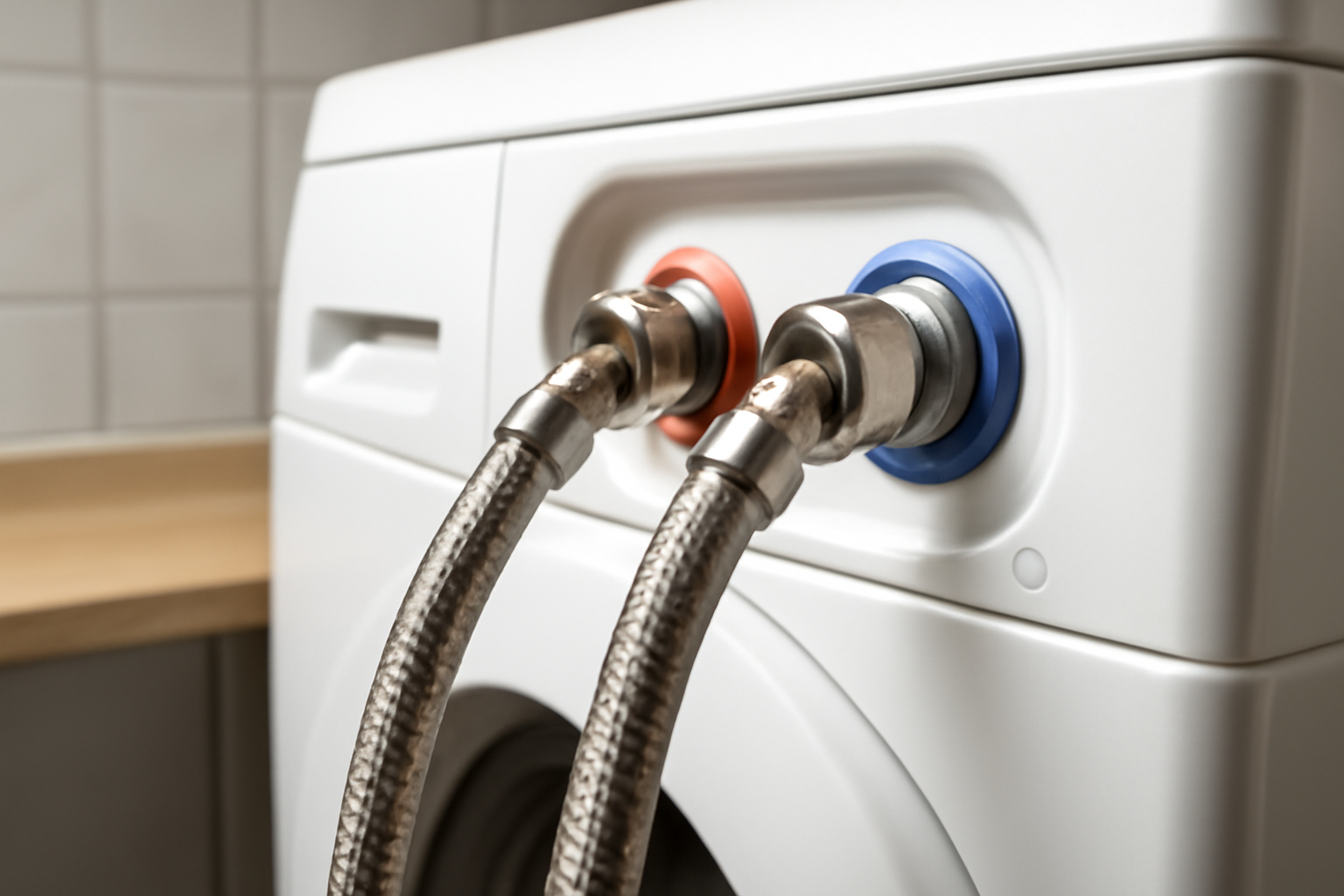
The hoses arrived in simple, no-frills packaging. Nothing fancy. Inside were two hoses, clearly color-coded — one with a red stripe for hot, one with a blue stripe for cold. That immediate visual distinction was exactly what I hoped for.
Picking them up, the first thing I noticed was the weight. These feel noticeably more substantial than the rubber hoses I’d pulled out of the trash bag the week before. The stainless steel braiding is tight and uniform. Running my hand along the length, there were no loose threads, no thin spots, and no rough patches at the crimping points where the connectors meet the hose body.
The fittings themselves are where I spent most of my inspection time. The hex nuts turned smoothly by hand, which is a good sign — some cheaper hoses have fittings that feel gritty or stiff before installation even begins. Inside each fitting, the rubber washer was seated properly and appeared intact. That detail matters because a damaged or missing washer is the most common source of connection leaks.
My one small moment of hesitation came here. I’d read a review mentioning that the hot and cold labels on a different brand were barely visible. On these, the stripe color is woven into the braiding itself — it won’t fade off a sticker. That reassured me considerably.
My Installation and Testing Protocol
Installing the Yejesiy 4 Ft Washing Machine Hoses, 2 Packs Premium Stainless Steel Washer Hoses Burst Proof took me about twenty minutes, including the time I spent re-reading my washer’s manual. The process was straightforward.
Here’s exactly what I did:
- Turned off the water supply valves fully before disconnecting the old hoses
- Drained any remaining water from the old lines into a bucket
- Hand-tightened the new fittings first, then snugged them with pliers — about a quarter turn past hand-tight, not more
- Turned the water back on slowly and watched both connection points for a full five minutes before walking away
- Checked again at 24 hours, 1 week, and 1 month post-installation
My testing window has now stretched past four months of regular household use. My household runs roughly eight to ten loads of laundry per week — a mix of cold, warm, and hot water cycles. That’s real-world stress, not a single test wash.
I also deliberately ran a hot cycle after a cold one to introduce the kind of thermal cycling that degrades lower-quality hoses over time. Throughout all of this, I kept a small paper towel folded behind each connection point. It’s a simple trick — any moisture shows up immediately on the paper.
What Actually Changed After Installing Them
The most significant change was psychological, which I didn’t expect to admit in a product review. After the flooding incident, I had developed a low-grade anxiety about leaving the washer running while I left the house. That stopped almost immediately after installation.
Physically, the results were equally clean. After four-plus months and well over 150 wash cycles, the paper towel test has produced zero moisture. Both connection points — at the wall valves and at the back of the washer — remain completely dry. The braiding looks the same as day one. No fraying, no discoloration from heat exposure, and no mineral buildup visible on the exterior.
The 4-foot length was exactly right for my setup. My washer sits roughly 3 feet from the wall valves, so there’s a comfortable loop rather than a taut stretch or an excess coil sitting on the floor. That matters for long-term durability — a kinked or over-stressed hose fails faster, regardless of material.
My Moment of Genuine Doubt
About three weeks in, I noticed what looked like a tiny discoloration near one of the fittings. My stomach dropped. I pulled the washer out, dried the area with a cloth, and watched for five full minutes with a flashlight. Nothing. Completely dry. The mark was a small smudge from the original installation — probably residue from my hand or the old pipe joint compound. After that, I checked weekly for another month before fully relaxing.
I’m mentioning this because false alarms are part of the reality of paranoid post-flood hose ownership. The hoses themselves gave me no actual reason for concern during that check.
The Downsides Worth Knowing
No review is honest without real negatives. Here’s what I genuinely found lacking or limited.
The length is fixed at 4 feet. For most standard laundry setups, that’s sufficient. However, if your washer is positioned more than 3.5 feet from your wall connections, you’ll be working with a stretched hose. That’s a problem. Stretched hoses experience higher stress at the fittings and can fail prematurely. Measure before ordering.
There’s no integrated shutoff valve. Some higher-end hose sets include a built-in auto-shutoff mechanism that triggers if it detects a burst or sudden pressure drop. These Yejesiy hoses don’t have that feature. They rely on the quality of the braided construction to prevent bursting, rather than offering automatic flood protection. For most users this is fine, but if you travel frequently and leave the washer unattended for days, you may want to either shut off your wall valves manually or consider a hose set with auto-shutoff.
No documentation on pressure rating or certification. The listing describes them as burst-proof, but I couldn’t find a stated PSI rating or third-party certification on the product page. Most residential water supply lines operate between 40–80 PSI, so quality braided hoses typically handle this range comfortably. Even so, I’d appreciate more transparency on this spec.
The packaging is minimal. No installation instructions are included. For experienced DIYers, that’s fine. For a first-time hose installer, it could lead to improper tightening — either under-tightened (leaks) or over-tightened (cracked fittings). Always hand-tighten first, then use pliers for just a quarter turn more. Don’t overtighten.
This post contains affiliate links. As an Amazon Associate, I earn from qualifying purchases at no extra cost to you.
Final Verdict: My Stainless Steel Washing Machine Hoses Review
After four months of real household use, I’m confident recommending the Yejesiy 4 Ft Washing Machine Hoses, 2 Packs Premium Stainless Steel Washer Hoses Burst Proof, Hot and Cold Striped Water Supply Hoses to most homeowners. This stainless steel washing machine hoses review lands on a clear thumbs up — with the caveats I’ve outlined above clearly in mind.
Buy These If You:
- Currently have rubber or plastic hoses and want a meaningful durability upgrade
- Need a standard 4-foot length for a typical laundry closet or alcove setup
- Want an easy hot/cold identification system to avoid wrong-side hookups
- Are comfortable with basic hand-tightening and a simple DIY install
- Are on a reasonable budget and want solid construction without overpaying
Skip These If You:
- Need longer than 4 feet between your washer and wall valves
- Travel often and want automatic flood-shutoff protection built into the hose
- Prefer products with published third-party pressure certifications
A Note on the Alternative: Beaquicy 6 Ft Washer Hoses
If the 4-foot length doesn’t work for your setup, the Beaquicy 6 Ft Washer Stainless Steel Hoses Braided Stainless Steel Water Supply Line is worth a look. It offers the same hot/cold stripe system and braided stainless construction in a longer 6-foot format, which gives more flexibility if your washer needs to sit farther from the wall or if you simply want extra slack for easier machine access during maintenance.
Personally, 4 feet was exactly right for my laundry room. That’s why the Yejesiy hoses won out for my situation. However, the Beaquicy option is a reasonable alternative for anyone whose installation requires extra length. Both represent a significant upgrade over standard rubber supply hoses.
The bottom line is simple: replacing aging rubber hoses with braided stainless steel is one of the cheapest and most effective appliance-related home improvements you can make. My only regret is not doing it before my laundry room flooded.