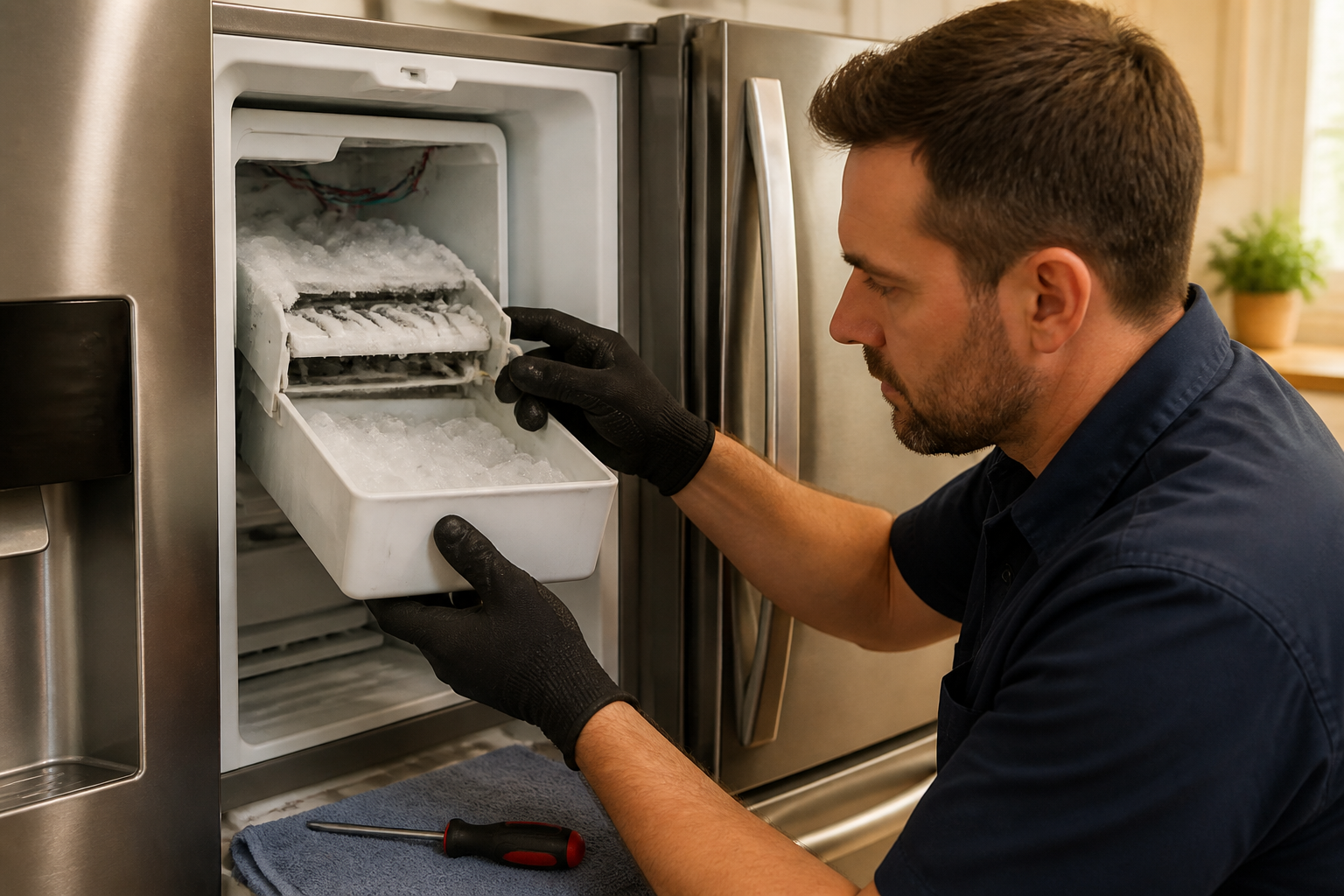
Ice Maker Frozen Shut Repair – Maytag MFI2570FEZ French Door Refrigerator
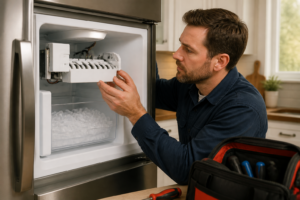
A frozen ice maker is a common problem in the Maytag MFI2570FEZ French Door Refrigerator that occurs when ice forms around the ice maker assembly, preventing proper operation and ice dispensing. This issue typically results from excessive moisture, temperature fluctuations, or faulty seals allowing warm air to enter the ice maker compartment. When the ice maker becomes frozen shut, ice cubes cannot drop into the storage bin, water cannot flow properly through the system, and the entire ice production cycle becomes compromised. This repair is rated as MODERATE difficulty, requiring disassembly of the ice maker unit and careful attention to electrical connections and water lines. Most homeowners with basic appliance repair experience can complete this repair in 2-3 hours.
Symptoms
- Ice maker produces no ice despite power indicator light being illuminated on the MFI2570FEZ control panel
- Visible ice buildup around the ice maker assembly housing and harvest motor area
- Ice cubes stuck in the ejector arm mechanism, preventing the arm from completing its rotation cycle
- Water dripping or pooling in the bottom of the freezer compartment beneath the ice maker
- Grinding or clicking sounds from the ice maker without ice production occurring
- Ice maker control arm cannot be moved manually due to ice formation around the pivot points
⚠️ Safety Warning
Before beginning any repair work on your Maytag MFI2570FEZ refrigerator, disconnect the unit from electrical power by unplugging it from the wall outlet or switching off the dedicated circuit breaker. The ice maker operates on 115V AC power and contains live electrical connections that pose shock hazards. Additionally, turn off the water supply line to the refrigerator at the shut-off valve, typically located behind or beneath the unit. Be prepared for water spillage when disconnecting water lines and have towels ready. This refrigerator weighs approximately 285 pounds, so never attempt to move it alone. When working inside the freezer compartment, allow the unit to warm slightly to prevent skin contact injuries from extremely cold surfaces. Wear safety glasses when chipping away ice buildup to protect your eyes from flying ice fragments.
Parts Needed
- Ice maker assembly complete unit – Maytag part number W10873791 (if replacement is necessary)
- Ice maker water inlet valve – part number W10408179 (if valve is damaged by freezing)
- Ice maker fill cup and tube assembly – part number W10277448
- Ice maker motor module – part number W10822606 (if motor is damaged)
- Door gasket seal for ice maker compartment – part number W10443885
- Ice maker wiring harness – part number W10613606 (if connections are damaged)
- Food-grade silicone sealant for minor seal repairs
- Electrical contact cleaner spray
Tools Required
- Phillips head screwdriver with magnetic tip
- Flathead screwdriver (1/4 inch blade)
- Digital multimeter for testing electrical continuity
- Hair dryer or heat gun for ice removal
- Needle-nose pliers for connector removal
- Plastic ice scraper or putty knife
- Adjustable wrench (10mm) for water line connections
Step-by-Step Instructions
Step 1: Power Down and Access Preparation
🔨 Pro Tip from Dave
On the MFI2570FEZ specifically, there’s a small plastic auger motor cover at the back of the ice bin that cracks over time and creates a gap where warm air sneaks in — most techs miss it because it looks intact until you flex it slightly with your hand. If you clear the ice jam and it refreezes within a week, pull that bin completely and inspect that cover before you do anything else.
Unplug the Maytag MFI2570FEZ from the electrical outlet and turn off the water supply valve. Remove all food items from the freezer compartment and take out the ice storage bin by lifting it straight up and pulling it toward you. Remove the freezer door bins and any shelving that may obstruct access to the ice maker assembly mounted on the left wall of the freezer compartment.
Step 2: Initial Ice Removal
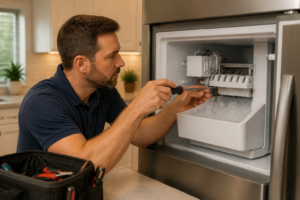
Use a hair dryer on low heat setting to begin melting ice buildup around the ice maker assembly. Hold the dryer 6-8 inches away from the ice maker housing to prevent damage to plastic components. Focus on the areas around the ejector arm, fill cup, and motor housing. Place towels in the bottom of the freezer to catch melting ice and water. This process may take 15-20 minutes for heavily frozen units.
Step 3: Remove Ice Maker Cover Panel
Locate the ice maker cover panel on the left side of the freezer compartment. Remove the two Phillips head screws at the top of the panel and one screw at the bottom-left corner. Carefully lift the cover panel up and toward you to disengage the bottom clips. Set the panel aside and note the wire harness routing for reassembly.
Step 4: Disconnect Electrical Connections
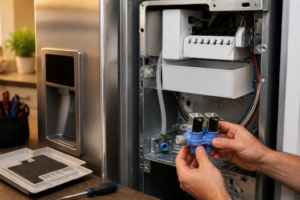
Identify the main wiring harness connector located behind the ice maker assembly. This is a white plastic connector with 6 wires (typically blue, brown, orange, red, yellow, and white). Press the connector tab and pull the connectors apart. Also disconnect the smaller 2-wire connector for the water inlet valve, located near the back wall of the freezer compartment.
Step 5: Remove Water Line Connection
Locate the water supply line connection at the back of the ice maker assembly. This is a 1/4-inch copper or plastic tube connected with a compression fitting. Use an adjustable wrench to loosen the compression nut by turning counterclockwise. Be prepared for water spillage and have towels ready. Once disconnected, cap the water line to prevent contamination.
Step 6: Remove Ice Maker Assembly
The ice maker assembly in the Maytag MFI2570FEZ is held in place by four mounting screws. Remove the two screws at the top of the assembly and two screws at the bottom. The screws are located approximately 2 inches from each corner of the rectangular mounting bracket. Carefully pull the ice maker assembly forward and down to remove it from the mounting bracket.
Step 7: Thorough Ice Removal and Cleaning
With the ice maker removed, continue using the hair dryer to remove all ice from both the assembly and the freezer compartment mounting area. Use a plastic scraper to carefully remove stubborn ice buildup, being careful not to damage the fill cup or ejector mechanism. Clean all surfaces with warm water and mild detergent, then dry thoroughly.
Step 8: Inspect for Damage
Examine the ice maker assembly for cracked plastic components, particularly around the fill cup and motor housing. Check the ejector arm for freedom of movement – it should rotate smoothly through its full cycle. Use your multimeter to test continuity across the motor terminals, which should read between 200-400 ohms of resistance.
Step 9: Check Door Seals and Gaskets
Inspect the freezer door gaskets around the ice maker compartment for tears, warping, or poor sealing. Pay particular attention to the area around the ice chute where warm air infiltration commonly occurs. Replace any damaged gasket sections with part number W10443885 if necessary.
Step 10: Reassemble Ice Maker
If the ice maker assembly is in good condition, reinstall it by reversing the removal process. Position the assembly in the mounting bracket and secure with the four mounting screws. Reconnect the water line, ensuring the compression fitting is tight but not over-tightened. Reconnect the electrical connectors, ensuring they click securely into place.
Step 11: Test and Calibrate
Replace the cover panel and restore power to the Maytag MFI2570FEZ. Turn the water supply back on and check for leaks. Initiate a test cycle by moving the ice maker wire arm down to the ON position. The first cycle should begin within 15 minutes, with the fill cup receiving water first, followed by a 90-minute freeze cycle.
Step 12: Monitor Initial Operation
Observe the ice maker through several complete cycles over the next 24 hours. Normal operation should produce 8-10 ice cubes every 90 minutes. Check that ice cubes are ejecting properly and that no ice is building up around the ejector mechanism or fill areas.
Troubleshooting
- If ice maker still doesn’t produce ice after repair, verify that the freezer temperature is set to 0°F and check that the water filter isn’t clogged or overdue for replacement
- If ice continues to build up around the assembly, inspect the freezer door alignment and gasket sealing – poor door sealing allows humid air infiltration
- If the ejector arm doesn’t rotate during harvest cycle, test the harvest motor with a multimeter for proper resistance readings between 200-400 ohms
- If water doesn’t fill the ice cube molds, check water pressure at the inlet valve – minimum 20 PSI is required for proper operation
- If ice cubes are too small or hollow, adjust the fill cup position or replace the water inlet valve if it’s not opening fully
- If the ice maker cycles but produces no ice, verify that the thermostat is sensing proper temperatures by testing resistance across the thermostat terminals
When to Call a Professional
- If the refrigeration system requires refrigerant work or compressor diagnosis, as this requires EPA certification and specialized equipment
- If electrical problems extend beyond the ice maker to the main control board or require 220V electrical work
- If water line connections require soldering or major plumbing modifications behind the refrigerator
- If the freezer compartment doesn’t maintain proper temperature despite ice maker repairs, indicating possible sealed system problems
When to Call a Professional
Most of the repairs in this guide are within reach for a careful DIYer with basic tools. In my experience, if you’ve completed a full manual defrost and the ice maker refreezes within 48 to 72 hours, that’s a strong signal the sealed system — specifically the evaporator — may have a refrigerant restriction or a failing thermistor that requires certified diagnostic equipment and an EPA 608 certified technician to properly evaluate and repair. When in doubt, a diagnostic service call typically costs $80–$120 and can save you from a misdiagnosis that costs more in parts.
Recommended Parts & Tools
Maytag Ice Maker Assembly W10873791
This genuine OEM ice maker assembly is specifically designed for Maytag refrigerators including the MFI2570FEZ model. When your ice maker becomes frozen shut and cannot be properly repaired through defrosting or cleaning, a complete replacement assembly ensures reliable ice production. This part includes the ice maker motor, mold, and control components needed for full functionality. Check current pricing on Amazon.
Wagner Spraytech HT1000 Heat Gun
This adjustable heat gun is essential for safely thawing frozen ice maker components without damaging plastic parts in your Maytag MFI2570FEZ. The variable temperature control allows you to apply gentle, controlled heat to melt ice buildup around the ice maker assembly and water lines. This tool is much more effective than hair dryers for appliance repair work and provides the precise heat needed for frozen component repairs. Check current pricing on Amazon.