Ice Maker Slow Production Repair for GE GSS25IYNFS Side-by-Side Refrigerator
Slow ice production in your GE GSS25IYNFS refrigerator is a common issue that typically stems from water supply problems, temperature irregularities, or mechanical component failures within the ice maker assembly. This side-by-side model uses a modular ice maker system that should produce approximately 10-12 pounds of ice per 24-hour period under normal conditions. When production drops significantly below this rate, the problem usually involves the water fill valve, ice maker module, temperature sensor, or water filtration system. This repair ranges from EASY to MODERATE difficulty, depending on which component requires attention, and can typically be completed by a homeowner with basic mechanical skills and proper tools.
Symptoms
- Ice production reduced to fewer than 6-8 cubes per cycle (normal cycle produces 10-14 cubes)
- Extended time between ice making cycles, taking 3-4 hours instead of the typical 90-120 minutes
- Small, hollow, or malformed ice cubes indicating insufficient water fill
- Ice maker runs through cycles but produces little to no ice over 24-48 hours
- Unusual clicking or grinding noises from the ice maker assembly located in the upper left freezer compartment
- Water dispenser flow rate noticeably slower than normal, indicating potential water supply issues affecting both systems
⚠️ Safety Warning
Before beginning any repair work on your GE GSS25IYNFS, disconnect power at the circuit breaker or unplug the unit from the wall outlet. This refrigerator operates on 115V AC current, and the ice maker assembly contains live electrical connections even when the unit appears off. Shut off the water supply valve typically located behind or beneath the refrigerator to prevent flooding during water line disconnection. Be aware that this unit weighs approximately 300 pounds – never attempt to move it alone, and ensure proper ventilation space when pulling it away from the wall. Wear safety glasses when working with small components, as springs and clips can become projectiles. Allow the refrigerator to reach room temperature for at least 30 minutes before beginning work to prevent condensation-related electrical hazards.
Parts Needed
- GE Water Inlet Valve Assembly (Part #WR57X10051 or WR57X10032) – dual solenoid valve rated for 120V AC
- GE Ice Maker Assembly Module (Part #IM116000 or WR30X10093) – complete modular unit for GSS25IYNFS
- Water Filter Cartridge (Part #MSWF or MSWFDS) – genuine GE SmartWater filter
- Ice Maker Wiring Harness (Part #WR23X10030) if connector damage is present
- Freezer Temperature Sensor (Part #WR55X10025) – thermistor assembly with 18-inch lead wire
- Water Line Tubing Kit (Part #WR17X11705) – 1/4-inch copper tubing with compression fittings
Tools Required
- Digital multimeter capable of measuring AC/DC voltage and resistance (0-200 ohm range minimum)
- Phillips head screwdriver set with #1 and #2 bits
- Flathead screwdriver set (1/4-inch and 3/8-inch blade widths)
- Adjustable wrench (10-inch minimum) for water line connections
- Needle-nose pliers for small wire connections and clip removal
- Flashlight or headlamp for illuminating work area inside freezer compartment
- Small container or towels for collecting water during line disconnection
Step-by-Step Instructions
Step 1: Initial Diagnosis and Preparation
🔨 Pro Tip from Dave
On the GSS25IYNFS specifically, watch out for a partially kinked water supply line behind the fridge where it passes through the cabinet bracket — it’s a tight radius that can restrict flow just enough to cut production in half without triggering a full no-ice symptom, and it’s easy to miss if you only check the shutoff valve and inlet valve. I’ve seen techs swap the water inlet valve on these units twice before someone finally pulled the fridge out and looked at that bend.
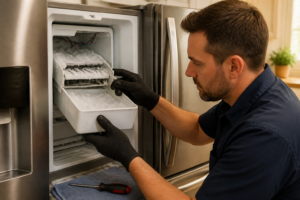
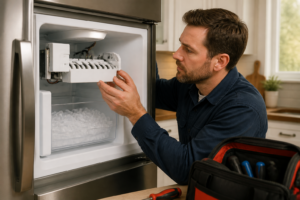
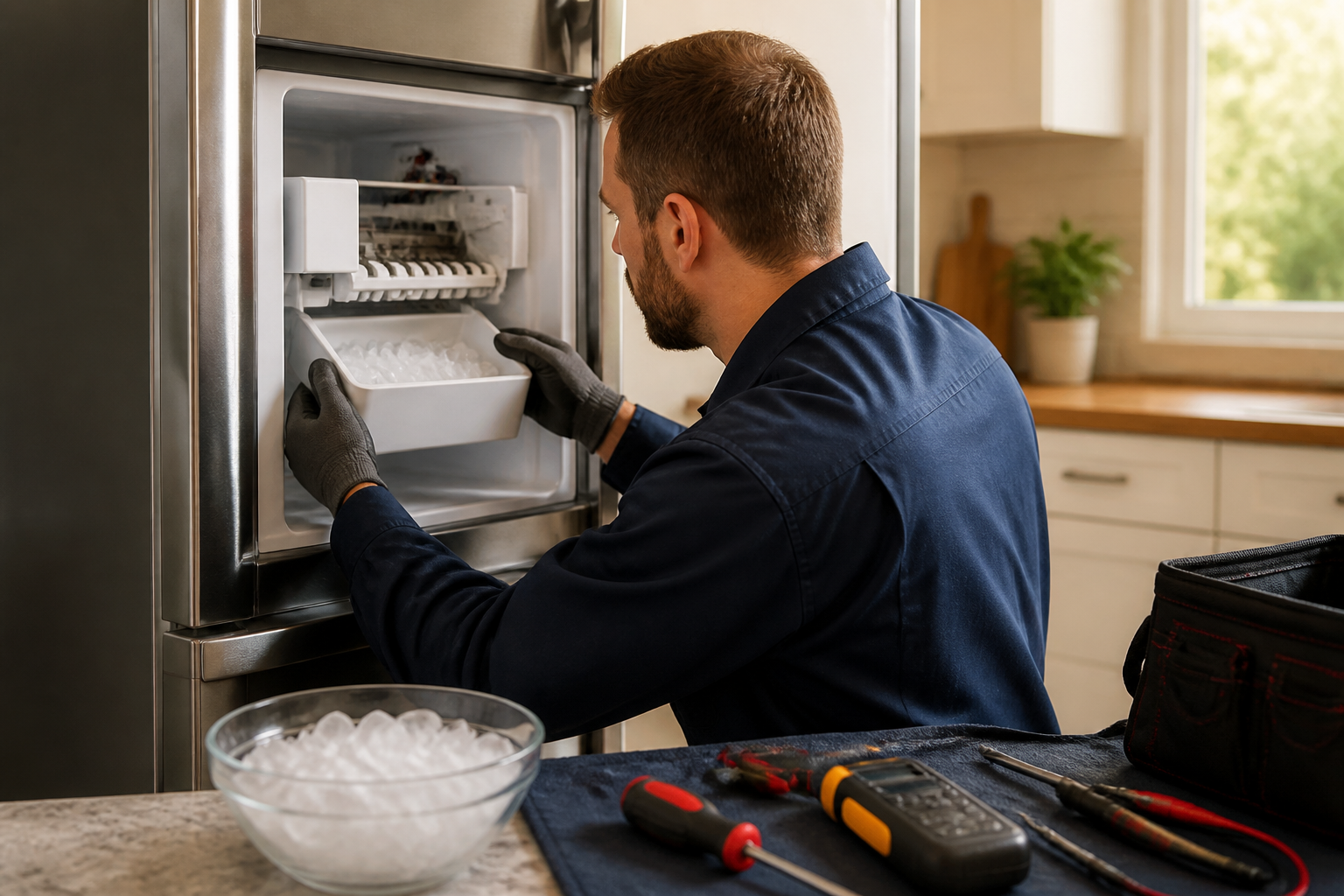
Disconnect power to your GE GSS25IYNFS and remove all items from the freezer compartment. Locate the ice maker assembly in the upper left corner of the freezer – it’s a rectangular module approximately 10 inches wide by 6 inches deep. Remove the wire storage basket beneath the ice maker by lifting it straight up. Check the ice maker’s ON/OFF switch (located on the freezer ceiling near the ice chute) to ensure it’s in the ON position. Examine the fill cup area (small plastic cup behind the ice maker) for ice blockages or debris that might prevent proper water filling.
Step 2: Test Ice Maker Electrical Connections
Restore power temporarily to perform electrical testing. Set your multimeter to AC voltage mode and carefully probe the ice maker’s 4-pin connector located on the left side of the module. The connector should show 120V AC across the outer two pins when the ice maker calls for water. If no voltage is present, check the 3-amp fuse on the main control board located behind the temperature control panel. Remove power again before proceeding with mechanical inspection.
Step 3: Remove Ice Maker Assembly
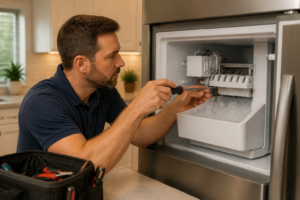
With power disconnected, locate the three mounting screws securing the ice maker to the freezer ceiling – two screws are positioned at the front corners and one at the rear center. Remove these screws using a Phillips #2 screwdriver. Carefully disconnect the 4-pin wiring harness by pressing the release tab and pulling straight out. Lower the ice maker assembly slowly, noting the position of the fill cup and ejector arm for reassembly reference.
Step 4: Inspect Water Fill System
Examine the fill cup (small white plastic component) for cracks or mineral buildup that could affect water distribution. The fill cup should direct water into the ice mold evenly – any damage here will cause insufficient filling and small ice cubes. Check the water supply tube connection at the top rear of the ice maker assembly. This 1/4-inch tube should be firmly connected and free of kinks or ice blockages that would restrict water flow to the ice maker.
Step 5: Test Water Inlet Valve
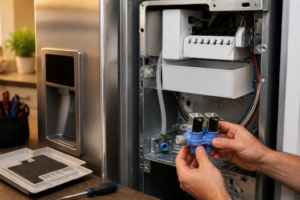
Locate the water inlet valve on the rear wall of the refrigerator, typically positioned behind the lower access panel. Remove the rear panel by unscrewing four Phillips screws located at each corner. The valve has two solenoids – one for the dispenser and one for the ice maker. Using your multimeter set to resistance mode, test each solenoid coil. Normal resistance should read between 200-500 ohms. If readings are infinite (open circuit) or near zero (short circuit), replace the water inlet valve assembly.
Step 6: Check Water Filter and Flow Rate
Remove the water filter cartridge from the upper right corner of the fresh food compartment by turning it counterclockwise one-quarter turn. Inspect the filter for clogs, discoloration, or damage. Even if the filter change indicator hasn’t activated, a severely clogged filter can reduce water flow to both the dispenser and ice maker. Test water flow by temporarily bypassing the filter with the blue bypass plug (typically stored behind the filter housing) and activating the water dispenser.
Step 7: Examine Ice Maker Module Components
With the ice maker removed, inspect the gear assembly visible through the bottom of the unit. The harvest cam should rotate freely without binding or unusual resistance. Check the thermistor (temperature sensor) – a small component with two wires extending from the ice maker body. This sensor tells the ice maker when the ice is frozen and ready for harvest. Test the thermistor resistance at room temperature; it should read approximately 16,000-17,000 ohms on your multimeter.
Step 8: Clean and Service Ice Maker Assembly
Remove any ice buildup from the ejector blades and mold using warm water and a soft brush. Pay special attention to the mold cavities where ice forms – mineral deposits can prevent complete filling and cause slow production. Clean the fill cup thoroughly with warm water and white vinegar to remove calcium buildup. Ensure all components move freely and there are no obstructions in the ice discharge chute.
Step 9: Test and Replace Water Inlet Valve if Necessary
If your electrical tests indicated a faulty water inlet valve, disconnect the water supply line using an adjustable wrench on the compression fitting. Remove the two mounting screws holding the valve to the refrigerator frame. Install the new valve by reversing this process, ensuring all connections are tight to prevent leaks. The water line connection requires only hand-tight pressure plus one-quarter turn with the wrench to prevent over-tightening and damage.
Step 10: Reinstall Ice Maker Assembly
Position the ice maker assembly back into the freezer compartment, aligning the mounting holes with the original screw locations. Reconnect the 4-pin wiring harness until you hear a positive click indicating proper connection. Secure the assembly with the three original mounting screws, tightening them snugly but not over-tightening to avoid cracking the plastic mounting tabs. Verify that the ice maker sits level and the ejector arm can move freely.
Step 11: Restore Power and Initialize Ice Maker
Reconnect power to your GE GSS25IYNFS and turn on the water supply. The ice maker should begin its initial cycle within 10-15 minutes of power restoration. You may need to manually cycle the ice maker using the test button (if equipped) or by moving the wire arm down and back up. Listen for the water fill cycle – you should hear water flowing into the ice maker for approximately 7-8 seconds during the fill portion of the cycle.
Step 12: Monitor and Verify Repair
Allow the ice maker to complete 2-3 full cycles over the next 4-6 hours to verify proper operation. Each cycle should produce 10-14 properly formed ice cubes and take approximately 90-120 minutes from start to finish. Check that the ice cubes are uniform in size and completely solid without hollow centers, which would indicate insufficient water fill. Document the repair completion time and monitor ice production over the following 24 hours to ensure sustained proper operation.
Troubleshooting
- If ice production remains slow after replacing components, verify freezer temperature is maintaining 0-5°F using an independent thermometer placed near the ice maker assembly
- Check for air in the water lines by dispensing water for 2-3 minutes continuously to purge any air bubbles that could affect fill volume
- Ensure the door seals are intact and the freezer is not experiencing frequent temperature fluctuations due to door opening or seal leakage
- Verify the ice maker is level using a small bubble level – an unlevel installation can cause uneven water distribution and poor ice formation
- Test the household water pressure at the refrigerator connection point – insufficient pressure (below 20 PSI) will cause slow fill and poor ice production
- Check for partial blockages in the ice chute or dispenser mechanism that might cause back-pressure and affect the ice maker’s harvest cycle
When to Call a Professional
- If electrical testing reveals problems with the main control board or complex wiring harness issues requiring specialized diagnostic equipment
- When water leaks develop behind the refrigerator or inside wall cavities, indicating possible damage to concealed water lines requiring appliance relocation
- If the refrigerant system shows signs of problems such as inadequate cooling, unusual noises from the compressor, or visible refrigerant leaks requiring EPA-certified technician intervention
- When multiple component failures occur simultaneously, suggesting underlying electrical or control system problems that require comprehensive diagnosis and specialized repair expertise
When to Call a Professional
Most of the repairs in this guide are within reach for a careful DIYer with basic tools. In my experience, once your diagnostics point to a failed control board, a seized ice maker motor module that won’t respond to a manual harvest test, or any situation where the freezer won’t hold temperature despite a clean condenser and intact door seals, you’ve crossed into territory where misdiagnosis gets expensive fast and a certified tech will save you money in the long run. When in doubt, a diagnostic service call typically costs $80–$120 and can save you from a misdiagnosis that costs more in parts.
Recommended Parts & Tools
WR30X10093 Water Filter for GE Refrigerators
A clogged water filter is one of the most common causes of slow ice production in GE side-by-side refrigerators like the GSS25IYNFS. This genuine GE water filter replacement ensures proper water flow to the ice maker and should be replaced every 6 months for optimal performance. This filter is specifically designed for compatibility with GE refrigerator models including the GSS25IYNFS. Check current pricing on Amazon.
WR49X10283 Ice Maker Water Inlet Valve for GE Refrigerator
When the water inlet valve becomes faulty or partially clogged, it can restrict water flow to the ice maker, resulting in slow ice production or small ice cubes. This replacement inlet valve is compatible with GE side-by-side refrigerators including the GSS25IYNFS model and restores proper water pressure and flow to the ice making system. Installing this valve can resolve persistent slow ice production issues when filter replacement doesn’t solve the problem. Check current pricing on Amazon.