Machine walking / vibration
This step-by-step repair guide walks you through fixing machine walking / vibration on your Bosch WAW285H2UC (Front Load). With the right tools and parts, most homeowners can complete this repair in 1–2 hours and avoid a costly service call.
🔨 Pro Tip from Dave
On the WAW285H2UC, a lot of DIYers overlook the rear leveling feet and only adjust the front two — big mistake. This model uses part 00754869 for the adjustable feet assembly, and if those rear feet aren’t locked down tight with the jam nut after leveling, the machine will creep forward within a few cycles. Also check that the floor isn’t flexing; this unit’s high-speed 1400 RPM spin cycle will exploit any soft subfloor.
Part of our Top 20 Washing machine Models & Common Repair Issues Guide. Browse all washing machine repair guides for related models and issues.
“`html
Common Symptoms & Causes
These symptoms on your Bosch WAW285H2UC typically point to a machine walking or excessive vibration issue during operation.
- The washer visibly shifts or “walks” across the floor during the spin cycle
- Loud banging or thumping sounds occur when the drum reaches high spin speeds
- The machine shakes violently, causing nearby cabinets or walls to rattle
- The wash cycle completes but leaves clothes excessively wet due to an unbalanced load stopping full spin
This issue is most commonly caused by worn or damaged shock absorbers, failed drum bearings, uneven leveling feet, or a faulty suspension spring that can no longer properly stabilize drum movement.
“`
Safety First
- Unplug the washing machine from the power outlet before starting any repair — never work on a live appliance.
- Shut off the water supply valve before disconnecting any water lines or hoses.
- Wear work gloves when handling metal brackets, sheet metal edges, or sharp components.
- Take photos with your phone before disconnecting any wiring harnesses or connectors.
- Work in a well-lit area with enough floor space to lay removed panels flat.
Tools & Parts Needed
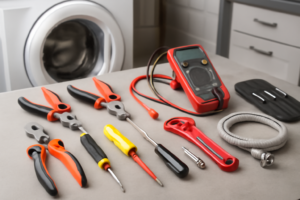
Essential Tools
- Phillips #2 screwdriver
- ¼” nut driver
- Torx T20 screwdriver
- Multimeter
- Bucket and towels
Replacement Parts
Step-by-Step Repair Instructions
Step 1
Check the rear of the machine for four shipping bolts with plastic spacers, removing them with a 13mm socket if present — these bolts rigidly lock the drum during transport and are the single most common cause of severe vibration in new or recently moved installations. Leaving them in place will damage the drum bearings over time, so confirm all four are removed and store them in case the unit needs to be moved again.
Step 2
Place a bubble level on top of the washer and adjust all four anti-vibration feet until the bubble is centered in both directions, then lock each foot’s jam nut with a 22mm wrench to prevent the feet from drifting during spin cycles. An unlevel washer causes the drum to swing unevenly, generating rhythmic banging and walking — even a few millimeters of tilt at the feet translates to significant imbalance force at high RPM.
Step 3
Fit anti-vibration pads under all four feet to absorb residual vibration that the feet alone cannot dampen, particularly on hard floors where vibration transmits easily. On floating or suspended wood floors, place a 16″×16″×¾” concrete board under the unit first — the added mass breaks the resonance between the machine’s spin frequency and the floor’s natural flex frequency, which is often what causes the unit to walk.
Step 4
Unplug the machine before proceeding, then pull the unit forward and remove the rear panel using a T20 Torx driver on all four screws to access the rear shock absorbers. Compress each shock absorber by hand — a healthy unit will offer firm, consistent resistance throughout the stroke; if a shock compresses with little or no resistance, the internal damper is worn out and the pair must be replaced together to maintain balanced drum support.
Step 5
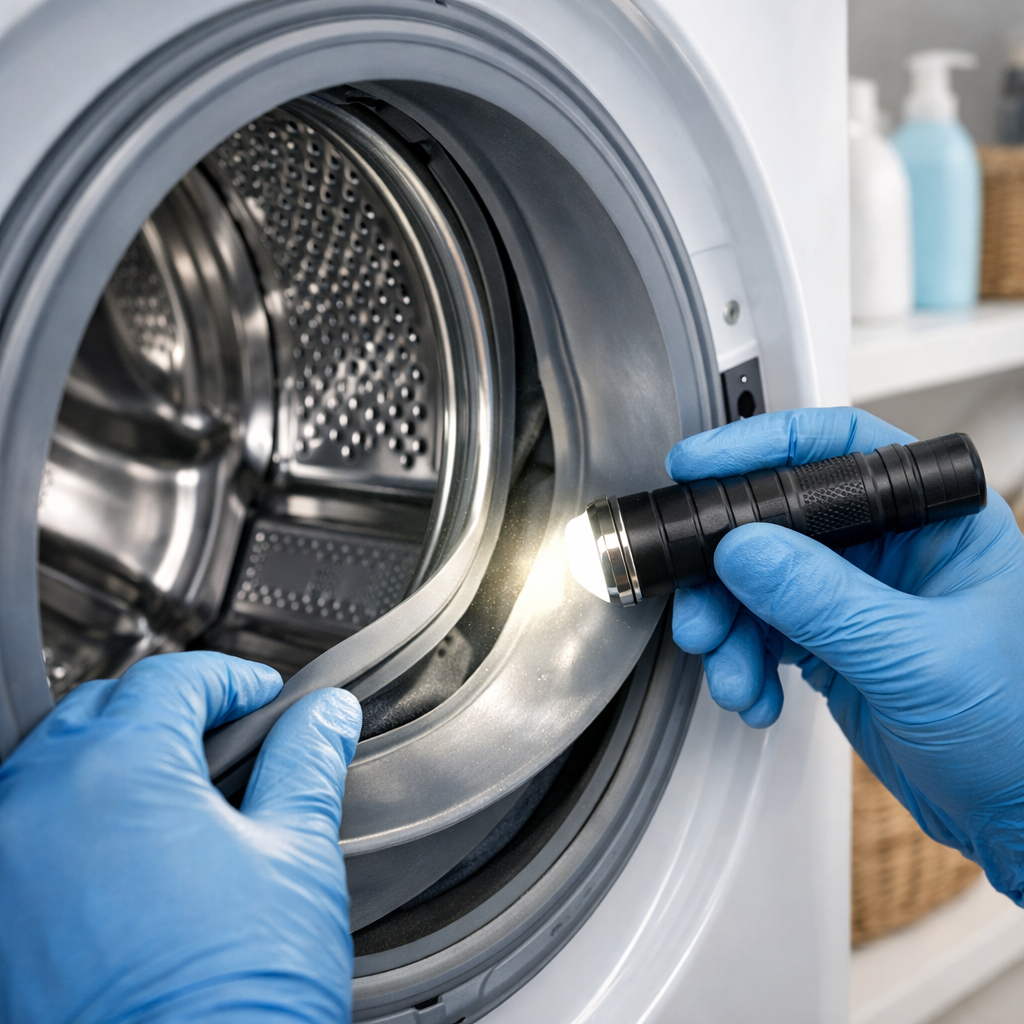
Access the front shock absorbers by carefully peeling back the door boot seal and removing the front panel — these are often overlooked because they require more disassembly but wear at a similar rate to the rear units. Apply the same hand-compression test: smooth, effortless compression indicates a failed damper that is no longer absorbing drum movement during the spin cycle, which produces both vibration and premature bearing wear.
Step 6
Reassemble all panels and seals, making sure the door boot seal is fully seated in its retaining groove to prevent water leaks. Run an empty cycle at the machine’s maximum spin speed and, if you have a vibration meter or smartphone app, confirm amplitude stays below 4mm — anything above this threshold means a damping or leveling issue remains and the diagnostic steps should be revisited before regular use resumes.
Where to Buy Replacement Parts
Find genuine OEM and aftermarket replacement parts for your Bosch WAW285H2UC (Front Load) on Amazon:
- Bosch WAW285H2UC anti-vibration feet kit 00751052
- Bosch front load washer shock absorber 00448031
- anti-vibration washing machine pads mat heavy duty
When to Call a Professional
If the issue persists after completing all steps above, the problem may involve the sealed refrigerant system, a failed main control board, or wiring that requires specialized diagnostic equipment. Contact a licensed appliance technician — attempting sealed-system repairs without EPA 608 certification is illegal and unsafe.
“`html
How Much Does This Repair Cost?
DIY parts to fix machine walking or vibration on a Bosch WAW285H2UC typically run $10–$80, depending on whether you need new leveling feet, a drum bearing, or shock absorbers. A professional service call generally costs $150–$300 including labor. Tackling this repair yourself can save you $100 or more while restoring your washer to stable, quiet operation.
“`
Frequently Asked Questions
Why does my Bosch WAW285H2UC walk across the floor during the spin cycle?
Uneven or unlocked leveling feet are the most common cause of walking and vibration on front-load washers. Adjust all four feet until the machine sits firmly on the floor, then tighten the lock nuts to hold them in place.
Could an unbalanced load be causing the excessive vibration?
Yes, overloading or unevenly distributed laundry forces the drum off-balance during high-speed spins. Redistribute the clothes evenly and avoid washing single heavy items without pairing them with similar garments.
Do I need to remove the shipping bolts before running my Bosch WAW285H2UC?
Absolutely — leaving the shipping bolts installed will cause severe vibration and potential damage to the machine. Check the rear panel and remove all bolts before operating the washer for the first time.
Recommended Products
These are the parts and tools we recommend for this repair, based on compatibility and customer reviews:
- 4Pcs Anti Vibration Pads for Washing Machine, Stops Washer Dryer Moving, Prevents Noise, Vibration Transfer, Antivibration Stabilizer Support Feet (Increase1.8in)
- Anti Vibration Pads for Washing Machine and Dryer (Set of 4) – Washer Anti Vibration Pads with HexiGrip™ – Washing Machine Accessories & Leveling Pads – Vibration Dampening Mat
- Anti Vibration Pads for Washing Machine with HexaGrip – Stops Washer Dryer Moving, Walking – Prevents Noise, Vibration Transfer – Rubber Antivibration Stabilizer Support Feet Mat – VIBRASHIELD 4 Pack
As an Amazon Associate, I earn from qualifying purchases.