Condenser dirty / restricted
This step-by-step repair guide walks you through fixing condenser dirty / restricted on your Sub-Zero BI-36UFD (Built-In). With the right tools and parts, most homeowners can complete this repair in 1–2 hours and avoid a costly service call.
🔨 Pro Tip from Dave
On the BI-36UFD, the condenser coil and fan assembly are accessed through the top grille panel — a spot many DIYers miss entirely because they go straight for the bottom. Use Sub-Zero’s condenser cleaning brush (part #7010562) to reach deep between the coils, and don’t skip the condenser fan blades, which accumulate enough debris to noticeably restrict airflow on their own.
Part of our Top 20 Refrigerator Models & Common Repair Issues Guide. Browse all refrigerator repair guides for related models and issues.
“`html
Common Symptoms & Causes
If your Sub-Zero BI-36UFD is struggling to maintain temperature, these symptoms may point to a dirty or restricted condenser.
- Refrigerator compartment temperature rises above 38°F despite correct settings
- Compressor runs continuously without cycling off
- Warm air blowing from the condenser fan vent area near the base grille
- Unit triggers a high-temperature alarm or displays a temperature warning on the control panel
This issue is typically caused by a heavy buildup of dust, pet hair, and debris on the condenser coils, which restricts airflow and forces the refrigeration system to overwork.
“`
Safety First
- Unplug the refrigerator from the power outlet before starting any repair — never work on a live appliance.
- Shut off the water supply valve before disconnecting any water lines or hoses.
- Wear work gloves when handling metal brackets, sheet metal edges, or sharp components.
- Take photos with your phone before disconnecting any wiring harnesses or connectors.
- Work in a well-lit area with enough floor space to lay removed panels flat.
Tools & Parts Needed
Essential Tools
- Phillips #2 screwdriver
- ¼” nut driver
- Needle-nose pliers
- Multimeter
- Flashlight or work light
Replacement Parts
Step-by-Step Repair Instructions
Step 1
Unplug the unit before doing anything else to eliminate any risk of electrical shock while working near internal components. On the BI-36UFD, the condenser is top-mounted, so locate the kick panel at the top of the unit and pull it straight forward — it’s friction-fit with no screws, so firm, even pressure is all that’s needed. Skipping the unplug step is how techs get hurt; condenser fan motors can start unexpectedly when the fridge cycles.
Step 2
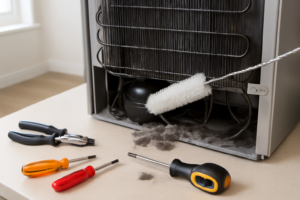
Use a Sub-Zero long-handled condenser brush and work only in the direction of the fins (side-to-side), never across them. Brushing against the fin direction bends the thin aluminum fins, which narrows airflow channels and forces the compressor to work harder — exactly the condition you’re trying to fix. A Pro tip: hold a flashlight at an angle to the coils so you can clearly see fin damage or remaining debris.
Step 3
Vacuum all loosened dust immediately using a soft-bristle vacuum attachment so dislodged debris doesn’t resettle on the coils. This step matters because a restricted condenser is the single most common cause of Sub-Zero Alarm Code 4 (high condenser temperature) and accounts for a disproportionate share of unnecessary service calls. Work slowly and cover the full coil surface — dust accumulates unevenly and pockets near the center are easy to miss.
Step 4
For heavier grease or lint buildup that brushing alone won’t clear, apply a condenser coil foam cleaner directly to the coils, let it penetrate for five minutes, then brush and vacuum the residue away. This step is optional for routine maintenance but important in kitchen environments where cooking grease mixes with dust to form a stubborn coating that insulates the coils and traps heat. Always confirm the cleaner is rated safe for aluminum fins before use.
Step 5
Sub-Zero officially recommends cleaning the condenser every 6–12 months under normal conditions, but shortening that interval to every 3 months if you have pets or a high-dust environment is a meaningful preventive measure. Lint and pet hair can completely choke a condenser in a single season, causing the unit to run warm, shorten compressor life, and trigger alarm codes. Setting a recurring calendar reminder after this cleaning is the easiest way to stay on schedule.
Step 6
Reinstall the kick panel by aligning the side tabs with their slots first, then pushing evenly until you hear and feel it click firmly into place — a loose panel can rattle and partially block condenser airflow. Plug the unit back in and listen: a successfully cleaned condenser will typically result in noticeably quieter, shorter compressor run cycles within 30 minutes as the unit returns to normal thermal efficiency. If the unit continues running loudly or Alarm Code 4 persists after cleaning, the condenser fan motor or refrigerant charge should be inspected by a certified technician.
Where to Buy Replacement Parts
Find genuine OEM and aftermarket replacement parts for your Sub-Zero BI-36UFD (Built-In) on Amazon:
- Sub-Zero refrigerator condenser brush cleaning kit 7009819
- Sub-Zero BI-36 condenser coil foam cleaner spray
- Sub-Zero refrigerator air filter replacement 7009819
When to Call a Professional
If the issue persists after completing all steps above, the problem may involve the sealed refrigerant system, a failed main control board, or wiring that requires specialized diagnostic equipment. Contact a licensed appliance technician — attempting sealed-system repairs without EPA 608 certification is illegal and unsafe.
How Much Does This Repair Cost?
Cleaning a dirty or restricted condenser on a Sub-Zero BI-36UFD typically costs little to nothing in parts, though a replacement condenser brush or coil cleaner runs just $10–$30. A professional service call for this repair generally ranges from $150–$300 including labor. Tackling this yourself can save you over $200 while keeping your refrigerator running efficiently.
Frequently Asked Questions
How often should I clean the condenser on my Sub-Zero BI-36UFD?
Sub-Zero recommends cleaning the condenser every 12 months under normal conditions, or every 6 months if you have pets. Regular cleaning prevents restricted airflow and keeps the unit running efficiently.
What symptoms indicate my BI-36UFD has a dirty or restricted condenser?
Common signs include the unit running warmer than usual, longer cooling cycles, or the compressor running continuously. You may also notice the refrigerator displaying a high-temperature alarm.
Can I clean the condenser myself, or do I need a technician?
Most homeowners can clean the condenser using a vacuum with a brush attachment and the Sub-Zero condenser cleaning brush. However, if cleaning doesn’t resolve the issue, contact a certified Sub-Zero technician for further diagnosis.
Recommended Products
These are the parts and tools we recommend for this repair, based on compatibility and customer reviews:
- Dryer Lint Trap Cleaning Brush Set, Dryer Vent Cleaner Kit with Refrigerator Condenser Coil Brush, 2 Gap Brushes and 2 Pliers for Home
- Dryer Vent Cleaner Kit & Refrigerator Condenser Coil Brush-Dryer Lint Brush Vent Trap Cleaner-Vacuum Attachment for Small Crevice-Dryer Cleaner Brush
- LONCHDAN 2Pcs Air Conditioner Fin Comb Cleaner kit AC Coil Cleaning Brush Condenser Fin Straightener AC Evaporator Comb Radiator Repair Clean Tool
- Supco SM0740 120V Condenser Fan Motor Replaces Sub-Zero 4200470
As an Amazon Associate, I earn from qualifying purchases.