Ice maker slow production
In this step-by-step repair guide, I’ll walk you through fixing the ice maker slow production issue on your Frigidaire FGHB2868TF (French Door). With the right tools and parts, most homeowners can complete this repair in 1–2 hours, saving you a costly service call.
🔨 Pro Tip from Dave
On the FGHB2868TF, keep an eye out for the dual water inlet valve (part number 5303918277). It’s common for technicians to replace just the ice maker side solenoid when both coils are worn. Always test both coil resistances (should read around 200–500 ohms each) before ordering a replacement. Don’t forget to check the freezer door gasket seal, as it can lead to ambient air infiltration that significantly slows down cycle times.
Part of our Top 20 Refrigerator Models & Common Repair Issues Guide. Browse all refrigerator repair guides for related models and issues.
Common Symptoms & Causes
Here are the most common signs that your Frigidaire FGHB2868TF is struggling with slow ice maker production:
- Ice maker produces fewer than 8–10 cubes per cycle instead of the normal 12–14
- Ice cubes come out smaller than usual or appear hollow and misshapen
- The ice bin takes more than 24 hours to fully refill after being emptied
- You hear the ice maker cycling normally but little to no ice drops into the bin
Typically, this issue is caused by a clogged water inlet valve, a frozen fill tube, low household water pressure below 20 psi, or a failing ice maker assembly due to normal wear over time.
Safety First
- Unplug the refrigerator from the power outlet before starting any repair — never work on a live appliance.
- Shut off the water supply valve before disconnecting any water lines or hoses.
- Wear work gloves when handling metal brackets, sheet metal edges, or sharp components.
- Take photos with your phone before disconnecting any wiring harnesses or connectors.
- Work in a well-lit area with enough floor space to lay removed panels flat.
Tools & Parts Needed
Essential Tools
- Phillips #2 screwdriver
- ¼” nut driver
- Needle-nose pliers
- Multimeter
- Flashlight or work light
Replacement Parts
- Ice maker module
- water inlet valve
- ULTRAWF water filter
- inline water pressure gauge
Step-by-Step Repair Instructions
Step 1
Begin by replacing the ULTRAWF water filter, which is often the culprit for slow ice production on this model. A clogged filter restricts water flow, potentially cutting ice output by 50% or more. To replace it, twist the filter counter-clockwise and pull it straight down. Insert the new filter, then twist clockwise until it locks. Pro tip: always run about 2 gallons of water through the dispenser after installing a new filter to purge air and carbon fines before the ice maker refills.
Step 2
Check that the freezer compartment is holding 0°F. Ice production slows significantly above 5°F and nearly stops above 10°F. The ice maker’s harvest cycle relies on the mold reaching a specific low temperature before it can eject cubes. Adjust the thermostat dial and allow at least 4 hours for the compartment to stabilize before re-checking the temperature. Use a standalone freezer thermometer instead of trusting the display, as the onboard sensor may read slightly differently than the actual air temperature.
Step 3
Test household water pressure at the supply shut-off valve using an inline gauge. The FGHB2868TF requires between 20 and 120 PSI to fill the ice maker mold completely and on time. Pressure below 20 PSI causes the mold to underfill, leading to small or misshapen cubes and extending the fill phase of each cycle. If pressure is low, investigate for a kinked supply line, a partially closed valve, or a building-side pressure issue before assuming the appliance is at fault.
Step 4
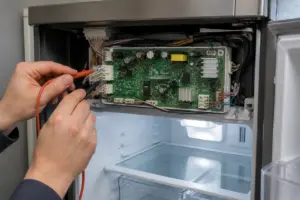
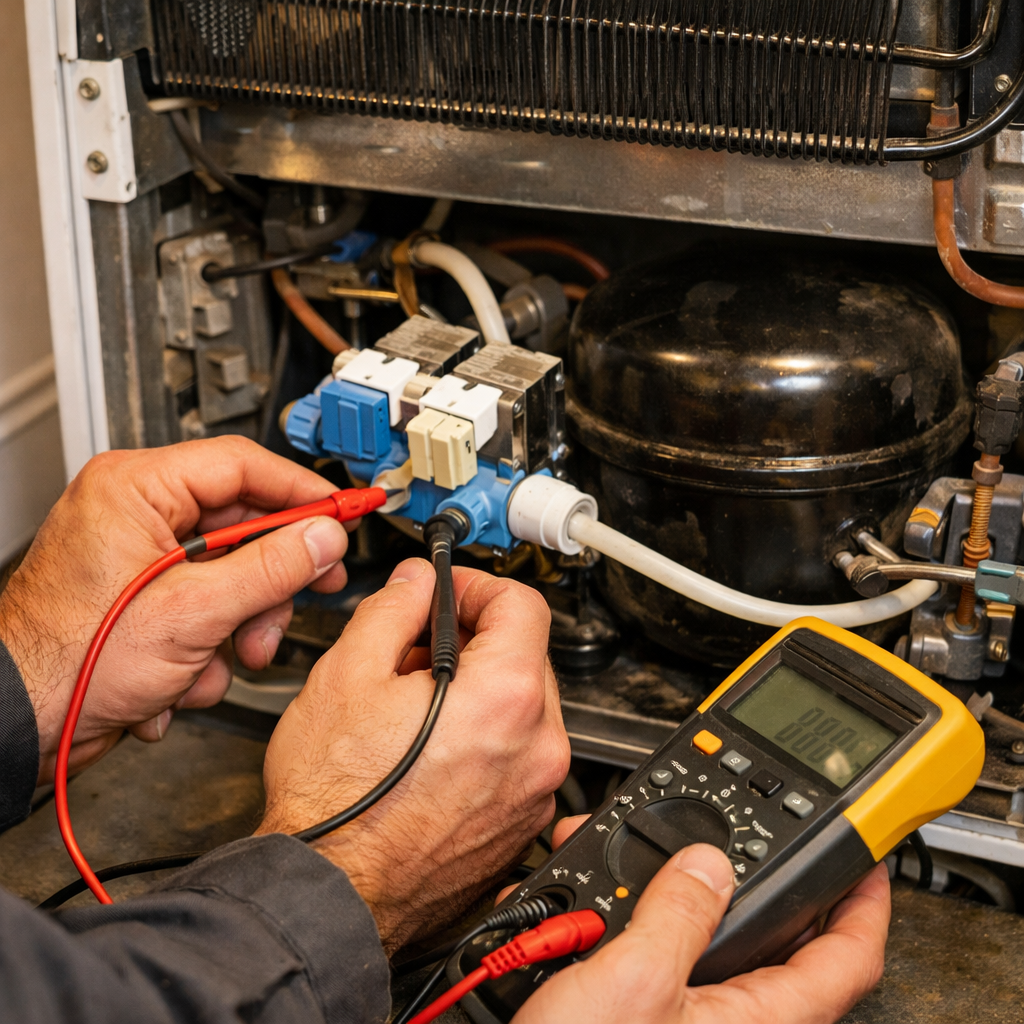
Access the water inlet valve through the rear access panel (remove 4 quarter-inch hex screws) and test the ice maker solenoid coil with a multimeter set to resistance. A healthy coil should read 200–500 ohms. A reading outside that range indicates the solenoid is failing and will not open reliably, starving the ice maker of water even when pressure is adequate. Safety note: unplug the refrigerator before removing the access panel or touching any valve terminals.
Step 5
Find the ice maker mold thermostat, which is a bi-metal disc clipped directly to the mold, and test it for continuity with a multimeter at room temperature. A good thermostat shows continuity, while an open reading means it has failed. This component signals when the mold is cold enough to begin the harvest cycle, so a failed thermostat causes the ice maker to stall between cycles, dramatically slowing overall production. Unplug the refrigerator and discharge any ice from the bin before working inside the freezer compartment to avoid slipping on loose cubes.
Step 6
After completing all repairs, time a full ice cycle from the moment you hear the water fill to the moment cubes drop into the bin. It should complete in 90 to 120 minutes on a properly functioning unit. Over a 24-hour period, the FGHB2868TF should produce 8 to 10 pounds of ice under normal conditions. If output remains low after all steps, the ice maker module itself may need replacement. Keep the freezer at least two-thirds full, as thermal mass helps maintain stable temperature and supports consistent cycle times.
Where to Buy Replacement Parts
- Frigidaire FGHB2868TF ice maker module 241798231
- Frigidaire refrigerator water inlet valve 241734301
- Frigidaire ULTRAWF water filter replacement
When to Call a Professional
If the issue persists after addressing all the steps above, the problem might involve the sealed refrigerant system, a failed main control board, or wiring that requires specialized diagnostic equipment. In such cases, it’s time to contact a licensed appliance technician—attempting sealed-system repairs without proper certification is illegal and unsafe.
How Much Does This Repair Cost?
| Repair route | Typical cost |
|---|---|
| Do it yourself | $20–$85 (parts) |
| Professional repair | $150–$300 (parts and labor) |
DIY parts for fixing slow ice maker production on the Frigidaire FGHB2868TF typically run $20–$85, depending on whether you need a water inlet valve, filter, or ice maker assembly. A professional service call for this repair usually costs $150–$300 including labor. Tackling this repair yourself can save you $100 or more while restoring full ice production.
Frequently Asked Questions
Why is my Frigidaire FGHB2868TF ice maker producing ice so slowly?
The most common culprits are a partially frozen water line, a clogged water filter, or low water pressure reaching the ice maker. Make sure your home water pressure is between 20–120 psi and replace the water filter if it hasn’t been changed in the last six months.
How long should it take for the ice maker to produce a full batch of ice?
Under normal conditions, the Frigidaire FGHB2868TF ice maker should complete a cycle every 90–120 minutes. If batches are taking significantly longer, a faulty water inlet valve or incorrect freezer temperature may be to blame.
Can a warm freezer temperature cause slow ice production on this model?
Absolutely, the freezer should be set to 0°F for optimal ice production on the FGHB2868TF. Temperatures above 10°F will noticeably slow down the ice-making cycle and reduce overall output.
The Water Inlet Valve That Usually Fixes Slow Ice on This Frigidaire Model
If your ice maker is trickling out cubes instead of producing a full batch every few hours, the water inlet valve is your first suspect on the FGHB2868TF. This valve controls water flow to the ice maker, and when it starts failing, it restricts the water supply just enough to cripple production without shutting it down completely.
What works
- Direct fit for this model — no adapter fumbling, and it seats properly without forcing or shimming.
- Replacement brings ice production back to normal speed within one cycle, which tells you immediately whether this was actually the culprit.
- The solenoid coil is easy to access after you pull the valve out, so if you’re still troubleshooting, you can test it with a multimeter before ordering a replacement.
What doesn’t
- You have to shut off the water supply and drain the line before you can remove it safely — messier than swapping a filter, and easy to skip if you’re in a hurry.
- If the slow ice is actually from a frozen fill tube (which happens on this model too), replacing the valve won’t help, and you’ll have wasted a trip and $60-80.
I’ve had homeowners order a new ice maker module first, assuming the whole assembly was bad, only to find out the valve was the real problem and the module was fine. Before you go that route, test the inlet valve with a multimeter to confirm it’s pulling voltage when the ice maker cycles — if there’s no continuity in the solenoid coil, grab a water inlet valve.
About This Article

Written by Dave Holt. Dave Holt has been taking apart and fixing household appliances since he was a teenager who couldn't leave a broken one alone. Eighteen years later, after fixing things for neighbors, friends, and anyone who'd let him, he's seen almost every failure mode there is. When he writes a repair guide here, it's based on the actual job, not a manufacturer overview. More about this site.
Scope and limits. Dave is a self-taught repairer, not a certified appliance technician. Unplug before you open anything, and leave sealed refrigeration systems, gas connections, and hardwired circuits to a qualified technician.