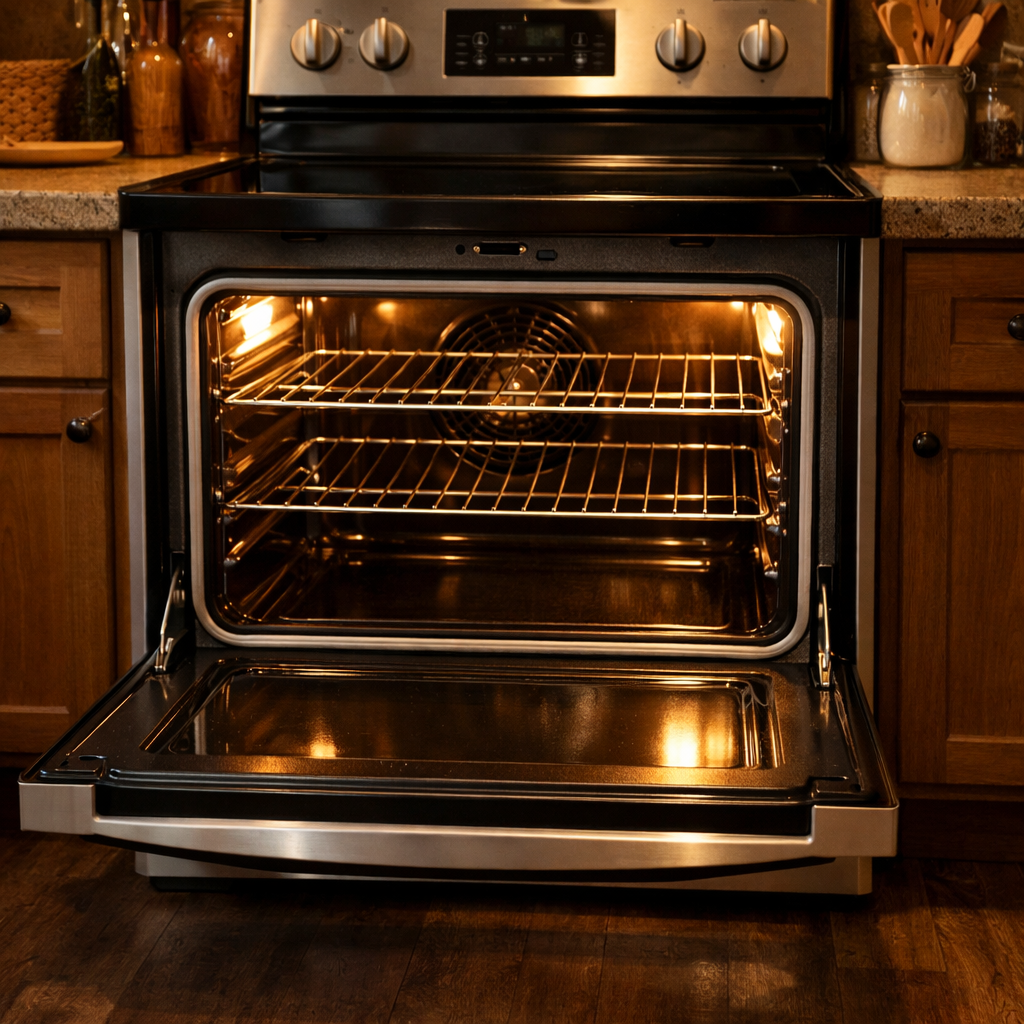
Electric oven F3E2 error
In this step-by-step repair guide, I’m going to walk you through fixing the electric oven F3E2 error on your KitchenAid KSDB900ESS (Dual Fuel). With the right tools and parts, I believe most homeowners can complete this repair in just 1–2 hours, saving you from a costly service call.
🔨 Pro Tip from Dave
On the KSDB900ESS, the oven temperature sensor is part number W10181986. Before you dive into the repair, check the sensor harness connector at the back wall of the oven cavity. I’ve found that this connector often suffers from heat-related corrosion. A simple cleaning with electrical contact cleaner can sometimes save you from a costly part replacement.
Part of our Top 20 Oven Models & Common Repair Issues Guide. Browse all oven repair guides for related models and issues.
Common Symptoms & Causes
If your KitchenAid KSDB900ESS is displaying an F3E2 error, you may notice one or more of the following symptoms before or alongside the fault code:
- The oven display shows the “F3E2” error code and the oven shuts down mid-cycle
- The oven fails to reach or maintain the set baking temperature
- The control panel becomes unresponsive after the error code appears
- The oven temperature reads significantly higher or lower than the selected setting
This error is typically caused by a failed or out-of-range oven temperature sensor (RTD probe), a damaged sensor harness, or a faulty connection between the sensor and the electronic control board.
Safety First
- Unplug the oven from the power outlet before starting any repair — never work on a live appliance.
- Wear work gloves when handling metal brackets, sheet metal edges, or sharp components.
- Take photos with your phone before disconnecting any wiring harnesses or connectors.
- Work in a well-lit area with enough floor space to lay removed panels flat.
Tools & Parts Needed
Essential Tools
- Phillips #2 screwdriver
- ¼” nut driver
- Multimeter
- Work gloves (heat-rated)
- Flashlight
Replacement Parts
- Oven temperature sensor
- sensor harness
- multimeter
Step-by-Step Repair Instructions
Step 1
When you see the F3E2 error code on your KitchenAid KSDB900ESS, it indicates that the lower oven temperature sensor has an open circuit. This tells the control board it cannot read the oven temperature, leading to a shutdown of that cavity as a safety measure. Since this is a dual fuel range, the upper and lower ovens each have their own temperature sensor, so this fault is isolated to the lower oven and won’t affect the upper oven or cooktop.
Step 2
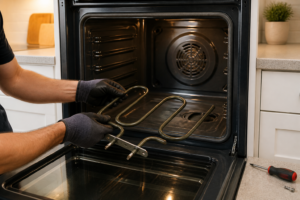
Before anything else, unplug the range from the wall outlet. The sensor is located inside the lower oven cavity on the back wall, and you’ll be disconnecting a wiring harness near metal edges that can cause shorts if power is live. Remove the two Phillips screws securing the sensor bracket, then carefully pull the sensor forward just enough to disconnect the 2-pin harness connector.
Step 3
Set your multimeter to Rx1 (resistance) and probe across the two sensor terminals to check whether the sensor has failed. At room temperature, a good sensor should read approximately 1,080–1,100 ohms. A reading of infinite resistance (OL or no continuity) confirms the sensor element is open, indicating it must be replaced. Unfortunately, no amount of reseating will fix a broken element.
Step 4
Even if the sensor tests good, inspect the entire length of the 2-pin harness before reassembling. The wiring can get pinched against a sharp cavity edge or chafed through its insulation, creating an intermittent open circuit that only appears when the oven flexes from heat expansion. Run your fingers along the wire looking for kinks, exposed copper, or melted insulation. Replace the harness if you find any damage — a compromised harness can cause the F3E2 code to return even with a new sensor.
Step 5
Thread the new sensor’s harness connector through the back wall opening, seat the connector until it clicks, then position the sensor in its bracket and drive the two Phillips screws in snugly, but not overtightened — ceramic sensor bodies can crack under excess torque. Route the harness along the oven wall rather than across open cavity space, and clip it into the original cable retainer to keep it from drifting toward the heating element during operation.
Step 6
Plug the range back in, set the lower oven to 350°F, and allow it to complete a full preheat cycle. The control board will read the sensor continuously and clear the F3E2 automatically once it confirms a valid temperature signal. To verify the fix, place an independent oven thermometer inside the lower cavity and check that it reads within 15–25°F of the set point. This will confirm that the new sensor is connected and calibrated correctly.
Where to Buy Replacement Parts
- KitchenAid KSDB900ESS oven temperature sensor WPW10181986
- KitchenAid dual fuel range F3 E2 upper oven sensor
- KitchenAid range sensor probe harness replacement
When to Call a Professional
If the issue persists after completing all steps above, the problem may involve a failed main control board, a defective temperature sensor, or wiring that requires specialized diagnostic equipment. In such cases, it’s best to contact a licensed appliance technician. For gas models, do not attempt work on the gas valve, burner orifices, or supply line — that work is typically restricted to a licensed gas fitter.
How Much Does This Repair Cost?
| Repair route | Typical cost |
|---|---|
| Do it yourself | $20–$60 (parts) |
| Professional repair | $150–$300 (parts and labor) |
Replacing the oven temperature sensor yourself typically costs $20–$60 for the part alone. A professional service call for an F3E2 error on the KitchenAid KSDB900ESS generally runs $150–$300, including labor and diagnostics. By tackling this repair yourself, you can save over $100 while getting your dual fuel range back to full working order.
Frequently Asked Questions
What does the F3E2 error code mean on my KitchenAid KSDB900ESS?
The F3E2 error indicates a faulty or shorted oven temperature sensor in the electric oven cavity. Typically, replacing the sensor is the most straightforward fix for this issue.
Can I still use the gas cooktop while the F3E2 error is active?
Yes, since the KSDB900ESS is a dual fuel range, the gas cooktop operates independently and should function normally while the oven error is present.
How do I reset the F3E2 error after replacing the temperature sensor?
After replacing the sensor, disconnect the appliance from power for one minute, then restore power to clear the error code automatically.
Recommended Products
Here are the parts and tools I recommend for this repair, based on compatibility and customer reviews:
- Upgraded WPW10181986 W10181986 Range Oven Temperature Sensor Probe – Replacement for Whirlpool, Kenmore, Maytag, Amana, KitchenAid Stove – Replaces 8273902, W10131826, PS11749737, AP6016450
- WP9755542 for Kitchenaid Oven Temperature Probe Sensor -Meat Thermometer Replacement for Model 9755542, Stainless Steel Food Probe Compatible with KitchenAid Ovens (Baking, Roasting, Grilling)
- 【Upgraded】 316490000 Oven Temperature Sensor Probe Replacement for Frigidaire Kenmore Ranges – 365 Days QA – by AMI PARTS
The Oven Temperature Sensor That Fixes F3E2 on Your KSDB900ESS
The F3E2 error almost always traces back to a failed RTD probe or a broken connection in the sensor circuit — and 9 times out of 10, replacing the sensor solves it completely. This is the part to start with on KitchenAid dual fuel models because it’s the most common culprit and the easiest swap.
What works
- Direct fit for the KSDB900ESS — installs in the same location as the original probe without modification or adapter fussing.
- Clears the F3E2 error immediately once power-cycled, which confirms it was the sensor and not a wiring harness issue.
- Holds temperature readings stable during both bake and broil cycles — no more fluctuating sensor signals that trigger nuisance errors mid-cook.
What doesn’t
- Won’t fix the error if the real problem is a corroded connector or damaged wiring harness — you need to visually inspect the harness first to rule that out.
- Installation requires you to remove the back panel and disconnect the old probe from its socket, which takes a few extra minutes but isn’t difficult if you take photos of the wire routing beforehand.
I’ve seen folks order a new sensor only to discover the actual problem was corrosion on the connector pins — so before you buy, pull the back panel and take a close look at where the old sensor plugs in. If the terminals look dark or crusty, you might just need to clean the connection first. But if the probe itself looks cracked or the error persists after cleaning, grab the replacement. Upgraded WPW10181986 sensor is the one I trust.
About This Article

Written by Dave Holt. Dave Holt has been taking apart and fixing household appliances since he was a teenager who couldn't leave a broken one alone. Eighteen years later, after fixing things for neighbors, friends, and anyone who'd let him, he's seen almost every failure mode there is. When he writes a repair guide here, it's based on the actual job, not a manufacturer overview. More about this site.
Scope and limits. Dave is a self-taught repairer, not a certified appliance technician. Unplug before you open anything, and leave sealed refrigeration systems, gas connections, and hardwired circuits to a qualified technician.