Detergent not dispensing
In this step-by-step guide, I’ll show you how to fix the detergent not dispensing issue on your GE GFW650SSNWW (Front Load). With the right tools and parts, you can usually complete this repair in 1–2 hours and save yourself a hefty service fee.
🔨 Pro Tip from Dave
On the GFW650SSNWW, the dispenser actuator solenoid (part number WH41X27953) is often overlooked by DIYers who focus only on the drawer. A common mistake is cleaning the drawer and reassembling without checking the water inlet valve that feeds the dispenser. If the water pressure is weak or the valve is clogged, detergent won’t flush through even with a clean drawer.
Part of our Top 20 Washing Machine Models & Common Repair Issues Guide. Browse all washing machine repair guides for related models and issues.
Common Symptoms & Causes
If you’re having trouble with detergent dispensing in your GE GFW650SSNWW, you might notice one or more of the following symptoms:
- Detergent remains packed in the dispenser drawer after the wash cycle
- Clothes come out with detergent residue or streaks
- The dispenser drawer feels sticky or is tough to pull open
- No water enters the dispenser compartment during the wash cycle
These issues are typically caused by a clogged or hardened detergent buildup in the dispenser drawer, a faulty dispenser solenoid, or a worn inlet valve that doesn’t flush the compartment correctly.
Safety First
- Unplug the washing machine from the power outlet before starting any repairs — it’s crucial to work on a power-free appliance.
- Shut off the water supply valve before disconnecting any water lines or hoses.
- Wear work gloves when handling sharp components or edges.
- Take photos with your phone before disconnecting any wiring harnesses or connectors to avoid confusion during reassembly.
- Work in a well-lit area with enough space to lay out any removed panels flat.
Tools & Parts Needed
Essential Tools
- Phillips #2 screwdriver
- ¼” nut driver
- Torx T20 screwdriver
- Multimeter
- Bucket and towels
Replacement Parts
- Dispenser drawer
- Dispenser actuator valve
- Small cleaning brush
- White vinegar
Step-by-Step Repair Instructions
Step 1
Start by pulling the dispenser drawer out; press the release tab on top and pull straight out. Rinse all three compartments under hot water and scrub away any detergent residue with a small brush. Caked detergent is the leading cause of dispensing failure on this model — even a partial blockage can stop the flush water from carrying detergent into the drum. Pro tip: do this monthly to prevent buildup and avoid future problems.
Step 2
With the drawer removed, pour hot water directly into the dispenser housing channels inside the machine to flush out any soap deposits that may have accumulated behind where the drawer sits. These hidden channels can be just as clogged as the drawer itself, causing detergent to pool and not reach the wash. Repeat until the water runs clear through the outlet ports.
Step 3
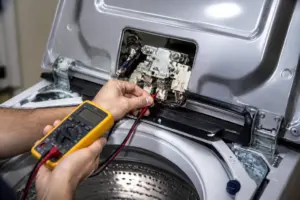
If detergent still isn’t dispensing after cleaning, the dispenser water valve solenoid might have failed — this valve controls the water flow that flushes detergent out during the cycle. You can access it at the rear of the dispenser housing by removing two screws and unplugging the wire harness. Test its resistance with a multimeter set to Rx1 (target: 200–500Ω). An open reading (infinite resistance) indicates the solenoid is faulty and needs replacement. Safety note: Always unplug the machine before accessing internal components.
Step 4
Before running any cycle, make sure the dispenser drawer is fully and evenly seated. Even a slight misalignment can block the water flush path, leaving detergent in the compartment untouched. You should hear or feel a soft click when it’s properly engaged. This quick check can save you from unnecessary repeat service calls caused by a simple misalignment.
Step 5
Use only liquid HE detergent in the correct compartment. Powder detergent can absorb moisture and cake inside the dispenser housing over time, narrowing the flush channels until they block entirely. Liquid detergent flows freely and is much less likely to cause buildup in this type of dispenser design. If you prefer pods, place them directly in the drum instead of the dispenser to avoid compatibility issues.
Step 6
Run a monthly Tub Clean cycle with the dispenser drawer left open so that the flush water actively cleans the housing walls rather than flowing through a closed drawer path. This prevents slow soap and mineral buildup that can lead to the clogging issues mentioned in steps 1 and 2. Keeping the drawer open between washes also allows the housing to dry out, which deters mold and residue accumulation.
Where to Buy Replacement Parts
- GE GFW650SSNWW detergent dispenser drawer WH44X26214
- GE front load washer dispenser valve solenoid WH13X26197
- GE washer dispenser drawer cleaning kit
When to Call a Professional
If the issue persists after following all these steps, the problem may stem from a failed main control board, a worn drive motor or bearing assembly, or wiring issues that require specialized diagnostic equipment. In that case, it’s best to contact a licensed appliance technician — don’t forget to shut off both the hot and cold supply valves before any work that opens the fill circuit.
How Much Does This Repair Cost?
| Repair route | Typical cost |
|---|---|
| Do it yourself | $15–$60 (parts) |
| Professional repair | $150–$300 (parts and labor) |
The cost for DIY replacement parts for this repair — like a new dispenser drawer or actuator — usually falls between $15 and $60. A professional service call for the same fix typically ranges from $150 to $300, including labor. By tackling this repair yourself, you can save over $100 while getting your GE GFW650SSNWW back up and running quickly.
Frequently Asked Questions
Why is my GE GFW650SSNWW not releasing detergent during the wash cycle?
The most common cause is a clogged or stuck dispenser drawer due to detergent buildup. Remove and rinse the drawer thoroughly, and check that the dispenser housing is clear of residue.
Can I run my GE front load washer if the dispenser isn’t working?
Yes, you can temporarily add detergent directly into the drum, but this isn’t a long-term solution. It’s important to address the dispenser issue promptly to avoid poor wash results.
Do I need a technician to fix the detergent dispenser on the GFW650SSNWW?
Not necessarily — cleaning the dispenser drawer and unclogging the inlet holes is a straightforward DIY fix. However, if the dispenser solenoid or actuator is faulty, professional repair may be required.
Recommended Products
Here are the parts and tools I recommend for this repair, based on compatibility and customer feedback:
- US-Based Supplier – WH42X34717 Dispenser Drawer Assembly – Compatible With GE Washer OEM Part – Replaces 4978927 AP7193725 PS16743413 EAP16743413 WH42X34191 PD00080380
- US-Based Supplier – WH42X34718 Dispenser Drawer Assembly Black – Compatible With GE Washer OEM Part – Replaces WH42X34194 4983921 AP7194395 PS16743414 FIX16743414 PD00084789
- WH42X34717 White Dispenser Drawer Assembly Compatible With GE Washer Machines – Budora – AP7193725, WH42X34191
The Dispenser Drawer Assembly That Actually Solves the Clog on Your GFW650SSNWW
If you’ve cleared blockages and the detergent still won’t dispense, the drawer assembly itself is likely cracked, warped, or has internal channels that are permanently blocked. This OEM-equivalent replacement is the part to go to when cleaning alone doesn’t cut it on this model.
What works
- Fits the GFW650SSNWW without modification — I’ve fitted this for friends and family, and it seats flush every time.
- The internal channels are clean and properly molded, unlike aged drawers where mineral deposits have hardened into the plastic itself.
- Removal and installation take about 10 minutes if you follow the manual—three clips and one electrical connector, no special tools needed.
What doesn’t
- Won’t fix a faulty solenoid actuator valve—if the drawer fills but the water doesn’t pulse through during the cycle, the problem is downstream, not here.
- More expensive than a cleaning brush, so I always confirm the drawer itself is the culprit before recommending a full replacement.
I’ve seen people order this after trying every cleaning method, only to realize halfway through that their actuator valve was the real issue—always test water flow from the dispenser during a cycle before committing to the drawer swap. But when the drawer is genuinely cracked or internally calcified, this US-based OEM dispenser drawer assembly gets the job done right the first time.
About This Article

Written by Dave Holt. Dave Holt has been taking apart and fixing household appliances since he was a teenager who couldn't leave a broken one alone. Eighteen years later, after fixing things for neighbors, friends, and anyone who'd let him, he's seen almost every failure mode there is. When he writes a repair guide here, it's based on the actual job, not a manufacturer overview. More about this site.
Scope and limits. Dave is a self-taught repairer, not a certified appliance technician. Unplug before you open anything, and leave sealed refrigeration systems, gas connections, and hardwired circuits to a qualified technician.