Condensation buildup
If you’re dealing with condensation buildup on your LG LBNC15221V (Bottom Freezer), don’t worry—I’ve got a step-by-step repair guide that can help you tackle this issue. With the right tools and parts, you can usually complete this repair in 1–2 hours, saving yourself from a costly service call.
🔨 Pro Tip from Dave
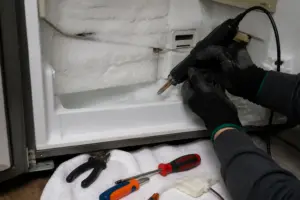
On the LG LBNC15221V, pay close attention to the drain tube and heater assembly (part number 5215JA2006B). This model is notorious for the drain tube freezing over, leading to condensation pooling inside the fresh food compartment. A common mistake I see is homeowners replacing the gasket before checking whether the defrost drain is partially clogged. This can mean the problem returns quickly.
Part of our Top 20 Refrigerator Models & Common Repair Issues Guide. Browse all refrigerator repair guides for related models and issues.
Common Symptoms & Causes
If you’re seeing these signs on your LG LBNC15221V, it points to a condensation buildup issue that needs addressing.
- Water droplets or frost collecting on the inside walls of the refrigerator compartment
- Puddles of water pooling on the bottom freezer drawer or floor beneath the unit
- Food packaging feels damp or wet after sitting in the fridge for a short period
- The door gasket appears wet, warped, or no longer seals flush against the cabinet
Typically, this issue arises from a worn or damaged door gasket, a clogged defrost drain, or a faulty defrost heater that allows moisture to accumulate instead of draining and evaporating properly.
Safety First
- Unplug the refrigerator from the power outlet before starting any repair — never work on a live appliance.
- Shut off the water supply valve before disconnecting any water lines or hoses.
- Wear work gloves when handling metal brackets, sheet metal edges, or sharp components.
- Take photos with your phone before disconnecting any wiring harnesses or connectors.
- Work in a well-lit area with enough floor space to lay removed panels flat.
Tools & Parts Needed
Essential Tools
- Phillips #2 screwdriver
- ¼” nut driver
- Needle-nose pliers
- Multimeter
- Flashlight or work light
Replacement Parts
- Anti-sweat/mullion heater wire
- door gasket set
- silicone sealant
- multimeter
Step-by-Step Repair Instructions
Step 1
Start by checking the door gaskets. Any gap or deformation allows warm, humid air to sneak into the refrigerator, leading to condensation on those cold surfaces. A quick trick is to press a dollar bill in the closed door and pull it out—if it slides out easily, the gasket has lost its seal and needs replacing. Remember to check the gasket along the full perimeter, not just one spot, as wear often concentrates in the corners.
Step 2
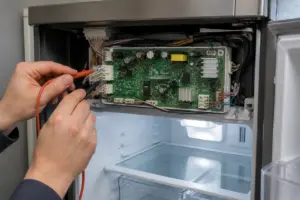
Next, locate the anti-sweat heater, a thin resistance wire embedded in the door frame and mullion (the divider between the fresh food and freezer compartments). This heater is designed to keep those surfaces warm enough to prevent condensation. Use your multimeter set to continuity or resistance mode and probe both terminals of the heater. If you find an open circuit (no continuity), the heater has failed and needs replacing. Safety reminder: always unplug the refrigerator before probing any electrical components to avoid shock risks.
Step 3
If you notice sweating on the exterior walls of the refrigerator, ensure the unit has at least half an inch of clearance on each side and one inch at the rear. Inadequate airflow traps heat around the cabinet, causing sweating. This restricted airflow forces the compressor to work harder, raising cabinet temperatures and worsening condensation over time. Carefully pull the unit forward and verify clearances with a tape measure before pushing it back into position.
Step 4
Make sure the refrigerator isn’t positioned within two feet of a dishwasher, stove, or any heat-producing appliance. Radiant and convected heat raises the ambient temperature around the unit, exacerbating condensation. Even the occasional steam cycle from a dishwasher can spike local humidity enough to overwhelm the anti-sweat system. If relocation isn’t an option, consider adding a thermal barrier panel between the appliances.
Step 5
In high-humidity climates, some exterior surface condensation during summer is normal and doesn’t indicate a malfunction. The outer cabinet simply becomes cooler than the surrounding dew point. However, if water is pooling on the interior floor, dripping from the ceiling of the fresh food section, or frost is building up inside, that points to warm air infiltration, and you’ll need to address the gasket. Use a flashlight to inspect the interior ceiling and rear wall for frost or water streaks, which indicate where the infiltration is occurring.
Step 6
Once you’ve completed any repairs, give the refrigerator a full 24 hours before assessing whether the condensation issue has resolved. The interior thermal mass takes time to stabilize, and surface moisture needs to fully evaporate. Wipe down all interior walls and shelves with a dry cloth before restarting the clock so you’re evaluating new moisture, not residual dampness. Pro tip: if condensation returns within that 24-hour window, it’s a sign the root cause hasn’t been fully addressed, so re-examine the gasket or anti-sweat heater.
Where to Buy Replacement Parts
- LG LBNC15221V mullion anti-sweat heater replacement 5006EL3001A
- LG refrigerator door gasket replacement seal MHL46915505
- LG refrigerator anti-condensation heater wire 5300JB1070A
When to Call a Professional
If the issue persists after completing all the steps above, you may be facing a problem with the sealed refrigerant system, a failed main control board, or wiring issues that require specialized diagnostic equipment. In that case, it’s best to contact a licensed appliance technician—attempting sealed-system repairs without proper certification is illegal and unsafe.
How Much Does This Repair Cost?
| Repair route | Typical cost |
|---|---|
| Do it yourself | $10–$65 (parts) |
| Professional repair | $150–$300 (parts and labor) |
When tackling condensation buildup on the LG LBNC15221V, DIY repairs typically cost between $10 and $65 for parts like door gaskets, drain tubes, or a defrost thermostat. A professional service call usually runs between $150 and $300 once labor and diagnostic fees are factored in. Doing this repair yourself can save you $100 or more.
Frequently Asked Questions
Why is my LG LBNC15221V building up condensation inside the refrigerator?
Condensation typically forms when warm, humid air enters through a worn or damaged door gasket. Inspect the rubber seal around your bottom freezer and refrigerator doors and replace it if you see cracks or gaps.
Could a faulty defrost drain cause condensation buildup on my LG LBNC15221V?
Absolutely, a clogged or frozen defrost drain can lead to moisture accumulating inside the unit. Clearing the drain with warm water usually resolves the issue quickly.
How do I know if the temperature settings are contributing to the condensation problem?
If your refrigerator is set too warm, it won’t properly control moisture in the air. LG recommends setting the refrigerator to 37°F and the freezer to 0°F for optimal performance.
Recommended Products
These are the parts and tools I recommend for this repair, based on compatibility and customer reviews:
- ForeverPRO MAN62288601 Door Basket for LG Refrigerator
- ForeverPRO 5251JA2006B Tube Assembly Drain for LG Refrigerator
- LG 5251JA3004E Refrigerator Drain Tube Assembly Genuine Original Equipment Manufacturer (OEM) Part
- LG 5251JA3004E Refrigerator Drain Tube Assembly Genuine Original Equipment Manufacturer (OEM) Part
The Door Gasket Swap That Stops Condensation From Pooling Inside Your LG LBNC15221V
If you’re noticing water droplets or a wet film on the inside walls of your fridge—especially around the door seals—a worn or warped door gasket is almost always the culprit on this model. This is the first part I check when diagnosing condensation complaints because a failed seal lets warm, humid air leak in constantly, and the refrigerator struggles to keep up with the moisture load.
What works
- Creates an airtight seal that actually stops the warm air infiltration—you can feel the difference in door resistance right away
- The magnetic strip on this gasket is strong enough that you won’t have door-sag issues after install, a problem I’ve seen with cheaper replacements
- Condensation buildup typically drops noticeably within 24–48 hours once a new gasket is installed properly
What doesn’t
- Installation requires you to remove the old gasket completely and clean the channel—don’t skip this step or the new gasket won’t seal flush
- If your condensation problem is actually caused by a blocked defrost drain, swapping the gasket alone won’t fix it—you’ll need to diagnose both issues
I’ve had owners order a gasket only to find out the drain was actually clogged, which delayed the fix by a week. Always check both the door seal and the defrost drain before ordering—pull the kick panel and look for standing water or ice around the drain opening. If you see either, grab a door gasket set and inspect that drain system simultaneously.
About This Article

Written by Dave Holt. Dave Holt has been taking apart and fixing household appliances since he was a teenager who couldn't leave a broken one alone. Eighteen years later, after fixing things for neighbors, friends, and anyone who'd let him, he's seen almost every failure mode there is. When he writes a repair guide here, it's based on the actual job, not a manufacturer overview. More about this site.
Scope and limits. Dave is a self-taught repairer, not a certified appliance technician. Unplug before you open anything, and leave sealed refrigeration systems, gas connections, and hardwired circuits to a qualified technician.