Not Draining
This guide covers how to diagnose and fix a GE GTW720BSNWS top-load washing machine that is not draining. Whether your washer leaves standing water after a cycle or stops mid-cycle with water in the tub, this walkthrough addresses the most common causes and repairs. Most homeowners with basic mechanical skills can complete this repair in 1–2 hours with a few standard tools.
Common Symptoms & Causes
A GE GTW720BSNWS that won’t drain typically presents in one of several ways before the root cause becomes clear.
- Tub remains full of water at the end of the spin cycle
- Washer pauses mid-cycle and displays an error code such as E3 or F7
- Clothes are excessively wet after the cycle completes
- You hear a humming sound but no water movement during the drain phase
The most common root cause on this model is a failed or clogged drain pump, though a kinked drain hose or faulty lid switch can also prevent the machine from entering the drain and spin sequence.
Safety First
- Unplug the washer from the wall outlet before performing any inspection or repair
- Wear work gloves to protect your hands from sharp metal edges inside the cabinet
- Photograph all wiring harness connections before disconnecting anything so you can reassemble correctly
- Work in a well-lit area and keep a dry towel or shallow pan nearby to catch residual water
Tools & Parts Needed
Essential Tools
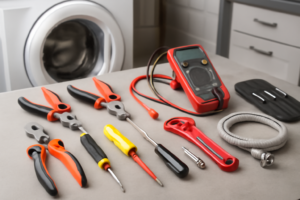
- Phillips and flat-head screwdrivers
- ¼-inch and 5/16-inch nut drivers
- Needle-nose pliers
- Bucket and towels for draining residual water
- Multimeter for testing electrical components
Replacement Parts
Step-by-Step Repair Instructions
🔨 Pro Tip from Dave
On the GTW720BSNWS, the drain pump impeller is notorious for getting locked up by a single small sock or a piece of bra underwire that made it past the filter — the pump motor will still hum and even test fine with a multimeter, which tricks a lot of people into replacing a perfectly good pump. Before you condemn the pump, manually rotate the impeller through the inlet port with a straightened coat hanger; if it’s stiff or won’t spin freely, you’ve found your real problem without spending a dime on a part.
Step 1: Check the Drain Hose
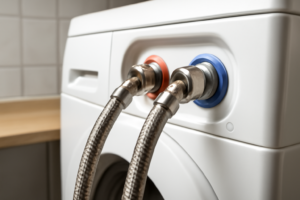
Pull the washer away from the wall and inspect the drain hose at the back of the machine. Look for kinks, sharp bends, or a hose end pushed more than 4.5 inches into the standpipe, which can create a siphon effect. Straighten any kinks and confirm the hose routes downward without obstruction — if water flows freely when you lower the hose into a bucket, the hose itself is not the problem.
Step 2: Test the Lid Switch
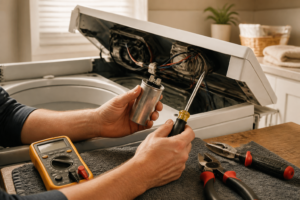
The GTW720BSNWS will not drain or spin if the lid switch assembly does not register the lid as closed. Open the top panel by releasing the two spring clips at the front with a putty knife, then locate the lid switch near the door latch area. Use a multimeter set to continuity mode — a functioning switch will beep when the tab is depressed; no continuity means the switch needs replacement.
Step 3: Access and Inspect the Drain Pump
With the cabinet top raised, locate the drain pump at the lower rear of the tub connected by two hoses and a wiring harness. Clamp both hoses with locking pliers, then remove the hose clamps and pull the hoses free — have a bucket ready for water. Check inside the pump inlet and both hoses for debris such as coins, hair ties, or lint buildup, which frequently block this model.
Step 4: Test the Drain Pump Motor
Disconnect the pump wiring harness and use your multimeter to test resistance across the pump motor terminals — a healthy pump typically reads between 5 and 10 ohms. An open reading (OL) or zero ohms indicates a burned-out motor winding and the pump must be replaced. You can also spin the pump impeller by hand; it should rotate freely with no grinding or seizing.
Step 5: Replace the Drain Pump
Remove the two mounting screws or bolts securing the pump to the cabinet frame and disconnect the wiring harness. Install the new pump, reconnect both hoses with new clamps if the originals are corroded, and plug in the harness. Reassemble the cabinet, restore power, and run a Rinse & Spin cycle to confirm the tub empties completely within two to three minutes.
Step 6: Inspect the Pump Belt (if applicable)
Some GTW720BSNWS units use a direct-drive pump, but verify your serial number batch — early production runs occasionally included a belt linking the motor to the pump pulley. If a belt is present, check it for cracking, fraying, or slipping off the pulley. A broken belt will cause the motor to hum with no pumping action and is an inexpensive fix at under $15.
Step 7: Run a Full Diagnostic Test Cycle
GE’s GTW720BSNWS supports a built-in service diagnostic mode: with the washer empty, rotate the cycle selector two clicks clockwise, one counter-clockwise, and one clockwise, then press Start. The machine will cycle through each function including drain and spin, and any active error codes will display. Confirm no error codes remain and that the tub drains completely before returning the machine to service.
How Much Does This Repair Cost?
Doing this repair yourself typically costs between $25 and $85 depending on which part has failed — a replacement drain pump runs $40–$75, a lid switch around $20–$35, and a drain hose under $20. Compare that to a professional service call on this model, which usually runs $150–$300 including labor and parts markup. Taking the DIY route saves most homeowners $100 to $200 and builds useful knowledge for future repairs.
When to Call a Professional
Most of the repairs in this guide are within reach for a careful DIYer with basic tools. In my experience, once you’ve confirmed the drain hose and filter are clear but the machine still won’t drain, and your multimeter shows the pump motor is getting proper voltage yet the tub sits full, you’re likely dealing with a failed control board or a wiring harness issue that requires schematic-level diagnostics — at that point, call a certified technician before you chase an expensive misdiagnosis. When in doubt, a diagnostic service call typically costs $80–$120 and can save you from a misdiagnosis that costs more in parts.
Where to Buy Replacement Parts
All three parts most commonly responsible for a GE GTW720BSNWS not draining are readily available on Amazon with fast shipping. Search directly using these links to find compatible replacements:
- GE GTW720BSNWS Drain Pump Replacement (WH23X10030)
- GE GTW720BSNWS Lid Switch Assembly Replacement (WH12X10468)
- GE GTW720BSN
If your GE GTW720BSNWS isn’t draining, a faulty water inlet valve is one of the first components worth inspecting — a failed valve can prevent the machine from cycling water properly and mimic a drain problem. The Upgraded Washer Water Valve Replacement for GE GTW685BSL6WS GTW720BPN0DG GTW720BPN1DG GTW720BPNDG GTW720BSN0WS GTW720BSN1WS GTW720BSNWS GTW725BPN0DG GTW725BPN1DG GTW725BPNDG GTW725BSN0WS is a direct-fit upgrade designed specifically for this lineup of GE top-load washers, making it a reliable drop-in fix without any modification. Swapping it out is a straightforward DIY repair that can save you the cost of a service call. (As an Amazon Associate I earn from qualifying purchases.)
Once you’ve confirmed the internal components are working correctly, don’t overlook the drain hose itself — a kinked, clogged, or too-short hose is a surprisingly common cause of drainage failures. The DLHMBOQ 10ft Washing Machine Drain Hose Extension Kit – Universal for Washer, Dishwasher & Dehumidifier, 7-Piece Set with U-Bracket, 4 Clamps & Adapter gives you the extra length needed to reach a utility sink or standpipe without straining the hose into a bend that restricts flow. The included U-bracket and clamps make for a secure, leak-free installation you can complete in minutes.
If 10 feet is more than you need, a shorter extension will still solve a taut or misrouted drain hose without leaving excess hose coiled behind the machine. The Post Views: 3