Convection fan blade
This step-by-step repair guide walks you through fixing convection fan blade on your Electrolux EI30EW38TS (Wall Oven). With the right tools and parts, most homeowners can complete this repair in 1–2 hours and avoid a costly service call.
🔨 Pro Tip from Dave
On the EI30EW38TS, the convection fan blade uses part number 318073900 and has a reverse-thread nut — meaning you turn it CLOCKWISE to loosen it, not counterclockwise. This trips up a lot of DIYers who end up stripping the shaft trying to force it the wrong way. Also, always inspect the motor shaft for scoring before installing the new blade, because a damaged shaft will destroy a new blade quickly.
Part of our Top 20 Oven Models & Common Repair Issues Guide. Browse all oven repair guides for related models and issues.
“`html
Common Symptoms & Causes
If your Electrolux EI30EW38TS wall oven has a faulty convection fan blade, you may notice one or more of the following symptoms:
- The oven produces a loud rattling or scraping noise during convection cooking
- Food bakes unevenly, with hot and cold spots throughout the oven cavity
- The convection fan runs but airflow inside the oven feels weak or inconsistent
- A burning smell occurs when the fan is operating, suggesting blade contact with surrounding components
These issues are typically caused by a cracked, warped, or physically damaged convection fan blade resulting from normal wear, repeated high-heat exposure, or accidental impact during oven cleaning.
“`
Safety First
- Unplug the oven from the power outlet before starting any repair — never work on a live appliance.
- Wear work gloves when handling metal brackets, sheet metal edges, or sharp components.
- Take photos with your phone before disconnecting any wiring harnesses or connectors.
- Work in a well-lit area with enough floor space to lay removed panels flat.
Tools & Parts Needed
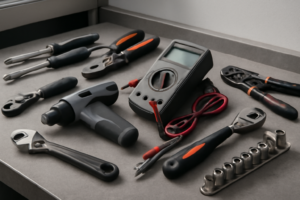
Essential Tools
- Phillips #2 screwdriver
- ¼” nut driver
- Multimeter
- Work gloves (heat-rated)
- Flashlight
Replacement Parts
- Convection fan blade
- fan motor
- Phillips screwdriver
- multimeter
Step-by-Step Repair Instructions
Step 1
Disconnect power at the breaker before touching any components — convection fan circuits can remain live even when the oven is off, creating a shock hazard. Remove the oven racks for clear access, then unscrew the two Phillips screws holding the fan cover on the back wall of the oven cavity. Pull the cover off and spin the blade by hand: any wobble indicates a bent blade throwing the motor off-balance, chips can cause vibration and noise at speed, and hardened grease clumps create imbalance that wears out the motor bearing prematurely — any of these means the blade needs replacing.
Step 2
The fan blade is either pressed onto the motor shaft or secured with a center nut, depending on production run. If there is a nut, turn it counter-clockwise to remove it; if the blade is press-fit, work a flat-head screwdriver gently behind the blade hub and pry it straight off the shaft — do not rock it side to side or you risk bending the motor shaft. Note which way the blade faces before removal so the replacement goes on in the correct orientation.
Step 3
Before installing the new blade, wipe the motor shaft clean of any grease or carbon buildup using a dry cloth or a small amount of isopropyl alcohol on a rag. Grease left on the shaft prevents the new blade from seating fully, which will cause it to sit crooked and vibrate under load. Make sure the shaft is fully dry before proceeding, as residue can also work its way into the motor bearing over time.
Step 4
Align the new blade with the shaft and press it on firmly and evenly until the hub sits flush with the face of the motor — an incompletely seated blade will wobble immediately and can work loose during operation. If the design uses a center nut, thread it on clockwise and tighten it snugly by hand plus a quarter-turn with a screwdriver; overtightening can crack the plastic hub or strip the shaft threads. Pro tip: some replacement blades include a new nut — use it rather than reusing the old one if it shows any corrosion.
Step 5
Before reinstalling the fan cover, give the blade a slow spin by hand and watch it carefully from the side — it should rotate in a true, flat plane with no side-to-side wobble and no scraping against the cover or motor housing. This manual check catches seating problems or a misaligned blade before you restore power, saving you from having to disassemble everything again. If you detect any wobble, remove the blade and reseat it; do not proceed until rotation is true.
Step 6
Reinstall the fan cover, restore power at the breaker, and run a Convection Bake cycle for five to ten minutes. The fan should spin up quickly and run silently — no vibration transmitted through the oven cavity walls, no rattling, and no wobble visible through the oven door. If you hear grinding or feel vibration, shut power off immediately and recheck blade seating and nut tightness, as continued running with an imbalanced blade will damage the motor.
Where to Buy Replacement Parts
Find genuine OEM and aftermarket replacement parts for your Electrolux EI30EW38TS (Wall Oven) on Amazon:
- Electrolux EI30EW38TS convection fan blade WB02T10281 replacement
- Electrolux wall oven convection fan motor 318068503
- Electrolux oven fan blade balance noise vibration
When to Call a Professional
If the issue persists after completing all steps above, the problem may involve the sealed refrigerant system, a failed main control board, or wiring that requires specialized diagnostic equipment. Contact a licensed appliance technician — attempting sealed-system repairs without EPA 608 certification is illegal and unsafe.
“`html
How Much Does This Repair Cost?
A replacement convection fan blade for the Electrolux EI30EW38TS typically costs between $20 and $60 for the part alone. Hiring a professional appliance technician will generally run $150 to $300 once you factor in the service call and labor fees. By tackling this repair yourself, you can save over $100 or more.
“`
## Frequently Asked Questions
### How do I know if the convection fan blade on my Electrolux EI30EW38TS needs to be replaced?
If your oven is making a loud rattling or scraping noise during convection cooking, the fan blade is likely cracked, bent, or loose. Visually inspect the blade through the back panel for any visible damage or wobble.
### Do I need to disconnect power before replacing the convection fan blade?
Yes, always shut off the circuit breaker supplying power to the oven before starting any repair. This is a critical safety step to prevent electric shock.
### Can I replace the convection fan blade myself, or do I need a technician?
Most homeowners can replace the fan blade with basic tools by removing the oven’s back panel and unscrewing the blade from the motor shaft. However, if the motor itself is damaged, professional service is recommended.
Recommended Products
These are the parts and tools we recommend for this repair, based on compatibility and customer reviews:
- ForeverPRO 318398302 Fan Blade for Frigidaire Wall Oven (AP4566043) 316136400 1614302 318398300
- Samsung DG67-00011B Range Convection Fan Blade, Lower
- SUPPLYZ Direct Replacement for Frigidaire 318398302 Wall Oven Fan Blade (AP4566043) 316136400 1614302 318398300
As an Amazon Associate, I earn from qualifying purchases.