Front felt seal replacement
This step-by-step repair guide walks you through fixing front felt seal replacement on your Frigidaire FCED3025AS (Electric). With the right tools and parts, most homeowners can complete this repair in 1–2 hours and avoid a costly service call.
🔨 Pro Tip from Dave
On the FCED3025AS, order part number 134762000 (or the updated cross-reference 5303281153) for the front felt drum seal. A common mistake I see DIYers make is forgetting to apply a thin, even bead of high-temp drum seal adhesive before pressing the new felt in place — skipping this causes the seal to peel within weeks. Also, while you have the front panel off, go ahead and clean out the lint trap housing cavity, because buildup there is almost always excessive on this model.
Part of our Top 20 Dryer Models & Common Repair Issues Guide. Browse all dryer repair guides for related models and issues.
“`html
Common Symptoms & Causes
If your Frigidaire FCED3025AS is experiencing front felt seal issues, you may notice one or more of the following symptoms during operation.
- Clothes come out still damp after a full drying cycle
- Visible lint buildup around the front door opening or drum edge
- Loud squeaking or scraping noise when the drum spins
- Noticeable heat escaping from the front of the dryer during use
These symptoms are typically caused by a worn, torn, or compressed front felt drum seal that has degraded over time due to heat exposure and normal friction wear.
“`
Safety First
- Unplug the dryer from the power outlet before starting any repair — never work on a live appliance.
- Wear work gloves when handling metal brackets, sheet metal edges, or sharp components.
- Take photos with your phone before disconnecting any wiring harnesses or connectors.
- Work in a well-lit area with enough floor space to lay removed panels flat.
Tools & Parts Needed
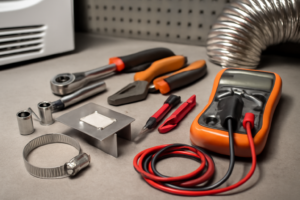
Essential Tools
- Phillips #2 screwdriver
- ¼” nut driver
- Putty knife
- Multimeter
- Work gloves
Replacement Parts
Step-by-Step Repair Instructions
Step 1
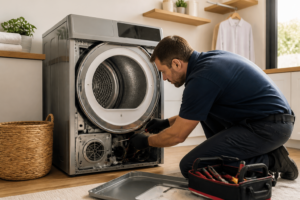
Unplug the dryer from the wall outlet before doing anything else — live 240V current makes any contact with internal components potentially fatal. Remove the front panel by taking out the single screw inside the lint trap housing and the two lower screws along the bottom edge, then lift the panel straight up and off. With the front panel free, slide the drum out so you have clear access to the front drum flange where the felt seal sits.
Step 2
Examine the felt seal — a fabric strip bonded around the circumference of the front drum flange — for wear that has cut through to the bare woven backing, or sections that are peeling or hanging loose. Either condition allows hot air to escape the drum cavity and pulls lint into areas that can become fire hazards, so err on the side of replacement if wear is significant. Run your finger around the full perimeter because failure is often uneven and easy to miss in one spot.
Step 3
Use a plastic putty knife (not metal, which can score the flange) to scrape away all remaining felt, then wipe down the bare flange with acetone on a lint-free cloth to dissolve adhesive residue. This surface prep step is critical: any contamination — old glue, oil from handling, or moisture — will prevent the new seal from bonding properly and cause it to fail within a few cycles. Let the solvent fully evaporate and confirm the surface is completely dry before moving on.
Step 4
Apply a thin, even bead of high-temperature drum seal adhesive around the front drum flange — thin means no excess squeeze-out, which can harden into a ridge and cause thumping. Press the new felt seal firmly into the adhesive starting at the weld seam so your overlap point lands in a low-stress location, work around the full circle, and where the ends meet trim to leave exactly a 1-inch overlap rather than a gap or excessive bulk. Hold firm pressure along the seal for a minute or two to ensure full contact before releasing.
Step 5
Let the adhesive cure for a full 30 minutes at room temperature before reassembling — the bond needs this time to reach working strength, and reassembling too soon means the drum will shear the seal right off on the first rotation. Keep the drum stationary during the cure window; even bumping it can break the initial tack. If the shop is cold (below 60°F), allow extra cure time because most contact adhesives cure significantly slower in low temperatures.
Step 6
Slide the drum back into position and reinstall the front panel, replacing all three screws — two lower and one inside the lint trap housing — before powering on. Plug the dryer in and run a full timed dry cycle while listening for rhythmic thumping (seal not seated flat) and feeling along the drum gap for warm air escaping (seal not making full contact). Either symptom means the panel needs to come back off for inspection before the dryer is returned to regular use.
Where to Buy Replacement Parts
Find genuine OEM and aftermarket replacement parts for your Frigidaire FCED3025AS (Electric) on Amazon:
- Frigidaire FCED3025AS drum front felt seal 131553800 replacement
- Frigidaire dryer drum seal adhesive high temperature
- Frigidaire electric dryer front glide replacement
When to Call a Professional
If the issue persists after completing all steps above, the problem may involve the sealed refrigerant system, a failed main control board, or wiring that requires specialized diagnostic equipment. Contact a licensed appliance technician — attempting sealed-system repairs without EPA 608 certification is illegal and unsafe.
“`html
How Much Does This Repair Cost?
Replacing the front felt seal on your Frigidaire FCED3025AS typically costs $10–$30 in parts when you do it yourself. A professional appliance technician will usually charge $150–$300 once you factor in the service call and labor fees. Tackling this repair on your own can save you over $100 while restoring your dryer’s efficiency.
“`
Frequently Asked Questions
How do I know if the front felt seal on my Frigidaire FCED3025AS needs replacing?
If you notice excessive heat escaping from the front of the dryer or hear a scraping noise during a cycle, the felt seal is likely worn or torn. Visually inspect the drum opening for frayed, flattened, or missing felt material.
Do I need to remove the entire dryer drum to replace the front felt seal?
Yes, accessing the front felt seal on the FCED3025AS requires removing the front panel and lifting out the drum. Make sure to disconnect power before starting disassembly.
What adhesive should I use to attach the new felt seal?
Use a high-temperature appliance adhesive, such as Frigidaire-recommended dryer seal glue, to secure the new felt. Allow it to cure fully before reassembling and running the dryer.
Recommended Products
These are the parts and tools we recommend for this repair, based on compatibility and customer reviews:
- newlifeapp 5303937139 Dryer Drum Felt Seal Kit with Glides & Adhesive – Made in USA – Fits Frigidaire, Kenmore, Electrolux – Replaces 131154800, AP2150497
- Improved W10612022 Dryer Rear Drum Felt Seal Replacement -Compatible with Whirlpool Crosley Amana Maytag Kenmore Dryer Drum Felt Seal AP5737110 PS8691753 AP3094267 PS334327 W10389561 279857 Dryer Felt
As an Amazon Associate, I earn from qualifying purchases.