Heating Element Replacement
In this step-by-step guide, I’m going to walk you through the process of fixing the heating element replacement on your Amana NED4655EW (Electric). With the right tools and parts, you can tackle this repair in just 1–2 hours, saving yourself from a costly service call.
🔨 Pro Tip from Dave
On the NED4655EW, the heating element assembly uses part number WP8544771. A common mistake I see DIYers make is not replacing the two high-limit thermostats mounted directly on the element housing, which often fail alongside the element. Always test and replace the thermal cutoff (WP8577274) at the same time, or you risk burning out your brand-new element within weeks.
Part of our Top 20 Dryer Models & Common Repair Issues Guide. Browse all dryer repair guides for related models and issues.
Common Symptoms & Causes
If your Amana NED4655EW is struggling to heat, look for these symptoms that may indicate a failed heating element:
- Dryer runs but produces no heat after a full cycle
- Clothes remain damp or cold after a normal drying cycle
- The dryer drum spins normally but takes multiple cycles to dry a small load
- Visible burn marks or a broken coil on the heating element itself
These issues are most often caused by a burned-out heating element coil, which can wear out over time due to repeated high-heat cycles and natural metal fatigue.
Safety First
- Unplug the dryer from the power outlet before starting any repair — never work on a live appliance.
- Wear work gloves when handling metal brackets, sheet metal edges, or sharp components.
- Take photos with your phone before disconnecting any wiring harnesses or connectors.
- Work in a well-lit area with enough floor space to lay removed panels flat.
Tools & Parts Needed
Essential Tools
- Phillips #2 screwdriver
- ¼” nut driver
- Putty knife
- Multimeter
- Work gloves
Replacement Parts
- Heating element
- thermal fuse
- high-limit thermostat
- ¼” hex driver
- multimeter
Step-by-Step Repair Instructions
Step 1
First things first: unplug the dryer from the wall outlet. Then, clean the entire vent duct from the dryer to the exterior exhaust cap. A restricted vent traps heat and can blow the thermal fuse, so this step is crucial. I recommend using a dryer vent brush kit and ensuring you have strong, unobstructed airflow before moving on.
Step 2
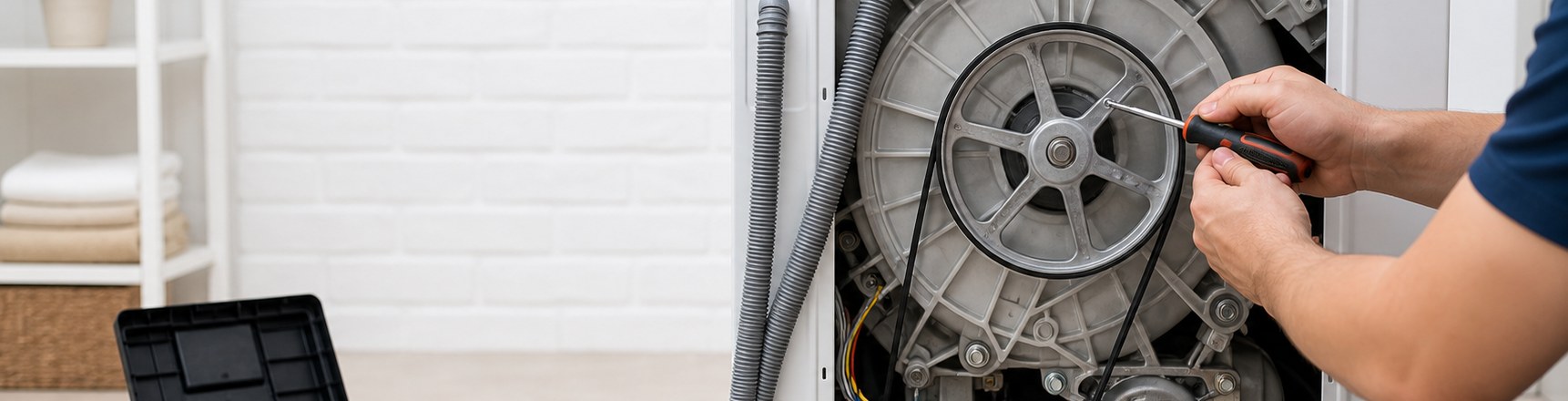
Next, remove the rear panel by taking out the five ¼” hex screws. This will expose the heating element coil sitting inside the lower heater box. Set your multimeter to Rx1 and probe both terminals of the element — a good coil should read near zero ohms, while an open reading (OL or infinite resistance) confirms the element is broken and needs replacement. Be careful not to touch the coil wire with bare hands during inspection, as skin oils can create hot spots that shorten the new element’s life.
Step 3
With the rear panel still off, locate the thermal fuse mounted on the exhaust housing and test it on Rx1. It should show continuity (near zero ohms). If it shows no continuity, then it has blown and is permanently open. A blown thermal fuse is a symptom, not just a part failure, which is why you should always replace it together with the heating element. And never bypass the thermal fuse — it’s your last line of defense against a dryer fire.
Step 4
Now, test the high-limit thermostat located near the heater box by probing its terminals on Rx1 at room temperature. A good thermostat will read continuity, while an open reading means it has failed and needs replacement. This thermostat cuts power to the element if temperatures spike dangerously, so if it fails, it can prevent heating entirely or, if it sticks closed, allow overheating. Replace it if there’s any doubt, as it’s inexpensive compared to the potential damage an overheating dryer can cause.
Step 5
Reconnect all wire terminals firmly to the new heating element, thermal fuse, and any thermostat you replaced. Then, reattach the rear panel with the five ¼” hex screws. Loose terminals are a common cause of arcing and premature component failure, so tug each connector gently after seating it to confirm it’s locked in place. Also, double-check that no wires are pinched between the panel and the dryer cabinet before driving the screws home.
Step 6
Before plugging the dryer back in, do a final check of the vent path to ensure it’s fully clear all the way to the exterior. This step is crucial to prevent a repeat failure. Plug the dryer in, load a damp towel, and run a Timed Dry cycle; the heating element should activate, and you should feel warm air at the exhaust vent within three minutes. If the dryer runs but produces no heat after this time, recheck your terminal connections and verify the circuit breaker hasn’t tripped on one leg of the 240V supply.
Where to Buy Replacement Parts
- Amana NED4655EW heating element WP8544771 replacement
- Amana electric dryer thermal fuse WP3392519
- Amana dryer high limit thermostat WP3977767
When to Call a Professional
If the problem persists after you’ve followed all these steps, you may be dealing with a failed main control board, a defective heating element or thermal cutoff, or wiring that requires specialized diagnostic equipment. In such cases, it’s best to contact a licensed appliance technician. And remember, on gas dryers, do not attempt any work on the gas valve or supply line — that should be left to a licensed gas fitter in most jurisdictions.
How Much Does This Repair Cost?
| Repair route | Typical cost |
|---|---|
| Do it yourself | $20–$60 (parts) |
| Professional repair | $150–$300 (parts and labor) |
The cost of a replacement heating element for the Amana NED4655EW typically ranges from $20 to $60 for parts alone. A professional repair service will generally charge $150 to $300 when you factor in labor and the service call fee. By tackling this repair yourself, you can save $100 or more, making it a worthwhile DIY project.
Frequently Asked Questions
How do I know if the heating element is the problem on my Amana NED4655EW?
If your dryer runs but produces no heat, a failed heating element is the most likely cause. You can confirm this by testing the element with a multimeter — no continuity means it needs replacement.
Do I need to disassemble the entire dryer to replace the heating element?
On the Amana NED4655EW, the heating element housing is accessed from the rear panel, so full disassembly is unnecessary. Removing the back cover gives you direct access to the element.
What replacement heating element part should I buy for the NED4655EW?
Use OEM part number WP8544771 or a compatible aftermarket equivalent designed for Amana and Whirlpool electric dryers. Always verify compatibility with your model number before purchasing.
Recommended Products
Here are the parts and tools I recommend for this repair, based on compatibility and customer reviews:
- 2026 Upgraded 8544771 WP8544771 Dryer Heating Element Kit, Compatible with Whirlpool, Maytag, Kenmore, Amana Dryers, Replaces 8544771R, AP6013115, AP3866035, PS11746337
- 𝟮𝟬𝟮𝟲 𝙐𝙋𝙂𝙍𝘼𝘿𝙀 8544771 Dryer Heating Element Replacement Part
- 280148 Thermal Cut-off Kit 3392519 Thermal Fuse 8577274 Thermistor Dryer replacement Kit Fit For whirl-pool Dryers WED7300XW0, WED7400XW0, WED7505FW0, WED7540FW0, WED7540FW1, WED7590FW0, WED7590FW1
- Upgraded 279816 Dryer Thermal Cut-off Kit – Compatible with Whirlpool Kenmore Maytag Amana Dryers – Replaces 3399848 AP3094244 PS334299 3977393 WED6200SW1 NED4600YQ0 NED4600YQ1 NED4655EW1
The Heating Element That Actually Fixes No-Heat on the Amana NED4655EW
Once you’ve confirmed the element is actually dead (multimeter reads open circuit), this is the part that solves the problem on the NED4655EW. I always order this before I even pull the dryer apart—saves a trip back to the supply house.
What works
- Direct OEM-equivalent spec for the NED4655EW—fits the bracket and terminal housing without shimming or adapters.
- The element itself is robust; I’ve had these last 8+ years in homes with decent lint trap maintenance and vent cleaning.
- Installation is straightforward—two bolts, two terminals, and about 10 minutes of work once the front panel and blower wheel are off.
What doesn’t
- This won’t help if your real problem is a clogged vent or lint trap—the element will burn out again in weeks if airflow restriction isn’t addressed first.
- Some aftermarket versions ship with cheaper terminal connectors that can corrode if the dryer sits unused for months.
I once had a homeowner order the wrong element (a universal fit for three different brands) and it arrived with loose bracket tabs that didn’t align—wasted half a day fabricating a shim. That’s why I stick with this one: it’s made for this specific model, and it arrives ready to install. Heating element
About This Article

Written by Dave Holt. Dave Holt has been taking apart and fixing household appliances since he was a teenager who couldn't leave a broken one alone. Eighteen years later, after fixing things for neighbors, friends, and anyone who'd let him, he's seen almost every failure mode there is. When he writes a repair guide here, it's based on the actual job, not a manufacturer overview. More about this site.
Scope and limits. Dave is a self-taught repairer, not a certified appliance technician. Unplug before you open anything, and leave sealed refrigeration systems, gas connections, and hardwired circuits to a qualified technician.