Gas smell during operation
This step-by-step repair guide walks you through fixing gas smell during operation on your Samsung DVG45BB6900H (Gas). With the right tools and parts, most homeowners can complete this repair in 1–2 hours and avoid a costly service call.
🔨 Pro Tip from Dave
On the DVG45BB6900H, a common mistake I see DIYers make is replacing only the gas valve coil kit (part number DC47-00018A) without inspecting the brass inlet fitting where the supply line connects — that joint develops micro-leaks due to vibration stress over time. Always apply approved gas leak detector solution to every connection after reassembly, and never rely on smell alone to confirm a successful repair.
Part of our Top 20 Dryer Models & Common Repair Issues Guide. Browse all dryer repair guides for related models and issues.
“`html
Common Symptoms & Causes
These symptoms may indicate a gas leak or combustion issue with your Samsung DVG45BB6900H gas dryer.
- A sulfur or rotten egg odor detected near the dryer during or after a cycle
- Weak or inconsistent flame visible through the dryer’s igniter viewport
- Dryer takes multiple cycles to fully dry a normal load
- Burning smell accompanied by the burner failing to stay lit
These issues are most commonly caused by a faulty gas valve coil, a worn igniter, or a deteriorated gas line connection that allows unburned gas to escape during operation.
“`
Safety First
- Unplug the dryer from the power outlet before starting any repair — never work on a live appliance.
- Wear work gloves when handling metal brackets, sheet metal edges, or sharp components.
- Take photos with your phone before disconnecting any wiring harnesses or connectors.
- Work in a well-lit area with enough floor space to lay removed panels flat.
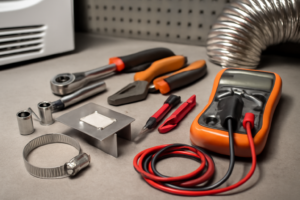
Tools & Parts Needed
Essential Tools
- Phillips #2 screwdriver
- ¼” nut driver
- Putty knife
- Multimeter
- Work gloves
Replacement Parts
- Gas line leak detection spray (or soapy water)
- flexible gas connector (if replacing)
- pipe wrench
- Teflon thread tape
Step-by-Step Repair Instructions
Step 1
If you detect a strong gas smell, evacuate your home immediately and call your gas utility from outside or a neighbor’s phone — do not flip any switches, use appliances, or open windows, because a spark or static discharge can ignite accumulated gas. This step takes priority over all diagnostics; only return indoors once a professional has cleared the area.
Step 2
A faint gas odor at startup can be normal: the burner circuit briefly purges residual gas before ignition, and this smell should clear within about 30 seconds. If the smell lingers beyond that window, a small leak at a fitting or valve is the likely cause, and you should proceed with a hands-on leak test rather than continuing to run the dryer.
Step 3
Mix a few drops of dish soap into water in a spray bottle and coat every gas connection point — the regulator fitting, valve inlet, valve outlet, and any union connections — with a generous application. You are looking for bubbles, which form when escaping gas pushes through the soapy film; even a slow leak will produce visible bubbling within 15–20 seconds, so watch each joint carefully before moving on.
Step 4
Turn off the gas supply valve before touching any fitting, then use a pipe wrench to snug the leaking connection with no more than a quarter-turn — overtightening can crack brass fittings or strip threads and create a worse leak. Reapply soapy water and retest; if bubbles persist at the same fitting after tightening, the fitting or its threads are compromised and the connector must be replaced using a new fitting with Teflon tape applied to the male threads.
Step 5
If bubbles appear at the body of the gas valve itself — not at a threaded connection into it, but from the valve casting — tightening will not help because the valve body is sealed internally and cannot be field-repaired. Replacing the gas valve assembly requires disconnecting the gas line on both sides, which legally requires a licensed plumber or gas technician in most jurisdictions; do not attempt this repair if you are not certified, as an improper reconnect is a serious fire and carbon monoxide hazard.
Step 6
Once every joint tests completely bubble-free, slowly reopen the gas supply valve and run the dryer through a normal cycle, staying nearby for the first two minutes to confirm no odor returns. A clean result — no bubbles during testing and no smell during operation — means the repair is successful; if any smell returns during the test cycle, shut off gas immediately and re-examine every connection before calling a professional.
Where to Buy Replacement Parts
Find genuine OEM and aftermarket replacement parts for your Samsung DVG45BB6900H (Gas) on Amazon:
- gas dryer leak detector spray soapy water test
- Samsung gas dryer gas valve replacement DVG45BB6900H
- flexible gas dryer connector hose replacement ½ inch
When to Call a Professional
If the issue persists after completing all steps above, the problem may involve the sealed refrigerant system, a failed main control board, or wiring that requires specialized diagnostic equipment. Contact a licensed appliance technician — attempting sealed-system repairs without EPA 608 certification is illegal and unsafe.
“`html
How Much Does This Repair Cost?
DIY parts such as a gas valve, igniter, or supply line typically cost between $15–$120 depending on the component. A professional service call for this repair generally runs $150–$300 including labor. Tackling this repair yourself can save you $100–$200 or more, making it a worthwhile fix for confident DIYers.
“`
Frequently Asked Questions
Is it safe to continue using my Samsung DVG45BB6900H if I smell gas during operation?
No, stop using the dryer immediately and ventilate the area. Turn off the gas supply valve and contact a qualified technician before running the appliance again.
What is the most common cause of a gas smell on the DVG45BB6900H?
A faulty or worn gas valve coil is the most frequent culprit, as it can prevent the valve from sealing properly between cycles.
Can I replace the gas valve coils on my Samsung dryer myself?
A confident DIYer can replace the coils, but gas line connections should always be inspected and tested by a licensed technician to ensure safety.
Recommended Products
These are the parts and tools we recommend for this repair, based on compatibility and customer reviews:
- 279834 Gas Dryer Coil Kit Replacement for Maytag Whirlpool Kenmore GE. Dryer Gas Valve Ignition Solenoid Coil Set Replace 279834VP 306105 306106 694539 12001349 14201336 14205025 14210032
- Azdele Heating Element for Samsung Dryer, Dryer Heating Element DC47-00019A for Samsung dv42h5000ew/a3 dv45h7000ew/a2 Dryer Parts, Including DC96-00887A, DC47-00016A, DC47-00018A and DC32-00007A
- Dryer Gas Valve Solenoid Coil Kit For Samsung DV448AGPXAA0000 DV448AGPXAA0001 DV448AGPXAA0002 DV219AGWXAA0001
- Samsung DC62-00201A Genuine OEM Gas Valve Assembly for Samsung Gas Dryers
As an Amazon Associate, I earn from qualifying purchases.