TurboWash not activating
This step-by-step repair guide walks you through fixing turbowash not activating on your LG WM4500HBA (Front Load). With the right tools and parts, most homeowners can complete this repair in 1–2 hours and avoid a costly service call.
🔨 Pro Tip from Dave
On the WM4500HBA, a lot of techs overlook the dual water inlet valve assembly (part number ACU72950101) and go straight to the control board — that’s a costly mistake. TurboWash requires a minimum water pressure of 14.5 PSI to trigger properly, so always check your home’s incoming pressure and inspect the valve screens for sediment buildup before replacing anything electronic.
Part of our Top 20 Washing machine Models & Common Repair Issues Guide. Browse all washing machine repair guides for related models and issues.
“`html
Common Symptoms & Causes
If TurboWash is not activating on your LG WM4500HBA, you may notice one or more of the following signs during your wash cycle.
- The TurboWash indicator light on the control panel fails to illuminate when selected
- Cycle times remain unchanged at the standard duration instead of the shortened TurboWash runtime
- The washer completes the full cycle without the high-pressure nozzle spray activating
- Selecting TurboWash causes the control panel to beep and revert to the default wash setting
These issues are most commonly caused by a faulty control board, a worn or unresponsive membrane touchpad, or a failed water inlet valve preventing the TurboWash nozzles from receiving adequate water pressure.
“`
Safety First
- Unplug the washing machine from the power outlet before starting any repair — never work on a live appliance.
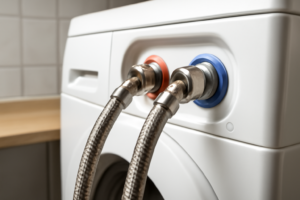
- Shut off the water supply valve before disconnecting any water lines or hoses.
- Wear work gloves when handling metal brackets, sheet metal edges, or sharp components.
- Take photos with your phone before disconnecting any wiring harnesses or connectors.
- Work in a well-lit area with enough floor space to lay removed panels flat.
Tools & Parts Needed
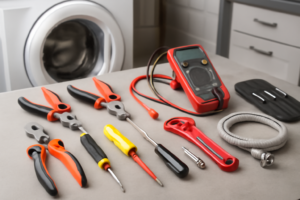
Essential Tools
- Phillips #2 screwdriver
- ¼” nut driver
- Torx T20 screwdriver
- Multimeter
- Bucket and towels
Replacement Parts
- TurboWash spray nozzles (2)
- water inlet valve
- control board
- descaling solution
Step-by-Step Repair Instructions
Step 1
Confirm TurboWash is actually enabled before assuming a hardware fault — the feature must be activated by holding the TurboWash button for 3 seconds, and many ‘failures’ are simply the mode being off. Press and hold the button until the indicator lights; if the display acknowledges the selection but the wash cycle still shows no change in behavior, the issue is hardware and you should move on to a physical inspection.
Step 2
TurboWash relies on two dedicated spray nozzles mounted at the top of the drum that inject a high-pressure water stream to accelerate saturation — if these nozzles are scaled with calcium deposits, water flow is blocked and the feature effectively does nothing even when electrically active. Open the washer door and look up into the top of the drum opening to visually inspect both nozzles; if you see white mineral buildup or the openings appear restricted, remove the nozzles and soak them in undiluted white vinegar for one hour to dissolve the scale. Pro tip: in hard-water areas, run a monthly tub-clean cycle with a citric acid cleaner to prevent this buildup from recurring.
Step 3
To remove the nozzles for cleaning or replacement, first unplug the machine — water lines will be disturbed and the risk of a pressurized spray is real if power remains connected. Remove the two rear screws on the top panel and lift it free, which exposes the water inlet line running across the top of the tub where the nozzles thread in; use an adjustable wrench to unscrew them, then clear any remaining calcium deposits from the inlet ports with a small pick or brush before reinstalling.
Step 4
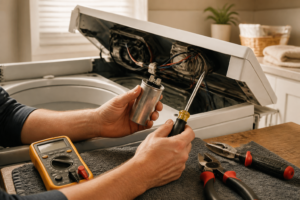
If the nozzles are clear, the next suspect is the dedicated TurboWash solenoid branch on the water inlet valve, located behind the rear access panel — a failed solenoid means the valve cannot open to supply water to the nozzles regardless of what the control board commands. Unplug the machine, disconnect the solenoid terminals, and test resistance across the TurboWash valve coil with a multimeter set to Rx1; a healthy coil reads 200–500 ohms, and an open-circuit (OL) reading confirms the solenoid has failed and the entire inlet valve assembly must be replaced. Label your wire connectors with tape before removing them to avoid reassembly errors.
Step 5
If both the nozzles and the inlet valve solenoid test good, the fault lies upstream with the main control board, which is responsible for sending the activation signal to the TurboWash valve — if that signal never leaves the board, no downstream component can compensate. This is a confirm-by-elimination diagnosis: only replace the control board after ruling out the nozzles and solenoid, since the board is the most expensive component in this chain. Check for any visible burn marks or damaged relay contacts on the board before ordering a replacement, as physical damage can confirm the diagnosis.
Step 6
After completing any repair, run a full cycle with a load and specifically watch through the door during the wash phase to confirm you can see the spray jets actively hitting the load from the top nozzles — this is the only way to verify TurboWash is functioning as designed rather than just electrically activated. If the indicator is on but no spray is visible, recheck nozzle installation torque and confirm the inlet valve wiring harness is fully seated.
Where to Buy Replacement Parts
Find genuine OEM and aftermarket replacement parts for your LG WM4500HBA (Front Load) on Amazon:
- LG WM4500HBA spray nozzle jet replacement 5214ER2002H
- LG front load washer TurboWash spray nozzle clog
- LG washer control board EBR65956809
When to Call a Professional
If the issue persists after completing all steps above, the problem may involve the sealed refrigerant system, a failed main control board, or wiring that requires specialized diagnostic equipment. Contact a licensed appliance technician — attempting sealed-system repairs without EPA 608 certification is illegal and unsafe.
“`html
How Much Does This Repair Cost?
DIY parts for fixing TurboWash activation issues on the LG WM4500HBA typically run $10–$80, depending on whether you need a control board, wiring harness, or door latch assembly. A professional service call for the same repair generally costs $150–$300 including labor. Tackling this repair yourself can save you $100 or more.
“`
Frequently Asked Questions
Why is TurboWash not showing up as an option on my LG WM4500HBA?
TurboWash is only available on select cycles like Normal and Bulky/Large. If you’re using an incompatible cycle such as Delicates or Sanitary, the feature will remain grayed out.
Can a software glitch cause TurboWash to stop working?
Yes, a firmware issue can disable TurboWash unexpectedly. Try performing a hard reset by unplugging the washer for 60 seconds, then check if the option becomes available.
Could a faulty water inlet valve prevent TurboWash from activating?
Absolutely — TurboWash relies on a high-pressure spray that requires proper water flow. A clogged or failing inlet valve can prevent the feature from engaging correctly.
Recommended Products
These are the parts and tools we recommend for this repair, based on compatibility and customer reviews:
- AJU73213301 AJU75152601 5221EA1008F Washer Water Inlet Valve (0EM part) with 10-year GUARANTEE 2025 UPGRADED Water Valve fits for Kenmore LG Washers WT7200CW, WT5001c*, 79631522211, WT1201CW
- LG 5221ER1003A Genuine OEM Water Inlet Valve Assembly for LG Washing Machines
- LG AJU75152601 Genuine OEM Water Inlet Valve Assembly for LG Washing Machines
- EBR88051101 for LG WM4500HBA Washer Control Board
As an Amazon Associate, I earn from qualifying purchases.